Is your air conditioner not cooling like it used to? You might need to add Freon to get it working efficiently again.
Adding Freon yourself can save you time and money, but it’s important to do it the right way. In this guide, you’ll learn simple, step-by-step instructions to safely recharge your home AC. By the end, you’ll feel confident knowing how to boost your air conditioner’s performance and stay cool all summer long.
Keep reading to discover how easy it can be to add Freon to your air conditioner.
Signs Of Low Freon Levels
Freon is a key part of your air conditioner. It helps cool the air in your home. When Freon is low, the AC does not work well.
Knowing the signs of low Freon can help you fix the problem early. This keeps your home comfortable and saves money.
Reduced Cooling Efficiency
Your air conditioner may blow warm or less cool air if Freon is low. It takes longer to reach the set temperature.
The AC uses more energy to try to cool your home. This can increase your electricity bill.
Ice Formation On Coils
Low Freon causes the evaporator coils to get too cold. This makes ice or frost form on the coils.
Ice blocks airflow and stops the AC from cooling properly. You may see ice build-up on the indoor unit.
- Check coils for white or blue ice
- Turn off AC to let ice melt
- Call a technician if ice returns
Hissing Sounds
A hissing noise near the AC unit may mean a Freon leak. Freon escapes through small holes or cracks in pipes.
This sound shows the system is losing Freon and cannot cool well. It needs to be fixed quickly to avoid damage.

Credit: www.lochardplumbingheatingandcooling.com
Safety Precautions
Adding Freon to your air conditioner can be risky without safety measures. You must protect yourself and your home.
Follow these safety tips to handle Freon safely and avoid damage or injury.
Wear Protective Gear
Always wear the right gear to protect your skin and eyes from Freon exposure. Freon is a cold chemical that can cause frostbite or irritation.
- Wear safety goggles to protect your eyes.
- Use gloves that resist chemicals and cold.
- Wear long sleeves and pants to cover your skin.
Work In A Ventilated Area
Freon gas can build up in closed spaces. Always work outside or in a well-ventilated room.
Tip:Open windows and use fans to keep air moving. Avoid working near open flames or sparks.
Avoid Overcharging
Putting too much Freon in your air conditioner can harm the system and waste the chemical.
| Risk | Effect |
|---|---|
| Too much Freon | Increases pressure, causing leaks or damage |
| Too little Freon | Reduces cooling efficiency, strains compressor |
| Correct amount | Keeps system safe and efficient |
Tools And Materials Needed
Adding Freon to your home air conditioner requires some special tools. These tools help you add the right amount safely.
Using the correct tools protects you and keeps your air conditioner working well. Below are the main items you will need.
Freon Canister
The Freon canister holds the refrigerant gas you add to the air conditioner. It comes sealed and ready for use.
Make sure to get the right type of Freon for your air conditioner model. Read the label on your unit or manual to check.
- Use R-22 or R-410A depending on your AC unit
- Keep the canister upright when using
- Check the expiration date on the canister
Pressure Gauge
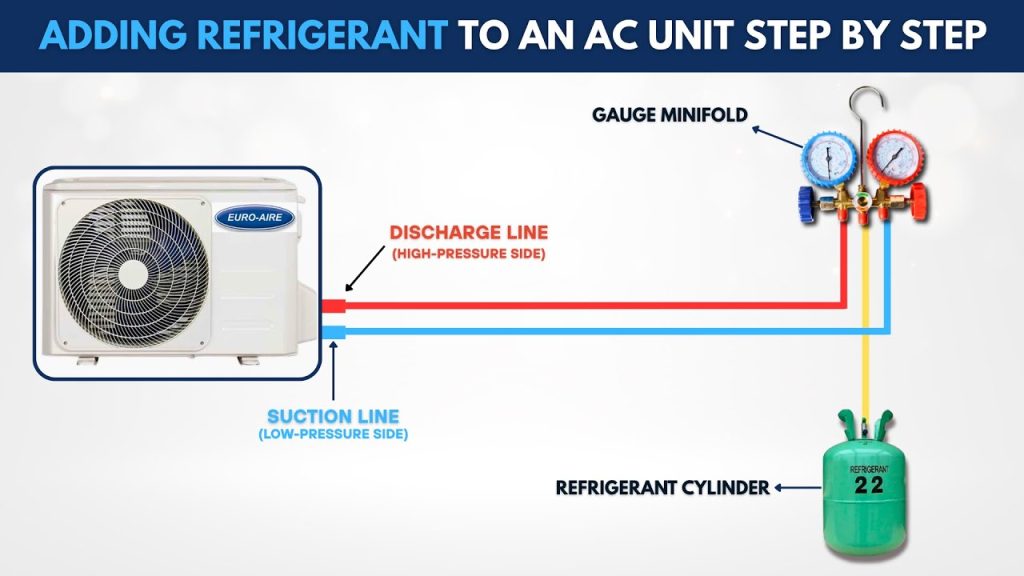
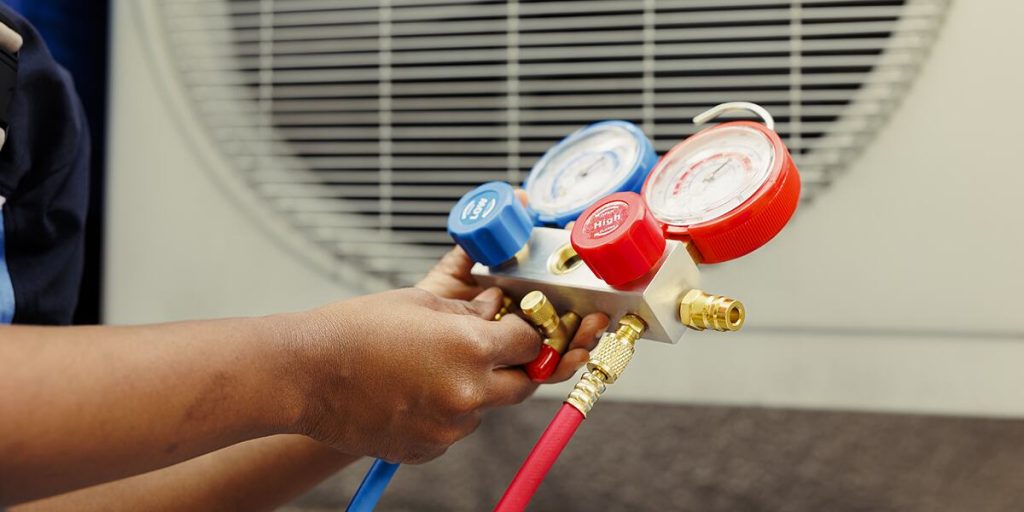
The pressure gauge measures the air conditioner’s refrigerant pressure. It helps you add the right amount of Freon.
You connect the gauge to the low-pressure valve on your AC unit. Read the numbers carefully to avoid overfilling.
- Choose a gauge that works with your Freon type
- Use a gauge with clear markings for easy reading
- Check for leaks before attaching the gauge
Protective Gloves And Goggles
Wear protective gloves and goggles to keep yourself safe. Freon is cold and can cause frostbite if it touches skin.
Goggles protect your eyes from gas or liquid sprays. Gloves help prevent direct contact with the refrigerant.
- Use thick gloves designed for chemical handling
- Wear goggles that seal around your eyes
- Always use these safety items during the process

Credit: www.youtube.com
Locating The Service Valve
Adding Freon to your home air conditioner starts with finding the service valve. This valve lets you connect the charging hose safely.
The service valve is usually outside, near the compressor unit. It controls the flow of refrigerant in your system.
Identify The Low-pressure Port
The low-pressure port is where you add Freon. It is smaller than the high-pressure port and usually has a blue cap.
Look for a metal pipe coming from the compressor. The low-pressure port is on this pipe, near the outdoor unit.
- The low-pressure port is often labeled with an “L”
- It connects to the larger suction line
- The cap is usually blue or black
- Do not confuse it with the high-pressure port, which is smaller and red
Prepare The Valve For Charging
Before adding Freon, clean the valve area. Dirt can enter the system and cause damage.
Remove the cap from the low-pressure port carefully. Check the valve for leaks or damage before connecting the hose.
- Wear gloves and safety glasses
- Use a wrench to open the valve slightly if needed
- Attach the charging hose securely
- Make sure the hose gauge reads zero before starting
Checking The Current Freon Level
Before adding Freon to your air conditioner, check its current level. This helps avoid overcharging the system.
Using a pressure gauge is the best way to measure Freon levels safely and accurately.
Attach The Pressure Gauge
First, find the low-pressure service port on your AC unit. It is usually on the larger refrigerant line.
Connect the pressure gauge hose to this port. Make sure it is tight to avoid leaks.
Read The Pressure Levels
Turn on your air conditioner and let it run for a few minutes. Then check the gauge reading.
- Low pressure means your system needs more Freon.
- Normal pressure shows the Freon level is okay.
- High pressure may mean there is too much Freon or another issue.
Adding Freon To The Air Conditioner
Adding Freon to your air conditioner helps it cool better. It can fix low cooling caused by low refrigerant levels.
Follow simple steps to add Freon safely. Use the right tools and handle the refrigerant carefully.
Shake The Canister
Before using the Freon canister, shake it well. This mixes the refrigerant inside for even flow.
Shake the canister for about 30 seconds. This prevents blockages and helps the Freon release smoothly.
Connect The Canister To The Valve
Find the low-pressure valve on your air conditioner unit. This valve is where you add Freon.
Attach the canister’s hose securely to the valve. Make sure the connection is tight to avoid leaks.
- Locate the service port with a plastic cap
- Remove the cap carefully
- Attach the hose firmly to the valve
Release Freon Slowly
Open the valve on the canister gently to start releasing Freon. Do this slowly to control the flow.
Watch the pressure gauge if you have one. Stop adding Freon when the pressure reaches the recommended level.
- Open valve slowly for controlled release
- Monitor pressure gauge carefully
- Close valve once desired pressure is reached
Monitoring The System During Charging
Adding Freon to your air conditioner requires careful monitoring. Watching the system helps keep it safe and working well.
Check the system often while charging. This prevents damage and ensures the right amount of Freon is added.
Watch The Pressure Gauge
The pressure gauge shows the Freon level inside the system. Keep an eye on it during charging to avoid overfilling.
If the pressure is too high or too low, stop adding Freon. Adjust the charging speed to keep the pressure steady.
- Low pressure may mean a leak or low Freon
- High pressure can damage the compressor
- Check the gauge often to keep pressure in the safe range
Listen For Unusual Noises
Sounds from your air conditioner can tell you a lot. Listen carefully while adding Freon to spot problems early.
Unusual noises like hissing, banging, or rattling can mean leaks or mechanical issues. Stop charging if you hear these sounds.
- Hissing may show a Freon leak
- Banging sounds can mean pressure problems
- Rattling might be loose parts or damage
Credit: www.georgiaairrepair.com
Final Checks After Adding Freon
After adding Freon to your home air conditioner, it is important to perform final checks. These checks ensure your system runs well and safely.
Two key areas to focus on are the cooling performance and possible leaks. Both help keep your air conditioner efficient.
Check Cooling Performance
Turn on your air conditioner and let it run for about 15 minutes. This time allows the Freon to circulate properly.
Feel the air coming from the vents. It should be cool and steady. If the air is not cold, the Freon level may still be low.
- Set thermostat to a lower temperature
- Wait 10 to 15 minutes for cooling effect
- Check if the room temperature drops
- Listen for unusual noises from the unit
Inspect For Leaks
Look around the air conditioner for any signs of Freon leaks. Leaks can harm the environment and reduce cooling.
Use soapy water to spray on the connections and tubes. Bubbles will form if there is a leak.
- Check all Freon lines and connections
- Spray soapy water on suspected spots
- Watch for bubbles indicating leaks
- Contact a professional if you find leaks
When To Call A Professional
Adding Freon to your home air conditioner can help it cool better. Sometimes, the problem needs expert help. Knowing when to call a professional saves time and money.
Professionals have the right tools and skills. They can safely check and fix your AC system.
Persistent Cooling Issues
If your air conditioner does not cool well after adding Freon, the problem may be bigger. This can mean leaks or broken parts.
Trying to fix these issues alone can cause more damage. A professional can find the root cause and fix it properly.
- Your home stays warm even when AC runs long
- Air feels less cold than usual
- AC shuts off quickly or cycles on and off
- Unusual noises or smells from the unit
Complex Refrigerant Systems
Some air conditioners have complex refrigerant systems. These systems need precise Freon amounts and handling.
Adding Freon without knowledge can cause leaks or system failure. Professionals follow safety rules and use special tools.
- Modern AC units with sealed systems
- Units with multiple cooling zones
- Systems that require specific Freon types
- ACs with electronic controls for refrigerant
Frequently Asked Questions
How Do I Know If My Ac Needs Freon?
If your AC blows warm air or cycles frequently, it may need Freon. Low cooling efficiency and ice buildup on coils are also signs. Always check for leaks before refilling refrigerant to ensure proper system function.
Can I Add Freon To My Ac Myself?
Yes, you can add Freon yourself if you follow safety guidelines. Use the correct refrigerant type, wear protective gear, and avoid overcharging. However, handling refrigerants requires caution and sometimes professional certification for safe and legal use.
What Tools Are Needed To Add Freon To Ac?
You need a refrigerant gauge set, a can of Freon, safety gloves, and goggles. A vacuum pump may be required to remove air from the system. These tools help ensure accurate pressure and safe refrigerant addition.
How Much Freon Should I Add To My Ac?
Add Freon according to the manufacturer’s specifications, usually found on the unit’s label. Overcharging can damage the system and reduce efficiency. Use pressure gauges to monitor levels and stop when optimal pressure is reached.
Conclusion
Adding freon to your home air conditioner boosts its efficiency. Following the steps ensures safety and effectiveness. Always wear safety gear and work in a well-ventilated area. Check for leaks before adding freon. If unsure, consult a professional. Routine maintenance keeps your system running smoothly.
Remember to recycle old freon responsibly. Regular check-ups prevent costly repairs. A well-maintained air conditioner saves energy and money. Enjoy a cool and comfortable home environment. Stay informed and keep your system in top shape.