Is your air conditioner not cooling like it used to? It might be low on refrigerant, and adding more could be the quick fix you need.
But how do you do that safely and effectively? In this guide, you’ll learn exactly how to add refrigerant to your air conditioner step-by-step. By the end, you’ll have the confidence to boost your AC’s performance and enjoy cool, comfortable air again—without calling in a costly professional.
Keep reading to discover the simple tips and tricks that can save you time and money.
Signs Your Ac Needs Refrigerant
Reduced cooling efficiencyis a common sign your AC needs refrigerant. The air conditioner may blow warm air instead of cold. This happens because low refrigerant lowers the system’s ability to cool your home.
Ice formation on coilsis another warning sign. When refrigerant is low, the evaporator coil can freeze. This ice buildup blocks airflow and reduces cooling performance.
Hissing or bubbling noisesnear the AC unit can indicate a refrigerant leak. These sounds often mean the refrigerant is escaping, lowering the system’s pressure and cooling power.

Credit: www.youtube.com
Choosing The Right Refrigerant
Choosing the right refrigerantis key to your air conditioner’s performance. Different AC units use different types of refrigerants. Using the wrong one can cause damage or reduce efficiency.
Here are some common refrigerants:
- R-22:Older AC models use this, but it is being phased out.
- R-410A:Newer models often use this refrigerant.
- R-32:A more eco-friendly option gaining popularity.
Always check the manufacturer’s specificationsbefore adding refrigerant. The AC manual or label usually lists the recommended type. Using the exact refrigerant is important for safe operation.
Environmental considerationsmatter. Some refrigerants harm the ozone layer or increase greenhouse gases. Choose refrigerants with lower environmental impact to help protect the planet.
Tools And Safety Gear Required
Essential tools include a refrigerant gauge, a vacuum pump, and a refrigerant cylinder. A wrench set helps with connections. Leak detectors find gas leaks quickly. A thermometer checks temperature changes during charging.
Protective equipment is very important. Wear safety goggles to shield your eyes. Gloves protect your hands from cold refrigerant. Long sleeves help avoid skin contact. A mask prevents inhaling harmful gases.
Safety first. Work in a well-ventilated area to avoid gas buildup. Never mix different refrigerant types. Always follow the manufacturer’s instructions. Keep fire sources away from refrigerants as they can be flammable.

Credit: www.lochardplumbingheatingandcooling.com
Preparing Your Air Conditioner
Turn off the power to the air conditioner at the main switch or circuit breaker. This is important for safety and prevents accidents during work.
Find the service valve on the outdoor unit. It is usually near the compressor and has a cap that can be unscrewed.
Check the service valve and surrounding pipes for signs of leaks. Look for oil stains or wet spots, which indicate a leak.
- Use a soap solution on connections to spot bubbles showing leaks.
- Listen for hissing sounds near valves or pipes.
- Replace or repair any leaking parts before adding refrigerant.
Step-by-step Refrigerant Addition
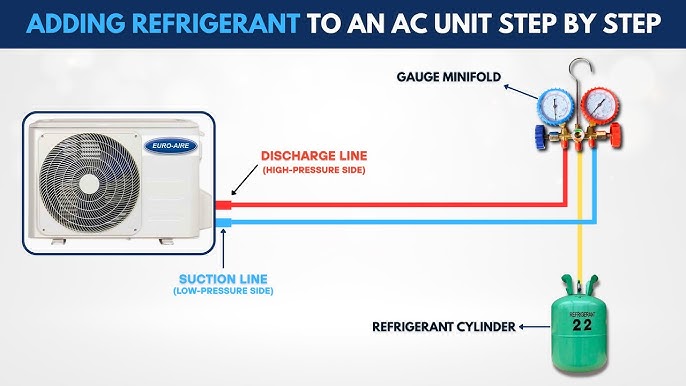
Connect the gauge and hose to the air conditioner’s service port. Make sure the connection is tight to avoid leaks. Use the correct gauge for your AC model. This helps to read the pressure properly.
Release refrigerant slowly into the system. Open the valve on the refrigerant can carefully. Adding too fast can harm the system. Let the refrigerant flow gently and steadily.
Watch the pressure levels closely on the gauge. Compare them with the recommended levels found in the AC manual. Stop adding refrigerant once the correct pressure is reached. Check the system for leaks before finishing.
Post-refilling Checks
Check for any refrigerant leaksagain after refilling. Use a leak detector or soapy water on joints and connections. Look for bubbles or hissing sounds. Fix leaks immediately to avoid losing refrigerant.
Test the cooling performanceby turning on the air conditioner. Feel the air coming out of the vents. It should be cold and steady. If it is not cold, check the refrigerant level again or call a professional.
Clean up any tools and spilled refrigerant carefully. Dispose of empty refrigerant containers safely. Keep the work area tidy to prevent accidents or contamination.
When To Call A Professional
Complex repairs often need special tools and knowledge. These jobs are best left to trained professionals. Mistakes can cause damage to the AC unitor harm to yourself. Handling refrigerants requires care because they are toxic and flammable. Only experts should work with them to avoid accidents.
Many air conditioners come with a warrantythat may become void if you try to fix them yourself. Professionals understand local laws and regulationsabout refrigerant use. This ensures the work is safe and legal. Trusting a certified technician helps keep your AC running smoothlyand your home safe.
Credit: m.youtube.com
Frequently Asked Questions
How To Know If Ac Needs Refrigerant?
If your AC blows warm air or the cooling is inefficient, it may need refrigerant. Other signs include ice buildup on the coils and hissing sounds. Regular maintenance checks can help identify low refrigerant levels early, ensuring your air conditioner operates efficiently.
What Refrigerant Type Is Used In Ac?
Most modern air conditioners use R-410A refrigerant. Older units might use R-22, which is being phased out due to environmental concerns. Always check your AC unit’s label or manual to confirm the correct type. Using the wrong refrigerant can damage your system and reduce efficiency.
Is Adding Refrigerant A Diy Task?
Adding refrigerant is not a typical DIY task. It requires specialized tools and knowledge. Improper handling can lead to system damage or personal injury. It’s best to hire a certified HVAC technician to ensure safe and proper refilling of refrigerant.
How Often Should Refrigerant Be Added?
Refrigerant is not consumed like fuel, so it shouldn’t need regular refilling. If you find yourself adding refrigerant often, there might be a leak in the system. Always address leaks promptly to avoid further damage and ensure efficient operation.
Conclusion
Adding refrigerant to your air conditioner helps it run cool and smooth. Always check the type and amount of refrigerant needed. Use proper tools and follow safety steps carefully. Avoid adding too much refrigerant to prevent damage. Regular maintenance keeps your AC working well longer.
Small efforts can save big repair costs later. Keep your home cool and comfortable with the right care. Simple steps make a big difference in AC performance. Try to learn and handle refrigerant with caution and care.