Are your car’s side mirrors giving you a clear view of the road behind? If not, you could be putting yourself and others at risk every time you drive.
Adjusting your side mirrors the right way is quick and simple, but many drivers overlook this small step. You’ll discover exactly how to position your side mirrors for maximum safety and comfort. Keep reading to learn how a few easy adjustments can make a big difference in your driving experience.

Credit: www.youtube.com
Importance Of Proper Side Mirror Adjustment
Proper side mirror adjustment helps drivers see vehicles around them. It reduces blind spots and keeps driving safe.
Side mirrors give a wider view of the road. Adjusting them correctly helps avoid accidents and improves driving confidence.
Improve Road Awareness
Side mirrors show traffic on your left and right sides. Proper adjustment helps you notice cars approaching from behind.
Good mirror positioning lets you change lanes safely and avoid collisions. It also helps in tight spaces and parking.
Reduce Blind Spots
Blind spots are areas not visible through front mirrors. Side mirrors, when adjusted well, reduce these hidden zones.
Less blind spots mean fewer surprises from other vehicles. This lowers the risk of accidents during lane changes.
Increase Driving Comfort And Confidence
Properly set mirrors reduce the need to turn your head often. This makes driving less tiring and more comfortable.
When you trust your mirrors, you feel more confident on the road. This helps in heavy traffic and complex driving situations.
Common Mistakes In Mirror Adjustment
Adjusting side mirrors on a car seems simple but many drivers make mistakes. These errors reduce visibility and increase blind spots. Correct mirror adjustment helps keep you safe on the road.
Let’s look at some common mistakes people make when setting their side mirrors. Fixing these will improve your driving experience.
Mirrors Pointed Too Far Outward
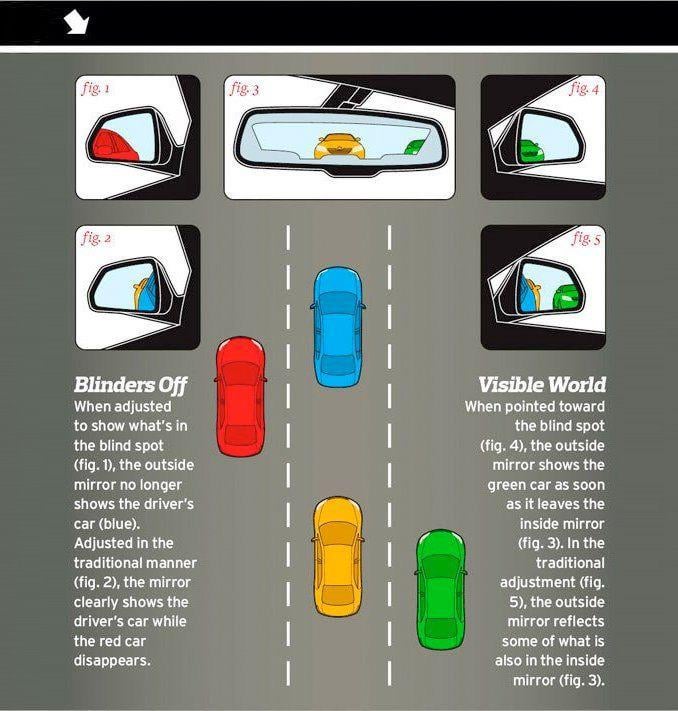
One frequent mistake is setting mirrors too far out. This causes drivers to see mostly the road beside their car. It hides vehicles closer in the blind spot.
Mirrors should show a small part of your own car. This helps you judge distances better.
Mirrors Pointed Too Far Inward
Some drivers angle their mirrors too far toward the rear of the car. This gives a narrow view of the road behind and limits side vision.
- It increases blind spots on the sides.
- Makes lane changes riskier.
- Reduces overall awareness of other vehicles.
Ignoring The Blind Spot
Many drivers do not adjust mirrors to reduce blind spots. Blind spots are areas you cannot see in your mirrors.
| Mirror Position | Blind Spot Coverage |
|---|---|
| Standard Adjustment | Large blind spots remain |
| Proper Outward Angle | Blind spots minimized |
Adjust your side mirrors outward until you barely see the side of your car. This technique helps cover blind spots.
Setting Mirrors Without Sitting Properly
Adjusting mirrors without sitting in the driver’s seat causes errors. Your seat position affects mirror angles.
- Always sit in your normal driving position.
- Adjust mirrors after settling into the seat.
- Check mirror views from your usual head position.
Step-by-step Guide To Adjusting Side Mirrors
Properly adjusted side mirrors help you see cars and objects around you. This guide shows you how to set your mirrors for the best view. Adjusting your mirrors correctly can improve safety while driving.
Follow each section carefully to position yourself and your mirrors. This will reduce blind spots and help you drive more confidently.
Positioning Yourself Correctly
Sit in the driver’s seat as you normally would. Make sure your back is straight and you are comfortable. Your seat should be adjusted so your feet reach the pedals easily.
- Adjust the seat height and angle for a clear view out of all windows.
- Keep your head against the headrest in a natural driving position.
- Ensure your hands can reach the steering wheel comfortably.
Adjusting The Driver’s Side Mirror
Lean your head toward the driver’s side window. Move the mirror so you can just see the side of your car. This reduces blind spots on the driver’s side.
- Lean your head until it almost touches the window glass.
- Adjust the mirror outward until you can see the side of your car.
- Check that you have a clear view of the road behind and beside you.
Adjusting The Passenger’s Side Mirror
Shift your head to the center of the car, above the center console. Adjust the passenger mirror to just show the side of your car. This helps cover the blind spot on the passenger side.
| Position | Mirror Adjustment |
| Lean head to center above console | Move mirror outward to see side of car |
| Check view | Ensure clear sight of adjacent lanes |

Credit: www.reddit.com
Advanced Tips For Optimal Visibility
Adjusting your car’s side mirrors correctly helps you see better while driving. Good mirror settings reduce blind spots and increase safety. These tips show how to fine-tune your mirrors for the best view.
Learn how to minimize blind spots and use convex mirrors to improve your side vision. Small changes can make a big difference on the road.
Minimizing Blind Spots
Blind spots are areas you cannot see using your mirrors alone. Adjusting your side mirrors helps cover these areas. Use these tips to reduce blind spots and stay safer.
- Lean your head to the left until it almost touches the driver’s window. Adjust the left mirror to just show the side of your car.
- Lean your head to the right, centered above the console. Adjust the right mirror to just show the side of your car.
- Check if you can see the lanes beside your car clearly. You should not see much of your car in the mirrors.
- Use quick shoulder checks to confirm if blind spots are clear before changing lanes.
Proper mirror angles help you see cars in adjacent lanes. This setup reduces the need to turn your head too much.
Utilizing Convex Mirrors
Convex mirrors curve outward. They show a wider view than flat mirrors. Many cars have convex mirrors on the passenger side to increase visibility.
| Type of Mirror | View Area | Image Size | Common Use |
| Flat Mirror | Narrow | True size | Driver side mirror |
| Convex Mirror | Wide | Smaller, distorted | Passenger side mirror |
Convex mirrors help drivers see more around their car. They reduce blind spots but make objects look smaller and farther away. Always adjust and use them carefully.
For extra safety, some drivers add small convex blind spot mirrors to the flat side mirrors. These are easy to install and improve side views.
Safety Checks After Adjustment
After adjusting your car’s side mirrors, you must check their safety. Proper checks help avoid blind spots and accidents.
This guide covers how to test mirror visibility and ensure no overlapping views for safe driving.
Testing Mirror Visibility
Check that you see the road clearly in each mirror. Sit in your normal driving position before testing.
- Look straight ahead and verify the side mirror shows the side of your car.
- Turn your head slightly and check the mirror shows the adjacent lane.
- Adjust the mirror if you see too much of your car or not enough of the road.
- Repeat for the other side mirror to maintain balance.
Ensuring No Overlapping Views
Side mirrors should cover different areas to avoid overlapping views. Overlap can hide vehicles in blind spots.
| Mirror | Primary View Area | Overlap Check |
|---|---|---|
| Left Side Mirror | Left lane and part of your car’s side | Minimal overlap with rearview mirror |
| Right Side Mirror | Right lane and car’s side | Minimal overlap with rearview mirror |
| Rearview Mirror | Directly behind the car | Clear view between side mirrors |

Credit: www.youtube.com
Troubleshooting Common Issues
Side mirrors help you see cars behind and beside you. Sometimes, they need adjusting to work well.
Common problems include glare and mirror vibration. Fixing these issues makes driving safer.
Dealing With Glare
Glare happens when bright lights reflect off your mirrors. It can hurt your eyes and block your view.
To reduce glare, tilt your side mirrors slightly downward. This helps catch the road, not the headlights.
- Adjust mirrors to see the road behind, not the sky
- Use the night or auto-dim mode if your car has it
- Keep mirrors clean to avoid extra glare
- Wear polarized sunglasses for extra protection
Addressing Mirror Vibration
Mirror vibration makes it hard to see clearly. It often happens when driving fast or on rough roads.
Check if your mirrors are tightly fixed. Loose mirrors cause shaking and poor visibility.
- Tighten screws or bolts holding the mirror
- Replace worn or broken mirror mounts
- Avoid hitting curbs or objects that can loosen mirrors
- If vibration continues, visit a mechanic for help
Frequently Asked Questions
How Do I Properly Adjust Car Side Mirrors?
Adjust side mirrors by sitting in the driver’s seat and aligning mirrors to show the car’s side edge. Ensure minimal blind spots and clear rear view for safety.
Why Is Adjusting Side Mirrors Important While Driving?
Proper side mirror adjustment reduces blind spots, improving visibility. It helps prevent accidents by allowing drivers to see surrounding vehicles clearly.
What Is The Best Angle For Side Mirrors?
Set side mirrors to show a small part of your car’s side and a wide view of adjacent lanes. This angle helps in better lane changes.
Can Side Mirrors Be Adjusted Manually Or Electronically?
Side mirrors can be adjusted manually or electronically depending on your car model. Electronic adjustments are more precise and convenient.
Conclusion
Adjusting your car’s side mirrors improves safety and driving comfort. Check your mirrors before every trip. Small changes can prevent blind spots and accidents. Practice adjusting them until you see the sides of your car clearly. Proper mirror setup helps you stay aware of other vehicles.
Take a moment to ensure your mirrors are correctly positioned. Safe driving starts with good visibility. Simple steps make a big difference on the road.