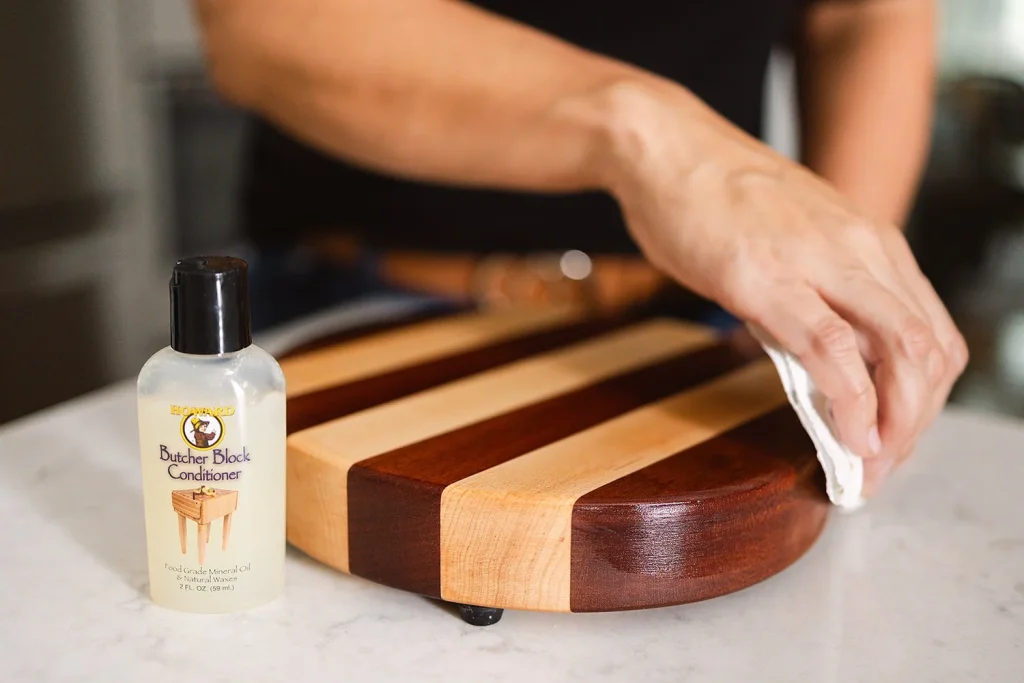
Your cutting board is one of the most important tools in your kitchen. Keeping it in great shape not only makes your food prep easier but also helps your board last longer.
Applying mineral oil might sound simple, but doing it the right way can make all the difference. In this guide, you’ll learn exactly how to apply mineral oil to your cutting board so it stays smooth, clean, and protected. Ready to bring your cutting board back to life?
Let’s dive in!
Choosing The Right Mineral Oil
Applying mineral oil to your cutting board keeps it safe and extends its life. Picking the right oil matters for food safety and wood care.
Some mineral oils are safe for food contact, while others are not. Knowing the difference helps you protect your kitchen tools.
Food-grade Vs. Non-food-grade Oil
Food-grade mineral oil is safe to use on cutting boards. It does not contain harmful additives. Non-food-grade oil can have chemicals that may cause health risks.
- Food-Grade Mineral Oil:Safe for direct contact with food.
- Non-Food-Grade Mineral Oil:Contains chemicals not meant for food use.
- Check labels:Look for “food-grade” on the container.
- Purity:Food-grade oils are purified for safety.
Benefits Of Using Mineral Oil
| Benefit | Explanation |
| Protects Wood | Mineral oil seals the wood, stopping it from drying out or cracking. |
| Prevents Stains | It creates a barrier that stops water and food stains. |
| Easy to Apply | Mineral oil spreads smoothly and absorbs well into the wood. |
| Safe for Food | Food-grade mineral oil is non-toxic and safe for kitchen use. |
Preparing The Cutting Board
Applying mineral oil helps keep your cutting board safe and strong. Before you add oil, you must prepare the board properly. This ensures the oil works well and lasts longer.
Start by cleaning the surface and drying the board completely. These steps remove dirt and moisture that can stop the oil from soaking in.
Cleaning The Surface
Clean your cutting board to remove food bits and stains. Use warm water and mild soap. Scrub gently with a sponge or soft brush.
Do not soak the board in water. This can cause the wood to swell or crack. Rinse well to remove all soap.
- Use warm water, not hot
- Apply mild dish soap
- Scrub with a soft sponge or brush
- Rinse thoroughly
- Do not soak the board
Drying Completely
After cleaning, dry your cutting board fully. Use a clean towel to wipe off water. Then let it air dry in a warm place.
Make sure no moisture stays on the surface. Oil will not soak in well if the board is wet. Drying helps the oil protect the wood better.
- Wipe with a dry towel
- Stand the board upright for air flow
- Keep away from direct heat
- Wait until the board feels dry to touch
Applying Mineral Oil
Mineral oil keeps your cutting board in good shape. It protects the wood and stops it from drying out.
Regular oiling helps your board last longer and stay clean. Let’s learn how to apply mineral oil properly.
Amount To Use
Use enough mineral oil to cover the whole cutting board. The oil should soak in but not pool on the surface.
Start with a small amount. Add more if the wood absorbs it quickly. Avoid using too much oil at once.
- Pour a few tablespoons of oil for a medium board
- Use more for larger boards, less for smaller ones
- Apply thin coats to let the oil soak in well
Methods Of Application
You can apply mineral oil with a cloth or a brush. Both ways help the oil soak into the wood.
Rub the oil into the board in small circles. Cover all sides, including the edges.
- Use a clean, soft cloth for even application
- A paintbrush can reach corners and edges well
- Let the oil sit for a few hours or overnight
- Wipe off any extra oil before use
Allowing Oil To Soak
Applying mineral oil to a cutting board helps protect and maintain the wood. Letting the oil soak in is important for deep conditioning.
This process keeps the board from drying out and cracking over time. Proper soaking improves the board’s durability.
Recommended Soaking Time
After applying mineral oil, allow it to soak for several hours. A good time is between 4 to 6 hours.
For best results, leave the oil on overnight. This gives the wood enough time to absorb the oil deeply.
- Short soaking (1-2 hours) works for light oiling
- 4-6 hours is ideal for regular maintenance
- Overnight soaking is best for dry or new boards
Tips For Better Absorption
Make sure the cutting board is clean and dry before applying oil. This helps the wood absorb the oil evenly.
Apply oil in a thin, even layer. Use a soft cloth or brush to spread it across the surface.
- Warm the oil slightly for easier absorption
- Apply multiple thin coats instead of one thick coat
- Turn the board to oil both sides and edges
- Wipe off extra oil after soaking to prevent stickiness
Wiping Off Excess Oil
After applying mineral oil to your cutting board, it is important to remove the extra oil. This helps keep the board clean and prevents it from feeling sticky.
Wiping off excess oil also helps the wood absorb the right amount of moisture. Here are some tips on how to do this properly.
Using A Clean Cloth
Use a soft, clean cloth to wipe off the extra mineral oil. A lint-free cloth works best to avoid leaving fibers on the board.
Gently rub the surface in a circular motion to spread and remove excess oil evenly.
- Choose a clean, dry cloth
- Use gentle circular motions
- Cover the entire surface area
- Change cloth if it becomes too oily
Ensuring No Sticky Residue
Check the cutting board for any sticky or oily spots after wiping. Sticky residue means too much oil is left on the surface.
If you find sticky areas, use a fresh cloth to wipe them again until the surface feels smooth and dry to the touch.
- Look for shiny or wet spots
- Wipe sticky areas with a clean cloth
- Let the board air dry after wiping
- Repeat if needed for a smooth finish

Credit: www.amazon.com
Maintaining Your Cutting Board
Keeping your cutting board in good shape helps it last longer. Regular care stops cracks and stains.
Applying mineral oil is a simple way to protect the wood. It keeps the surface smooth and safe for food.
Frequency Of Oiling
Oiling your cutting board depends on how often you use it. A well-oiled board stays strong and clean.
- Oil new boards before first use.
- Apply mineral oil every few weeks with regular use.
- Increase oiling frequency if you wash the board often.
- Oil immediately if the board looks dry or dull.
Signs Your Board Needs Reapplication
Look for clear signs that your cutting board needs more oil. These signs help you keep the board healthy.
| Sign | What It Means |
|---|---|
| Wood looks dry or faded | The oil has worn off and needs reapplication. |
| Water soaks in quickly | The board is not sealed well and can crack. |
| Surface feels rough | The wood fibers are exposed and may splinter. |
| Cracks or warping appear | Immediate oiling and care are needed to prevent damage. |
Avoiding Common Mistakes
Applying mineral oil to your cutting board is important to keep it safe and clean. Many people make simple mistakes that harm the board instead of protecting it.
Knowing what to avoid helps your board last longer and look better. Here are two common mistakes to watch out for.
Using The Wrong Oil
Not all oils work well on cutting boards. Some oils can go bad and make your board sticky or smelly.
Use only food-safe mineral oil. Avoid cooking oils like olive or vegetable oil. They can turn rancid and damage the wood.
- Choose pure mineral oil labeled food-safe
- Do not use cooking oils or essential oils
- Avoid oils that dry hard like linseed or tung oil
Over-oiling The Board
Applying too much oil can cause problems. The board may feel sticky or attract dirt and dust.
Apply a thin, even layer of oil. Let the board absorb it before adding more. Wipe off any extra oil to avoid buildup.
- Use a clean cloth to apply oil lightly
- Let the board soak in the oil for several hours
- Wipe off excess oil with a dry cloth
- Oil your board only when it looks dry

Credit: www.amazon.com

Credit: www.reddit.com
Frequently Asked Questions
Why Use Mineral Oil On Cutting Boards?
Mineral oil creates a protective layer on cutting boards. It helps prevent cracks and warping by repelling water. This food-safe oil enhances the board’s longevity and maintains its appearance. Regular application keeps your cutting board looking new and ensures it remains safe for food preparation.
How Often Should I Apply Mineral Oil?
Apply mineral oil to your cutting board every month. If you use your board frequently or wash it often, consider applying more frequently. Regular oiling prevents the wood from drying out, reducing the risk of damage and extending its lifespan.
It keeps your board in optimal condition for longer use.
Can I Use Any Oil On Cutting Boards?
Not all oils are safe for cutting boards. Avoid vegetable oils as they can go rancid. Use food-grade mineral oil or specialized cutting board oils. These oils are non-toxic, ensuring your board remains safe for food preparation. Always choose oils specifically designed for cutting board maintenance.
How Do I Apply Mineral Oil To The Board?
First, clean and dry your cutting board thoroughly. Apply a generous amount of mineral oil using a clean cloth. Rub the oil into the wood in circular motions. Allow the oil to soak overnight, then wipe off any excess. Regularly maintaining this routine ensures a well-preserved board.
Conclusion
Applying mineral oil to your cutting board keeps it safe and clean. It stops the wood from drying out or cracking. Regular oiling also helps prevent stains and odors. Just a little oil goes a long way. Take your time and cover the entire surface evenly.
Let the oil soak in for a few hours. Then wipe off any extra with a soft cloth. This simple step extends your board’s life and keeps it looking nice. A well-oiled board is easier to use and care for every day.
Try it soon and see the difference yourself.