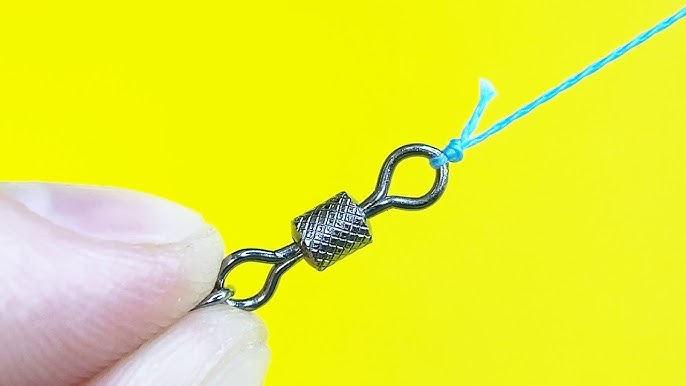
If you’re serious about fishing, knowing how to attach a swivel to your fishing line is a skill you can’t afford to miss. A swivel can save you from tangled lines, improve your lure’s movement, and make your fishing experience smoother and more enjoyable.
But if you’re not sure how to do it the right way, it can feel tricky and frustrating. Don’t worry—this guide will walk you through simple, step-by-step instructions that anyone can follow. By the end, you’ll have the confidence to attach a swivel quickly and securely every time.
Keep reading to learn the easy technique that will make your fishing trips more successful.
Choose The Right Swivel
Attaching a swivel to your fishing line helps prevent twists and tangles. Picking the correct swivel is important for a smooth fishing experience.
This guide covers the types of swivels and how to match their size to your fishing line strength.
Types Of Swivels
Swivels come in many shapes and sizes. Each type has a specific use depending on fishing conditions and gear.
- Barrel Swivel:Simple and common. It allows the line to spin freely.
- Ball Bearing Swivel:Has ball bearings for smooth rotation. Best for heavy-duty fishing.
- Three-Way Swivel:Has three rings for connecting multiple lines or rigs.
- Snap Swivel:Includes a snap for quick lure changes.
Matching Swivel Size To Line Strength
Choose a swivel size that matches your fishing line’s strength. A wrong size can cause line breakage or poor performance.
- For light lines (2-6 lb), use small swivels like size 10-14.
- Medium lines (8-15 lb) fit well with size 6-8 swivels.
- Heavy lines (20+ lb) need larger swivels, sizes 1-4.
- Check the swivel packaging for recommended line strength.

Credit: www.youtube.com
Select The Best Knot
Attaching a swivel to your fishing line needs a strong and reliable knot. Choosing the right knot helps keep your line secure and prevents slipping.
This guide explains popular knots for swivels and compares their strength. Use the best knot for your fishing needs.
Popular Knots For Swivels
The Palomar knot is simple and very strong. It holds well on braided and monofilament lines. Many anglers trust it for swivels.
The Improved Clinch knot is easy to tie and works well with light to medium fishing lines. It is a classic choice for attaching swivels.
- Palomar Knot: Very strong and easy to tie
- Improved Clinch Knot: Common and reliable
- Uni Knot: Versatile and good for many line types
Knot Strength Comparison
Knot strength is important to avoid losing fish or tackle. Different knots keep different amounts of line strength.
| Knot | Strength Retention (%) | Ease of Tying |
|---|---|---|
| Palomar Knot | 95% | Easy |
| Improved Clinch Knot | 85% | Easy |
| Uni Knot | 90% | Medium |
Prepare The Fishing Line
Preparing your fishing line is important before attaching a swivel. It helps ensure a strong, secure knot. Taking time now prevents problems later on the water.
This section covers cutting and straightening the line and moistening it before tying. Follow these steps for better results.
Cutting And Straightening The Line
Cut the fishing line with sharp scissors or a line cutter. Make a clean, straight cut to avoid frayed ends. Frayed ends are weak and hard to tie.
- Use sharp scissors or a line cutter
- Cut the line at a right angle
- Avoid crushing or bending the line
- Pull the line straight before tying
- Check the line for twists or kinks
Moistening The Line Before Tying
Moistening the line helps reduce friction and heat. This protects the line and knot from damage. Use water or saliva to wet the line.
| Step | Action | Reason |
|---|---|---|
| 1 | Dip the line tip in clean water | Keeps the line lubricated |
| 2 | Apply saliva if water is not available | Provides smooth knot tightening |
| 3 | Tie the knot gently | Prevents heat damage and line breakage |

Credit: mysterytacklebox.com
Tie The Knot Securely
Attaching a swivel to your fishing line keeps your bait moving freely. It also stops the line from twisting. To keep it strong, you must tie the knot securely.
A well-tied knot holds under pressure and keeps your gear safe. Learning how to tie it step-by-step helps you avoid losing fish or tackle.
Step-by-step Knot Tying
Start by threading the fishing line through the swivel’s eye. Leave enough line to work with for tying the knot.
Loop the tag end back alongside the main line. Wrap it around the main line five to seven times.
- Pass the tag end through the small loop near the swivel’s eye.
- Pull both ends to tighten the knot slowly.
- Wet the knot with water or saliva to reduce friction.
- Pull tight until the knot is firm and secure.
- Trim the tag end close to the knot.
Check the knot by pulling hard on the swivel and line. It should not slip or loosen.
Common Mistakes To Avoid
Many anglers tie knots too quickly or skip steps. This causes weak knots that can break easily.
- Not wetting the knot before tightening causes heat and weakens the line.
- Wrapping too few times reduces knot strength.
- Leaving long tag ends can cause tangles or catch weeds.
- Pulling too fast tightens the knot unevenly and may cause damage.
- Failing to test the knot before fishing risks losing gear.
Fix these mistakes by taking your time. Follow each step carefully for a strong knot.
Test The Connection
After attaching a swivel to your fishing line, check if it holds well. Testing the connection helps avoid losing fish or gear.
Make sure the knot is tight and the swivel does not slip. Testing also shows if the line can handle pressure.
Pull Test Technique
Hold the swivel and pull the fishing line hard. Use steady force to simulate a fish pulling on the line.
If the knot slips or the line breaks, retie the connection. The pull test ensures the knot is strong and secure.
- Hold the swivel firmly
- Pull the line with steady force
- Check for slippage or breakage
- Repeat until the knot feels tight
When To Retie
Retie the swivel if the knot loosens or the line frays. Weak knots can cause lost fish and gear.
Retie before each fishing trip or after catching a big fish. Regular checks keep your setup reliable.
- Knot slips during the pull test
- Line shows signs of wear or fraying
- Swivel moves freely on the line
- After heavy use or catches
Maintain And Replace Swivels
Swivels are important in fishing. They stop the line from twisting. Keeping them in good shape helps catch more fish.
You need to check swivels often. Replace them if they show damage. This keeps your fishing line strong and safe.
Signs Of Wear And Tear
Look at your swivels for any damage. Rust, cracks, or stiffness can cause problems. These signs mean it is time to change the swivel.
- Rust or corrosion on the metal
- Cracks or broken parts
- Swivel does not turn smoothly
- Line slips or gets tangled
Proper Storage Tips
Store swivels in a dry place after use. Moisture can cause rust and damage. Keeping them dry helps them last longer.
Use small containers or tackle boxes to keep swivels safe. Avoid mixing them with heavy items that can bend or break them.
- Keep swivels in a dry tackle box
- Use small compartments for organization
- Clean swivels after use to remove dirt
- Check them before each fishing trip

Credit: www.ohero.com
Frequently Asked Questions
What Is A Swivel In Fishing?
A swivel is a small device used in fishing to prevent line twisting. It consists of two rings connected by a pivoting joint. Swivels help maintain bait presentation and reduce tangling. They are essential for smooth casting and reeling. Using a swivel can improve your fishing experience significantly.
Why Use A Swivel On A Fishing Line?
Using a swivel prevents line twisting and tangling during casting and reeling. It ensures smooth bait presentation and enhances your fishing experience. Swivels provide better control over your fishing line. They are especially useful when using lures that spin or rotate.
Overall, swivels contribute to more efficient and enjoyable fishing.
How To Choose The Right Swivel Size?
Choosing the right swivel size depends on your fishing line and target species. Match the swivel size to your line’s breaking strength. Ensure it is strong enough to handle the fish you aim to catch. A too large swivel may scare fish, while a too small one may break.
Can Swivels Affect Casting Distance?
Swivels can affect casting distance if they are too large or heavy. A bulky swivel may reduce casting efficiency and distance. To avoid this, choose a lightweight, appropriately-sized swivel. It should suit your fishing line and lure type. Proper selection ensures optimal casting performance and minimizes distance loss.
Conclusion
Attaching a swivel to your fishing line helps prevent twists and tangles. Use a strong knot to keep the swivel secure. Practice tying the knot a few times for confidence. This simple step improves your fishing experience a lot. With patience and care, you can easily attach a swivel.
Enjoy smoother casting and better control on the water. Keep your gear ready and fish with more ease. Small skills like this make fishing more fun.