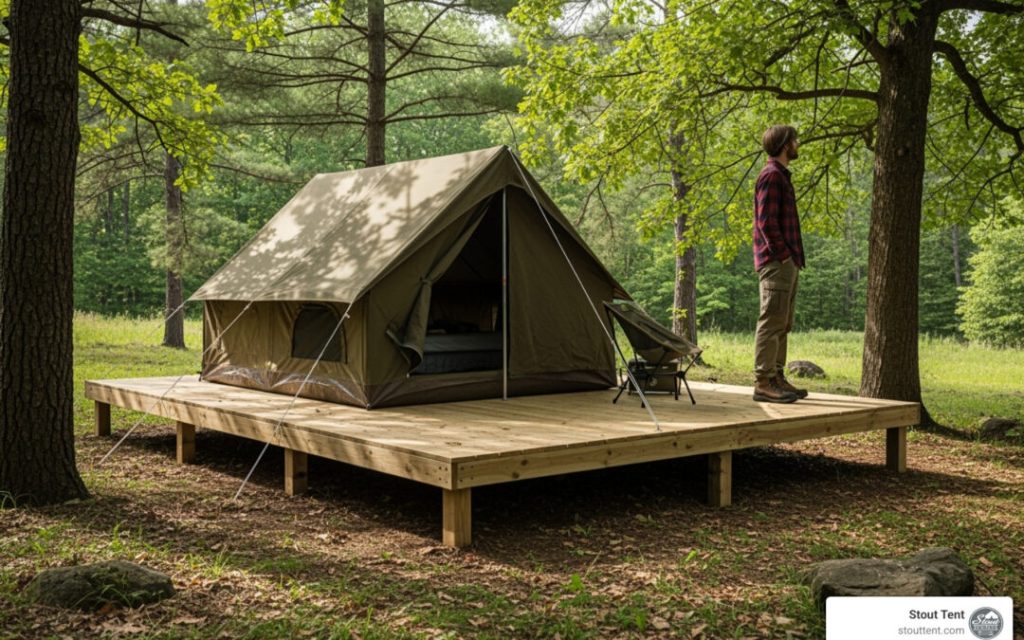
Are you tired of setting up your tent on uneven, rocky ground? Building a sturdy platform for your tent can change your camping experience completely.
Imagine having a flat, stable surface that keeps you off the dirt and away from moisture. This not only makes your nights more comfortable but also protects your tent and gear. You’ll learn simple steps to build a strong tent platform using easy-to-find materials.
Whether you’re camping in the woods or your backyard, this guide will help you create the perfect base for your tent—making every camping trip more enjoyable. Keep reading to discover how you can take your outdoor setup to the next level!
Choosing The Right Location
Building a platform for your tent starts with picking the best spot. The right location makes your tent stable and comfortable.
Look at the ground carefully before you begin. This helps you avoid problems later.
Assessing The Terrain
Check the type of ground where you want to build. Soft soil might sink, while rocky ground can be uneven.
Look for flat, firm soil that is easy to work with. Avoid places with loose sand or thick roots.
- Firm soil supports the platform well
- Avoid rocky or root-filled areas
- Clear away debris before building
Checking For Level Ground
Find a spot that is as flat as possible. Level ground keeps your tent steady and comfortable.
Use a small level tool or a water bottle to check. If the ground slopes, try to find a flatter area nearby.
- Level ground prevents tipping
- A sloped surface can cause discomfort
- Adjust the area by adding or removing soil if needed
Avoiding Water Accumulation
Do not build your platform in low spots where water collects. Water can damage your platform and tent.
Look for areas with good drainage. Avoid places near streams or where water pools after rain.
- Check the site after rain for puddles
- Choose higher ground to stay dry
- Clear nearby ditches to help water flow away
Gathering Materials And Tools
Building a platform for a tent needs the right materials and tools. Getting these ready makes the work easier and safer.
Start by choosing strong wood, then gather tools and safety gear. Each part helps the platform last long and hold well.
Selecting Durable Lumber
Pick lumber that can resist weather and weight. Cedar and pressure-treated pine are good choices. They do not rot or break easily.
- Look for straight boards without cracks
- Choose wood that is at least 2 inches thick
- Buy lumber with a smooth surface for easy handling
- Avoid wood with many knots or holes
Essential Tools Checklist
| Tool | Use |
| Hammer | Drive nails into wood |
| Measuring Tape | Measure wood and spaces |
| Saw | Cut wood to size |
| Drill | Make holes for screws |
| Level | Check surface evenness |
| Screwdriver | Tighten screws |
Safety Equipment
Protect yourself with safety gear. This reduces risk of injury while working with wood and tools.
- Wear safety goggles to protect eyes
- Use gloves to avoid splinters and cuts
- Wear a dust mask when cutting wood
- Use ear protection if tools are loud
- Wear sturdy boots for foot safety
Designing The Platform
Building a platform for a tent is essential for a comfortable camping experience. A well-designed platform keeps your tent level and dry.
Consider the size, frame structure, and ventilation when designing your platform. These elements ensure durability and comfort.
Determining Platform Size
The size of your platform depends on the tent dimensions. Measure your tent before building.
Ensure the platform is slightly larger than the tent. This prevents water from pooling near the edges.
- Measure tent length and width
- Add extra space for tent stakes
- Consider space for gear storage
Planning Frame Structure
The frame structure supports the platform. Use durable materials like treated wood or metal.
Ensure the frame is stable and can handle weight. Reinforce corners for extra strength.
- Choose strong materials
- Reinforce with cross beams
- Secure with nails or screws
Allowing For Ventilation
Ventilation prevents moisture buildup under the tent. Design the platform with gaps for airflow.
Elevate the platform slightly to enhance air circulation. This helps keep the tent dry.
- Leave small gaps between boards
- Elevate platform on blocks
- Ensure airflow from all sides

Credit: www.lifeintents.com
Preparing The Ground
Building a stable platform for your tent starts with preparing the ground. Good preparation helps keep your tent flat and dry. It also makes your camping experience more comfortable.
Follow simple steps to clear, level, and create a strong base for your tent platform. Each step improves the ground’s condition.
Clearing Debris
Remove sticks, rocks, leaves, and other debris from the site. Clearing the area helps prevent damage to your tent floor. It also keeps the platform smooth and safe.
- Pick up sharp stones and large rocks
- Clear away branches and twigs
- Remove leaves and grass patches
- Check for roots sticking out of the ground
Leveling The Surface
Make sure the ground is flat and even. A level surface prevents water from pooling under the tent. It also helps the tent stand firmly.
| Tools | Purpose |
| Shovel | Dig high spots or fill low spots |
| Rake | Spread soil evenly |
| Level | Check if surface is flat |
Adding A Base Layer
Add a base layer to improve drainage and support. The base keeps moisture away and adds comfort. Use materials like gravel, sand, or wood chips.
Here are common base layer options:
- Gravel:Allows water to drain well and keeps the ground firm.
- Sand:Smooths uneven spots and helps water flow away.
- Wood Chips:Provide cushioning and keep dirt from sticking.
Constructing The Frame
Building a strong frame is key to a stable tent platform. The frame holds the entire structure steady. Careful planning and solid materials make the frame last longer.
This guide covers the main steps for building the frame. You will learn how to build the outer frame, add support beams, and secure all joints and corners.
Building The Outer Frame
Start by measuring the size of your tent base. Cut strong wooden boards to match the length and width. These boards form the outer frame of the platform.
- Use pressure-treated wood for durability
- Make sure corners are square with a carpenter’s square
- Lay the boards flat on level ground before joining
- Double-check all measurements before cutting
Installing Support Beams
Support beams go inside the outer frame. They help carry the weight and keep the platform from bending. Space them evenly for best support.
| Beam Spacing | Recommended Distance |
| Small Tent (up to 6 ft) | 16 inches apart |
| Medium Tent (6 to 10 ft) | 12 inches apart |
| Large Tent (over 10 ft) | 8 inches apart |
Securing Joints And Corners
Strong joints keep the frame from shifting or collapsing. Use screws and metal brackets to join boards and beams. Tighten all screws well for safety.
- Pre-drill holes to prevent wood splitting
- Use galvanized screws to avoid rust
- Attach corner brackets on both inside and outside
- Check stability after assembly
Adding The Decking
Adding decking to your tent platform gives you a stable, flat surface. It helps keep your tent dry and clean. This part of the build needs care and attention.
The decking boards must be strong and well-fitted. You will choose materials, lay the boards, and finish them for safety and durability.
Choosing Decking Material
Pick decking material that suits your budget and climate. Wood is popular but needs treatment to resist weather. Composite boards last longer but cost more.
- Cedar: Natural resistance to rot and insects
- Pine: Affordable but needs sealing
- Redwood: Durable with a rich color
- Composite: Low maintenance and weatherproof
Spacing And Laying Boards
Leave small gaps between boards for water drainage. Use spacers to keep even gaps. Start at one edge and work across the frame.
| Board Type | Recommended Gap | Notes |
| Wood | 1/8 inch (3 mm) | Allows for wood expansion |
| Composite | 1/4 inch (6 mm) | Prevents warping |
Secure each board with screws at every joist. Check the alignment often to keep the surface flat and even.
Sanding And Finishing
Sand the decking smooth to prevent splinters. Use medium grit sandpaper first, then fine grit for a clean finish.
Apply a weatherproof finish or sealant for protection. Follow these tips:
- Choose a non-slip finish for safety
- Apply at least two coats for durability
- Let the finish dry fully between coats
Ensuring Stability And Safety
Building a platform for a tent requires careful attention to stability and safety. A strong platform prevents accidents and keeps the tent secure.
This guide covers key steps to anchor the platform, inspect for weak points, and maintain it regularly for long-lasting use.
Anchoring The Platform
Secure the platform firmly to the ground to avoid shifting or tipping. Use strong anchors suited for the soil type.
- Choose heavy-duty ground stakes or auger anchors.
- Drive anchors deep into the soil for maximum hold.
- Attach platform corners tightly to anchors with strong ropes or straps.
- Check anchor tension regularly to keep the platform steady.
Inspecting For Weak Points
Check the platform often to find any damage or weak spots. Early detection helps prevent accidents.
| Inspection Area | What to Look For | Action Needed |
| Wooden Boards | Cracks, splits, or rot | Replace damaged boards |
| Support Beams | Loose joints or warping | Tighten or reinforce beams |
| Anchors | Rust or loosening | Clean and secure anchors |
| Surface | Slippery or uneven areas | Smooth and level the surface |
Regular Maintenance Tips
Keep the platform in good condition by doing simple maintenance tasks regularly.
- Clean the platform from dirt and debris weekly.
- Apply wood sealant or paint every year to protect from weather.
- Check all fasteners and replace any that are rusty or loose.
- Store tools and materials properly to avoid damage.

Credit: blog.whiteduckoutdoors.com
Setting Up The Tent On The Platform
Building a platform for your tent makes camping more comfortable. It keeps the tent off the ground and protects from dirt and water.
Placing the tent correctly on the platform is important. It helps with stability and keeps the tent secure during use.
Positioning The Tent
Place the tent in the center of the platform for even support. Make sure it fits well without hanging over the edges.
Align the tent door so it faces away from the wind. This helps keep the inside dry and comfortable.
Securing Tent Stakes
Use stakes to anchor the tent to the platform. This stops the tent from moving in strong winds.
Drive stakes into the platform corners at a 45-degree angle. Pull the tent loops tight before securing the stakes.
- Check that each stake is firmly in place
- Use extra stakes if the wind is strong
- Inspect stakes regularly for stability
Weatherproofing The Setup
Add a waterproof tarp under the tent floor on the platform. This adds an extra layer of protection against moisture.
Cover the tent with a rainfly or waterproof cover. Secure it tightly to block rain and wind from entering.
- Seal any gaps between the tent and platform
- Check for water pooling during rain
- Use guy lines for extra support in storms

Credit: blog.whiteduckoutdoors.com
Frequently Asked Questions
What Materials Are Best For Building A Tent Platform?
Wooden planks like cedar or pressure-treated pine are ideal for tent platforms. They resist moisture and last longer outdoors. Use sturdy, weather-resistant screws for assembly. Avoid untreated wood to prevent rot and insect damage.
How Do You Prepare The Ground For A Tent Platform?
Clear the area of rocks, roots, and debris. Level the ground using a shovel or rake. Compact the soil to create a stable base. Adding a layer of gravel improves drainage and prevents moisture buildup under the platform.
What Tools Do I Need To Build A Tent Platform?
Basic tools include a saw, drill, measuring tape, level, and hammer. You may also need screws, nails, and a shovel for ground preparation. Safety gear like gloves and goggles is recommended during construction.
How Large Should A Tent Platform Be?
The platform should be slightly larger than your tent’s footprint. Add at least 1 to 2 feet on each side for comfort and gear storage. This ensures stability and prevents tripping hazards around your tent.
Conclusion
Building a sturdy platform makes camping more comfortable and safe. Choose strong materials and a flat spot for your base. Take your time to measure and secure each part carefully. A good platform keeps your tent dry and stable. This simple step improves your outdoor experience a lot.
Try it on your next trip and feel the difference. Enjoy nature with a solid place to rest.