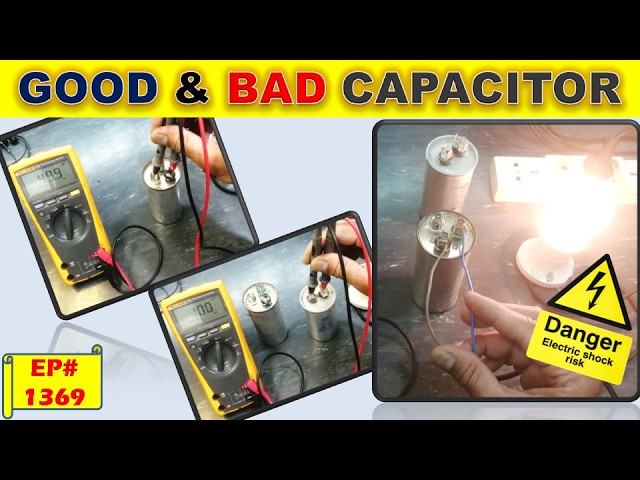
Is your air conditioner not cooling like it used to? One common culprit could be the capacitor.
Knowing how to check your air conditioner capacitor can save you time and money by spotting problems early. In this guide, you’ll learn simple steps to test the capacitor safely and effectively. By the end, you’ll feel confident handling this crucial part of your AC unit and keeping your home cool all summer long.
Keep reading to discover how easy it is to check your air conditioner capacitor yourself!

Credit: www.youtube.com
Signs Of A Bad Capacitor
The capacitor in your air conditioner helps start the motor and keep it running. If the capacitor is bad, your AC may not work well.
Knowing the signs of a bad capacitor can help you fix the problem early. This stops bigger AC issues.
Common Symptoms
A bad capacitor shows several symptoms that are easy to spot. These signs tell you the AC needs a check.
- The AC does not start or takes a long time to start.
- The outdoor fan motor does not spin or spins slowly.
- The AC makes a humming noise but does not run.
- The unit turns on and off quickly.
- The air conditioner blows warm air instead of cold.
- Visible bulges or leaks on the capacitor body.
Impact On Ac Performance
A faulty capacitor lowers the AC’s efficiency. It can cause the system to use more energy and cool less.
The AC may stop working completely if the capacitor fails. This can cause damage to other parts.
- Higher electricity bills due to poor motor operation.
- Uneven cooling in your home.
- Increased wear and tear on the compressor and fan.
- Short cycling, which reduces the AC’s lifespan.
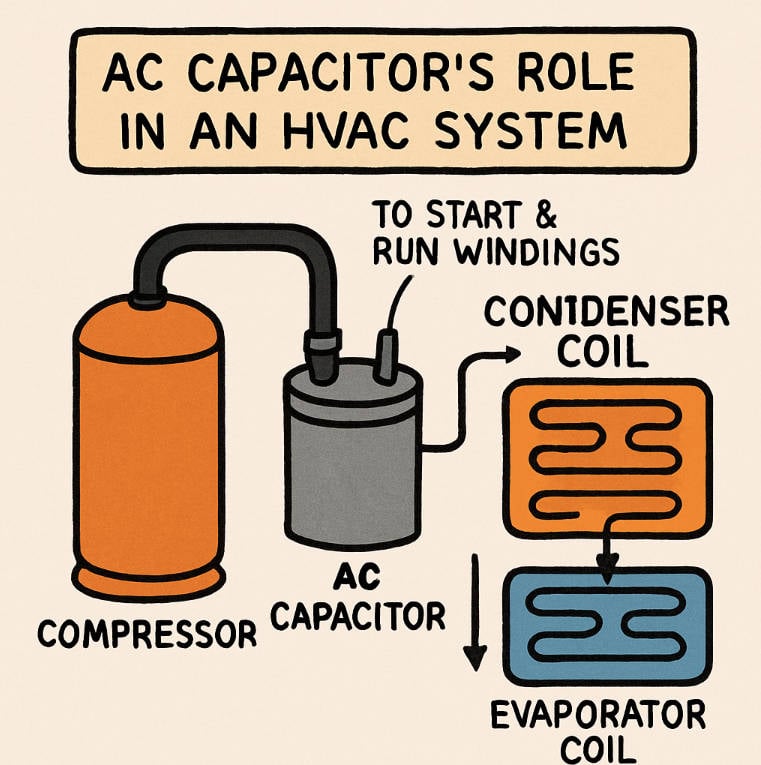
Credit: www.bettlink.com
Tools Needed For Testing
Checking an air conditioner capacitor needs some basic tools. These tools help you test if the capacitor works well or needs replacement.
Using the right tools also keeps you safe and makes the testing process easier. Below are the key tools you will need.
Multimeter
A multimeter measures electric values like voltage, current, and resistance. It is essential for testing the capacitor’s condition.
To check the capacitor, use the multimeter’s capacitance setting. This shows if the capacitor stores and releases energy correctly.
- Choose a multimeter with a capacitance feature
- Set it to the correct range for your capacitor
- Read the displayed value and compare it to the capacitor’s rating
Screwdriver And Safety Gear
A screwdriver helps open the air conditioner panel and access the capacitor. Use the right size to avoid damage.
Safety gear is very important. Capacitors can hold electric charge even after power is off. Protect yourself with gloves and safety glasses.
- Wear insulated gloves to prevent shocks
- Use safety glasses to protect your eyes
- Use a screwdriver that fits the screws well
- Discharge the capacitor before testing to avoid injury
Safety Precautions
Checking an air conditioner capacitor requires careful attention to safety. Capacitors store electrical energy that can cause shocks. Always follow safety steps to avoid injury.
This guide covers important safety actions before checking your capacitor. Focus on powering off and safely discharging the capacitor to protect yourself.
Power Off Procedures
Before you start, turn off all power sources to the air conditioner. This stops electricity flow and lowers risk of electric shock.
- Locate the main power switch or breaker for the AC unit.
- Switch off the breaker or power switch fully.
- Confirm no power by testing with a voltage meter or tester.
- Wear insulated gloves for extra protection.
- Keep tools insulated and dry while working.
Discharging The Capacitor
Even when off, the capacitor holds charge. You must safely release this stored energy before touching it.
| Discharge Step | Action |
|---|---|
| 1 | Use a screwdriver with an insulated handle. |
| 2 | Place the metal tip across both capacitor terminals. |
| 3 | Hold the screwdriver firmly to create a short circuit. |
| 4 | Wait several seconds to fully discharge the capacitor. |
| 5 | Verify discharge with a voltage meter before touching. |
Locating The Capacitor
The capacitor is a small part inside your air conditioner. It helps start the motor and keeps it running.
Finding the capacitor is the first step in checking if it works well or needs replacement.
Accessing The Ac Unit
Turn off the power to the air conditioner before opening it. This keeps you safe from electric shock.
Find the outdoor unit, usually near the house. Remove the screws or panels to open the unit’s cover.
- Switch off the breaker or unplug the AC
- Use a screwdriver to remove the access panel
- Place the panel somewhere safe after removal
Identifying The Capacitor
The capacitor looks like a small metal can or cylinder. It usually has wires connected to its top.
Look for a label on the capacitor. It shows its voltage and microfarad (µF) ratings, important for testing.
- Usually silver or gray in color
- Has two or three terminals for wires
- May have words like “Start” or “Run” near terminals
- Located near the compressor or fan motor
Testing The Capacitor
Testing an air conditioner capacitor helps find out if it works well. A bad capacitor can stop your AC from running.
This guide shows how to test the capacitor safely and read the results correctly.
Using A Multimeter
You need a multimeter to test the capacitor. It measures electrical charge and resistance.
- Turn off the power to the air conditioner.
- Discharge the capacitor by touching the terminals with a screwdriver that has an insulated handle.
- Set your multimeter to the capacitance setting.
- Connect the multimeter probes to the capacitor terminals.
- Hold the probes steady and wait for the reading.
Reading The Results
Check the number on your multimeter against the capacitor’s rated value. The rating is on the capacitor label.
| Multimeter Reading | Condition | Action Needed |
| Within 5% of rated value | Good capacitor | No repair needed |
| More than 5% off | Weak capacitor | Replace capacitor |
| Zero or no reading | Open circuit | Replace capacitor |
| Very high reading or infinity | Shorted capacitor | Replace capacitor |
Replacing A Faulty Capacitor
Air conditioner capacitors help start and run the motor. A faulty capacitor can stop your AC from working properly. Replacing it can fix many problems.
Before replacing, make sure you have the right parts and tools. Safety is very important when working with electrical parts.
Choosing The Right Replacement
Pick a capacitor that matches the voltage and microfarad (μF) rating of the old one. Using the wrong type can cause damage or poor performance.
| Capacitor Feature | What to Match |
| Voltage | Same or higher than old capacitor |
| Microfarad Rating (μF) | Exact match required |
| Physical Size | Fits the mounting space |
| Type | Run or start capacitor as needed |
Installation Steps
Follow these steps to safely replace the capacitor in your air conditioner unit.
- Turn off power to the AC unit at the breaker box.
- Remove the access panel to reach the capacitor.
- Take a photo or note the wiring connections.
- Discharge the old capacitor using a screwdriver with an insulated handle.
- Disconnect the wires carefully from the old capacitor.
- Remove the mounting bracket holding the capacitor.
- Install the new capacitor and secure it with the bracket.
- Reconnect the wires to the correct terminals.
- Replace the access panel and restore power.
- Test the AC unit to ensure it runs properly.
Preventive Maintenance Tips
Checking your air conditioner capacitor helps keep your system running well. Regular care stops big problems early.
This guide shows simple ways to inspect and clean your air conditioner capacitor. Follow these tips to protect your unit.
Regular Inspections
Look at the capacitor often to find damage or wear. Check for bulges, leaks, or rust on the metal parts.
Use a multimeter to test the capacitor’s electrical charge. This helps find weak or broken parts before failure.
- Turn off power before inspecting
- Look for dents or cracks on the capacitor
- Check wiring connections for looseness
- Test capacitance with a multimeter
- Replace if readings are below the recommended level
Cleaning And Care
Keep the capacitor and nearby parts clean from dust and debris. Dirt can cause overheating or bad connections.
Use a dry cloth or soft brush to wipe the capacitor surface gently. Avoid using water or cleaning liquids.
- Turn off the AC and unplug before cleaning
- Use a soft brush to remove dust
- Keep the area around the capacitor dry
- Check for signs of corrosion and clean carefully
- Schedule regular cleaning every few months

Credit: www.youtube.com
Frequently Asked Questions
What Tools Are Needed To Check A Capacitor?
To check a capacitor, you need a multimeter and a screwdriver. A multimeter tests the capacitance, while the screwdriver helps with accessing the capacitor. Ensure you have safety gloves for protection. Proper tools ensure accurate readings and safe handling.
How Do I Safely Discharge An Ac Capacitor?
First, turn off the power to the AC unit. Then, use an insulated screwdriver to bridge the capacitor terminals. This discharges any stored energy. Always wear safety gloves and goggles. Properly discharging prevents electric shock and ensures safety.
What Are Signs Of A Faulty Capacitor?
A faulty capacitor may cause your AC to hum or not start. Other signs include warm air output and frequent cycling. Physical signs include bulging or leaking from the capacitor. Identifying these symptoms early can prevent further AC damage.
Can A Multimeter Test Ac Capacitors?
Yes, a multimeter can test AC capacitors effectively. Set it to the capacitance mode. Connect the probes to the capacitor terminals. The multimeter displays the capacitance value, allowing you to compare it to the rated value. This method ensures accurate capacitor testing.
Conclusion
Checking your air conditioner capacitor helps keep your unit running well. A simple test can find problems early. Always turn off power before starting any work. Using a multimeter makes testing easier and safer. Regular checks save money on costly repairs later.
Taking small steps now can avoid bigger issues soon. Stay calm, follow instructions carefully, and protect yourself. Keeping your AC in good shape means cool, comfortable days ahead.