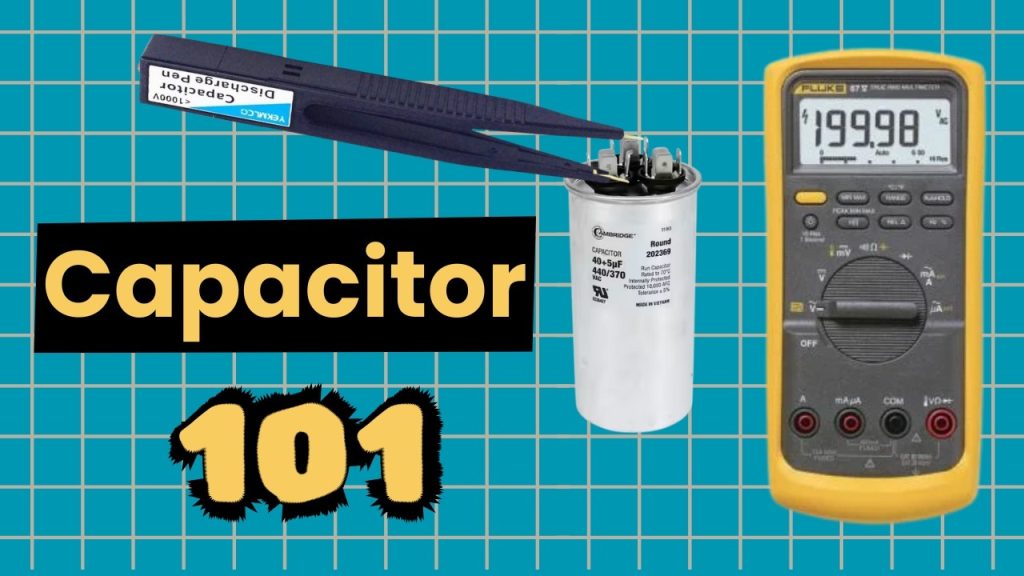
Is your air conditioner acting up or not cooling like it used to? One common culprit might be a faulty capacitor.
But how do you know if your AC capacitor is the problem? You don’t need to call a technician right away or spend money on unnecessary repairs. With a simple tool you probably already have—a multimeter—you can check your AC capacitor yourself.
In this guide, you’ll learn step-by-step how to test your air conditioner capacitor quickly and safely. Keep reading, and you’ll gain the confidence to troubleshoot your AC like a pro and save time and money on repairs.

Credit: www.youtube.com
Tools Needed
Choose a digital multimeterwith a capacitance setting. This setting measures the capacitor’s ability to store charge. Avoid simple multimeters without this feature.
Look for a multimeter that shows results in microfarads (µF). It helps to match the capacitor’s rating. A clear screen and easy buttons make testing simpler.
- Wear safety glassesto protect your eyes from sparks.
- Use insulated gloves to avoid electric shock.
- Make sure the power is off before handling the capacitor.
- Work in a dry area to reduce risk.
Preparing The Air Conditioner
Before checking the air conditioner capacitor, ensure the power is turned off. Unplug the unit or switch off the circuit breaker. This step is important for safetyto avoid electric shock.
Locate the capacitor inside the air conditioner by removing the service panel. The capacitor is usually a small, cylindrical or oval-shaped part with two or three terminals. Sometimes, it is near the compressor or fan motor.
Handle the capacitor carefully. It may still hold some electrical charge even after power is off. Discharge it safely by using a screwdriver with an insulated handle to connect the terminals together.
Identifying The Capacitor
Capacitors in air conditioners store and release electrical energy. They help the motor start and run smoothly. Two main typesappear in AC units:
- Start capacitorsgive a quick boost to start the motor.
- Run capacitorskeep the motor running efficiently.
Capacitors look like small cans or cylinders. They often have wires or terminals on top.
| Label | Meaning |
|---|---|
| µF (microfarads) | Capacitance value; shows how much charge it stores |
| V (voltage) | Maximum voltage it can handle |
| Temp rating | Safe operating temperature |
| Brand and model | Manufacturer details |
Reading these labels helps pick the right capacitor for replacement or testing.

Credit: reversepcb.com
Setting Up The Multimeter
Choose the multimeter modefor measuring capacitance. This mode often shows a symbol like “—|(—” or “CAP.” Some multimeters may need a dial turn. Ensure the device is off before switching modes.
Calibrate the multimeter to get accurate readings. This usually means touching the test leads together and adjusting the device to zero. This step removes any small charge from the leads.
- Use fresh batteries in the multimeter for best results.
- Check that the test leads are not damaged or frayed.
- Keep the leads clean and dry to avoid false readings.
Testing The Capacitor
Set your multimeter to the capacitance mode to measure the capacitor. Disconnect power and discharge the capacitor first. Connect the multimeter probes to the capacitor terminals. The multimeter will show the capacitance value in microfarads (µF). Compare this value with the capacitor’s rated value printed on its body. A large difference means the capacitor may be faulty.
Switch the multimeter to continuity mode to check for shorts. Place the probes on the capacitor terminals again. No beep or continuity signal means the capacitor is not shorted. A beep or low resistance reading shows a short circuit, indicating a bad capacitor.
| Multimeter Reading | What It Means |
|---|---|
| Capacitance close to rated value | Capacitor is likely good |
| Capacitance much lower or zero | Capacitor is bad or dead |
| Continuity beep or low resistance | Capacitor is shorted and bad |
| No continuity beep | Capacitor is not shorted, possibly good |
Troubleshooting Tips
Common issues with air conditioner capacitors include failure to startthe motor, humming sounds, or the unit running slowly. A bad capacitor can cause the AC to overheator stop workingentirely. Signs like bulgingor leaking fluidon the capacitor body also indicate a problem.
Knowing when to replace the capacitor is key. Replace it if the multimeter shows a reading outside the normal range. Also, change it if the AC won’t turn onor starts and stopsfrequently. Capacitors usually last a few years but may wear out sooner in hot climates.
Safety Precautions
Before testing, discharge the capacitorto avoid electric shocks. Use a screwdriver with an insulated handle. Place it across the capacitor terminals carefully. This releases stored energy safely.
Always wear safety gloves and goggles. They protect you from sparks or accidental shocks. Keep the work area dry and clear of clutter. Never touch capacitor terminals with bare hands.
- Turn off the AC power supply before working.
- Use a multimeter with proper settings for capacitor testing.
- Double-check that the capacitor is fully discharged.
- Handle the capacitor gently to avoid damage.

Credit: www.youtube.com
Frequently Asked Questions
How Do I Test An Ac Capacitor With A Multimeter?
To test an AC capacitor, set your multimeter to capacitance mode. Disconnect the capacitor and discharge it first. Then, connect the probes to the capacitor terminals. A reading close to the rated capacitance means it’s good; a low or no reading indicates failure.
What Safety Precautions Are Needed Before Testing Capacitors?
Always turn off and unplug the air conditioner before testing. Discharge the capacitor fully using a resistor or insulated screwdriver. Wear insulated gloves and avoid touching terminals directly to prevent electric shocks or damage.
Can A Multimeter Detect A Faulty Ac Capacitor?
Yes, a multimeter can identify a faulty capacitor by measuring capacitance. If the reading is significantly lower or shows open circuit, the capacitor is likely defective and needs replacement.
What Capacitance Value Should I Expect On The Meter?
The capacitance value should match the capacitor’s rating, usually printed on its label. Values within 6-10% of the rated capacitance are acceptable. Significant deviations indicate a failing or failed capacitor.
Conclusion
Checking an air conditioner capacitor with a multimeter saves time and money. It helps find problems early before they get worse. Always follow safety steps to avoid accidents. A working capacitor keeps your AC running smoothly and cool. Regular checks keep your system in good shape longer.
Simple tools and clear steps make this task easy. Try it yourself and keep your home comfortable all year.