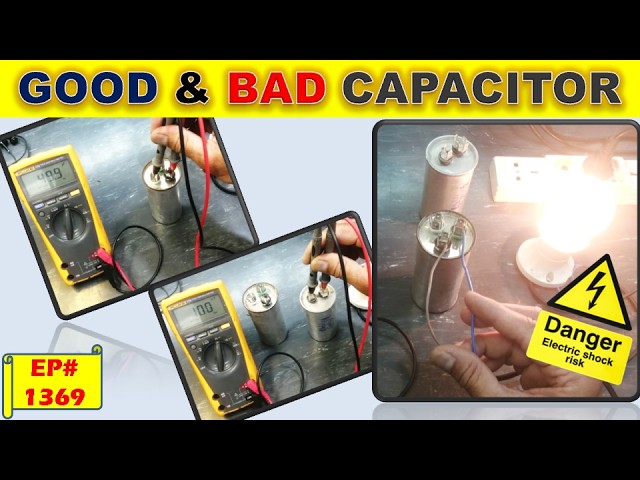
Is your air conditioner acting up or not cooling like it used to? One common culprit could be a faulty capacitor.
But how do you know for sure? You don’t need to be an expert or call a technician right away. By using a simple tool called a multimeter, you can check your air conditioner capacitor yourself—quickly and safely. In this guide, you’ll learn step-by-step how to test your capacitor and understand the results, saving you time and money.
Ready to take control of your AC repair? Let’s dive in.
Tools Needed
A good multimetershould measure capacitance and voltage. Digital multimeters with a capacitance setting work best. Check the multimeter’s range; it should cover the capacitor’s rating.
Use insulated gloves and safety glasses. Capacitors can hold a charge even when unplugged. Always discharge the capacitor before testing to avoid shocks.
- Multimeter with capacitance measurement
- Insulated gloves
- Safety glasses
- Screwdriver to access capacitor

Credit: www.youtube.com
Locating The Capacitor
Access the outdoor AC unitby turning off the power first. Remove the metal panel or cover carefully. This exposes the internal parts, including the capacitor. Always use safety glovesand tools to avoid electric shocks.
The capacitor is usually a small, round, or oval-shaped component. It has two or three terminalson top. The common types are:
- Run capacitor:Helps the compressor and fan run smoothly.
- Start capacitor:Provides extra power to start the compressor.
- Dual run capacitor:Combines run capacitor functions for fan and compressor.
Preparing For Testing
Before testing, turn off the powerto the air conditioner. This step is very importantto avoid shocks. Next, discharge the capacitorby touching its terminals with an insulated screwdriver. This removes any stored electricity.
Set the multimeter to the capacitance settingor use the ohm setting if capacitance is unavailable. Connect the multimeter leads to the capacitor terminals. Make sure the leads are firmly attachedand do not touch each other.

Credit: www.youtube.com
Testing The Capacitor
Set your multimeter to the capacitance measurement mode. Remove power from the air conditioner before testing. Discharge the capacitor by touching its terminals with a screwdriver. Connect the multimeter probes to the capacitor terminals. The meter will show the capacitance value in microfarads (µF). Compare this value with the number printed on the capacitor. A close match means the capacitor is good. A much lower or zero reading means the capacitor is bad and needs replacement.
Check the multimeter display carefully. Readings outside the capacitor’s rated range suggest failure. Fluctuating or no readings also indicate a problem. Always test with the capacitor removed for accurate results. Use safety gear to avoid electric shock.
Troubleshooting Results
Signs of a faulty capacitorinclude a humming noise from the AC unit. The fan may not start or runs slowly. The air conditioner might stop cooling properly. Sometimes, the unit trips the circuit breaker. A bulging or leaking capacitor casing is a clear sign. Using a multimeter can confirm if the capacitor is bad.
Next steps after testingdepend on the test results. If the multimeter shows a low or zero reading, the capacitor is likely defective. Replace the capacitor with one of the same rating. Always turn off power before handling the capacitor. If readings are normal, check other parts like the compressor or fan motor. Regular maintenance helps avoid future capacitor issues.
Replacing The Capacitor
Testing an air conditioner capacitor with a multimeter helps find if it is faulty. Disconnect power, set the multimeter to capacitance mode, and measure the capacitor’s value. Replace the capacitor if the reading is outside the recommended range.
Selecting A Replacement
Choose a capacitor with the same microfarad (µF) ratingas the old one. Check the voltage ratingto match or exceed the original. Look for the same physical sizeto fit the unit properly. Use a reputable brandfor better durability and safety. Avoid cheap or unknown brands to prevent failures.
Installation Tips
- Turn off all powerto the air conditioner before starting.
- Discharge the old capacitor carefully to avoid shocks.
- Use a multimeterto check the new capacitor before installing.
- Connect wires to the correct terminals as marked on the capacitor.
- Secure the capacitor firmly to prevent vibrations and damage.
- Double-check all connections before restoring power.
Preventive Maintenance
Regular inspections keep your air conditioner’s capacitor in good shape. Check it every few months to spot any damage early. Look for swelling, cracks, or leaks on the capacitor’s body. These signs mean it needs replacement.
Use a multimeter to test capacitance and ensure it works right. Testing helps catch problems before they cause bigger damage. Keep the unit clean and dry to avoid short circuits.
Extending the capacitor’s life depends on how well you care for it. Avoid power surges by using surge protectors. Make sure the AC’s electrical connections are tight and clean. This reduces stress on the capacitor.
Keep the area around the capacitor free of dust and moisture. These factors can cause it to fail faster. Regular maintenance saves money and keeps your AC running smoothly.

Credit: reversepcb.com
Frequently Asked Questions
How Do I Know If My Ac Capacitor Is Bad?
A failing capacitor might cause your AC to not start or produce weak airflow. You may also hear a humming sound or notice the AC unit taking longer to start. Testing it with a multimeter is the best way to confirm its condition.
What Are The Symptoms Of A Bad Capacitor?
Symptoms of a bad capacitor include the AC not turning on, weak airflow, or strange noises. The AC may struggle to start or shut off unexpectedly. These signs indicate the need for a capacitor check.
Can I Check An Ac Capacitor Myself?
Yes, you can check an AC capacitor yourself using a multimeter. Ensure the power is off and the capacitor is discharged before testing. Follow safety precautions to avoid electrical hazards and ensure accurate readings.
What Should A Capacitor Read On A Multimeter?
A functional capacitor should show a reading close to its rated capacitance on a multimeter. The reading should match the microfarad (µF) value indicated on the capacitor’s label. A significant deviation from the rating indicates a faulty capacitor.
Conclusion
Checking an air conditioner capacitor with a multimeter is simple and useful. You can save time and money by testing it yourself. Always turn off the power before starting. Use the multimeter to measure the capacitor’s reading carefully. A good reading means your capacitor works well.
A bad reading shows it needs replacement. Regular checks help keep your AC running smoothly. Stay safe and follow the steps closely. This skill helps you understand your AC better and avoid big problems. Try it next time your AC acts up.