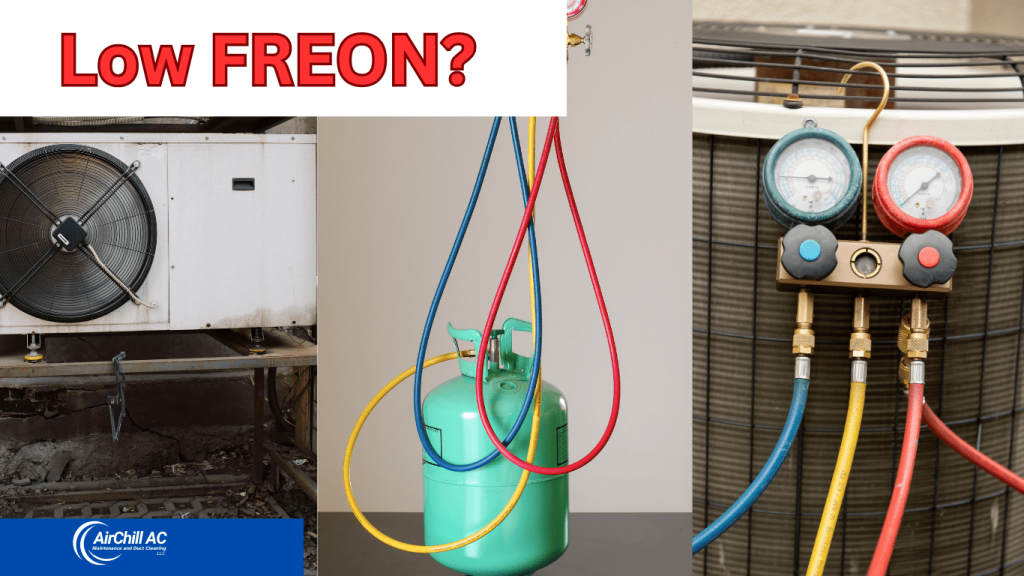
Is your air conditioner not cooling your home like it used to? You might be dealing with low refrigerant, a common issue that can quietly drain your comfort and increase your energy bills.
Knowing how to check for low refrigerant can save you time, money, and hassle. You’ll discover simple signs to watch for and easy steps you can take to identify the problem early. Keep reading to take control of your AC’s performance and keep your space cool all season long.

Credit: morelliair.com
Signs Of Low Refrigerant
Low refrigerant in your air conditioner causes many problems. It stops the system from cooling your home properly.
Knowing the signs helps you find the issue early. This guide shows common signs of low refrigerant.
Reduced Cooling Efficiency
When refrigerant is low, your AC cannot cool the air well. You may feel warm air from the vents even at the coldest setting.
The system runs longer but cools less. This wastes energy and makes your home uncomfortable.
Ice Formation On Coils
Low refrigerant causes the coils to get too cold and form ice. You might see frost or ice on the evaporator coils or refrigerant lines.
- Ice blocks airflow
- Reduces cooling power
- Can damage the system
Hissing Or Bubbling Noises
Leaks in refrigerant lines can cause hissing or bubbling sounds. These noises come from escaping refrigerant or air in the system.
Check these signs carefully:
- Listen near the outdoor unit
- Look for oil spots on pipes
- Notice unusual sounds during operation
Higher Energy Bills
Low refrigerant makes your AC work harder to cool. This raises electricity use and your bills.
| Reason | Effect |
| Low refrigerant level | AC runs longer |
| Longer run time | More electricity used |
| More electricity | Higher monthly bill |
Tools Needed For Checking
Checking the refrigerant level in an air conditioner is important. You need the right tools to do it safely and effectively.
This guide will help you understand what tools are necessary for this task.
Pressure Gauges
Pressure gauges measure the refrigerant pressure in the system. They help you see if the refrigerant levels are too low.
- Connect the gauges to the service ports
- Check the readings on the gauge
- Compare with manufacturer specifications
Thermometer
A thermometer checks the temperature difference across the air conditioner’s coils. It helps identify cooling issues linked to refrigerant levels.
| Location | Temperature |
| Inlet Coil | Measure here first |
| Outlet Coil | Measure here next |
Leak Detector
A leak detector finds leaks in the system. Leaks can cause low refrigerant levels, affecting performance.
Use the leak detector around joints and connections.
Listen for beeps indicating a leak is present.
Step-by-step Check Process
Checking for low refrigerant in an air conditioner is important to keep it running well. You can do this by following a simple process.
This guide will help you find out if your AC has low refrigerant safely and clearly.
Turn Off The Air Conditioner
Start by turning off the air conditioner at the thermostat. This stops the system from running during the check.
Wait a few minutes after turning it off to let the pressure inside settle.
Locate The Service Valves
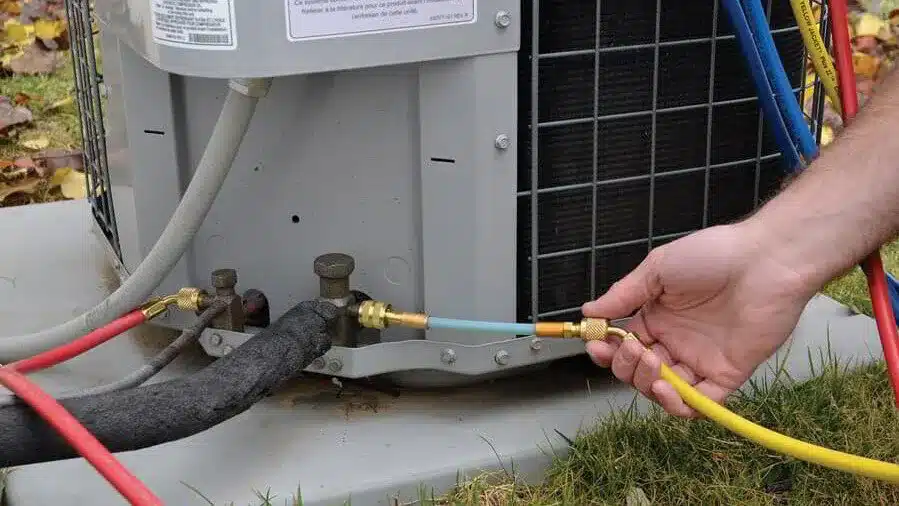
Find the service valves on the outdoor unit. These valves connect to the refrigerant lines.
There are usually two valves: one for the low-pressure side and one for the high-pressure side.
Attach Pressure Gauges
Attach your pressure gauges to the service valves. Make sure they are secure to avoid leaks.
Use a gauge set designed for air conditioners to get accurate readings.
Compare Pressure Readings
Turn on the air conditioner and let it run for a few minutes. Then, check the pressure readings on the gauges.
Compare the readings to the normal range for your AC model. Low pressure often means low refrigerant.
| Pressure Side | Normal Pressure Range (PSI) |
|---|---|
| Low Pressure | 25-45 PSI |
| High Pressure | 150-250 PSI |
Check For Visible Leaks
Look closely at the refrigerant lines and connections for any signs of leaks. Oil stains or frost spots can show leaks.
You can also use a leak detector or soapy water to find bubbles that show escaping refrigerant.
Credit: vernonairconditioning.com
When To Call A Professional
Low refrigerant in your air conditioner can cause poor cooling and higher energy bills. You might notice your AC runs longer but does not cool well.
Checking refrigerant levels is not easy for most homeowners. Knowing when to call a professional helps protect your system and safety.
Handling Refrigerant Safely
Refrigerants are chemicals that can harm people and the environment. A professional has the right tools and training to handle them safely.
Trying to fix refrigerant problems yourself can cause leaks or injury. It is best to let experts manage refrigerant checks and refills.
Complex Repairs
Low refrigerant often means there is a leak or damage to the AC system. Fixing these issues needs special tools and skills.
A professional can find leaks, repair parts, and recharge refrigerant correctly. Complex repairs should not be done without proper training.
Legal Regulations
Many countries have laws about handling refrigerants. These rules protect the environment and people’s health.
Only licensed technicians can buy and use refrigerants legally. Calling a professional ensures your AC service follows the law.
Preventing Low Refrigerant Issues
Low refrigerant in your air conditioner can cause poor cooling. It may also increase energy bills and damage the system.
Preventing low refrigerant starts with simple care and checks. Follow these tips to keep your AC running well.
Regular Maintenance
Check your air conditioner regularly to avoid refrigerant loss. Clean or replace filters monthly to keep airflow strong.
- Inspect coils for dirt and clean them
- Clear debris around the outdoor unit
- Schedule professional tune-ups yearly
- Listen for unusual noises or leaks
Seal Air Leaks
Air leaks can reduce AC efficiency and cause the system to work harder. This can lead to refrigerant problems.
| Location | Action to Seal |
| Windows and doors | Use weatherstripping or caulk |
| Ductwork joints | Apply mastic or foil tape |
| Pipe openings | Seal gaps with foam insulation |
Timely Repairs
Fix problems quickly to stop refrigerant leaks. Ignoring small issues can cause bigger damage.
- AC blows warm air
- Ice forms on coils
- Unusual hissing sound
- High electricity bills

Credit: www.lochardplumbingheatingandcooling.com
Frequently Asked Questions
How Do I Know If My Ac Refrigerant Is Low?
Low refrigerant causes weak cooling, ice buildup, and longer run times. Check for warm air and hissing sounds near the unit. These signs often indicate low refrigerant levels needing professional inspection.
Can Low Refrigerant Damage My Air Conditioner?
Yes, low refrigerant can harm your AC. It causes the compressor to overheat and may lead to system failure. Promptly addressing low refrigerant prevents costly repairs and extends your AC’s lifespan.
Why Is My Air Conditioner Freezing Up?
Freezing happens when refrigerant levels drop, reducing pressure and temperature. This causes ice to form on coils. Low refrigerant restricts airflow, leading to frozen components and poor cooling performance.
How Often Should Refrigerant Levels Be Checked?
Check refrigerant levels annually during routine AC maintenance. Regular checks ensure efficient cooling and catch leaks early. Professionals can top off refrigerant and maintain optimal system performance.
Conclusion
Checking for low refrigerant in your air conditioner helps keep it working well. Watch for signs like weak cooling or strange noises. A quick test can save you money and stress. Call a professional if you find any problems. Regular care keeps your AC cool and efficient.
Small steps now prevent big issues later. Stay comfortable and avoid costly repairs. Easy to do and worth the effort. Your AC will thank you.