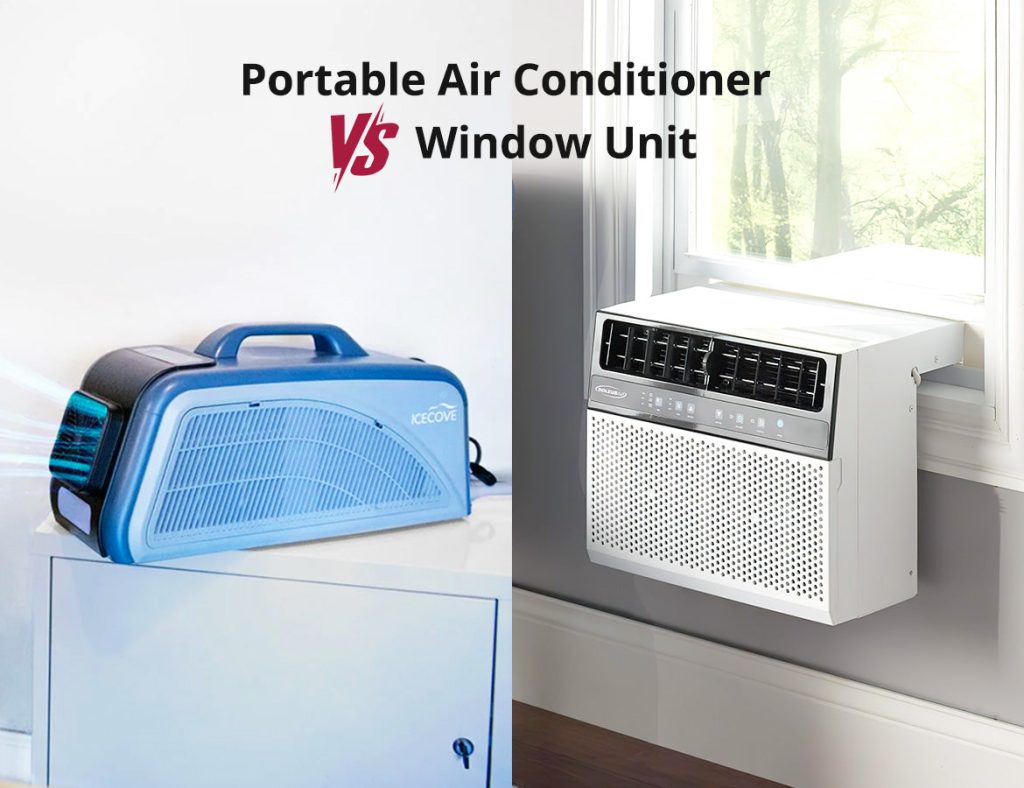
Choosing the right air conditioner can make all the difference in your comfort during hot days. But how do you decide between a portable unit and a window air conditioner?
You want something that fits your space, cools efficiently, and suits your lifestyle. Making the wrong choice can lead to wasted money and frustration. You’ll discover clear, simple tips to help you pick the perfect air conditioner for your needs.
Keep reading to find out what will work best for you and your home.
Types Of Air Conditioners
Choosing the right air conditioner can make your room comfortable. There are different types to fit your needs. Two popular choices are portable and window air conditioners.
Each type has its features, benefits, and limits. Understanding these will help you pick the best one for your space.
Portable Air Conditioners
Portable air conditioners are easy to move from room to room. They do not need permanent installation. These units come with a hose to vent hot air outside through a window or wall.
- Can cool different rooms as needed
- Simple setup with no major changes to your home
- Usually smaller and less powerful than window units
- Requires venting for hot air
- Can be noisy depending on the model
Window Air Conditioners
Window air conditioners fit into a window frame. They cool a single room by pushing hot air outside. These units are fixed in one place until removed.
| Feature | Advantages | Considerations |
|---|---|---|
| Installation | Secure and stable in window | Requires proper window size and support |
| Cooling Power | Often more powerful than portable units | Limited to one room or area |
| Energy Use | Usually more energy efficient | May block window light and view |
| Noise | Generally quieter inside the room | Noise outside may be noticeable |
Cooling Capacity And Room Size
Choosing the right air conditioner depends on the size of your room. Cooling capacity must match the room size for best results.
If the unit is too small, it won’t cool properly. If it is too big, it wastes energy and costs more.
Measuring Room Dimensions
Measure the length and width of your room to find its area. This helps you pick an air conditioner with the right power.
Use a tape measure or ruler. Multiply the length by the width to get square feet. For example, 10 feet by 12 feet equals 120 square feet.
- Measure length from wall to wall
- Measure width from wall to wall
- Multiply length × width for area (square feet)
Btu Ratings Explained
BTU stands for British Thermal Unit. It shows how much heat an air conditioner can remove per hour.
Higher BTU means more cooling power. Match the BTU rating to your room size for good comfort and energy use.
| Room Size (sq ft) | Recommended BTU |
|---|---|
| 100 – 150 | 5,000 |
| 150 – 250 | 6,000 – 8,000 |
| 250 – 350 | 8,000 – 10,000 |
| 350 – 450 | 10,000 – 12,000 |
Installation And Space Requirements
Choosing between a portable or window air conditioner depends on your space and installation needs. Each type has different setup steps and room requirements.
Understanding these details helps you pick the best air conditioner for your home or office.
Setting Up Portable Units
Portable air conditioners do not need permanent installation. You can move them from room to room. They require a window or wall opening for the exhaust hose.
- Place the unit near a window and power outlet.
- Use the exhaust hose to vent hot air outside through the window.
- Ensure the hose is as straight as possible to improve airflow.
- Leave at least 20 inches of clearance around the unit for air circulation.
- Check that the window opening fits the hose adapter correctly.
Installing Window Units
Window air conditioners need to be mounted in a window frame. They require a secure fit to hold the unit safely and seal the space around it.
| Requirement | Details |
| Window Size | Must fit the air conditioner width and height |
| Window Type | Double-hung or sliding windows work best |
| Weight Support | Window frame must hold the unit’s weight safely |
| Sealing | Use weather stripping or foam to block air leaks |
| Electrical Outlet | Close enough to plug in without extension cords |
Energy Efficiency And Operating Costs
Choosing the right air conditioner affects your electricity bill. Portable and window units vary in energy use. Understanding efficiency helps save money.
Look at energy ratings and power use. These details show how much energy the unit consumes. Lower use means lower costs over time.
Energy Star Ratings
Energy Star is a label for efficient appliances. Air conditioners with this rating use less electricity. They help reduce your power bills and carbon footprint.
- Look for the Energy Star label on the unit.
- Certified models meet strict energy-saving standards.
- They cool rooms effectively with less power.
- Energy Star units may cost more upfront but save money later.
Comparing Power Consumption
Power consumption varies by model and size. Check the wattage and cooling capacity to compare units. Lower wattage means less power used.
| Unit Type | Average Power Use (Watts) | Cooling Capacity (BTU) | Estimated Monthly Cost |
|---|---|---|---|
| Portable Air Conditioner | 900 | 10,000 | $30 |
| Window Air Conditioner | 800 | 10,000 | $27 |
Estimated cost based on 8 hours daily use and $0.12 per kWh electricity rate.
Noise Levels And Comfort
Choosing between a portable or a window air conditioner depends on many factors. Noise levels and comfort are important to consider. A quiet unit helps you relax and sleep better.
Understanding decibel ratings and how noise affects living spaces can guide your decision. This helps ensure your room stays cool and peaceful.
Decibel Ratings
Decibel (dB) ratings show how loud an air conditioner is. Lower dB means quieter operation. Portable units usually range from 50 to 60 dB. Window units can be slightly louder, around 55 to 65 dB.
- Below 50 dB is very quiet, like a soft whisper.
- 50 to 60 dB is moderate noise, similar to normal conversation.
- Above 60 dB can disturb some people, like background music.
Impact On Living Spaces
| Type | Average Noise Level (dB) | Comfort Effect |
| Portable Air Conditioner | 50 – 60 | Good for bedrooms and small rooms |
| Window Air Conditioner | 55 – 65 | Better for larger rooms but can be louder |
Think about where you will use the air conditioner. Portable units suit quiet spaces better. Window units cool larger areas but may cause more noise.

Credit: www.cnet.com
Additional Features To Consider
Choosing a portable or window air conditioner means looking beyond cooling power. Some added features can improve your comfort and save energy. Think about how you will use the unit daily.
Extra features help with ease of use, air quality, and humidity control. These can make a big difference in your experience with the air conditioner.
Remote Controls And Timers
Remote controls let you change settings without getting up. Timers allow you to set the air conditioner to turn on or off at specific times. These features add convenience and help save energy.
- Remote control for easy temperature adjustment
- Timer to schedule cooling periods
- Sleep mode timers for quiet, energy-saving nights
- Auto restart after power outages
Air Filters And Dehumidifiers
Air filters improve the air quality by trapping dust and allergens. Dehumidifiers reduce moisture in the air, helping to prevent mold and mildew. Some air conditioners combine both features.
| Feature | Benefit |
| Removable Air Filter | Easy to clean and maintain |
| HEPA Filter | Captures small allergens and dust |
| Built-in Dehumidifier | Reduces humidity for better comfort |
| Continuous Drain Option | Allows moisture to drain without emptying a tank |
Budget And Price Comparison
Choosing between a portable and a window air conditioner depends on your budget. Understanding the costs helps you pick the best option.
This guide looks at the main expenses for each type. It focuses on initial costs and maintenance expenses.
Initial Costs
Window air conditioners usually cost less upfront. They need a proper window for installation. Portable units often cost more but need no window setup.
Prices vary by size and cooling power. Portable units can be pricier because of their design and mobility.
| Type | Price Range (USD) | Installation Needs |
|---|---|---|
| Window Air Conditioner | $150 – $400 | Window mounting required |
| Portable Air Conditioner | $300 – $600 | No permanent installation |
Maintenance Expenses
Window air conditioners need regular cleaning of filters and coils. They are easier to maintain but may need occasional repairs.
Portable units require cleaning and emptying the water tank. Their hoses can need replacement over time.
- Window AC filters should be cleaned monthly
- Portable AC water tanks need frequent emptying
- Both types may need professional servicing yearly
- Hoses on portable units might wear out faster

Credit: www.cnet.com
Pros And Cons Summary
Choosing between a portable air conditioner and a window air conditioner depends on your needs. Each type has its own benefits and drawbacks. This summary helps you understand the main points.
Knowing the advantages of each can guide you to the right choice. Consider space, ease of installation, and cooling power before deciding.
Advantages Of Portable Acs
Portable air conditioners are easy to move and install. They do not require permanent mounting or window space. These units suit renters or people who need flexible cooling.
- Can be moved from room to room
- No need for window installation
- Good for spaces without suitable windows
- Easy to store during cold months
- Works well in rooms with multiple windows
Advantages Of Window Acs
Window air conditioners cool rooms efficiently and usually use less energy. They install directly into a window frame and do not take floor space.
| Feature | Window AC | Portable AC |
|---|---|---|
| Energy Efficiency | Higher | Lower |
| Installation | Requires window mounting | No window needed |
| Mobility | Fixed in one spot | Can be moved easily |
| Space Usage | Does not use floor space | Uses floor space |
| Noise Level | Quieter | Noisier |

Credit: www.popularmechanics.com
Frequently Asked Questions
What Factors To Consider When Choosing An Air Conditioner?
Consider room size, cooling capacity, energy efficiency, and noise level. Also, check installation type and budget before selecting an air conditioner.
Portable Vs Window Ac: Which Is More Energy Efficient?
Window AC units generally use less energy than portable ones. They cool rooms faster and have better energy ratings, saving electricity.
How To Measure Room Size For Ac Cooling?
Measure the room’s length and width in feet. Multiply these numbers to get square footage for selecting the right AC size.
Can Portable Acs Work In All Room Types?
Portable ACs work best in small to medium rooms. They are versatile but less efficient in large or poorly insulated spaces.
Conclusion
Choosing the right air conditioner depends on your needs. Consider space and budget. Portable units are flexible and easy to move. Window units cool effectively but need installation. Think about energy efficiency and noise levels too. Both types have pros and cons.
Assess your room size and usage. Also, check the power source available. Make a choice that ensures comfort and convenience. A well-suited air conditioner can improve your home environment. Stay cool and enjoy a comfortable space all year round.