
Choosing the right fishing rod can make all the difference between a frustrating day and an unforgettable catch. You might think all rods are the same, but the truth is, picking the perfect one for your style and needs can boost your success and enjoyment.
Whether you’re new to fishing or looking to upgrade, this guide will help you understand what to look for. Keep reading, and you’ll discover simple tips that make choosing your next fishing rod easy and stress-free. Your best fishing experience starts here.

Credit: blog.shopgoodwill.com
Types Of Fishing Rods
Fishing rods come in many styles. Each type fits different fishing needs and skill levels.
Choosing the right rod helps you catch fish better and enjoy fishing more.
Spinning Rods
Spinning rods are easy to use. They work well for beginners and casual anglers.
The reel hangs below the rod, making it simple to cast light lures or bait.
Casting Rods
Casting rods offer more accuracy and power. They suit experienced anglers targeting bigger fish.
- Reel sits on top of the rod
- Better for heavy lures and lines
- Requires more skill to cast well
Fly Rods
Fly rods are unique. They use special lines to cast very light flies.
| Feature | Description |
| Length | Usually 7 to 9 feet |
| Flexibility | Very flexible to cast flies |
| Use | Best for trout and freshwater fish |
Telescopic Rods
Telescopic rods fold down for easy transport. They are good for travel and hiking.
Advantages of telescopic rods:
- Compact and portable
- Quick to set up
- Works in many fishing spots
Materials And Construction
Fishing rods are made from different materials, each with unique qualities. Understanding these materials helps you choose the best rod for your needs.
Consider the advantages and disadvantages of each material type. This ensures you select a rod that suits your fishing style and environment.
Graphite Rods
Graphite rods are known for their light weight and sensitivity. They allow anglers to feel even the slightest nibble on the line.
- Lightweight design reduces arm fatigue
- High sensitivity for detecting fish bites
- Can be more brittle than other materials
Fiberglass Rods
Fiberglass rods are durable and flexible. They are great for beginners due to their forgiving nature.
| Feature | Description |
| Durability | Resistant to breaking |
| Flexibility | Handles large fish well |
| Weight | Heavier than graphite |
Composite Rods
Composite rods combine materials to offer benefits of both graphite and fiberglass. They provide a balance of sensitivity and strength.
These rods are versatile and can be used in various fishing conditions.
Rod Length And Power
Choosing the right fishing rod is important for a good fishing experience. Two key factors are rod length and power. These affect how you cast and control the fish.
Understanding these can help you pick a rod that fits your fishing style and target fish. Let’s explore rod length and power in detail.
Choosing The Right Length
Rod length affects casting distance and control. Longer rods cast farther but are harder to control. Shorter rods give better control but shorter casts.
Use longer rods for open water and longer casts. Choose shorter rods for fishing in tight spaces like rivers or near trees.
- Short rods: 5 to 6 feet – good for close, precise casting
- Medium rods: 6 to 7 feet – versatile for most fishing types
- Long rods: 7 feet and above – best for long casts and open water
Understanding Rod Power
Rod power means how much force the rod can handle. It shows the strength and stiffness of the rod. Power ranges from ultra-light to heavy.
Light power rods bend easily and are for small fish. Heavy power rods are stiff and handle big fish and heavy baits.
- Ultra-light: for very small fish and light lures
- Light: for small fish and finesse fishing
- Medium: for average fish and general use
- Heavy: for big fish and strong baits
- Extra heavy: for the largest fish and toughest conditions
Matching Power To Fish Type
Match rod power to the size and strength of the fish you want to catch. Using the right power helps control the fish without breaking the rod.
Light power rods work well for small fish like trout. Heavy power rods are good for big fish like bass or pike.
| Fish Type | Recommended Rod Power |
|---|---|
| Small fish (trout, panfish) | Ultra-light to Light |
| Medium fish (bass, walleye) | Light to Medium |
| Large fish (pike, catfish) | Medium to Heavy |
| Very large fish (musky, saltwater) | Heavy to Extra Heavy |

Credit: fishingbooker.com
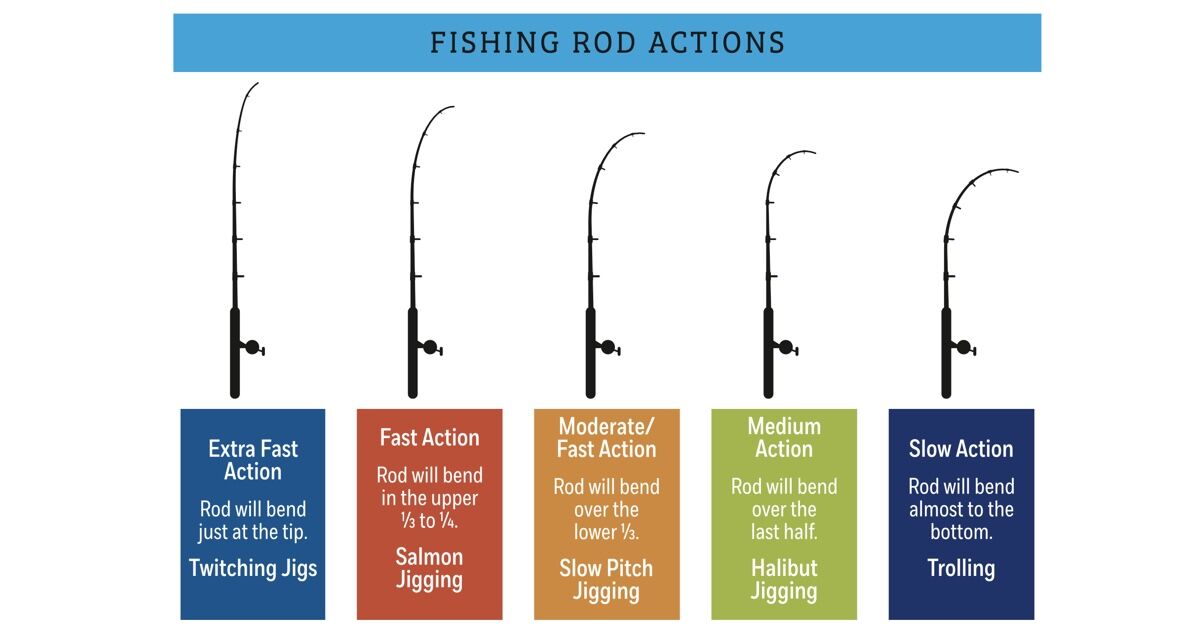
Action And Flexibility
Choosing the right fishing rod depends on action and flexibility. These features affect how the rod bends and performs.
Understanding rod action helps you pick one that fits your fishing style and target fish.
Fast Action Rods
Fast action rods bend mostly near the tip. They offer quick hook sets and high sensitivity. These rods are great for fishing with lures that need sharp, fast movements.
- Bends in the top 20% of the rod
- Best for single-hook lures
- Good for deep water fishing
- Offers strong hook setting power
Medium Action Rods
Medium action rods bend from the tip to the middle. They provide good control and power. These rods work well for many fishing types and lure sizes.
| Feature | Details |
| Bend Area | Tip to middle of rod |
| Best Use | Versatile for many lures and fish |
| Power | Balanced control and strength |
| Sensitivity | Moderate |
Slow Action Rods
Slow action rods bend along the entire length. They provide gentle flexibility and smooth casting. These rods help absorb the fight of fish and reduce line breaks.
- Longer casting distance with light bait
- Gentle on fish, reducing hook pull out
- Good for small or shy fish
- Less sensitive but more forgiving
Handle Types And Comfort
Choosing the right fishing rod handle is important for comfort. A good handle helps you fish longer without pain.
Different handle types offer different grips and feels. You should pick a handle that fits your hand well.
Cork Handles
Cork handles are popular because they feel soft and warm. They give a natural grip even when wet.
Cork is lightweight and helps reduce fatigue. It also looks classic and lasts a long time if cared for.
Eva Foam Handles
EVA foam handles are made from soft, dense foam. They provide a firm grip and are easy to clean.
These handles are durable and resist damage from water and sun. They are good for fishing in rough conditions.
Handle Length Considerations
Handle length affects control and comfort. Short handles work well for close fishing.
Long handles give more leverage for casting far or fighting big fish. Pick a length that feels balanced.
- Short handles: Better for accuracy and quick moves
- Long handles: Help with power and longer casts
- Medium handles: Offer a mix of control and power
Reel Compatibility
Choosing the right fishing rod means picking one that works well with your reel. The reel and rod must match for the best fishing experience.
Reel compatibility affects casting, control, and comfort. Understanding different reel types and sizes helps you select the best rod.
Spinning Vs. Baitcasting Reels
Spinning reels hang below the rod and are easy to use. Baitcasting reels sit on top and offer more control for heavier lines.
- Spinning reelswork well with lighter rods and lines.
- Baitcasting reelssuit stronger rods for bigger fish.
- Spinning rods have larger guides to fit the line from the reel.
- Baitcasting rods have smaller guides for better line control.
Matching Reel Size To Rod
| Reel Size | Rod Length | Rod Power | Recommended Use |
|---|---|---|---|
| 1000-2500 (Spinning) | 5-7 feet | Light to Medium | Small fish, light lures |
| 3000-4000 (Spinning) | 6-7 feet | Medium | Medium fish, versatile use |
| 100-200 (Baitcasting) | 6-7 feet | Medium to Heavy | Large fish, heavy lures |
| 300-400 (Baitcasting) | 7+ feet | Heavy | Big fish, heavy lines |
Match the reel size with the rod’s length and power. This balance helps you cast better and handle fish well.
Budget And Brand Choices
Choosing the right fishing rod means thinking about your budget. Knowing how much to spend helps narrow options. Picking a good brand also ensures quality and durability.
Both budget and brand affect your fishing experience. This guide breaks down affordable rods, premium brands, and what to expect from warranties.
Affordable Options
Affordable fishing rods suit beginners and casual fishers. They offer good value without high costs. These rods often come with basic features but can handle regular fishing well.
- Look for rods made of fiberglass or composite materials.
- Check user reviews to find reliable budget models.
- Consider rods with simple reel seats and handles.
- Buy from stores with return policies for testing.
Premium Brands
Premium brands use high-quality materials like carbon fiber. Their rods are lightweight and strong. These rods offer better sensitivity and control.
| Brand | Material | Price Range |
| Brand A | Carbon Fiber | High |
| Brand B | Graphite | Medium to High |
| Brand C | Composite | Medium |
Warranty And Customer Support
A strong warranty protects your purchase. Look for brands that offer clear warranty terms. Good customer support helps with repairs and questions.
- Length of coverage (usually 1-5 years)
- What parts are covered (blank, guides, reel seat)
- Conditions that void the warranty
- How to submit a claim or request support
Credit: islandfishermanmagazine.com
Tips For Testing Rods
Choosing the right fishing rod is key to enjoying your fishing trips. Testing rods before buying helps you find one that fits your style and needs.
Try different rods by focusing on how they bend, feel, and balance in your hand. This guide helps you check these important features.
Flex Test
Check how the rod bends by applying gentle pressure. A good rod should flex smoothly without feeling too stiff or too soft. This affects casting and fighting fish.
- Hold the rod tip and push down slowly.
- Watch how evenly the rod bends along its length.
- Feel if the resistance suits your fishing style.
Weight And Balance
Test the rod’s weight by holding it as you would while fishing. A balanced rod feels comfortable and does not tire your arm quickly.
| Weight | Balance | Comfort Level |
| Light | Well balanced | Easy to hold for long time |
| Heavy | Top-heavy | Tiring and hard to control |
| Medium | Even balance | Good for general use |
Grip And Feel
Hold the rod handle to check the grip. It should feel secure and comfortable, even when wet. The handle material and size matter a lot.
Here are key points to try:
- Check if the handle fits your hand size.
- Feel the texture to avoid slipping.
- Test different materials like cork or foam.
Frequently Asked Questions
What Length Fishing Rod Should I Choose?
Choose a rod length based on fishing style and location. Short rods (5-6 feet) are best for close, precise casting. Longer rods (7-9 feet) suit long-distance casting and larger waters. Match rod length to your comfort and target species for optimal results.
Which Fishing Rod Material Is Best For Durability?
Graphite rods are lightweight and sensitive, ideal for precision. Fiberglass rods offer durability and flexibility, perfect for beginners. Composite rods combine both materials for balanced strength and sensitivity. Choose based on your fishing needs and budget for best durability.
How To Select The Right Rod Power For Fishing?
Rod power indicates strength and lifting capability. Light power suits small fish and finesse techniques. Medium power fits most freshwater fish and versatile use. Heavy power handles large, strong fish and heavy lures. Match rod power to your target fish size.
What Action Type Should My Fishing Rod Have?
Rod action describes how much and where the rod bends. Fast action bends near the tip for quick hook sets. Medium action bends in the middle for versatility. Slow action bends throughout for better lure control. Choose action based on fishing technique and fish type.
Conclusion
Choosing the right fishing rod makes a big difference. Think about the type of fish you want to catch. Consider the rod’s length, power, and action. Match your rod to your fishing style and location. Testing a few rods can help you decide.
A good rod feels comfortable and suits your needs. Take your time and enjoy the process. Happy fishing!