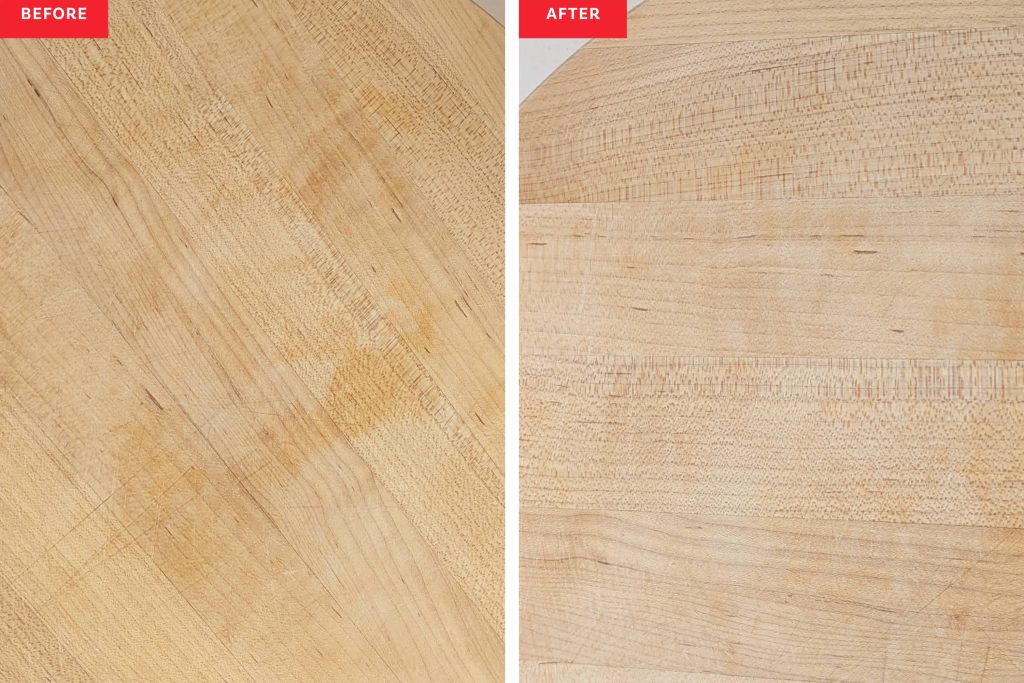
Have you ever noticed stubborn stains on your cutting board that just won’t go away? These marks not only make your kitchen look messy but can also harbor bacteria, putting your health at risk.
Cleaning a stained cutting board might seem tricky, but with the right steps, you can restore it to its original shine quickly and safely. Keep reading, and you’ll discover simple, effective methods that anyone can follow to keep your cutting board fresh and spotless every time.
Credit: www.thekitchn.com
Choosing The Right Cleaning Tools
Cleaning a stained cutting board needs the right tools to work well. Using the correct brushes and cleaners helps remove stains and germs.
Choosing the best tools makes your cutting board safe and ready for your next use.
Types Of Brushes And Scrubbers
Different brushes and scrubbers work best for various stains and board materials. Soft brushes clean wood without damage. Hard scrubbers suit plastic boards for tough stains.
- Soft-bristle brushes: Gentle on wood, remove dirt well
- Nylon scrubbers: Good for plastic, remove stuck particles
- Sponges with rough sides: Clean and scrub stains easily
- Steel wool: Use only on plastic, avoid wood as it can scratch
Best Cleaning Agents For Cutting Boards
Using the right cleaning agents keeps your board clean and stain-free. Some cleaners work better on wood, others on plastic.
| Cleaning Agent | Best For | Notes |
| White vinegar | All boards | Kills bacteria naturally |
| Baking soda | Wood and plastic | Removes odors and stains |
| Dish soap | Plastic boards | Effective for grease and food |
| Lemon juice | Wood boards | Natural bleaching and fresh scent |
Removing Surface Stains
Cutting boards often get stains from fruits, vegetables, and meats. Removing these stains keeps your board clean and safe to use.
Simple household items can help lift these stains without harsh chemicals. Try these easy methods to refresh your cutting board.
Using Baking Soda And Vinegar
Baking soda and vinegar work well together to remove surface stains. Baking soda scrubs the board, while vinegar disinfects and lifts stains.
- Sprinkle baking soda over the stained area.
- Pour white vinegar slowly on top of the baking soda.
- Let the mixture bubble and sit for five minutes.
- Scrub the area with a sponge or brush.
- Rinse the board with warm water and dry it well.
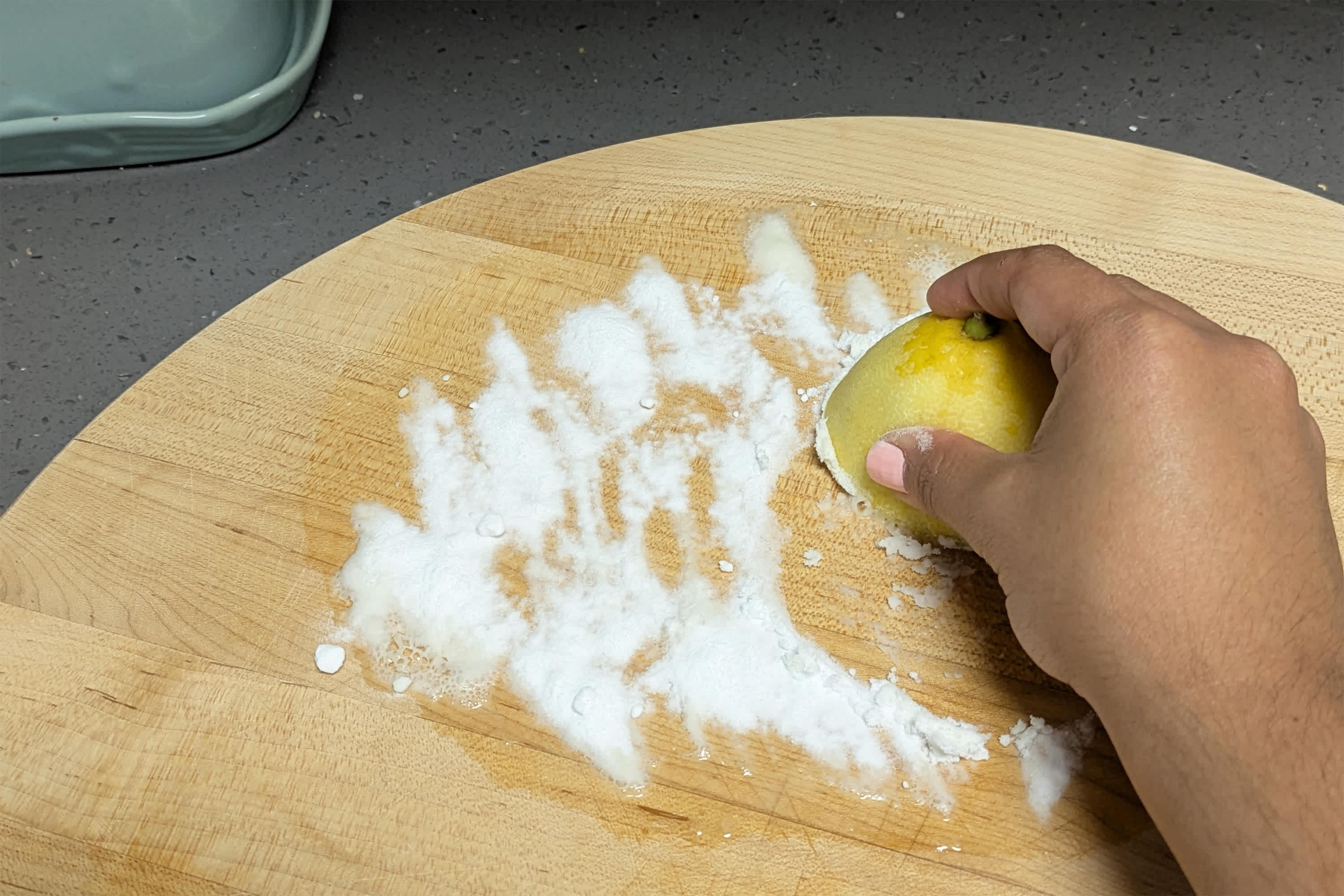
Lemon And Salt Method
Lemon and salt are natural and gentle cleaners. The salt scrubs away stains, and lemon juice brightens the surface.
| Ingredient | Role | How to Use |
|---|---|---|
| Coarse Salt | Scrubs stains | Sprinkle on the board |
| Lemon | Brightens and cleans | Rub lemon over salt-covered board |
| Warm Water | Rinses the board | Wash after scrubbing |
Deep Cleaning Techniques
Cutting boards can get tough stains from food and liquids. Deep cleaning removes these stains and keeps your board safe to use.
Using strong cleaners carefully helps keep your cutting board fresh. This guide explains how to use hydrogen peroxide and bleach safely.
Applying Hydrogen Peroxide
Hydrogen peroxide is good for killing germs and lightening stains. Use it to clean your cutting board deeply without harsh chemicals.
Pour 3% hydrogen peroxide on the stained area. Let it sit for 5 to 10 minutes. Then scrub the board with a brush and rinse well.
- Use only 3% hydrogen peroxide solution
- Apply enough to cover the stain
- Wait 5-10 minutes before scrubbing
- Rinse with warm water after cleaning
Using Bleach Safely
Bleach kills germs well but can damage wood if used too strong. Use a diluted bleach solution to clean plastic or wood cutting boards carefully.
Mix one tablespoon of bleach with one gallon of water. Soak the board for two minutes. Rinse thoroughly and dry completely before use.
- Use a mild bleach solution (1 tbsp bleach per gallon water)
- Do not soak for more than two minutes
- Rinse well with clean water
- Dry the board fully to avoid damage
Deodorizing Your Cutting Board
Cutting boards can hold strong smells after use. Cleaning them well removes stains but not always odors. Deodorizing your cutting board keeps it fresh and ready for your next use.
This guide shows simple ways to remove bad smells with natural ingredients and commercial products.
Natural Deodorizing Ingredients
Many kitchen staples help get rid of odors on cutting boards. These natural ingredients are safe and easy to use. They also clean and brighten your board.
- Baking Soda:Sprinkle baking soda on the board. Let it sit for 10 minutes, then scrub with a damp sponge.
- Lemon:Rub half a lemon over the surface. The acid breaks down smells and leaves a fresh scent.
- White Vinegar:Spray or wipe vinegar on the board. Let it sit for a few minutes before rinsing.
- Salt:Use coarse salt as a scrub with lemon juice. It removes odors and tough stains.
Commercial Deodorizers
Stores sell products made specifically to deodorize cutting boards. These are often designed for quick use and strong odors.
| Product Type | Use | Benefits |
| Cutting Board Cleaner Spray | Spray and wipe | Fast action and easy to use |
| Odor Removing Wipes | Wipe surface | Convenient for quick deodorizing |
| Sanitizing Gel | Apply and let dry | Kills bacteria and removes smells |
Preventing Future Stains
Keeping your cutting board free from stains helps it last longer and stay clean. Simple habits can stop stains before they happen.
Follow these tips to protect your cutting board every day and store it properly to avoid damage and stains.
Regular Maintenance Tips
Clean your cutting board after each use. Use mild soap and warm water. Avoid soaking it in water to stop warping and cracking.
- Wipe the board dry with a clean towel right after washing.
- Apply food-safe mineral oil once a week to keep wood boards sealed.
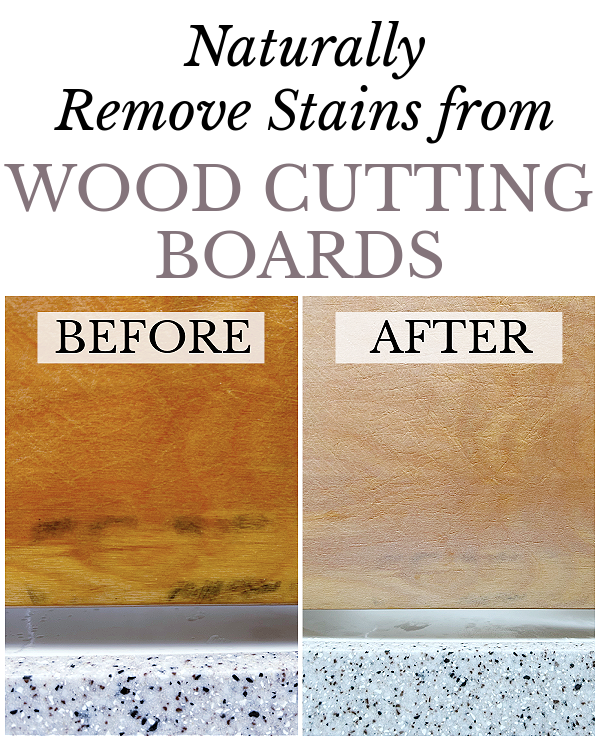
- Use baking soda or lemon juice to remove light stains and odors.
- Do not cut raw meat or strong-colored foods without cleaning the board first.
- Use separate boards for meat and vegetables to avoid stains and cross-contamination.
Proper Storage Practices
Store your cutting board in a dry, well-ventilated place. Avoid stacking heavy items on top of it to prevent warping.
| Storage Tip | Why It Helps |
| Keep upright or on edge | Allows air to circulate and keeps the board dry |
| Store away from direct sunlight | Prevents discoloration and drying out of the board |
| Use a stand or rack | Keeps the board stable and reduces contact with surfaces |
| Do not store near heat sources | Prevents cracking and damage from heat exposure |
Credit: www.lemonslavenderandlaundry.com
Special Care For Different Materials
Cutting boards come in many materials, and each needs special care. Cleaning a stained board requires the right method to avoid damage.
Knowing how to clean wooden, plastic, bamboo, and composite boards helps keep them safe and lasting longer.
Wooden Cutting Boards
Wooden cutting boards absorb moisture and stains easily. Avoid soaking them in water to prevent warping or cracking.
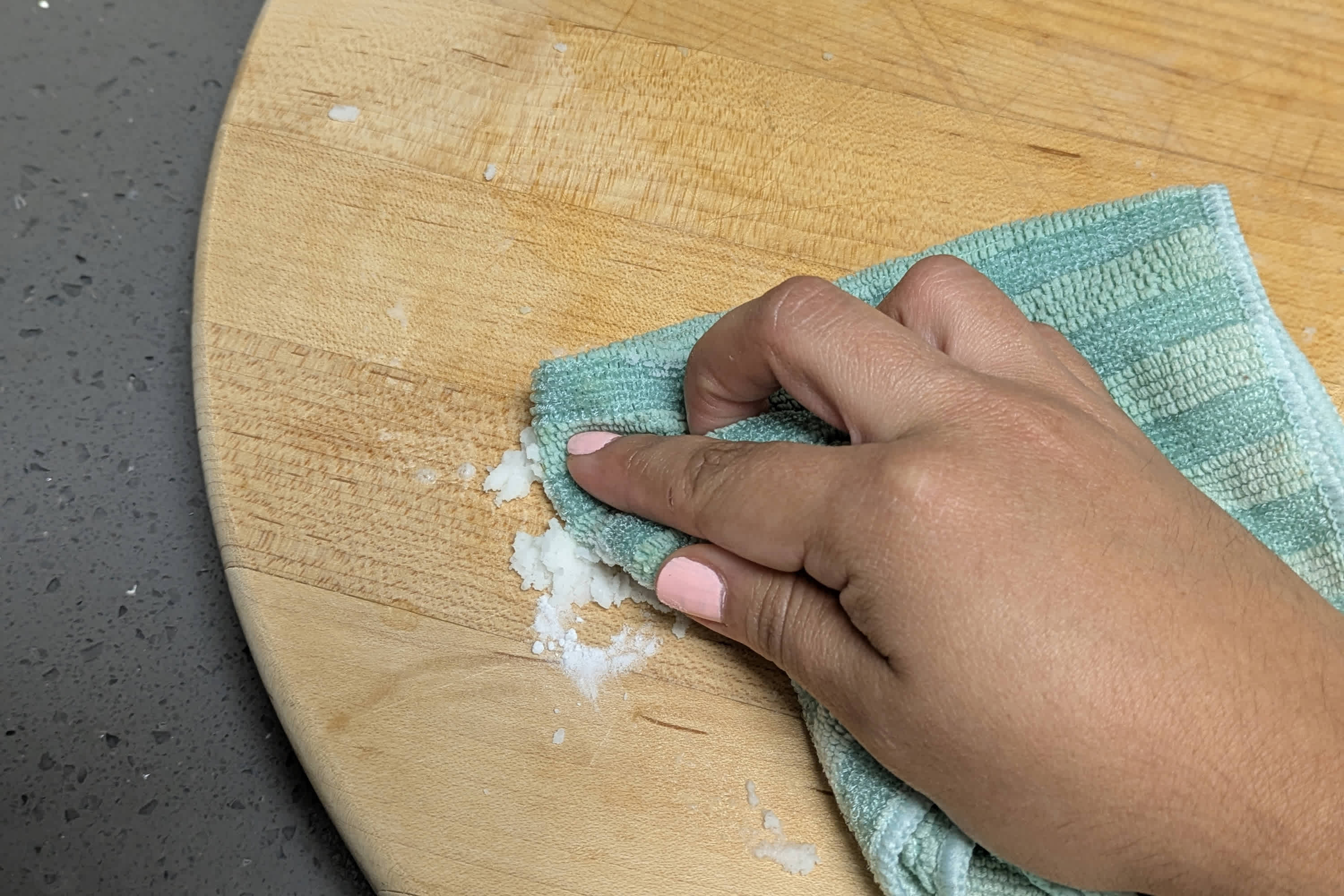
Use coarse salt and lemon to scrub stains gently. Wipe with a damp cloth and dry immediately to keep the board healthy.
- Sprinkle coarse salt on the stain
- Rub with half a lemon in circular motions
- Rinse quickly with warm water
- Dry with a clean towel right away
Plastic Cutting Boards
Plastic boards are easier to clean but can hold stains and odors. Use baking soda or bleach for tough stains.
Scrub stains with baking soda paste or soak in diluted bleach. Rinse well and air dry to avoid mold growth.
- Make a paste with baking soda and water
- Scrub the stained area with a sponge
- Or soak in 1 tablespoon bleach per gallon of water
- Rinse thoroughly and dry in open air
Bamboo And Composite Boards
Bamboo and composite boards are strong but need gentle cleaning. Avoid harsh chemicals that can damage their surface.
Use mild soap and warm water. For stains, scrub lightly with baking soda and rinse well. Dry completely before storing.
- Wash with mild dish soap and warm water
- Scrub stains softly using baking soda
- Rinse thoroughly after cleaning
- Dry fully to prevent moisture damage
Credit: www.thekitchn.com
Frequently Asked Questions
How Do I Remove Stains From A Wooden Cutting Board?
To remove stains, sprinkle coarse salt and rub with lemon juice. Let it sit for 5 minutes, then rinse. Repeat if necessary. This method naturally brightens and disinfects the board without harsh chemicals.
Can Baking Soda Clean A Stained Cutting Board?
Yes, baking soda is effective for cleaning stains. Make a paste with water, apply it to stains, then scrub gently. Rinse thoroughly afterward. Baking soda deodorizes and lifts stains safely on most cutting board materials.
What Household Items Disinfect A Cutting Board Effectively?
White vinegar and hydrogen peroxide are great natural disinfectants. Spray vinegar, let it sit, then rinse. Follow with hydrogen peroxide for extra sanitizing. These kill bacteria without harmful residues, keeping your cutting board safe.
How Often Should I Deep Clean My Cutting Board?
Deep clean your cutting board once a week if used daily. Regular cleaning prevents stains, odors, and bacterial buildup. For heavy use, clean more frequently to maintain hygiene and extend the board’s lifespan.
Conclusion
Cleaning a stained cutting board is easier than you think. Use simple household items like lemon, salt, or baking soda. Scrub gently to remove stains and odors. Rinse well and dry completely to keep your board safe. Regular cleaning helps your cutting board last longer.
Keep your kitchen clean and healthy with these easy steps. Try these tips today and see the difference. A clean cutting board makes cooking safer and more enjoyable. Simple care goes a long way.