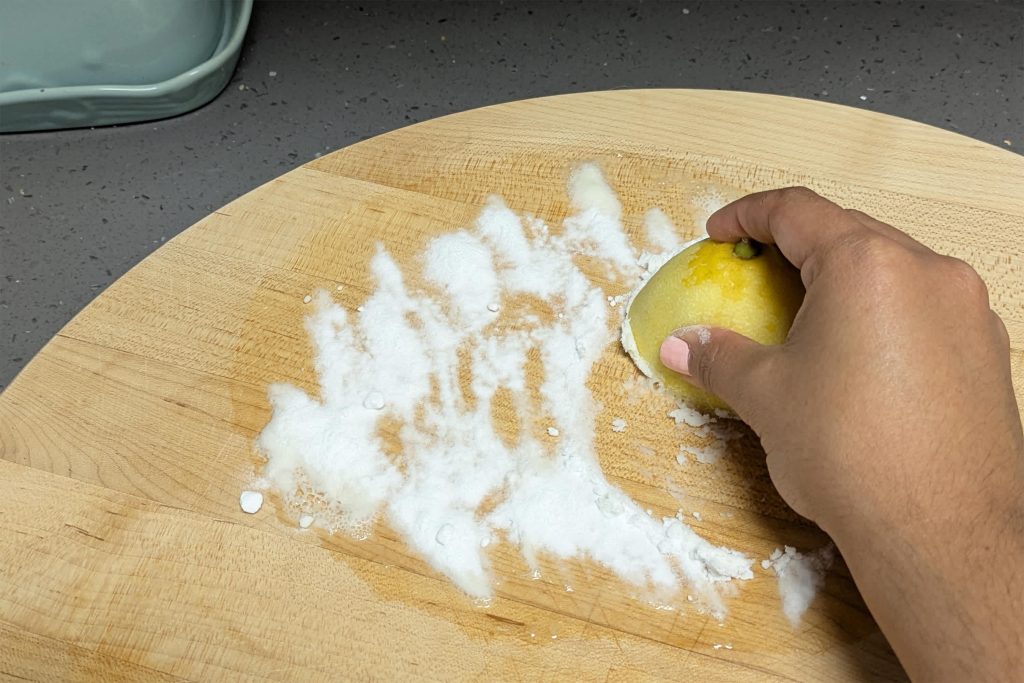
Your wood cutting board is a kitchen essential, but it can quickly become a hotspot for stains and odors. Cleaning it properly is key to keeping it fresh and safe for your food.
What if you could do this with something simple, natural, and right in your kitchen? Using lemon to clean your wood cutting board is an easy, effective trick that can transform your cleaning routine. Keep reading, and you’ll discover how this citrus power can refresh your board, kill bacteria, and leave it smelling amazing—without harsh chemicals or extra effort.
Why Clean Wood Boards Properly
Wood cutting boards need special care to stay safe and last long. Cleaning them well removes food bits and germs.
Using lemon is a simple way to clean wood boards naturally. It helps keep your kitchen healthy and your board strong.
Preventing Bacteria Build-up
Bacteria can hide in wood pores if the board is not cleaned right. Lemon’s natural acid kills many germs on the surface.
- Sprinkle salt on the board before rubbing lemon for extra scrubbing power.
- Cut a lemon in half and rub it over the board’s surface.
- Let the lemon juice sit for a few minutes to kill bacteria.
- Rinse with warm water and dry the board well after cleaning.
Maintaining Board Longevity
Proper cleaning stops wood from cracking or warping. Lemon juice also helps remove stains and odors naturally.
| Cleaning Tip | Benefit |
| Use lemon and salt | Removes stains and bacteria |
| Dry board immediately | Prevents warping and cracking |
| Oil board regularly | Keeps wood hydrated and smooth |

Credit: www.aol.com
Benefits Of Using Lemon
Lemon is a natural and safe way to clean wood cutting boards. It helps remove stains and dirt without harsh chemicals.
Using lemon keeps your cutting board fresh and extends its life. It is easy to find and simple to use.
Natural Antibacterial Properties
Lemon contains citric acid, which kills many bacteria on the board’s surface. This helps reduce germs from raw foods.
Cleaning with lemon lowers the risk of foodborne illness by making the board safer to use. It is a natural cleaner.
- Citric acid fights bacteria
- Reduces harmful germs
- Safe for food contact surfaces
Deodorizing Effects
Lemon removes bad smells from wood cutting boards. It neutralizes odors left by strong foods like garlic or onion.
The fresh citrus scent leaves the board smelling clean and pleasant. It helps keep your kitchen smelling nice.
- Neutralizes strong food odors
- Leaves a fresh lemon scent
- Improves kitchen freshness
Preparing Your Cutting Board
Cleaning a wood cutting board with lemon starts with good preparation. This helps remove dirt and germs before deep cleaning.
Proper preparation keeps your board safe and ready for fresh food. It also helps the lemon clean better.
Removing Loose Debris
First, remove any food crumbs or loose dirt from the board. This stops the debris from mixing with the cleaning lemon juice.
Use a dry cloth or a soft brush to clear away crumbs. Make sure to get into corners and edges where dirt hides.
- Use a dry towel or cloth
- Brush off crumbs gently
- Check all edges and corners
Initial Rinse
Rinse the board with warm water to wash away any remaining loose particles. Do not soak the board in water.
Keep the rinse light to avoid swelling or cracking the wood. A quick rinse is enough before using lemon for cleaning.

Credit: www.southernliving.com
Step-by-step Lemon Cleaning
Cleaning a wood cutting board with lemon is simple and natural. Lemon helps remove stains and odors while disinfecting the surface.
This guide shows you how to use lemon to clean your wood board safely and effectively.
Cutting The Lemon
Start by choosing a fresh lemon. Cut it in half using a sharp knife. You will use one half for cleaning and the other half if more juice is needed.
Applying Lemon Juice
Squeeze the lemon half directly over the cutting board. Make sure to cover the entire surface with fresh lemon juice for best results.
Scrubbing The Surface
- Use the lemon half as a scrubber by rubbing it on the board.
- Apply gentle pressure to work the juice into the wood.
- Focus on stained or smelly areas for better cleaning.
- Rotate the lemon half to use fresh juice while scrubbing.
Letting It Sit
Allow the lemon juice to sit on the board for about 5 minutes. This gives the acid time to break down bacteria and stains.
Rinsing And Drying
| Action | Purpose |
|---|---|
| Rinse with warm water | Remove lemon juice and loosened dirt |
| Dry with clean towel | Prevent wood from absorbing moisture |
| Air dry standing up | Allow full drying and avoid warping |
Additional Cleaning Tips
Cleaning a wood cutting board with lemon is simple and effective. You can use other tips to keep your board fresh and safe.
These extra steps help remove stains and prevent damage to your board over time.
Using Salt For Tough Stains
Coarse salt works well to scrub away tough stains on wood boards. It adds extra scrubbing power with lemon juice.
Sprinkle salt on the stained area, then rub with half a lemon. Let it sit for a few minutes before rinsing.
- Use coarse or kosher salt for best results
- Apply lemon juice to help lift stains
- Scrub gently to avoid scratching the wood
- Rinse and dry thoroughly after cleaning
Avoiding Excess Water
Wood cutting boards should not soak in water. Excess water can cause the wood to warp or crack.
After cleaning with lemon and salt, rinse quickly and dry the board with a towel. Stand it up to air dry completely.
- Never leave your board submerged in water
- Use a damp cloth for wiping instead of soaking
- Dry the board immediately after rinsing
- Store the board in a dry place
Regular Maintenance
Keep your wood cutting board in good shape by cleaning it often. Regular care stops stains and odors from building up.
Oiling the board with food-safe mineral oil helps protect the wood and keeps it smooth.
- Clean the board after each use with lemon and salt
- Oil the board once a month to prevent drying
- Check for cracks or deep cuts and sand if needed
- Store the board away from heat and sunlight
When To Oil Your Board
Oiling your wood cutting board keeps it strong and prevents cracks. It also stops the wood from drying out and absorbing water.
You should oil your board regularly, but knowing the right time is key. This helps your board last longer and stay safe for food.
Signs Your Board Needs Oiling
Look for these signs to know when your board needs oiling. They show that the wood is dry or damaged.
- The wood looks dull and faded
- Water soaks in quickly instead of beading up
- Small cracks or rough spots appear on the surface
- The board feels dry or rough to touch
- Food stains do not come off easily
Choosing The Right Oil
Pick an oil that is safe for food and does not spoil easily. Avoid oils that can go rancid and smell bad.
Common safe oils include mineral oil and specially made cutting board oils. These keep your board protected without harmful effects.
- Food-grade mineral oil – affordable and easy to find
- Beeswax blend – adds extra protection and shine
- Coconut oil (refined) – natural but can go rancid faster
- Walnut oil – good but may cause allergies for some people

Credit: homewithgraceandjoy.com
Frequently Asked Questions
How Does Lemon Clean A Wood Cutting Board?
Lemon’s natural acidity breaks down stains and kills bacteria on wood boards. It deodorizes and removes food odors effectively. Rubbing lemon juice on the board also helps to brighten and refresh the surface naturally.
Can Lemon Remove Odors From Wood Cutting Boards?
Yes, lemon neutralizes and eliminates unpleasant odors. Its natural citrus scent replaces food smells. Simply rubbing lemon on the board or letting lemon juice sit for a few minutes helps remove lingering odors.
Is Lemon Safe For All Wood Cutting Boards?
Lemon is generally safe for most wood boards. However, avoid using lemon on very dry or cracked wood, as it may cause dryness or damage. Always rinse and dry the board thoroughly after cleaning with lemon.
How Often Should I Clean My Wood Cutting Board With Lemon?
Cleaning with lemon once a week is ideal for regular maintenance. For heavy use, clean after each use with soap and water, then freshen with lemon weekly to keep bacteria and stains at bay.
Conclusion
Cleaning your wood cutting board with lemon keeps it fresh and safe. Lemon removes stains and kills germs naturally. Just rub, rinse, and dry well. This simple method helps your board last longer. It also smells clean and looks good.
Use lemon regularly to maintain your cutting board’s health. A clean board means healthier meals every time. Try this easy tip and enjoy a fresh kitchen tool daily. Simple steps, big results.