Is your air conditioner smelling musty or making your allergies worse? Mold might be the hidden problem inside your unit.
Cleaning mold from your air conditioner is not just about fresh air—it’s about protecting your health and keeping your home safe. If you want to breathe easier and stop mold from spreading, this guide will show you exactly how to clean your air conditioner safely and effectively.
Keep reading to learn simple steps you can take right now to restore clean, fresh air in your home.
Signs Of Mold In Air Conditioners
Common mold indicatorsin air conditioners include a musty smell near vents and visible black or green spots on filters or coils. Water leaks or excess moisture inside the unit often lead to mold growth. Poor airflow or dust buildup can also increase mold presence. Feeling allergies or breathing difficulties when the AC runs may signal mold inside the system.
Health risks linked to moldrange from mild to severe. Mold spores can cause coughing, sneezing, and itchy eyes. People with asthma or allergies may have worse symptoms. Long-term exposure can lead to lung infections or other respiratory issues. Mold can affect everyone, but children, elderly, and those with weak immune systems are at higher risk.

Credit: www.reddit.com
Safety Measures Before Cleaning
Wear protective glovesto keep your hands safe from mold and cleaning chemicals. Use a maskto avoid breathing in mold spores. Safety goggles protect your eyes from dust and splashes.
Turn off the air conditioner and unplug it from the power source. This step is crucialto prevent electrical shocks. Double-check that the unit is completely disconnectedbefore starting any cleaning.
Tools And Cleaning Supplies Needed
Cleaning an air conditioner with mold needs the right tools and supplies. Effective cleaning agentsinclude white vinegar, bleach solution, and commercial mold cleaners. These kill mold and stop it from growing back.
Necessary equipment helps make the process safe and easy. Use:
- Glovesto protect your hands
- Maskto avoid breathing mold spores
- Screwdriversfor opening panels
- Soft brushto scrub surfaces
- Spray bottleto apply cleaners
- Cloth or spongefor wiping
| Cleaning Agent | Use | Notes |
|---|---|---|
| White Vinegar | Kills mold on surfaces | Natural and safe |
| Bleach Solution | Disinfects and removes mold | Use in a well-ventilated area |
| Commercial Mold Cleaner | Fast mold removal | Follow label instructions |

Credit: unitedstatesolutions.com
Step-by-step Cleaning Process
First, take out the filterscarefully. Wash them with warm water and mild soap. Let them soak for 10 minutes. Use a soft brush to remove all dirt and mold. Rinse well and leave them to dry fully before putting back.
Next, scrub the moldy surfacesinside the air conditioner. Use a cloth dipped in a mixture of water and vinegar or a mild cleaner. Wipe gently to avoid damage. Mold can hide in corners, so check carefully.
Clean the coils and finsby spraying a coil cleaner or soapy water. Use a soft brush to clear dust and mold. Be gentle to avoid bending the fins. Rinse with water and let dry.
Finally, make sure all parts are dry. Use a cloth to wipe any wet spots. Put the filters and other parts back in their place. Turn the air conditioner on and check if it runs smoothly.
Preventing Future Mold Growth
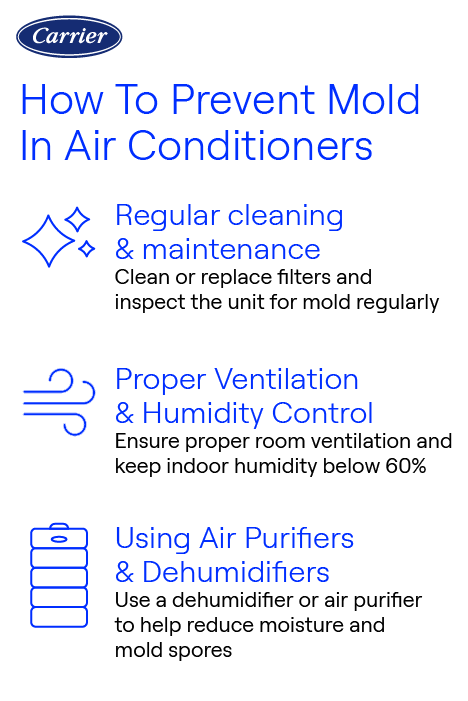
Regular maintenancehelps keep your air conditioner free from mold. Clean or replace filters every 1-3 months. Wipe down coils and drain pans to stop mold buildup. Check and clear the drain line to avoid water backup. Schedule professional tune-ups yearly to ensure everything works well.
Controlling moistureis key to stopping mold growth. Use a dehumidifier in damp rooms. Keep indoor humidity below 50%. Fix leaks around windows and doors quickly. Make sure air vents are not blocked and allow good airflow.

Credit: www.youtube.com
When To Call A Professional
Persistent mold smellinside or near the air conditioner means it needs expert care. Visible mold patcheson vents or filters also signal a problem.
Water leaksaround the unit or poor coolingdespite cleaning are signs to call a professional. If mold returns quickly, the system may need a deeper fix.
| Service Type | What They Do | When to Choose |
|---|---|---|
| HVAC Specialist | Clean and repair internal parts, check ducts | Severe mold, leaks, or system issues |
| Mold Remediation Expert | Remove mold safely, treat affected areas | Large mold growth or health concerns |
| General Technician | Basic cleaning and filter replacement | Minor mold or routine maintenance |
Frequently Asked Questions
How To Detect Mold In An Air Conditioner?
Detecting mold in an air conditioner involves checking for musty odors and visible mold growth. You might notice black, green, or white spots on vents or coils. If there’s a persistent musty smell when the unit operates, mold is likely present.
Regular inspections can help in early detection.
Can Mold In Ac Affect Health?
Yes, mold in your air conditioner can affect health. It can trigger allergies, respiratory issues, and asthma attacks. Mold spores circulate in the air, causing sneezing, coughing, and irritation. Long-term exposure can lead to more serious health concerns. It’s crucial to clean and maintain your AC regularly.
What Tools Are Needed To Clean Mold?
To clean mold, gather tools like a screwdriver, soft brush, and vacuum cleaner. You’ll also need a mild detergent, water, and a cloth. For safety, wear gloves and a mask to avoid inhaling mold spores. These tools help effectively remove mold from various air conditioner parts.
How Often Should Ac Be Cleaned?
Air conditioners should be cleaned at least twice a year. This helps prevent mold growth and maintains efficiency. Regular cleaning ensures the unit operates smoothly and improves indoor air quality. For areas with high humidity, consider more frequent cleanings to combat mold.
Conclusion
Cleaning mold from your air conditioner keeps the air fresh and healthy. Regular care stops mold from coming back quickly. Use safe cleaning steps and wear gloves for protection. Check your AC often to spot mold early. Clean filters and vents for better airflow.
A clean AC helps your home feel comfortable. Taking small steps now saves big problems later. Keep your air conditioner mold-free for a safer home. Simple actions make a big difference in air quality.