Your bamboo cutting board is more than just a kitchen tool—it’s where you prep your meals, slice fresh veggies, and create delicious dishes. But if you don’t clean it the right way, bacteria and stains can build up, making it unsafe and unpleasant to use.
Want to keep your bamboo board looking fresh and lasting longer? You’ll discover simple, effective steps to clean your bamboo cutting board like a pro. Keep reading to protect your kitchen and enjoy cleaner, safer cooking every day.

Credit: branchbasics.com
Benefits Of Bamboo Cutting Boards
Bamboo cutting boards are a popular choice in many kitchens. They offer several advantages over other materials.
This guide will explain why bamboo boards are good for cooking and cleaning.
Durability And Strength
Bamboo is a strong and hard material. It resists scratches and cuts better than many wood types. This makes the board last longer.
Natural Antibacterial Properties
Bamboo has natural substances that slow down bacteria growth. This helps keep your cutting board cleaner and safer for food preparation.
Eco-friendly And Sustainable
Bamboo grows faster than most trees. It can be harvested without killing the plant. This makes bamboo boards better for the environment.
- Fast growing plant
- Renewable resource
- Less water needed for growth
- Reduces deforestation
Lightweight And Easy To Handle
Bamboo boards are lighter than many hardwood boards. This makes them easy to move and clean after use.
Low Maintenance
| Feature | Bamboo Cutting Board |
| Cleaning | Easy to wash with soap and water |
| Drying | Dries quickly to prevent warping |
| Oiling | Needs occasional oiling to keep smooth |
| Stain Resistance | Resists stains better than plastic |
Credit: www.walmart.com
Daily Cleaning Routine
Keeping your bamboo cutting board clean is important to stop germs. A daily cleaning routine helps your board last longer and stay safe.
Follow simple steps every day to clean your bamboo board well. This keeps it fresh and ready for use.
Washing With Mild Soap
Use mild soap to clean your bamboo cutting board. Harsh soaps can damage the bamboo surface over time.
Apply a small amount of soap on a soft sponge. Gently scrub the board to remove food particles and stains.
Using Warm Water
Rinse your board with warm water after washing. Warm water helps remove soap and cleans better than cold water.
Avoid soaking the board in water to prevent warping or cracking. Quick rinsing is best.
Drying Techniques
Dry your bamboo board right after washing. Use a clean towel to wipe it down well.
Stand the board upright in a place with good air flow. This helps it dry fully and stops bacteria growth.
Deep Cleaning Methods
Bamboo cutting boards need regular deep cleaning to stay safe and last longer. Simple washing does not remove all stains or odors.
Use natural ingredients to clean your board deeply. These methods kill bacteria and keep the bamboo healthy.
Salt And Lemon Scrub
Sprinkle coarse salt on the bamboo board. Cut a lemon in half and use it to scrub the salt into the surface.
The salt scrubs away stains and the lemon juice helps remove odors and kills germs.
- Use coarse salt for better scrubbing
- Rub the lemon slowly to cover all spots
- Rinse the board with warm water after scrubbing
Vinegar Solution
Mix equal parts white vinegar and water in a spray bottle. Spray the solution on the bamboo board.
Let it sit for a few minutes. Vinegar kills bacteria and helps remove stains without harming the wood.
- Use white vinegar for best results
- Do not soak the board in vinegar
- Rinse well and dry the board after use
Baking Soda Paste
Mix baking soda with a small amount of water to form a thick paste. Spread the paste on the bamboo board.
Use a soft brush or cloth to scrub the paste into the board. This removes stains and freshens the surface.
- Make a thick paste for better cleaning
- Scrub gently to avoid damaging the bamboo
- Rinse the board with warm water and dry it
Removing Stains And Odors
Bamboo cutting boards can absorb stains and odors from food. Cleaning them properly keeps them fresh and safe to use. This guide shows easy ways to remove stains and smells.
Use natural and simple methods to clean your bamboo board. These solutions help maintain the board’s quality without damage.
Using Hydrogen Peroxide
Hydrogen peroxide helps remove stains and kills bacteria. It is a gentle bleach that works well on bamboo.
- Pour a small amount of 3% hydrogen peroxide onto the stained area.
- Let it sit for 5 to 10 minutes to break down the stain.
- Wipe the board clean with a damp cloth.
- Rinse with warm water and dry thoroughly.
Activated Charcoal
Activated charcoal absorbs odors and moisture. It can keep your bamboo board smelling fresh.
Try this simple charcoal pouch method:
- Place a few pieces of activated charcoal in a breathable cloth bag.
- Leave the bag on the cutting board for 24 hours.
- Remove the bag and wipe the board with a dry cloth.
Sunlight Exposure
Sunlight naturally removes odors and kills bacteria. It also helps dry the bamboo board.
| Sunlight Exposure Time | Effect |
|---|---|
| 1 hour | Reduces mild odors |
| 3 hours | Helps fade light stains |
| 6 hours | Dries board and kills bacteria |
Maintaining Bamboo Boards
Bamboo cutting boards are strong and eco-friendly. Keeping them clean and well cared for helps them last longer.
Proper maintenance prevents cracks and warping. It also keeps the surface safe for food.
Oiling Frequency
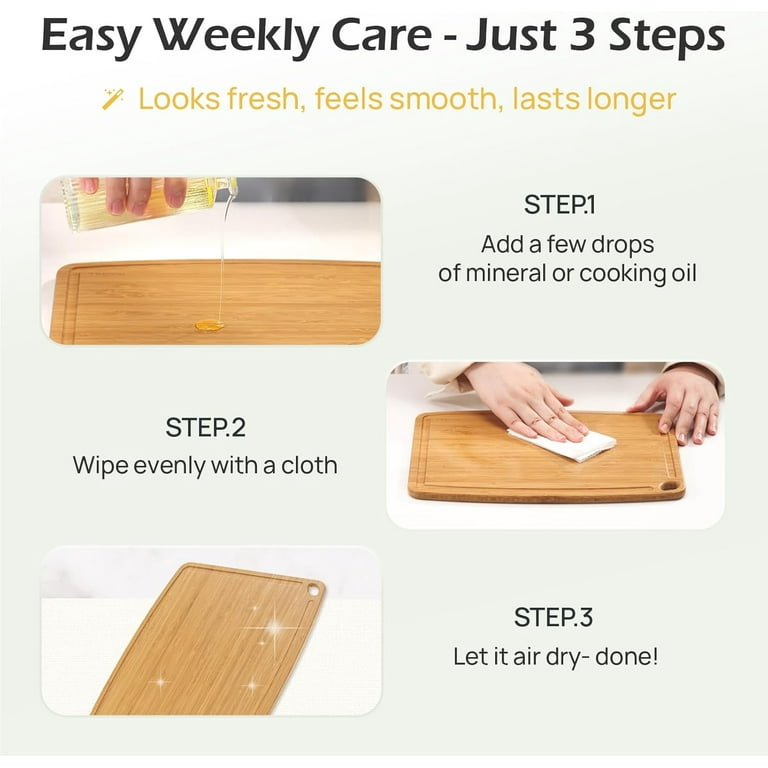
Oiling your bamboo board keeps it from drying out. It also protects against stains and damage.
Apply oil every few weeks or once a month. If you use the board often, oil it more.
Best Oils To Use
Choose oils that soak in well and do not go rancid. Avoid vegetable or olive oils that can spoil.
- Food-grade mineral oil
- Coconut oil (refined, food-grade)
- Beeswax mixed with mineral oil
- Walnut oil (if no nut allergies)
Avoiding Warping And Cracks
| Care Tip | Reason |
|---|---|
| Dry board completely after washing | Prevents moisture buildup |
| Do not soak in water | Stops wood from swelling |
| Store board upright or flat in dry place | Allows airflow, avoids warping |
| Use oil regularly | Keeps wood flexible and strong |
Follow these tips to keep your bamboo board smooth and safe to use.
Common Mistakes To Avoid
Cleaning bamboo cutting boards needs care. Some common cleaning mistakes can damage them. Avoid these errors to keep your board safe and lasting.
Learn what not to do when cleaning your bamboo board. This helps keep it strong and clean for a long time.
Soaking In Water
Do not soak bamboo cutting boards in water. Bamboo is natural wood and soaks up water easily. This can cause the board to swell, crack, or split over time.
- Do not leave the board in water for long
- Dry it quickly after washing with a towel
- Store it in a dry place
- Use a damp cloth for cleaning instead of soaking
Using Harsh Chemicals
Harsh chemicals can harm bamboo cutting boards. Strong cleaners may remove natural oils and damage the board’s surface. This leads to cracks and roughness.
| Harsh Chemicals | Effect on Bamboo Board |
| Bleach | Strips oils and weakens fibers |
| Ammonia | Causes discoloration and rough texture |
| Strong detergents | Dries out the board and cracks it |
Dishwasher Use
Never put bamboo cutting boards in the dishwasher. High heat and water pressure harm bamboo. It can warp or crack after a dishwasher cycle.
Follow these tips instead:
- Wash by hand with warm, soapy water
- Rinse and dry immediately with a towel
- Apply food-safe mineral oil regularly to protect the board
Credit: cheesegrotto.com
Frequently Asked Questions
How Do I Sanitize Bamboo Cutting Boards?
To sanitize bamboo cutting boards, use a mixture of white vinegar and water. Spray or wipe this solution onto the board. Let it sit for a few minutes, then rinse thoroughly with warm water. This method helps kill bacteria without damaging the bamboo’s natural surface.
Can I Use Soap On Bamboo Boards?
Yes, you can use mild dish soap to clean bamboo cutting boards. Gently scrub the surface with a soft sponge and warm water. Rinse well to remove any soap residue. Avoid harsh detergents, as they can damage the bamboo’s surface and natural oils.
How Often Should I Oil Bamboo Cutting Boards?
Oil bamboo cutting boards once a month to maintain their condition. Use food-grade mineral oil or bamboo oil. Apply a thin layer and let it soak in overnight. Regular oiling prevents dryness and warping, keeping the board in optimal condition for longer use.
Are Bamboo Cutting Boards Dishwasher Safe?
No, bamboo cutting boards are not dishwasher safe. The high heat and moisture can cause warping and cracking. Always hand wash with mild soap and water, and dry thoroughly to preserve the board’s quality and longevity.
Conclusion
Cleaning bamboo cutting boards keeps them safe and long-lasting. Use warm water and mild soap for daily cleaning. Avoid soaking boards to prevent warping or cracking. Dry them quickly with a towel after washing. Regularly oil the board to keep it smooth and strong.
Clean boards stop bacteria from growing and keep food fresh. Caring for your bamboo board is simple and worth it. A clean board makes cooking safer and more enjoyable. Keep these tips in mind for a healthy kitchen tool.