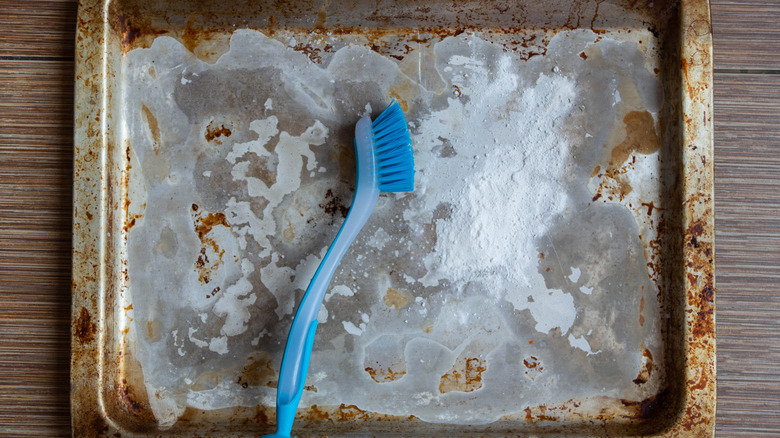
Are your cookie sheets looking dull, stained, or sticky after countless baking sessions? You don’t have to toss them out or spend a fortune on special cleaners.
You can bring back their shine using just two simple ingredients you probably already have: vinegar and baking soda. This easy, natural method not only saves your cookie sheets but also keeps your kitchen chemical-free. Stick with me, and you’ll learn how to make your baking gear spotless again—quickly and effortlessly.
Ready to see your cookie sheets sparkle like new? Let’s dive in!
Credit: www.carawayhome.com
Why Choose Vinegar And Baking Soda
Cleaning cookie sheets can be hard because of baked-on grease and stains. Vinegar and baking soda work well to clean them.
These two ingredients are easy to find and safe to use. They can help you get your cookie sheets clean without harsh chemicals.
Natural Cleaning Benefits
Baking soda is a mild abrasive that scrubs away dirt gently. Vinegar is acidic and breaks down grease and grime.
Together, they create a natural cleaning power that removes tough stains without damaging your pans.
- Safe for the environment
- Non-toxic and chemical-free
- Easy to use at home
- Cost-effective cleaning solution
Safe For Non-stick Surfaces
Vinegar and baking soda do not harm non-stick coatings. They clean well without scratching or wearing down the surface.
This makes them a smart choice for delicate cookie sheets. You can clean safely and keep your pans lasting longer.
Credit: www.carawayhome.com
Gathering Your Supplies
Cleaning cookie sheets can be easy with the right supplies. Vinegar and baking soda work well to remove stuck-on food and stains.
Before you start, gather all the ingredients and tools you need. This will save time and make the process smooth.
Essential Ingredients
Vinegar and baking soda are the main ingredients for cleaning. They work together to break down grease and grime.
- White vinegar: It helps dissolve grease and food residue.
- Baking soda: It acts as a gentle abrasive to scrub away stains.
- Warm water: Needed to rinse and soak the sheets.
Additional Tools Needed
Besides ingredients, some tools make cleaning easier and more effective. These help you scrub and rinse well.
- Non-scratch sponge or scrub brush: To clean without damaging the sheet.
- Large basin or sink: For soaking the cookie sheets.
- Rubber gloves: To protect your hands from vinegar and grime.
- Microfiber cloth or towel: For drying the sheets after cleaning.
Preparing The Cookie Sheet
Cleaning your cookie sheet well starts with good preparation. This helps vinegar and baking soda work better on stuck-on stains.
Follow simple steps to remove loose dirt and get the sheet ready for soaking. This makes the cleaning process faster and easier.
Removing Loose Debris
Start by clearing off crumbs and food bits from the cookie sheet. This stops dirt from mixing with your cleaning solution.
- Use a soft brush or cloth to sweep crumbs away.
- Rinse the sheet under warm water to loosen any stuck pieces.
- Dry the sheet with a clean towel before soaking.
Soaking Tips
Soaking softens baked-on grease and stains. Use vinegar and baking soda to make the job easier.
| Ingredient | Amount | Purpose |
|---|---|---|
| White Vinegar | 1 cup | Breaks down grease |
| Baking Soda | 2 tablespoons | Lifts stains and odors |
| Warm Water | Enough to cover sheet | Helps dissolve ingredients |
Fill a sink or basin with warm water. Add the vinegar and baking soda. Place the cookie sheet inside and let it soak for 30 minutes or more.
Applying Baking Soda
Baking soda is a natural cleaner that helps remove stains and grease from cookie sheets. It works well with vinegar for deep cleaning.
Using baking soda correctly makes your cookie sheets shine and smell fresh. Follow these simple tips to apply it properly.
Sprinkling Technique
Evenly spreading baking soda on your cookie sheet is key. Cover the entire surface, especially dirty spots.
- Use a spoon or your fingers to sprinkle baking soda.
- Focus on areas with baked-on grease or food.
- Make sure the layer is thick enough to cover stains.
- Avoid piling baking soda in one spot only.
Allowing It To Sit
Let the baking soda rest on the cookie sheet to break down grime. Time helps it work better with vinegar later.
| Waiting Time | Effect |
|---|---|
| 15 minutes | Loosens light stains and grease |
| 30 minutes | Breaks down tougher baked-on food |
| Over 1 hour | Deep cleans and softens stubborn spots |
Using Vinegar For Cleaning
Vinegar is a natural cleaner that helps remove grease and stains. It works well on cookie sheets to make them look clean again.
This liquid is safe and easy to use. It breaks down tough spots on your baking pans without harsh chemicals.
Spraying Vinegar
Spray vinegar directly on the cookie sheet surface. Cover all areas with stains or food residue.
Let the vinegar sit for about 10 minutes. This helps soften baked-on grease and makes scrubbing easier.
Fizzling Reaction Explained
When you add baking soda after vinegar, a fizzing reaction happens. This bubbles help lift dirt off the sheet.
The fizzing is a safe chemical reaction. It breaks down grime and makes cleaning faster and more effective.
Scrubbing And Rinsing
Cleaning cookie sheets with vinegar and baking soda removes tough stains. Scrubbing and rinsing are key steps.
These steps help make your sheets clean and ready for baking again.
Best Scrubbing Tools
Use scrubbing tools that clean well without scratching the sheet. Soft scrubbers work best for this.
Here are good tools to use:
- Non-scratch sponges
- Soft-bristle brushes
- Microfiber cloths
- Plastic scrapers
Avoid metal scrubbers that can damage the sheet’s surface.
Rinsing Thoroughly
Rinse the cookie sheet well after scrubbing. This removes all vinegar and baking soda residues.
Use warm water and check for leftover paste or dirt. Repeat rinsing if needed.
- Rinse under running water
- Use a clean cloth to wipe away residue
- Dry the sheet with a towel to avoid rust
Drying And Maintaining Cookie Sheets
Cleaning cookie sheets with vinegar and baking soda is effective. Proper drying and care keep them in good shape.
Drying your cookie sheets correctly stops rust and damage. Maintaining them helps avoid stains and extends use.
Proper Drying Methods
After washing, dry cookie sheets right away. Leaving water on the surface causes rust and spots.
- Use a clean, dry towel to wipe off water.
- Air dry by placing sheets upright in a dish rack.
- Make sure sheets are completely dry before storing.
- Avoid stacking sheets if they are still damp.
Preventing Future Stains
Prevent stains by keeping cookie sheets well maintained. Simple habits reduce build-up and discoloration.
| Tip | Reason |
| Line sheets with parchment paper | Stops food from sticking and staining |
| Apply a thin layer of cooking oil | Protects metal from moisture and rust |
| Clean sheets soon after use | Prevents baked-on residue |
| Store in a dry place | Reduces moisture exposure |
Troubleshooting Stubborn Stains
Cleaning cookie sheets can be hard when stains do not come off easily. Vinegar and baking soda help break down tough marks.
Use these tips to remove stubborn stains and keep your cookie sheets clean and shiny.
Additional Cleaning Tips
Use hot water to help loosen baked-on food before applying vinegar and baking soda. Heat helps the cleaning agents work better.
Let the baking soda and vinegar sit on the stains for at least 15 minutes. This gives time to break down grease and grime.
- Use a scrub brush or sponge with rough side for scrubbing.
- Try a paste of baking soda and water for thick stains.
- Rinse well with warm water after cleaning.
- Dry the cookie sheet completely to avoid rust.
When To Repeat The Process
Some stains need more than one cleaning session. If the sheet is still dirty, repeat the vinegar and baking soda treatment.
Repeat cleaning until the stains fade. Do not scrub too hard to avoid damage to the sheet’s surface.
- Repeat every few days for very old stains.
- Use gentle scrubbing tools to protect your sheet.
- After several attempts, consider soaking overnight in vinegar.
- If stains remain, try a commercial cleaner safe for cookie sheets.
Credit: www.carawayhome.com
Frequently Asked Questions
How Does Vinegar Clean Cookie Sheets?
Vinegar is acidic and helps dissolve grease and grime. When combined with baking soda, it creates a fizzing reaction. This reaction helps to lift and remove stubborn stains. Together, they effectively clean cookie sheets without harsh chemicals, making them a safe and eco-friendly option.
Can Baking Soda Damage Cookie Sheets?
No, baking soda is safe for most cookie sheets. It is a mild abrasive that helps scrub away stains without scratching. However, avoid using it on non-stick surfaces. Always test a small area first to ensure it’s safe for your specific type of cookie sheet.
How Long Should I Soak Cookie Sheets?
Soak cookie sheets for at least 30 minutes. This allows the vinegar and baking soda to break down stubborn stains. For heavily soiled sheets, you can soak them longer, even overnight. After soaking, scrub gently with a sponge or brush to remove loosened grime.
Is It Safe To Use Vinegar On Aluminum?
Yes, vinegar is generally safe for aluminum surfaces. However, prolonged exposure can cause discoloration. To prevent this, rinse thoroughly after cleaning. Use a soft cloth to dry and polish the surface. Always test a small area to ensure it won’t affect your specific cookware.
Conclusion
Cleaning cookie sheets with vinegar and baking soda works well. These ingredients break down grease and stuck-on food easily. The process is simple, safe, and uses things you likely have at home. Regular cleaning keeps your cookie sheets in good shape longer.
Try this method to save time and avoid harsh chemicals. Your baking tools will stay clean and ready for your next batch. Give it a try and see the difference yourself. Easy, natural, and effective—what’s not to like?