Is your air conditioner smelling musty or causing allergy symptoms? You might have mold growing inside it, and that’s a problem you don’t want to ignore.
Mold in your air conditioner can spread spores throughout your home, affecting your health and the air quality. But don’t worry—cleaning mold from your air conditioner is easier than you think. You’ll learn simple, effective steps to get rid of mold and keep your AC fresh and safe.
Keep reading to protect your home and breathe easier starting today.
Signs Of Mold In Ac
Mold in your air conditioner can cause health problems. It can also damage the unit. Knowing the signs helps you act fast.
Look for certain clues that show mold might be growing inside your AC system.
Musty Smell
A strong, musty odor is a common sign of mold. It often smells like damp or wet clothes left too long.
- The smell gets stronger when the AC runs.
- It may appear in rooms near the vents.
- Sometimes it is faint but noticeable.
Visible Mold Spots
Check the AC vents and nearby surfaces for mold spots. They look fuzzy or slimy and can be black, green, or white.
- Air vents and grills
- Inside the AC unit near the drip pan
- Behind or under the air filter
Reduced Airflow
Mold growth can block air filters and ducts. This reduces airflow and lowers AC efficiency.
| Cause | Effect |
| Mold blocking air filter | Less air moves through vents |
| Clogged ducts with mold | Rooms feel warmer or stuffy |
| Dirty drip pan with mold | Water leaks and poor cooling |
Safety Precautions
Cleaning mold in your air conditioner needs careful safety steps. Mold can cause health problems if not handled right.
Follow these safety tips to protect yourself during the cleaning process.
Wear Protective Gear
Wear gloves, masks, and goggles to avoid contact with mold. Mold spores can irritate your skin and lungs.
- Use rubber gloves to protect your hands
- Wear an N95 mask to filter mold spores
- Put on safety goggles to protect your eyes
Turn Off Power
Switch off the air conditioner and unplug it before cleaning. This prevents electrical shocks and accidents.
Make sure the power is completely off to work safely on the unit.
Ensure Proper Ventilation
Open windows and doors to let fresh air in while cleaning. Good airflow helps remove mold spores from the room.
Use fans if needed to keep air moving and reduce mold exposure.
Tools And Materials Needed
Cleaning mold in your air conditioner requires the right tools and materials. Using proper items helps you remove mold safely and effectively.
This guide covers the essential cleaning solutions, brushes and cloths, and the vacuum cleaner you will need.
Cleaning Solutions
You need cleaning solutions that kill mold and are safe to use on air conditioner parts. Common options include bleach, vinegar, and commercial mold removers.
- Bleach solution:Mix one cup of bleach with one gallon of water.
- White vinegar:Use undiluted for natural mold removal.
- Commercial mold cleaner:Follow the instructions on the label.
- Water:For rinsing parts after cleaning.
Brushes And Cloths
| Tool | Purpose |
| Soft-bristle brush | Scrubs mold without damaging surfaces |
| Old toothbrush | Reaches small or tight areas |
| Microfiber cloths | Wipes mold and cleaning solution residues |
| Disposable gloves | Protects your hands from mold and chemicals |
Vacuum Cleaner
A vacuum cleaner with a HEPA filter is important to remove loose mold spores safely. It prevents spores from spreading in the air.
Choose a vacuum cleaner that has:
- A HEPA filter to trap small particles
- A nozzle suitable for air conditioner vents and coils
- Good suction power for effective cleaning

Credit: www.reddit.com
Cleaning The Ac Filters
Cleaning the air conditioner filters helps keep your AC working well. It also stops mold from growing inside the unit.
Regular filter cleaning improves air quality and extends the AC’s life. Here is how to clean the filters safely and thoroughly.
Remove And Inspect Filters
First, turn off the AC and unplug it. Then, open the front panel carefully. Remove the filters from the unit.
Check the filters for dust, dirt, and mold. Look for any tears or damage that may need fixing or replacing.
Wash With Soap And Water
Fill a basin with warm water and mild soap. Soak the filters gently for 10 to 15 minutes.
- Use a soft brush to scrub away dirt and mold spots.
- Do not use harsh chemicals or bleach on the filters.
- Rinse the filters well with clean water to remove soap.
Dry Completely Before Reinstalling
After washing, shake off excess water. Place the filters on a clean cloth or rack to air dry.
| Drying Tips | Reason |
|---|---|
| Do not use direct sunlight | Prevents filter damage and shrinking |
| Ensure filters are fully dry | Stops mold from growing back |
| Wait at least 3 hours | Allows deep drying inside the filter |
Cleaning The Evaporator Coil
The evaporator coil in your air conditioner can collect mold over time. Cleaning it helps keep the air fresh and the unit working well. This guide shows how to clean the coil safely.
Follow these steps carefully to remove mold and maintain your air conditioner’s performance.
Accessing The Coil
First, turn off the air conditioner and unplug it from power. Remove the outer cover or panel to reach the evaporator coil. You may need a screwdriver for this.
Be gentle to avoid bending the coil fins. Clear any debris or dust on the coil with a soft brush or cloth.
Applying Coil Cleaner
Use a coil cleaner made for air conditioners. Spray it evenly on the coil surface. Let the cleaner sit for the time recommended on the label, usually 5 to 10 minutes.
- Wear gloves and eye protection when handling cleaner
- Do not use harsh chemicals that can damage the coil
- Apply the cleaner in a well-ventilated area
- Avoid spraying on electrical parts
Rinsing And Drying
Rinse the coil with water to remove the cleaner and mold. Use a spray bottle or gentle stream of water. Do not flood the unit with water.
| Drying Tip | Description |
|---|---|
| Air Dry | Leave the coil open to dry naturally for several hours |
| Use a Fan | Set a fan nearby to speed up drying |
| Avoid Heat | Do not use direct heat or hair dryers on the coil |
Cleaning The Drain Pan And Drain Line
Mold can grow in your air conditioner’s drain pan and drain line. Cleaning these parts helps keep your AC running well. It also stops bad smells and water damage.
This guide shows how to clean the drain pan and drain line safely and easily. Follow these steps to remove mold and keep your AC fresh.
Remove Standing Water
Standing water in the drain pan can cause mold and damage. First, turn off your air conditioner to avoid accidents. Use a sponge or cloth to soak up the water from the pan.
If the water is hard to reach, use a wet/dry vacuum to remove it. Make sure the pan is dry before moving to the next step.
Clear Drain Line Blockages
The drain line can get clogged with dirt and mold. This causes water to back up and overflow. To clear it, find the drain line’s access point near the indoor unit.
Use a wet/dry vacuum to suck out the blockage from the drain line. Alternatively, you can flush it with a mixture of water and vinegar to break up mold and debris.
- Locate the drain line access point
- Attach a wet/dry vacuum to the pipe
- Run the vacuum for several minutes
- Flush with water and vinegar if needed
Disinfect Drain Pan
After removing water and clearing the drain line, disinfect the drain pan. Use a mixture of water and mild bleach or vinegar. This kills mold spores and stops regrowth.
Apply the disinfectant with a cloth or spray bottle. Let it sit for 10 to 15 minutes. Then rinse and dry the pan before turning the AC back on.
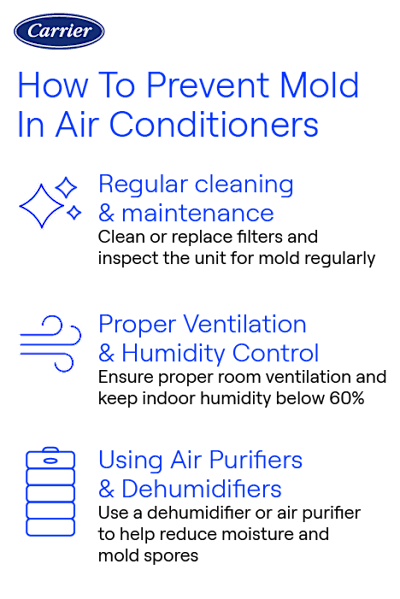
Preventing Mold Growth
Mold can grow inside air conditioners if not cleaned regularly. It causes bad smells and can harm your health. Preventing mold helps keep your air fresh and safe.
Follow simple steps to stop mold from growing in your air conditioner. These steps focus on cleaning, humidity control, and using special products.
Regular Maintenance Schedule
Cleaning your air conditioner often stops mold before it starts. Check and clean filters and coils every month. Replace filters if they are too dirty.
- Turn off the unit before cleaning.
- Remove and wash filters with soap and water.
- Clean the coils gently with a soft brush.
- Check and clear the drain pan and pipe.
- Dry all parts before reassembling the unit.
Control Humidity Levels
High humidity helps mold grow fast. Keep humidity below 60% in your home. Use a dehumidifier or air conditioner to control moisture.
| Humidity Level | Effect on Mold |
| Above 70% | High risk of mold growth |
| 50% to 60% | Moderate risk, monitor closely |
| Below 50% | Low risk, mold unlikely |
Use Mold-resistant Products
Special products stop mold from growing on air conditioner parts. Use mold-resistant sprays or coatings on filters and ducts. These products create a surface mold cannot stick to.
- Apply mold-resistant spray every 3 months.
- Use filters made from mold-resistant materials.
- Check product labels to ensure safety for air conditioners.
- Wear gloves and masks when applying these products.

Credit: unitedstatesolutions.com
When To Call A Professional
Cleaning mold in your air conditioner can often be done at home. Small patches are easy to remove with proper cleaning. But some situations need expert help to keep your home safe.
Knowing when to call a professional can save you time and avoid health risks. Professionals have the right tools and knowledge to handle tough mold problems.
Severe Mold Infestation
If you see large amounts of mold inside or around the air conditioner, do not try to clean it yourself. Severe mold can spread spores and cause health issues.
Professionals can safely remove heavy mold growth and check hidden areas. They also prevent mold from returning quickly.
- Visible mold covering large areas
- Mold inside the ductwork or vents
- Black or thick mold patches
Persistent Odors
Musty smells coming from your air conditioner may mean mold is still inside. If cleaning does not remove the odor, you need a professional inspection.
Experts can find hidden mold in hard-to-reach spots. They use special cleaners and tools to remove odor sources fully.
- Unpleasant smells after cleaning
- Odors return quickly after home cleaning
- Smells that affect the whole room
System Performance Issues
Mold can block air filters and coils, making your air conditioner work poorly. If you notice weak airflow or strange noises, mold might be the cause.
Professionals can clean deep inside the system and fix mold-related problems. This helps your air conditioner run well and saves energy.
- Reduced airflow from vents
- Unusual sounds during operation
- Higher energy bills than normal

Credit: www.youtube.com
Frequently Asked Questions
How Do I Safely Remove Mold From My Air Conditioner?
Turn off the AC and unplug it first. Use a mixture of water and mild detergent or white vinegar to clean moldy parts. Wear gloves and a mask to avoid inhaling spores. Wipe down all accessible surfaces and let them dry completely before restarting.
What Causes Mold Growth Inside Air Conditioners?
Mold grows in air conditioners due to moisture buildup from condensation. Poor ventilation, dirty filters, and clogged drains increase humidity. Warm temperatures combined with dampness create ideal conditions for mold to thrive inside the unit and ducts.
How Often Should I Clean Mold From My Ac Unit?
Clean your AC unit every 1 to 3 months during heavy use periods. Regular cleaning prevents mold buildup and improves air quality. Check filters monthly and replace or clean them as needed to maintain optimal airflow and reduce mold risks.
Can Mold In Air Conditioners Affect My Health?
Yes, mold spores from AC units can cause allergies, respiratory issues, and irritation. People with asthma or weakened immune systems are more vulnerable. Regular cleaning and maintenance reduce mold presence, improving indoor air quality and protecting your health.
Conclusion
Cleaning mold in your air conditioner is essential for health. Regular maintenance prevents mold growth and ensures clean air. Use vinegar or commercial cleaners for effective results. Protect yourself with gloves and a mask. Check and clean filters regularly. Inspect the unit for any signs of mold.
Address leaks promptly to avoid moisture buildup. This keeps mold at bay. Professional help can be sought for extensive issues. Keeping your air conditioner clean ensures a healthy home environment. Prioritize this task to breathe easier. Stay proactive for a mold-free air conditioning system.