Is your air conditioner blowing out a musty smell or making you sneeze more than usual? That could be mold growing inside your unit.
Mold in your air conditioner isn’t just unpleasant—it can affect your health and lower the efficiency of your cooling system. But don’t worry, you don’t need to call a professional right away. You can clean mold out of your air conditioner yourself with a few simple steps.
Keep reading, and you’ll learn exactly how to make your air conditioner fresh, safe, and working like new again.

Credit: www.youtube.com
Signs Of Mold In Air Conditioners
Mold can grow inside air conditioners if moisture builds up. It can cause bad smells and affect air quality.
Knowing the signs of mold helps you clean it early and keep your air safe to breathe.
Common Mold Indicators
You may notice these signs if mold is present in your air conditioner:
- A musty or earthy smell coming from vents
- Visible black, green, or gray spots on coils or filters
- Excess moisture or water leaks inside or around the unit
- Reduced airflow or strange noises during operation
- Increased dust buildup near the air vents
Checking these signs regularly can prevent mold from spreading.
Health Risks To Watch For
Mold in air conditioners can cause health problems, especially for sensitive people.
| Health Issue | Symptoms | Who is at Risk |
|---|---|---|
| Allergic Reactions | Sneezing, runny nose, itchy eyes | People with allergies |
| Asthma Attacks | Shortness of breath, wheezing, coughing | Asthma sufferers |
| Respiratory Infections | Chest tightness, fever, persistent cough | Children, elderly, weak immune systems |
| Skin Irritation | Rashes, itching, redness | Anyone exposed to mold spores |

Credit: www.youtube.com
Safety Precautions Before Cleaning
Cleaning mold from an air conditioner can improve air quality. You must take safety steps first. Mold can cause health problems if not handled right.
Following safety precautions protects you during the cleaning process. Prepare well before starting to clean the unit.
Protective Gear Essentials
Wear protective gear to stop mold spores from reaching your skin and lungs. Mold can irritate your eyes, skin, and breathing.
- Use gloves made of rubber or latex
- Wear a mask rated N95 or higher
- Wear safety goggles to protect your eyes
- Use long sleeves and pants to cover your skin
Clean and remove your gear carefully after cleaning the mold. This stops spores from spreading to other areas.
Power Off And Unplug
Always turn off the air conditioner before cleaning. Unplug it from the wall to cut all power. This prevents electric shock or injury.
Do not clean the unit while it is still running. Wait until it is fully off and unplugged to start the cleaning process.
Tools And Cleaning Supplies Needed
Cleaning mold from an air conditioner needs the right tools and supplies. Using proper items makes the job safer and easier.
Gather everything before you start. This saves time and helps you clean well.
Effective Cleaners For Mold
Choosing the right cleaner is key to removing mold. Some cleaners kill mold and stop it from coming back.
Use cleaners that are safe for air conditioner parts and work well on mold.
- White vinegar: natural and kills most mold types
- Hydrogen peroxide: a strong mold remover and disinfectant
- Baking soda: gentle cleaner that removes odors
- Commercial mold cleaners: made for tough mold problems
Recommended Equipment
Using the right equipment helps you clean safely and reach all mold spots. Some tools protect you from mold spores.
Make sure to have protective gear and cleaning tools ready before you start.
- Protective gloves to keep your hands safe
- Face mask to avoid breathing mold spores
- Soft brush or sponge to scrub mold gently
- Spray bottle for applying cleaners evenly
- Old cloths or towels to wipe off dirt and moisture
- Vacuum with a HEPA filter to remove loose mold
Step-by-step Mold Removal Process
Mold can grow inside air conditioners and cause health issues. Cleaning it out keeps the air fresh and safe. Follow these steps to remove mold from your AC unit.
Use simple tools and safe cleaners. Wear gloves and a mask to protect yourself from mold spores.
Accessing The Air Conditioner Unit
Turn off the power to your air conditioner before starting. Remove the outer cover carefully to reach the inside parts.
Check your model’s manual if you need help opening the unit. Keep screws and parts in a safe place to avoid losing them.
Cleaning The Filters
Take out the filters gently. Wash them with warm water and mild soap. Avoid harsh scrubbing to prevent damage.
Let the filters dry completely before placing them back. Clean filters help stop mold from growing again.
Scrubbing The Coils And Surfaces
Use a soft brush or cloth to scrub the coils and other surfaces inside the unit. Remove all visible mold and dirt carefully.
Do not use water directly on electrical parts. Use a spray bottle for cleaning solutions to avoid damage.
- Brush coils gently to avoid bending
- Wipe surfaces with a damp cloth
- Keep electrical parts dry
Disinfecting With Mold Killers
Apply a mold-killing spray or solution to all cleaned surfaces. Follow the product instructions for safe use and drying time.
Make sure the unit is dry and free of mold before reassembling. This step helps prevent mold from coming back quickly.
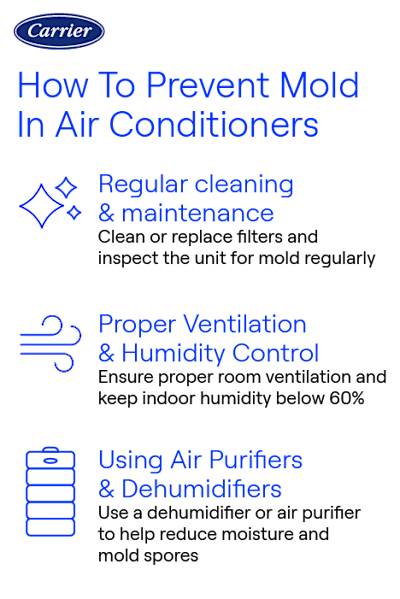
Preventing Future Mold Growth
Stopping mold from growing again in your air conditioner needs attention. Mold thrives in moist, dark places. You can keep your AC clean by following simple steps regularly.
Focus on regular care and controlling the air and humidity around your unit. These actions help keep mold away and make your home healthier.
Regular Maintenance Tips
Cleaning and checking your air conditioner often prevents mold buildup. Dirt and moisture left inside create a good place for mold to grow.
- Replace or clean air filters every 1-3 months.
- Clear debris and dirt from vents and coils.
- Ensure the drip pan is dry and clean.
- Schedule professional AC servicing yearly.
- Use a mold-killing spray on accessible parts.
Improving Airflow And Humidity Control
Good airflow and low humidity stop mold from growing inside your air conditioner. Moving air dries wet areas and lowers moisture levels.
| Tip | How it helps |
| Keep vents open | Allows air to flow freely |
| Use fans | Circulates air to reduce dampness |
| Run dehumidifiers | Removes excess moisture from air |
| Seal leaks | Prevents water from entering AC unit |
| Set thermostat properly | Keeps temperature and humidity balanced |
When To Call A Professional
Cleaning mold from an air conditioner is important for your health and home. Some mold problems need expert help.
Knowing when to call a professional can save time and prevent damage to your AC system.
Signs Mold Is Out Of Control
Mold that spreads quickly or smells strong needs special care. It can cause health problems and damage your AC.
Look for these signs to know if mold is out of control:
- A strong, musty odor near your air conditioner
- Visible black, green, or white mold patches
- Water leaks or moisture around the AC unit
- Health issues like coughing or allergies that worsen indoors
- Repeated mold growth after cleaning
Choosing The Right Service
Pick a professional who knows how to handle mold safely. They should have experience with air conditioners.
Check these points when choosing a service:
- Certified mold removal experts
- Good customer reviews and references
- Use of safe cleaning products and tools
- Proper equipment to clean and dry the AC system
- Clear pricing and service details

Credit: www.reddit.com
Frequently Asked Questions
How Do I Remove Mold From My Air Conditioner?
To remove mold, first turn off the AC and unplug it. Clean the filters and coils with a mixture of water and vinegar. Use a soft brush to scrub moldy areas gently. Dry all parts completely before reassembling the unit.
What Causes Mold Growth In Air Conditioners?
Mold grows in AC units due to moisture buildup, poor ventilation, and dirty filters. Warm, damp environments inside the unit create ideal conditions for mold spores to thrive and multiply.
How Often Should I Clean Mold From My Air Conditioner?
It’s best to clean mold from your air conditioner every 3 to 6 months. Regular cleaning prevents mold growth and improves air quality and system efficiency.
Can Mold In Air Conditioners Affect Health?
Yes, mold in air conditioners can cause allergies, respiratory issues, and headaches. It releases spores that worsen indoor air quality and may trigger asthma or other sensitivities.
Conclusion
Cleaning mold from your air conditioner keeps the air fresh and healthy. Regular care stops mold from growing back. Use safe cleaners and wear gloves for protection. Check and replace filters often to avoid moisture buildup. A clean AC works better and lasts longer.
Stay consistent with cleaning to enjoy cool, clean air all year. Small steps make a big difference in your home’s air quality. Take action today for a mold-free air conditioner.