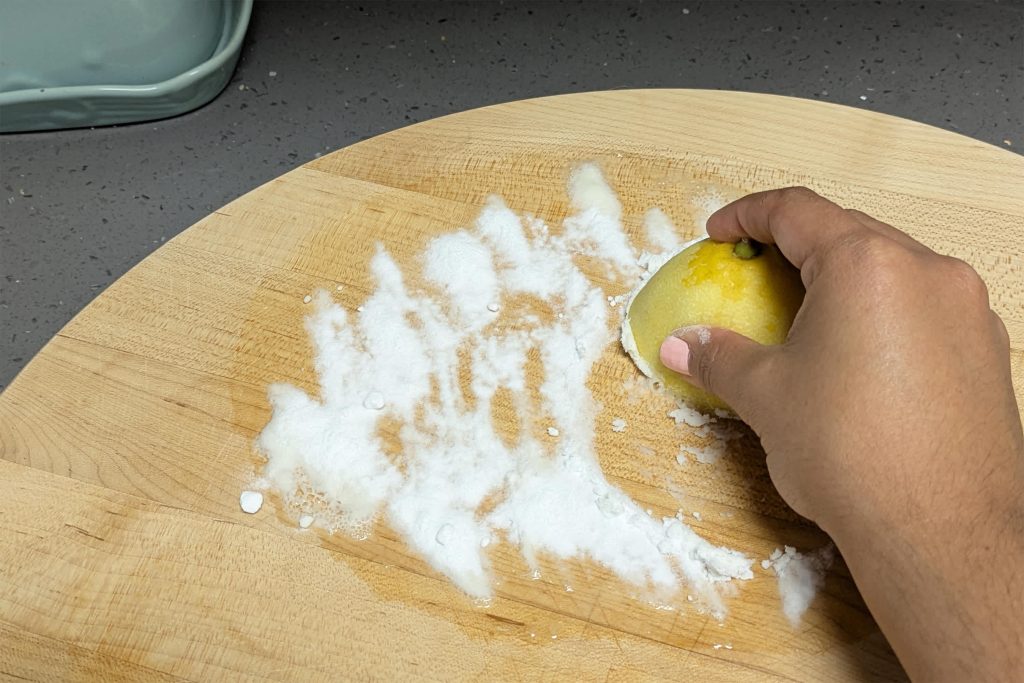
Your wood cutting board is one of the most used tools in your kitchen. But over time, it can absorb stains, odors, and bacteria, making it less safe and less pleasant to use.
What if you could clean and refresh your board with something as simple as a lemon? Yes, lemon isn’t just for cooking—it’s a natural, powerful cleaner that can bring your wood cutting board back to life. Keep reading, and you’ll learn how to easily and effectively clean your cutting board with lemon, keeping it fresh, safe, and ready for your next meal.

Credit: www.aol.com
Benefits Of Cleaning With Lemon
Cleaning a wood cutting board with lemon is simple and effective. Lemon helps keep the board fresh and safe to use.
Using lemon avoids harsh chemicals. It is a natural way to clean and protect your cutting board.
Natural Antibacterial Properties
Lemon has natural acids that kill many types of bacteria. This helps stop germs from growing on the wood.
The acid in lemon cleans deep inside the wood pores. It keeps your cutting board hygienic and safe for food.
Deodorizing Effects
Lemon removes bad smells from your cutting board. It leaves a fresh and clean scent behind.
The natural oils in lemon break down strong odors. This keeps your kitchen smelling pleasant.
Eco-friendly Cleaning
Lemon is a safe, natural cleaner that does not harm the environment. It is a good choice for eco-friendly homes.
Using lemon means no harsh chemicals go down the drain. It is a sustainable way to keep your cutting board clean.
Preparing Your Cutting Board
Cleaning a wood cutting board with lemon starts with good preparation. You must remove any leftover food and moisture first.
These steps help the lemon clean the board better and keep it safe for your next use.
Remove Food Residue
Remove bits of food stuck on the cutting board before using lemon. This stops dirt from mixing with the lemon juice.
- Scrape off large pieces with a plastic spatula or scraper.
- Use a damp cloth to wipe away small crumbs and particles.
- Rinse the board under warm water to flush out remaining residue.
- Pat dry with a clean towel before applying lemon.
Dry The Surface
Dry the cutting board well to prevent water damage and help lemon work properly.
| Drying Method | Why It Helps |
| Air Dry | Allows natural evaporation without rubbing or heat. |
| Towel Dry | Removes moisture quickly and prepares surface for lemon. |
| Place Upright | Keeps board dry on all sides and avoids pooling water. |
Step-by-step Lemon Cleaning Method
Cleaning a wood cutting board with lemon is natural and safe. Lemon helps remove stains and odors effectively.
Follow these easy steps to clean your cutting board using lemon juice.
Cutting The Lemon
Start by choosing a fresh lemon. Wash it well under running water.
Cut the lemon in half using a sharp knife. This will make it easier to apply juice.
Applying Lemon Juice
Take one lemon half and press it firmly on the board. Let the juice soak into the surface.
Move the lemon around to cover the entire board with fresh juice.
Scrubbing The Board
Use the lemon half to scrub the cutting board. Apply gentle pressure to remove stains.
- Focus on areas with strong odors or discoloration
- Scrub in circular motions for best results
- Use the lemon peel side to get extra scrubbing power
If needed, sprinkle some coarse salt on the board before scrubbing. Salt helps with scrubbing.
Rinsing And Drying
Rinse the cutting board with warm water to wash off lemon juice and debris.
Dry the board completely with a clean towel. Let it air dry standing up to avoid moisture.

Credit: www.southernliving.com
Tips For Deep Cleaning
Wood cutting boards need regular cleaning to stay safe and last long. Lemon is a natural cleaner that helps remove stains and smells.
Using lemon with other ingredients can clean deeply and scrub better. Here are some tips to make your wood cutting board very clean.
Using Salt For Extra Scrubbing
Coarse salt adds roughness to lemon cleaning. It helps scrub away stuck food and stains on the board.
Sprinkle salt on the board, then rub it with half a lemon. The salt scrubs, and lemon cleans and freshens.
- Use coarse sea salt or kosher salt
- Press the lemon firmly to release juice
- Rub in circular motions for 2-3 minutes
- Rinse with warm water and dry well
Combining Lemon With Baking Soda
Lemon and baking soda work well together to clean and deodorize. Baking soda is a mild abrasive that lifts dirt.
Make a paste using lemon juice and baking soda. Apply it on the board and scrub gently to remove deep stains.
- Mix 1 tablespoon baking soda with lemon juice
- Spread paste on the cutting board surface
- Let it sit for 5 minutes to break down stains
- Scrub with a sponge or cloth
- Rinse thoroughly and air dry
Maintaining Your Wood Cutting Board
Wood cutting boards add charm to your kitchen. Keeping them clean and cared for helps them last longer.
Using lemon is a natural way to clean and freshen your wood board. It helps remove stains and odors safely.
Regular Cleaning Routine
After each use, wash your wood cutting board with warm water and mild soap. Avoid soaking it in water.
- Sprinkle coarse salt on the board.
- Cut a lemon in half and rub it over the salt.
- Let it sit for 5 minutes to absorb stains and smells.
- Rinse with warm water and dry with a clean towel.
Oiling The Board
Oiling your wood board keeps it from drying out and cracking. Use food-grade mineral oil or beeswax.
| How Often | What to Use | Why |
| Every month | Mineral oil | Prevents drying and warping |
| Every 3 months | Beeswax blend | Adds extra protection and shine |
Avoiding Excess Moisture
Wood boards can warp or grow mold if too wet. Keep moisture away to protect your board.
- Never soak the board in water.
- Dry it immediately after washing.
- Store the board standing upright to air dry fully.
- Use a clean cloth to wipe moisture off after use.
Common Mistakes To Avoid
Cleaning a wood cutting board with lemon is easy and natural. Some mistakes can damage the board or reduce its life. Avoid these common errors for better care.
Learn what to skip when cleaning your wood board. This helps keep it safe and clean.
Using Harsh Chemicals
Do not use bleach or strong detergents on your wood board. These chemicals can eat away the wood and leave harmful residues. Lemon is enough to clean and freshen it naturally.
- Harsh chemicals dry out the wood.
- They can cause cracks and splits.
- Residues may stay in the wood pores.
- Lemon and salt work better and safer.
Soaking The Board In Water
Never soak your wood cutting board in water. Water can seep into the wood and cause it to warp or crack. Instead, wipe it with a lemon half and rinse quickly.
| What Happens | Result |
|---|---|
| Soaking in water | Wood swells and warps |
| Long wet time | Cracks and splits form |
| Quick rinse after lemon | Board stays strong |
Ignoring Drying Time
Do not put your wood board away while still wet. Moisture trapped inside can cause mold and bad smells. Always dry the board well after cleaning with lemon.
Tips for drying your board:
- Pat dry with a clean towel.
- Stand board upright to air dry.
- Do not store in a closed space until fully dry.

Credit: homewithgraceandjoy.com
Frequently Asked Questions
How Does Lemon Clean A Wood Cutting Board?
Lemon’s natural acidity breaks down stains and kills bacteria on wood boards. It deodorizes and brightens the surface safely without harsh chemicals.
Can Lemon Remove Odors From Wooden Cutting Boards?
Yes, lemon neutralizes strong odors like garlic or fish. Its fresh scent leaves your board smelling clean and natural.
How Often Should I Clean My Cutting Board With Lemon?
Clean your wood board with lemon weekly or after heavy use. This maintains hygiene and prevents bacteria buildup effectively.
Is Lemon Safe For All Wood Cutting Boards?
Lemon is safe for most wood boards but avoid soaking. Prolonged exposure to water and acid can damage some woods.
Conclusion
Cleaning your wood cutting board with lemon is simple and effective. The lemon’s natural acid helps remove stains and kills germs. Just rub the lemon on the board, let it sit, then rinse well. This method keeps your board fresh and safe for food.
Regular cleaning prevents bad smells and damage. Try this natural way to care for your wood cutting board. It’s easy, affordable, and good for your kitchen. Your board will last longer and stay clean every time you use it.