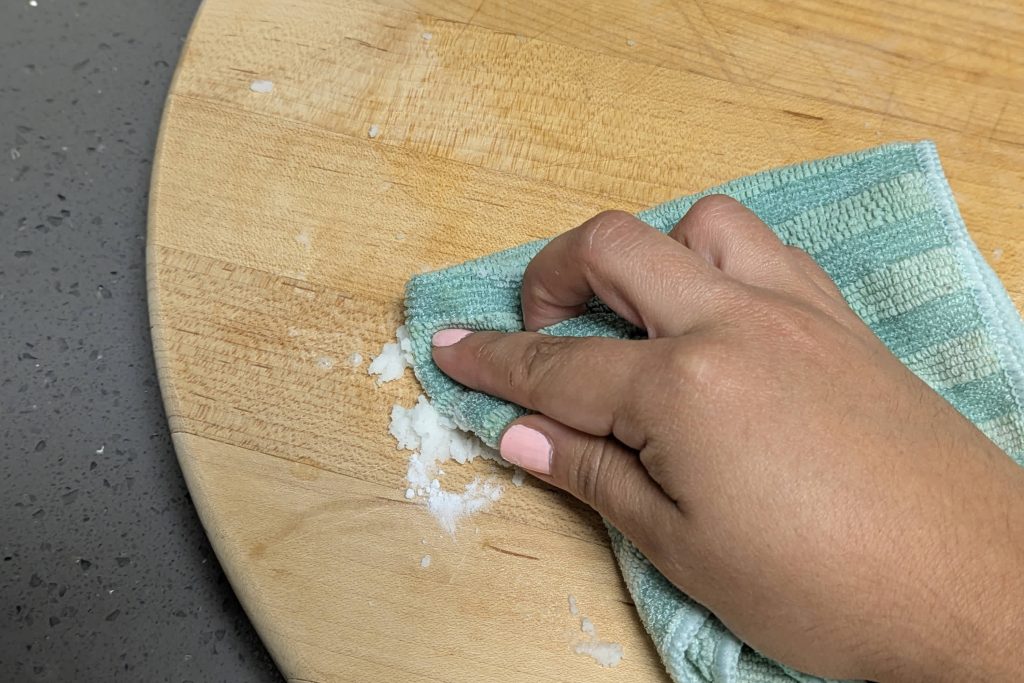
Your wooden cutting board is more than just a kitchen tool—it’s where you prepare meals for your loved ones. But do you know the best way to clean it?
Using the wrong method can damage your board or leave harmful bacteria behind. You’ll discover simple, effective steps to keep your wooden cutting board clean, safe, and long-lasting. Keep reading to learn how to protect your board and make your food prep safer every time.
Choosing The Right Cleaning Tools
Cleaning wooden cutting boards well keeps them safe and lasts longer. Using the right tools helps remove dirt without harming the wood.
Pick cleaning tools that clean gently but remove food particles and stains. Avoid anything too rough that can damage the board’s surface.
Soft Brushes And Sponges
Soft brushes and sponges clean wooden boards without scratching. They help get into grooves and remove stuck food safely.
- Use soft-bristle brushes for scrubbing
- Choose non-abrasive sponges that won’t damage wood
- Rinse brushes and sponges often to avoid bacteria
- Avoid steel wool or hard scrubbers that can scratch
Safe Cleaning Agents
Wood needs gentle cleaning agents that kill germs but do not dry it out. Harsh chemicals can ruin the board’s surface.
| Cleaning Agent | Use | Notes |
| Mild dish soap | Daily cleaning | Safe and effective |
| White vinegar | Disinfecting | Natural and gentle |
| Baking soda | Removing stains and odors | Use as a paste with water |
| Lemon juice | Freshening and light bleaching | Use carefully to avoid drying wood |

Credit: homewithgraceandjoy.com
Daily Cleaning Routine
Keeping wooden cutting boards clean is important for safety. Daily cleaning removes food particles and germs.
Using simple steps helps maintain the board’s quality and stops bad smells.
Washing With Warm Soapy Water
Use warm water and mild soap to wash your wooden cutting board. Avoid soaking it in water.
Scrub the board gently with a soft sponge or cloth to remove food bits and grease.
- Rinse the sponge or cloth often while cleaning
- Do not use harsh detergents or bleach
- Clean both sides of the board
Drying Techniques
Dry your wooden board right after washing to stop warping. Use a clean towel to wipe it.
Stand the board upright or lean it against a wall. This helps air flow and dries all sides.
- Do not leave the board flat while drying
- Keep it away from direct heat or sunlight
- Make sure the board is fully dry before storing
Removing Stains And Odors
Wooden cutting boards can absorb stains and smells from foods. Cleaning them well keeps them fresh and safe to use.
Using natural ingredients helps remove stains and odors without harming the wood.
Using Lemon And Salt
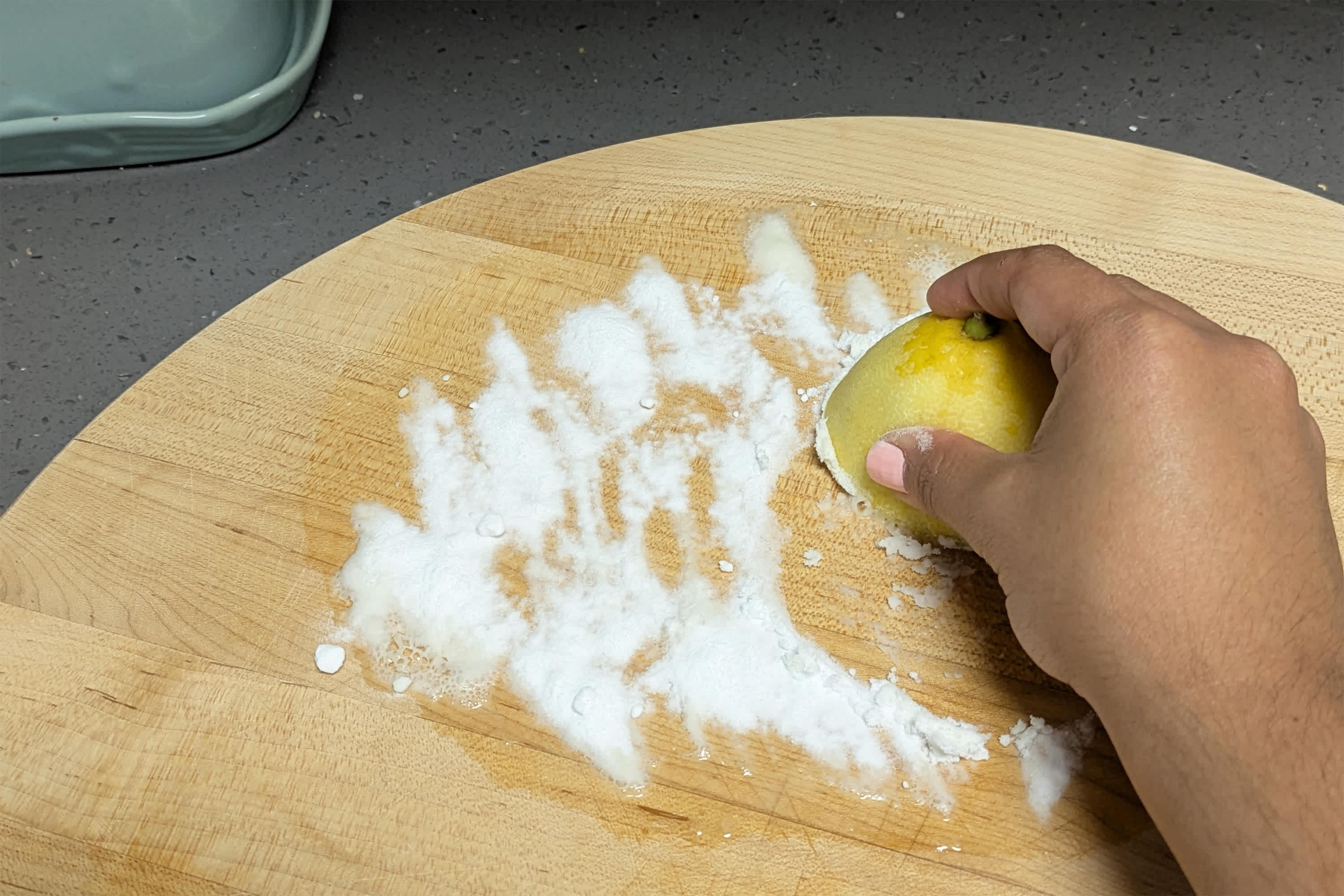
Lemon and salt work well together to clean wooden boards. Lemon juice breaks down stains and kills bacteria. Salt scrubs the surface to remove trapped food.
- Cut a lemon in half.
- Sprinkle coarse salt over the stained area.
- Rub the lemon on the salted spots for 2 to 3 minutes.
- Let it sit for 5 minutes to soak.
- Rinse with warm water and dry with a clean towel.
Baking Soda Solutions
Baking soda is a mild abrasive and deodorizer. It lifts stains and neutralizes odors without damaging wood.
| Cleaning Step | Description |
|---|---|
| Make Paste | Mix baking soda with a little water to form a thick paste. |
| Apply Paste | Spread the paste over the stained or smelly areas. |
| Scrub | Use a soft brush or cloth to scrub gently. |
| Wait | Leave the paste on the board for 10 minutes. |
| Rinse | Wash off with warm water and dry thoroughly. |
Deep Cleaning Methods
Wooden cutting boards need deep cleaning to stay safe and last longer.
Using natural disinfectants helps remove bacteria and odors effectively.
Vinegar Disinfection
Vinegar kills many germs on wooden boards. It is safe and easy to use.
- Spray white vinegar on the board’s surface.
- Let it sit for five minutes.
- Wipe the board with a clean cloth.
- Rinse with warm water and dry thoroughly.
Hydrogen Peroxide Treatment
Hydrogen peroxide cleans deeper and removes tough stains from wood.
| Step | Action |
| 1 | Pour 3% hydrogen peroxide on the board. |
| 2 | Spread it evenly with a clean cloth. |
| 3 | Let it sit for 10 minutes. |
| 4 | Rinse with warm water and dry well. |
Maintaining Wood Quality
Wooden cutting boards need care to last long. Proper maintenance keeps wood strong and safe for food.
Cleaning and treating wood helps prevent cracks and warping. It also stops bacteria from growing.
Oiling Frequency And Types
Oiling wooden boards stops drying and cracking. You should oil your board regularly to keep it smooth.
- Apply food-safe mineral oil once every 3 to 4 weeks.
- Use beeswax or a mixture of beeswax and mineral oil for extra protection.
- Do not use vegetable or olive oils; they can go rancid.
- Rub oil evenly and let it soak overnight for best results.
Avoiding Excess Moisture
Too much water can make wood swell and crack. Always dry your board fully after washing.
| Do | Don’t |
| Wash with warm, soapy water | Soak the board in water |
| Dry with a clean towel right after washing | Put the board in a dishwasher |
| Store the board standing up to air dry | Leave the board on a wet surface |

Credit: food52.com
Preventing Damage And Warping
Wooden cutting boards need special care to last long. Cleaning them right helps avoid cracks and warping.
Using the wrong cleaning methods can dry out or damage the wood. This guide shows how to keep your board safe.
Proper Storage Tips
Store your wooden cutting board in a dry place. Keep it away from direct sunlight and heat sources.
Stand the board on its edge or lay it flat with good air flow. This stops moisture from building up.
- Keep the board dry before storing
- Avoid stacking heavy items on it
- Use a rack or vertical holder
- Do not store near ovens or heaters
Avoiding Dishwasher Use
Do not put wooden cutting boards in the dishwasher. The heat and water can cause warping and cracking.
Hand wash with warm, soapy water and dry immediately. This protects the wood’s natural oils and shape.
- Wash by hand with mild soap
- Rinse with warm water only
- Dry with a towel right away
- Let air dry standing up
Credit: www.thekitchn.com
Frequently Asked Questions
How Often Should You Clean Wooden Cutting Boards?
Clean wooden cutting boards after each use to prevent bacteria buildup. Use hot soapy water and scrub thoroughly. For a deeper clean, disinfect with vinegar or hydrogen peroxide weekly. Dry thoroughly to avoid warping and cracking. Regular maintenance ensures your board remains sanitary and extends its lifespan.
Can You Use Bleach On Wooden Cutting Boards?
Avoid using bleach on wooden cutting boards, as it can damage the wood. Instead, opt for natural disinfectants like white vinegar or hydrogen peroxide. These alternatives effectively sanitize without harming the wood. Always rinse thoroughly and dry immediately after cleaning to maintain the board’s integrity.
What’s The Best Way To Remove Stains From Wood Boards?
To remove stains, sprinkle coarse salt on the board and scrub with a lemon half. The acidity and abrasiveness help lift stains. Rinse with warm water and dry immediately. For persistent stains, baking soda paste can be effective. Regular maintenance prevents deep staining.
How Do You Deodorize A Wooden Cutting Board?
To deodorize, sprinkle baking soda on the board and let it sit for 5 minutes. Scrub with a damp cloth, then rinse and dry. Alternatively, rub the board with lemon juice. Both methods neutralize odors effectively, leaving your board fresh and ready for use.
Conclusion
Cleaning wooden cutting boards keeps them safe and long-lasting. Use mild soap and warm water after each use. Avoid soaking to prevent cracks and warping. Regularly oil the board to keep wood healthy and strong. Dry it completely before storing to stop germs and mold.
A clean board means better food safety and tastier meals. Simple care makes a big difference every day. Keep your wooden cutting board fresh and ready for cooking.