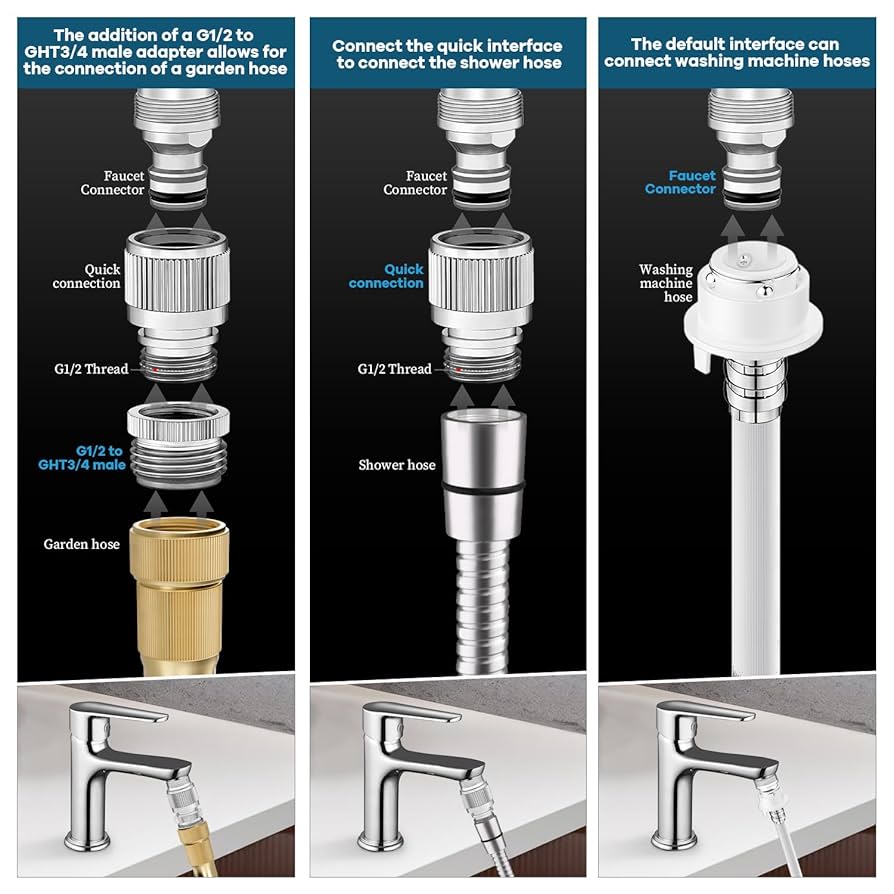
Are you tired of struggling to water your plants because your garden hose won’t connect to your kitchen faucet? You’re not alone.
Many people face this simple but frustrating problem every day. The good news is, connecting your garden hose to your kitchen faucet is easier than you think. In this guide, you’ll discover straightforward steps that anyone can follow. Imagine saving time and effort while keeping your garden green and healthy.
Keep reading, and you’ll learn exactly how to make it happen quickly and without hassle.

Credit: www.amazon.com
Tools And Materials Needed
Connecting a garden hose to your kitchen faucet is easy. You need the right tools and materials to do it properly.
This guide lists what you need before starting the connection. Having these items saves time and avoids leaks.
Garden Hose Adapter
The garden hose adapter attaches to your kitchen faucet. It changes the faucet end to fit the hose.
Adapters come in different sizes. Make sure to pick one that fits your faucet type.
- Threaded adapter for standard faucets
- Quick-connect adapter for easy hose changes
- Material options: plastic or metal
Rubber Washer
The rubber washer creates a tight seal between the faucet and adapter. It stops water from leaking.
Check that the washer fits inside the adapter snugly. Replace old washers if they are cracked or worn.
Adjustable Wrench
An adjustable wrench helps tighten the adapter to the faucet. It prevents damage by applying the right force.
You can also use pliers, but a wrench gives better control. Avoid overtightening to protect faucet threads.
Teflon Tape
Teflon tape wraps around faucet threads. It helps seal connections and stops leaks from thread gaps.
Wrap the tape clockwise around the threads two or three times before attaching the adapter.
Garden Hose
Choose a garden hose that fits the adapter size. Most hoses have a standard 3/4 inch diameter.
Check the hose length and quality. A flexible hose is easier to handle for kitchen use.
Bucket Or Towel (optional)
A bucket or towel helps catch water during installation. It keeps your kitchen dry and clean.
Use them to avoid spills when removing the faucet aerator or testing the hose connection.

Credit: www.amazon.ca
Choosing The Right Adapter
Connecting a garden hose to a kitchen faucet needs the right adapter. Using the correct adapter prevents leaks and damage.
Adapters come in different types and sizes. Picking the right one makes the connection easy and safe.
Types Of Adapters
There are several adapter types for joining garden hoses to kitchen faucets. The most common include:
- Threaded adapters with male or female ends
- Quick-connect adapters for easy attachment
- Rubber washers to prevent leaks
- Backflow preventers to stop water from flowing backward
Choose an adapter based on your faucet’s shape and threading. Some kitchen faucets need an extra part to fit standard hose sizes.
Selecting The Correct Size
Correct size is key for a tight and secure connection. Hose and faucet threads must match.
| Adapter Part | Common Sizes |
| Faucet Thread | 15/16″-27 (male), 55/64″-27 (female) |
| Hose Thread | 3/4″-11.5 NH (female) |
| Washer Diameter | Varies, usually 5/8″ to 3/4″ |
Measure your faucet threads with a ruler or thread gauge. Then, pick an adapter that fits both faucet and hose threads.
Preparing The Kitchen Faucet
Connecting a garden hose to your kitchen faucet starts with proper preparation. This ensures a tight and leak-free connection.
Two important steps are removing the aerator and inspecting the faucet threads. These help make sure the hose fits well.
Removing The Aerator
The aerator is the small screen at the faucet’s tip. It controls water flow and reduces splashing.
- Use your hand or a wrench to unscrew the aerator by turning it counterclockwise.
- If it is stuck, wrap a cloth around it to protect the finish before using a tool.
- Keep the aerator in a safe place for later use.
- Clean any debris inside the faucet opening.
Inspecting The Faucet Threads
After removing the aerator, check the faucet threads. These are the ridges where the hose connector will attach.
| What to Check | Details |
| Thread Type | Look for standard male threads for garden hoses. |
| Thread Condition | Ensure threads are clean and not damaged or worn out. |
| Thread Size | Measure to confirm it fits the hose connector, usually 3/4 inch. |
| Seal Area | Check the rubber washer or seal inside the connector for leaks. |
Attaching The Hose Adapter
Connecting a garden hose to your kitchen faucet needs the right adapter. This adapter links the hose and faucet safely. You will learn how to install it and make sure it fits well.
Follow these simple steps to attach the hose adapter correctly. A good connection stops leaks and keeps water flowing smoothly.
Installing The Adapter
First, check your kitchen faucet for threads or a smooth spout. Most adapters fit threaded faucets. If yours is smooth, you may need a different type of adapter.
- Turn off the water supply under the sink.
- Remove any aerator or existing attachments from the faucet.
- Clean the faucet threads to remove dirt and build-up.
- Wrap plumber’s tape around the faucet threads to prevent leaks.
- Screw the hose adapter onto the faucet by turning it clockwise.
- Hand-tighten the adapter until it feels secure.
Ensuring A Secure Fit
Check the connection to avoid leaks and water loss. Use a rubber washer inside the adapter for a tight seal. If the adapter has a clamp, tighten it with a screwdriver.
| Check | What to Do | Why It Matters |
|---|---|---|
| Rubber Washer | Place inside adapter | Prevents water leaks |
| Adapter Tightness | Hand-tighten firmly | Stops water from escaping |
| Clamp (if any) | Tighten with screwdriver | Keeps hose firmly attached |
| Water Test | Turn faucet on slowly | Check for leaks |
Connecting The Garden Hose
Connecting a garden hose to your kitchen faucet can save time watering plants. It also allows easy access to water outside your home.
Make sure you have the right adapter to fit your kitchen faucet. This will help you attach the hose securely.
Attaching To The Adapter
First, screw the adapter onto the kitchen faucet by turning it clockwise. Hand-tighten it to avoid damage.
Next, connect the garden hose to the adapter. Push the hose end onto the adapter’s connector firmly.
- Check the hose washer is inside the hose end to prevent leaks.
- Turn the hose connector clockwise to tighten it onto the adapter.
- Use a wrench if needed, but do not over-tighten.
Checking For Leaks
Turn on the faucet slowly to let water flow through the hose. Watch for any dripping or water spray.
| Problem | Solution |
|---|---|
| Water leaks at faucet connection | Tighten adapter or replace washer |
| Water leaks at hose end | Check hose washer and reconnect |
| No water flow | Ensure faucet is fully open |
Testing The Connection
After connecting your garden hose to the kitchen faucet, it is important to test the connection. This ensures there are no leaks and the water flows properly.
Testing helps avoid water waste and damage to your kitchen or garden area.
Turning On The Water
Start by slowly opening the kitchen faucet to allow water to flow into the garden hose. Watch closely for any water leaks at the connection point.
- Open the faucet handle gently to avoid sudden pressure.
- Check the hose end where it connects to the faucet.
- Look for drips or water spraying from the connection.
- If you see leaks, tighten the hose connector by hand.
- Do not use tools that may damage the faucet or hose.
Adjusting Water Flow
| Water Flow Setting | Effect |
| Low | Reduces pressure, helps prevent leaks |
| Medium | Good for normal watering tasks |
| High | Increases pressure, may cause leaks if connection is loose |
Adjust the faucet to control the water flow. Use low or medium flow to keep the connection secure and avoid leaks.
Troubleshooting Common Issues
Connecting a garden hose to a kitchen faucet can sometimes cause problems. These problems can stop water flow or cause leaks.
This guide will help you fix common issues like leaks, drips, and weak water pressure. Follow simple steps to solve these problems.
Leaks And Drips
Leaks and drips happen when the connection between the hose and faucet is not tight. Worn-out washers or damaged threads can also cause leaks.
Check the rubber washer inside the hose connector. Replace it if it is cracked or missing. Make sure the hose fits tightly on the faucet.
- Turn off water supply before checking connections
- Remove the hose and inspect the washer
- Replace damaged washers with new ones
- Tighten the hose connector by hand, avoid over-tightening
- Use plumber’s tape on faucet threads if needed
Weak Water Pressure
Weak water pressure can happen if the hose or faucet is blocked. Kinks in the hose or a clogged faucet aerator reduce water flow.
Inspect the hose for bends or kinks. Clean the faucet aerator by removing it and rinsing out dirt. Make sure the water valve is fully open.
- Straighten any kinks in the hose
- Remove and clean faucet aerator
- Check water valve is fully open
- Replace old or damaged hose
- Ensure faucet threads are clean and clear
Maintenance Tips
Keeping your garden hose connected to the kitchen faucet in good condition saves time and effort. Regular maintenance helps avoid leaks and damage.
Simple checks and proper storage protect the hose and faucet from wear and tear. Follow these tips to ensure a long-lasting connection.
Regular Checks
Inspect the hose and faucet connection often. Look for cracks, leaks, or loose fittings. Fix issues quickly to prevent bigger problems.
- Check the hose washer for wear and replace if needed.
- Ensure the faucet threads are clean and not damaged.
- Look for any water leaks around the connection point.
- Tighten the hose connector by hand; avoid using tools that can cause damage.
Proper Storage
Store your garden hose carefully to extend its life. Avoid leaving it under direct sun or freezing temperatures.
| Storage Tip | Reason |
| Keep hose in a shaded area | Prevents material from drying and cracking |
| Drain water before storing | Stops freezing and damage in cold weather |
| Use hose reels or hangers | Keeps hose untangled and ready to use |
| Disconnect hose from faucet | Avoids pressure on faucet and fittings |

Credit: www.reddit.com
Frequently Asked Questions
How Do I Connect A Garden Hose To Kitchen Faucet?
Use a faucet adapter that fits your kitchen faucet. Attach the adapter securely, then screw the garden hose onto it. Ensure all connections are tight to avoid leaks.
Can I Use A Kitchen Faucet For Outdoor Watering?
Yes, with the right adapter, a kitchen faucet can supply water outdoors. This setup is practical for small gardening tasks or filling buckets.
What Adapter Do I Need For Hose To Kitchen Faucet?
You need a faucet adapter compatible with your faucet’s spout size. Common sizes are 15/16″ or 55/64″ for kitchen faucets. Check your faucet before buying.
Will Connecting A Hose Damage My Kitchen Faucet?
If installed properly, connecting a hose won’t damage the faucet. Avoid overtightening and use the correct adapter to prevent leaks or wear.
Conclusion
Connecting a garden hose to a kitchen faucet is simple and useful. Choose the right adapter and attach it carefully. Check for leaks to avoid water waste. This setup helps water plants or clean outdoor spaces easily. Take your time and follow each step clearly.
Soon, you will have water ready where you need it most. Enjoy the convenience without extra hassle. Simple tools and a little effort make a big difference. Try it today and see how handy it can be.