
Are you struggling with too much moisture or dry air inside your grow tent? Controlling humidity is one of the most important steps to ensure your plants stay healthy and thrive.
Too much humidity can cause mold and mildew, while too little can stunt growth and reduce yields. You’ll discover simple, effective ways to manage the humidity levels in your grow tent. By learning these tips, you’ll create the perfect environment for your plants to flourish.
Keep reading to unlock the secrets to a successful grow!

Credit: www.spider-farmer.com
Causes Of High Humidity
High humidity in a grow tent can harm your plants. It creates a wet environment that leads to mold and pests. Understanding what causes high humidity helps you keep it under control.
Several factors add moisture to the air inside the tent. These factors need to be managed to keep plants healthy and growing well.
Plant Transpiration
Plants release water vapor through their leaves. This process is called transpiration. It adds moisture to the grow tent air, increasing humidity levels.
When many plants transpire at once, the air inside the tent can become very humid. Warm temperatures and bright lights make plants transpire more.
- Transpiration increases with heat and light
- More plants mean more moisture in the air
- Healthy plants release more water vapor
Watering Practices
Watering plants adds moisture to the grow tent. Overwatering causes excess water to evaporate into the air. This raises humidity levels quickly.
Water left on the soil surface or in trays also evaporates. Poor watering habits make it hard to control humidity.
- Avoid overwatering plants
- Use proper drainage to prevent standing water
- Water plants in the morning to reduce evaporation
Ventilation Issues
Good airflow removes moist air from the grow tent. Poor ventilation traps humid air inside the tent. This causes humidity to rise quickly.
Blocked fans or small vents reduce air exchange. This makes it hard to keep humidity low and fresh air flowing.
- Keep vents and fans clean and clear
- Use exhaust fans to remove moist air
- Bring fresh air from outside the tent
External Environment
The air outside the grow tent affects humidity inside. If the outside air is very humid, it raises the tent’s humidity too. This happens especially in rainy or damp weather.
Temperature and humidity outside the tent also impact the inside environment. Warm and wet outdoor air adds moisture when it enters the tent.
- High outdoor humidity increases tent humidity
- Cold air holds less moisture than warm air
- Control airflow from outside to reduce moisture
Effects Of Excess Humidity
Excess humidity in a grow tent can cause many problems for your plants. It creates a damp environment that is harmful to plant health.
Controlling humidity is important to keep plants growing strong and healthy. Too much moisture can lead to serious issues.
Mold And Mildew Growth
High humidity levels make mold and mildew grow fast inside a grow tent. These fungi thrive in wet, warm places.
Mold and mildew damage leaves and stems. They also reduce the plant’s ability to absorb light and nutrients.
- Look for white or gray powdery spots on leaves
- Check for fuzzy growth on soil and plant surfaces
- Remove affected parts to stop spread
Pest Infestations
Excess humidity attracts pests like fungus gnats and spider mites. These pests harm plants by feeding on them.
Wet environments help pests reproduce quickly. This can cause a fast increase in pest numbers inside the tent.
- Fungus gnats lay eggs in moist soil
- Spider mites thrive in humid air
- Pests weaken plants and spread diseases
Plant Stress
Too much humidity stresses plants by making it hard for leaves to breathe. Plants may stop growing well.
High moisture slows down water evaporation from leaves. This reduces the plant’s ability to cool itself.
- Leaves may turn yellow or wilt
- Growth may slow or stop completely
- Plants become less resistant to disease
Nutrient Imbalance
Excess humidity can cause nutrient problems in plants. Waterlogged soil stops roots from taking up nutrients properly.
This leads to nutrient buildup or deficiency. Plants may show signs like yellow leaves or poor growth.
- Too much moisture reduces oxygen in soil
- Roots may rot from being too wet
- Nutrient uptake becomes uneven or blocked
Monitoring Humidity Levels
Keeping the right humidity in a grow tent is very important for plant health. Too much or too little moisture can harm growth.
Monitoring humidity helps you make changes fast. This keeps your plants happy and growing strong.
Choosing The Right Hygrometer
A hygrometer measures the moisture in the air inside your grow tent. Picking a good one is key to accurate readings.
Look for a hygrometer that is easy to read and has fast response time. Digital ones often give better accuracy.
- Choose a digital hygrometer for clear numbers
- Pick one with a built-in thermometer
- Check for calibration options
- Place it at plant level for best results
Ideal Humidity Ranges
Different plants need different humidity levels. Keep your tent within the right range for best growth.
Seedlings and clones like higher humidity. Mature plants prefer it lower to stop mold and pests.
| Plant Stage | Ideal Humidity Range (%) |
|---|---|
| Seedlings and Clones | 65 – 75 |
| Vegetative Stage | 40 – 70 |
| Flowering Stage | 40 – 50 |
| Late Flowering | 30 – 40 |
Regular Data Tracking
Check your hygrometer readings at least twice a day. This helps catch changes before they hurt plants.
Write down the humidity levels. This lets you see trends and improve your control methods.
- Record morning and evening humidity
- Note any changes in plant health
- Adjust humidifiers or fans based on data
- Use apps or charts to track long-term trends
Credit: blimburnseeds.com
Ventilation Techniques
Controlling humidity in a grow tent needs good ventilation. Proper airflow helps keep plants healthy and prevents mold.
This section explains ways to improve ventilation using fans and air circulation methods.
Using Exhaust Fans
Exhaust fans pull moist air out of the grow tent. They help lower humidity and bring fresh air inside. Choose a fan size that fits your tent volume.
Run the fan continuously or on a timer to keep air moving. Place the exhaust fan near the top of the tent because hot air rises.
Intake Fan Placement
Intake fans bring fresh air into the grow tent. Place them near the bottom to allow cooler, fresh air to flow in. This balances the air pressure and helps exhaust fans work better.
- Position intake fans opposite the exhaust fan for good airflow
- Keep intake fans lower than exhaust fans to create air circulation
- Use screens to prevent pests from entering through intake vents
Air Circulation Strategies
Good air circulation moves moisture away from plants. Use oscillating fans inside the tent to spread air evenly.
| Fan Type | Purpose | Placement |
| Oscillating Fan | Circulates air around plants | Inside tent, above plants |
| Inline Exhaust Fan | Removes humid air | Top of tent, near exhaust vent |
| Intake Fan | Brings fresh air in | Bottom of tent, near intake vent |
Dehumidification Methods
Controlling humidity is key to a healthy grow tent environment. Too much moisture can cause mold and harm plants. There are simple ways to reduce humidity inside your tent.
This guide covers three common dehumidification methods. You will learn about portable dehumidifiers, desiccant packs, and heating solutions. Each method works differently to keep humidity in check.
Portable Dehumidifiers
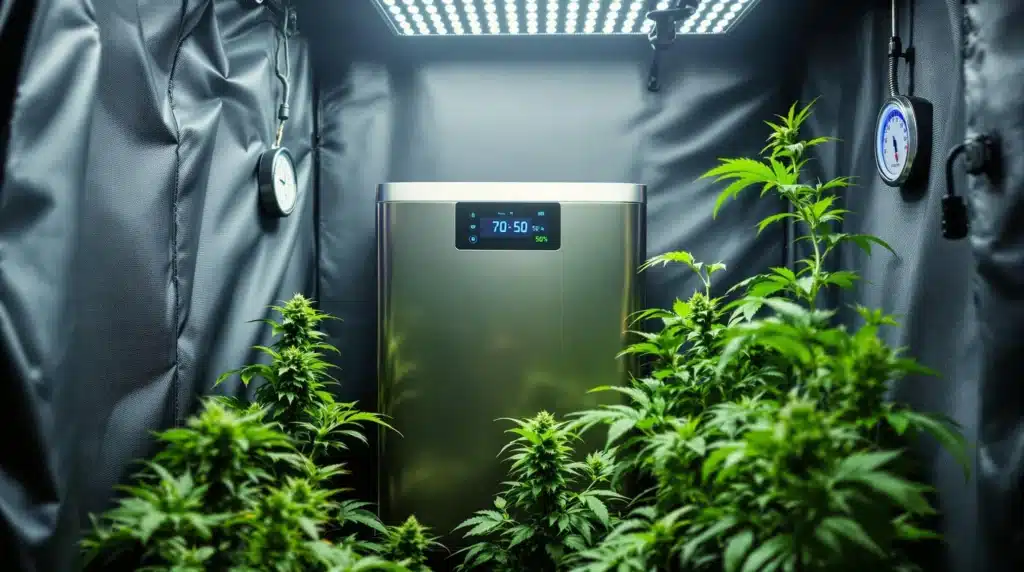
Portable dehumidifiers remove moisture from the air using a fan and cooling coils. They are easy to move and control. These devices work best in medium to large grow tents.
- Place the dehumidifier near the tent’s air intake.
- Set the desired humidity level using the built-in controls.
- Empty the water tank regularly or connect a drain hose.
- Choose a model that matches your tent size for best results.
Desiccant Packs
Desiccant packs absorb moisture from the air without electricity. They are small and can fit inside tight spaces. These packs work well for small tents or to supplement other methods.
| Type | Material | Best Use | Replacement Frequency |
|---|---|---|---|
| Silica Gel | Silica beads | Small tents and cabinets | Every 1-2 months |
| Clay Desiccant | Natural clay | Medium tents | Every 2-3 months |
| Calcium Chloride | Salt crystals | High humidity areas | Every 1 month |
Heating Solutions
Heating the air can lower humidity by increasing evaporation. This method works well in cooler environments. Use heaters safely to avoid overheating your plants.
Tips for using heating solutions:
- Use a thermostat to keep a steady temperature.
- Place heaters away from plants to avoid burns.
- Combine heating with ventilation for best results.
- Check humidity levels often to adjust heater settings.

Credit: www.reddit.com
Watering Adjustments
Controlling humidity in a grow tent often starts with watering habits. Water affects moisture levels in the air and soil.
Changing how and when you water plants helps keep humidity balanced. This keeps plants healthy and prevents mold.
Watering Frequency
Water plants only when they need it. Check soil moisture before watering again. Too much water raises humidity.
Let soil dry out slightly between waterings. This stops excess moisture from building up inside the tent.
Drainage Improvement
Good drainage helps water flow out of pots easily. This stops water from sitting and increasing humidity.
Use pots with holes and well-draining soil. Add a tray under pots to catch extra water and remove it quickly.
- Choose pots with multiple drainage holes
- Use soil mixes with perlite or sand
- Empty trays after watering to avoid standing water
Avoiding Overwatering
Overwatering is a common cause of high humidity. It also harms roots and slows plant growth.
Water only the amount plants need. Watch for signs like droopy leaves or wet soil to adjust watering.
- Check soil moisture with your finger or a moisture meter
- Water less if air feels very humid
- Let pots dry between waterings
Temperature Control
Controlling temperature in a grow tent helps keep plants healthy. Temperature changes affect humidity levels. Proper temperature control keeps the environment stable.
Using the right tools can make heating and cooling easier. This guide explains how to control temperature and its impact on humidity.
Heating And Cooling Options
Heaters add warmth to your grow tent. Use electric or ceramic heaters for steady heat. Fans help cool the air by moving it around. Air conditioners work well for larger tents.
- Electric heaters are easy to use and safe.
- Ceramic heaters provide even heat without drying air too much.
- Fans improve air flow and reduce hot spots.
- Air conditioners lower temperature and remove moisture.
Impact On Humidity
Temperature affects how much moisture air can hold. Warmer air holds more water vapor. Cooling air lowers its moisture capacity, causing condensation. Heating air can lower relative humidity if no water is added.
| Temperature | Effect on Humidity |
| Heating | Decreases relative humidity if no water added |
| Cooling | May increase relative humidity or cause condensation |
| Stable temperature | Keeps humidity levels steady |
Maintaining Stable Conditions
Keep temperature and humidity steady by monitoring both regularly. Use a thermometer and hygrometer inside the tent. Adjust heating or cooling devices as needed.
Tips for stable conditions:
- Set heaters or coolers on timers.
- Use humidifiers or dehumidifiers to balance moisture.
- Seal the tent well to avoid air leaks.
- Place sensors away from direct heat or air flow.
Plant Selection And Arrangement
Controlling humidity in a grow tent starts with the right plants and how you place them. Some plants release less moisture into the air. Others need space to let air flow freely. Both help keep humidity levels stable.
Choosing plants and arranging them well lowers risks of mold and mildew. It also helps plants grow strong and healthy inside your tent.
Choosing Low-transpiration Plants
Plants that release less water vapor help reduce humidity. These low-transpiration plants keep the air drier. They are easier to manage in small grow tents.
- Succulents like aloe and jade plants
- Herbs such as rosemary and thyme
- Ornamental plants like snake plants
- Vegetables with thick leaves, like kale
- Cacti, which store water and release little
Spacing For Airflow
Good airflow lowers humidity by moving moist air away from plants. Space plants enough to let air flow around leaves and stems. This also helps prevent fungal growth.
| Spacing Method | Details |
| Between plants | Leave at least 6 to 12 inches |
| Between rows | Allow 12 to 18 inches for air movement |
| Height arrangement | Tall plants at back, shorter at front |
| Use fans | Keep air circulating gently inside tent |
Additional Tips For Success
Controlling humidity in a grow tent is important for healthy plants. Small actions can help keep humidity levels steady. These tips will help you improve your setup.
Focus on regular care, use the right tools, and adjust your methods by season. Each part plays a role in keeping your grow tent environment stable.
Regular Maintenance
Check your grow tent often to avoid humidity problems. Clean the tent and equipment regularly. Remove dead leaves and debris, as they add moisture.
- Wipe down walls and surfaces weekly
- Inspect and clean fans and filters
- Check for leaks or water spills
- Empty water trays daily to prevent excess moisture
Using Humidity Controllers
Humidity controllers keep your tent at a steady level. They turn humidifiers or dehumidifiers on and off automatically. This saves time and keeps plants safe.
| Device | Function | When to Use |
| Humidifier | Adds moisture | Dry air or winter |
| Dehumidifier | Removes moisture | Wet air or rainy season |
| Fan with Sensor | Circulates air | High humidity levels |
Seasonal Adjustments
Humidity changes with the seasons. Adjust your settings to fit the weather. Use this simple guide to help adjust your tent’s humidity.
- Spring: Increase airflow, reduce humidity
- Summer: Use dehumidifier to prevent mold
- Fall: Balance humidity and temperature
- Winter: Add humidifier for dry air
Frequently Asked Questions
How Do I Reduce Humidity In A Grow Tent?
To reduce humidity, improve ventilation by using fans and exhaust systems. Consider using a dehumidifier or silica gel to absorb moisture. Keep plants spaced adequately to ensure airflow. Monitor humidity levels regularly with a hygrometer to maintain optimal conditions for plant growth.
What Is The Ideal Humidity For A Grow Tent?
The ideal humidity varies with plant growth stages. Seedlings thrive at 65-70% humidity, while flowering plants prefer 40-50%. Consistent monitoring and adjustments ensure the best environment. Maintaining optimal humidity levels promotes healthy plant growth and reduces the risk of mold and mildew.
Can High Humidity Harm Plants In A Grow Tent?
Yes, high humidity can harm plants by promoting mold and mildew growth. It can also hinder nutrient uptake. Excess moisture creates an unhealthy environment, affecting plant health and yield. Proper ventilation and humidity control are essential to prevent these issues and ensure a thriving grow tent environment.
Do Fans Help Control Grow Tent Humidity?
Yes, fans help by promoting air circulation and reducing humidity levels. They prevent moisture buildup and create a balanced environment. Proper airflow is crucial for maintaining the right humidity, preventing mold, and ensuring healthy plant growth. Regularly check and adjust fan placement for optimal results.
Conclusion
Controlling humidity in a grow tent keeps plants healthy and strong. Use a humidifier or dehumidifier to adjust moisture levels. Ventilation helps air flow and stops mold growth. Regularly check your tent’s humidity with a reliable meter. Small changes make a big difference in plant growth.
Stay consistent and your plants will thrive. Simple steps lead to better harvests and less stress. Keep your grow tent environment balanced for the best results.