Cutting cement board can feel tricky if you’ve never done it before. But with the right tips and tools, you’ll find it’s easier than you think.
Whether you’re working on a tile project or a home renovation, knowing how to cut cement board correctly saves you time and frustration. In this guide, you’ll discover simple steps that make your cuts clean and precise. Stick with me, and you’ll gain the confidence to handle your project like a pro.
Ready to get started? Let’s dive in.

Credit: www.tilemountain.co.uk
Tools Needed
Cutting cement board requires the right tools to make clean and accurate cuts. Using proper tools also helps you work safely and efficiently.
This guide covers the essential cutting tools and safety gear you need for the job.
Essential Cutting Tools
You need specific tools to cut cement board properly. These tools help you score, snap, or saw through the board easily.
- Utility knife with a sharp blade
- T-square or straight edge for marking
- Cement board scoring tool (optional)
- Carbide-tipped scoring tool
- Jigsaw with a carbide blade
- Angle grinder with diamond blade
- Measuring tape for accurate cuts
For simple cuts, scoring and snapping with a utility knife is enough. For curved or detailed cuts, use a jigsaw or angle grinder.
Safety Gear
Cutting cement board creates dust that can harm your lungs and eyes. Always wear proper safety gear to protect yourself.
- Dust mask or respirator to avoid inhaling dust
- Safety goggles to protect your eyes
- Work gloves to protect your hands
- Long-sleeve shirt and pants to cover your skin
- Ear protection if using power tools
Wear safety gear every time you cut cement board to stay safe and avoid injuries.

Credit: insulationgo.co.uk
Preparing The Work Area
Cutting a cement board requires a clean and safe work area. Preparing your space helps you work faster and avoid accidents.
Organize your tools and clear the surface before starting to cut. This preparation makes the task easier and more accurate.
Clear And Stable Surface
Set up a flat and stable surface to support the cement board. This prevents the board from moving while you cut.
Remove any clutter or loose items from your workspace. Use sawhorses or a sturdy table to hold the board securely.
- Choose a level and firm surface
- Use clamps to hold the board in place
- Keep the area free from dust and debris
Marking The Cut Lines
Use a pencil or chalk to draw clear lines where you want to cut. Accurate marks guide your cutting tool for a straight edge.
Measure twice before marking to avoid mistakes. Use a straightedge or ruler to keep your lines straight and neat.
- Measure the board carefully
- Use a ruler to draw straight lines
- Double-check your measurements
Cutting Techniques
Cutting cement board needs care and the right tools. Choose a method that fits your project and skill level.
This guide covers three common ways to cut cement board safely and accurately.
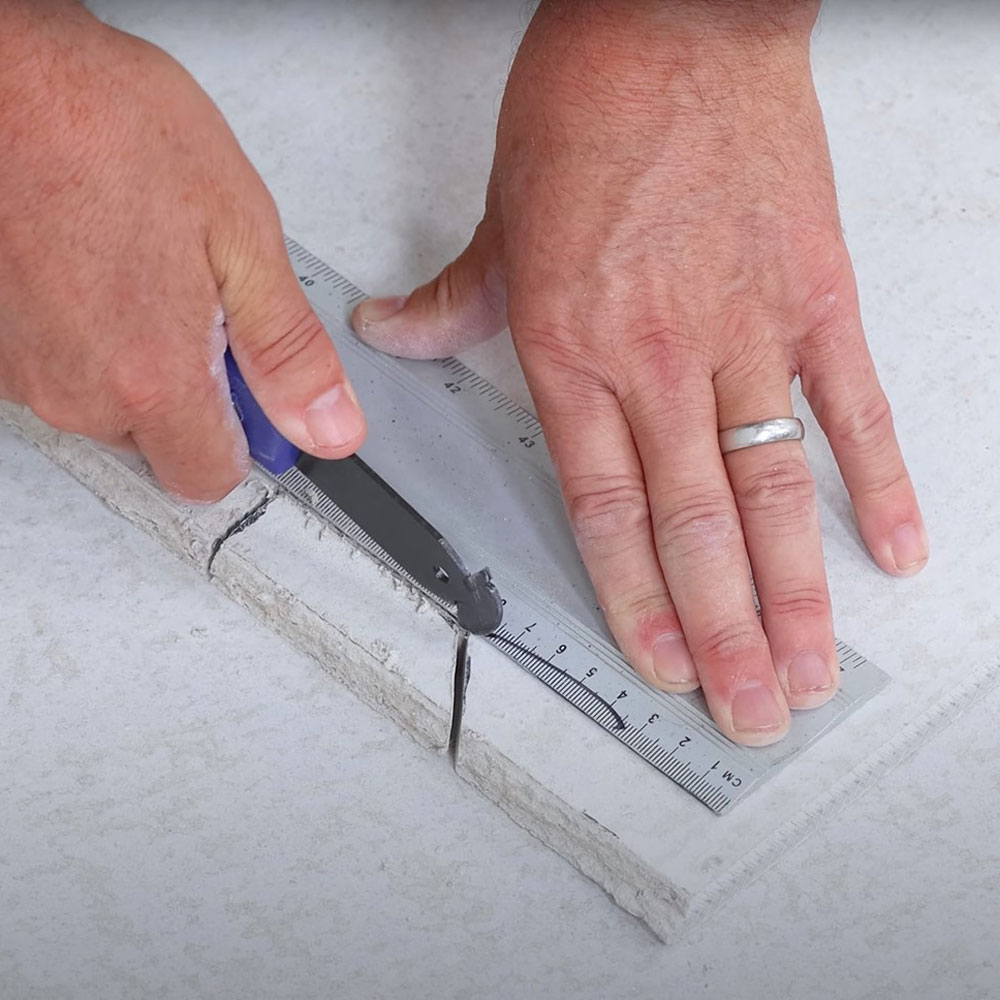
Scoring And Snap Method
This method uses a utility knife and scoring to break the board cleanly. It works best for straight cuts on thin cement boards.
- Draw a straight line where you want to cut.
- Use a carbide-tipped utility knife to score along the line deeply.
- Snap the board gently downwards at the scored line.
- Use sandpaper to smooth rough edges if needed.
Using A Circular Saw
A circular saw with a diamond blade cuts cement board quickly. Wear protective gear to avoid dust and debris.
| Tip | Details |
| Blade type | Use a diamond-tipped blade for clean cuts |
| Cut depth | Set the blade to the board thickness |
| Safety gear | Wear mask, goggles, and gloves |
| Cutting speed | Go slow to avoid chipping |
Using A Jigsaw
A jigsaw cuts curves and shapes in cement board. Use a carbide-grit blade and a steady hand for best results.
- Mark your cutting line clearly.
- Attach a carbide-grit blade to the jigsaw.
- Secure the board on a stable surface.
- Cut slowly following the line to avoid breaks.
- Wear a mask to protect from dust.
Handling Edges And Finishing
Cutting cement board creates rough edges that need attention. Proper handling of these edges ensures safety and a clean look. Finishing the edges helps the cement board fit well into your project.
This guide covers how to smooth rough edges and clean dust and debris after cutting cement board.
Smoothing Rough Edges
Rough edges can cause cuts or damage other materials. Smoothing them makes the board easier to handle and install. Use simple tools to get a smooth finish.
- Wear gloves to protect your hands.
- Use a sanding block or a rasp to smooth edges gently.
- Work in small sections to avoid breaking the board.
- Check edges often to avoid over-sanding.
- Clean the board after sanding to remove dust.
Cleaning Dust And Debris
Cutting cement board produces fine dust that can irritate your skin and lungs. Cleaning the dust and debris keeps your workspace safe and the board ready for use.
| Cleaning Tool | Use | Notes |
|---|---|---|
| Vacuum Cleaner | Remove dust quickly | Use one with a HEPA filter |
| Brush | Sweep off debris | Use a stiff brush for best results |
| Damp Cloth | Wipe surface clean | Use water to trap remaining dust |
Common Mistakes To Avoid
Cutting cement board can be tricky if you do not prepare well. Many people make mistakes that cause damage or injury. Knowing what to avoid helps you get better results.
This guide explains two common errors when cutting cement board. Follow the tips to work safely and accurately.
Cutting Without Proper Support
One common mistake is cutting cement board without enough support underneath. The board can crack or break if it bends while cutting. This causes rough edges and waste.
- Always place the cement board on a flat, sturdy surface.
- Use sawhorses or a workbench to hold the board steady.
- Clamp the board firmly so it does not move during cutting.
- Support the offcut piece to prevent it from snapping.
- Do not cut while the board is hanging unsupported.
Ignoring Safety Precautions
Cutting cement board creates dust that can harm your lungs and eyes. Many people skip safety gear and suffer injuries or health issues.
| Safety Gear | Reason to Use |
| Respirator mask | Protect lungs from dust |
| Safety goggles | Shield eyes from particles |
| Gloves | Prevent cuts and scrapes |
| Long sleeves | Protect skin from irritation |
| Hearing protection | Reduce noise from cutting tools |

Credit: www.tilemountain.co.uk
Frequently Asked Questions
How To Safely Cut A Cement Board?
To safely cut a cement board, wear protective gear like gloves and a mask. Use a carbide-tipped scoring tool or a circular saw with a carbide blade. Ensure the board is secured and cut slowly to avoid chipping.
What Tools Are Needed For Cutting Cement Board?
You need a scoring tool, a circular saw with a carbide blade, and safety gear. Always ensure your tools are in good condition. A utility knife might also be useful for smaller cuts or edges.
Can I Use A Jigsaw To Cut Cement Board?
Yes, you can use a jigsaw with a carbide-grit blade for cutting curves. Ensure the board is properly supported. A jigsaw is ideal for intricate shapes or smaller cutouts in the cement board.
Do I Need To Seal Cement Board Edges?
Yes, sealing cement board edges prevents moisture absorption and prolongs durability. Use a waterproofing membrane or sealant. This step is crucial, especially in wet areas like bathrooms or kitchens.
Conclusion
Cutting cement board is easier than it seems. Use the right tools and follow safety steps. Score the board, then snap it cleanly. Always wear protective gear to avoid dust and injury. Practice on a scrap piece if you can.
Taking your time helps you get neat cuts. With patience, your project will look professional. Keep these tips in mind for smooth results every time.