Are you ready to tackle your next project with foam board but unsure how to cut it perfectly? Cutting foam board might seem tricky, but with the right tips and tools, you can achieve clean, sharp edges every time.
Imagine saving time, avoiding frustration, and getting professional-looking results that make your work stand out. Keep reading, and you’ll discover simple, step-by-step methods that anyone can follow—even if you’ve never worked with foam board before. Your next project is about to get a whole lot easier!
Choosing The Right Foam Board
Foam boards are popular for art, crafts, and presentations. Picking the right board makes cutting easier and results better.
This guide helps you understand foam board types, thickness, and size for your projects.
Types Of Foam Boards
Foam boards come in different materials and finishes. Each type fits different uses and cutting methods.
Common types include standard foam board, archival foam board, and glossy foam board.
- Standard Foam Board:Lightweight with white paper surfaces, good for general crafts.
- Archival Foam Board:Acid-free, lasts longer without yellowing, ideal for important displays.
- Glossy Foam Board:Shiny surface, great for photos and professional presentations.
Selecting Thickness And Size
Foam boards come in various thicknesses, usually from 3/16 inch to 1/2 inch. Thicker boards are stronger but harder to cut.
Choose size based on your project. Larger boards cover more space but need bigger tools to cut smoothly.
- Thin boards (3/16 inch) are easy to cut and good for simple projects.
- Medium boards (1/4 inch) balance strength and cut-ability for most uses.
- Thick boards (1/2 inch) offer durability but require sharp blades and care.
- Standard sizes include 20×30 inches and 24×36 inches.

Credit: www.youtube.com
Essential Tools For Cutting
Cutting foam board needs the right tools. Using proper tools helps you get clean and straight cuts.
This guide covers the main tools you need for cutting foam board safely and accurately.
Knives And Blades
A sharp knife is the best choice for cutting foam board. It makes smooth cuts without tearing the material.
Use a craft knife, utility knife, or X-Acto knife. Replace blades often to keep cuts clean and safe.
- Craft knife: good for detailed cuts
- Utility knife: strong and easy to handle
- X-Acto knife: precise and sharp
- Always use new blades for best results
Cutting Mats And Rulers
A cutting mat protects your work surface and keeps your blade sharp. Use a self-healing mat for long use.
A metal ruler helps you cut straight lines. It stops the knife from slipping and causing mistakes.
- Cutting mat: protects tables and blades
- Self-healing mats last longer
- Metal ruler: guides straight cuts
- Use ruler with a non-slip backing
Preparing For The Cut
Cutting foam board needs careful preparation to get clean and straight edges. Taking time before cutting helps avoid mistakes and damage.
Focus on marking the cutting lines clearly and securing the foam board firmly. These steps make the cutting process safer and easier.
Marking The Cutting Lines
Use a ruler and a pencil to draw straight cutting lines on the foam board. Clear lines guide your blade for accurate cuts.
- Place the ruler firmly along the line you want to cut.
- Use a sharp pencil or fine marker to draw the line.
- Double-check measurements before drawing.
- Mark both sides if you plan to cut from both edges.
- Keep lines light to avoid permanent marks on the surface.
Securing The Foam Board
Hold the foam board steady to prevent slipping during the cut. Use clamps or weights to keep it in place.
| Method | How to Use |
| Clamps | Attach to the edges of a workbench to hold the board tight. |
| Weights | Place heavy objects evenly on the board corners. |
| Non-slip Mat | Put under the board to increase friction and reduce movement. |

Credit: www.wikihow.com
Step-by-step Cutting Techniques
Cutting foam board properly makes your project look clean and neat. Using the right tools and methods helps you get smooth edges. This guide covers different cutting styles to help you work confidently.
Follow these steps to cut foam board safely and accurately. Each method suits a different type of cut you might need.
Single Straight Cuts
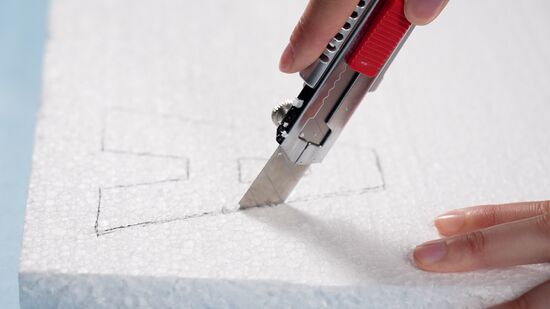
Single straight cuts are the easiest and most common cuts for foam board. Use a sharp utility knife and a ruler for best results. Cut slowly to avoid rough edges.
- Place the foam board on a flat surface.
- Measure and mark the cut line with a pencil.
- Align a metal ruler along the mark.
- Score the foam board lightly with the knife along the ruler.
- Make several passes, pressing deeper each time until the cut goes through.
Multiple Layer Cuts
Cutting several foam boards at once saves time. You need a sharp blade and a sturdy surface. Clamp the boards together to keep them aligned.
| Step | Action | Tip |
|---|---|---|
| 1 | Stack foam boards evenly. | Use clamps to hold them tightly. |
| 2 | Mark the cut line on the top board. | Double-check measurements. |
| 3 | Score along the line with a sharp knife. | Apply steady pressure. |
| 4 | Repeat scoring until boards separate. | Use multiple light passes. |
| 5 | Separate boards and smooth edges if needed. | Sand gently for a clean finish. |
Curved And Complex Shapes
Cutting curves and shapes needs patience and the right tools. A craft knife with a fine blade works best. Trace your shape clearly before cutting.
Follow these tips for curved cuts:
- Use a flexible ruler or stencil to draw curves.
- Make small, careful cuts rather than one long cut.
- Turn the foam board, not the knife, to follow the shape.
- Use sandpaper or a file to smooth edges after cutting.
Tips For Clean And Precise Cuts
Cutting foam board cleanly takes care and the right tools. Sharp blades and steady hands help you get smooth edges.
This guide shares tips to make your cuts precise and neat every time. Follow these steps to avoid rough edges and mistakes.
Maintaining Blade Sharpness
A sharp blade cuts foam board easily and cleanly. Dull blades tear the surface and cause jagged edges.
- Use a new blade or replace blades often.
- Keep the blade clean from sticky residue.
- Store blades safely to avoid damage.
- Use a craft knife designed for foam board cutting.
Applying Consistent Pressure
Pressing evenly while cutting helps avoid uneven or broken edges. Too much force can crush the foam inside.
| Pressure Level | Effect on Cut |
| Light | May cause incomplete cuts |
| Moderate and steady | Clean and smooth edges |
| Heavy | Crushed foam and rough edges |
Using Guides And Templates
Guides and templates help keep lines straight and shapes accurate. They make cutting easier and faster.
Try these tips for using guides:
- Use a metal ruler to guide your blade.
- Clamp templates to the board to prevent slipping.
- Mark cutting lines clearly with a pencil.
- Cut along the edge of the guide slowly and steadily.
Common Mistakes To Avoid
Cutting foam board needs care and attention. Mistakes can cause damage or injury. Avoiding common errors helps get clean cuts and stay safe.
This guide shows two frequent mistakes to avoid while cutting foam board.
Cutting Too Fast
Rushing through the cut can ruin the foam board edges. It can also cause the blade to slip. Cutting slowly gives better control and cleaner lines.
- Use steady, even pressure on the knife.
- Make multiple light passes rather than one deep cut.
- Keep the blade sharp to reduce force needed.
- Support the foam board fully to avoid bending.
- Take breaks if your hand feels tired.
Ignoring Safety Precautions
Cutting foam board with sharp tools can cause injuries. It is important to follow basic safety rules every time.
| Safety Precaution | Reason |
| Wear cut-resistant gloves | Protects hands from accidental cuts |
| Use a cutting mat | Prevents damage to work surface and blade slipping |
| Cut away from your body | Reduces risk of injury if blade slips |
| Keep blade covered when not in use | Prevents accidental contact |
| Work in a well-lit area | Improves visibility and accuracy |
Finishing Touches
Cutting foam board is only part of the process. Finishing touches make your project look clean and professional. This section covers important steps after cutting.
Paying attention to edges and debris helps your foam board last longer and look better. Follow these tips to improve your results.
Smoothing Edges
Sharp or rough edges can ruin the look of your foam board. Use simple tools to smooth them out. A sanding block or fine sandpaper works well.
- Lightly sand the edges in one direction
- Use gentle pressure to avoid damaging the foam
- Check edges often to keep them even and smooth
- Wipe off dust with a soft cloth after sanding
Cleaning Up Debris
Cutting foam board creates small particles and dust. Cleaning your workspace and the board improves safety and appearance. Use the right tools to remove debris.
| Tool | Use |
| Soft brush | Remove loose dust from edges and surface |
| Vacuum cleaner | Clean up dust from the workspace |
| Damp cloth | Wipe surface gently to pick up fine particles |
Credit: jtechphotonics.com
Frequently Asked Questions
How Do You Cut Foam Board Cleanly?
To cut foam board cleanly, use a sharp utility knife or a hot wire cutter. Ensure your cutting surface is flat and stable. Score the board lightly first, then apply firm pressure for a full cut. A straightedge can help maintain straight lines.
What Tools Are Best For Cutting Foam Board?
The best tools for cutting foam board include a utility knife and a hot wire cutter. A craft knife or a rotary cutter can also be effective. Always ensure the blades are sharp for clean cuts. Use a metal ruler or straightedge to guide your cuts.
Can Foam Board Be Cut With Scissors?
Yes, foam board can be cut with scissors, but it’s not ideal. Scissors may crush the edges, leading to uneven cuts. For better results, use a sharp utility knife. If scissors are your only option, use small, precise cuts to minimize damage.
Is It Easy To Cut Foam Board?
Yes, cutting foam board is relatively easy with the right tools. A sharp utility knife or a hot wire cutter works best. For beginners, practice on a scrap piece first. Ensure you have a stable cutting surface and use a straightedge for guidance.
Conclusion
Cutting foam board is easier than it seems. Use the right tools and take your time. A sharp blade and a straight edge help a lot. Measure carefully before you cut. Smooth, clean cuts make your project look better. Practice a bit to gain confidence.
Soon, cutting foam board will feel natural. Keep safety in mind and work on a flat surface. Enjoy creating with your neatly cut foam boards!