
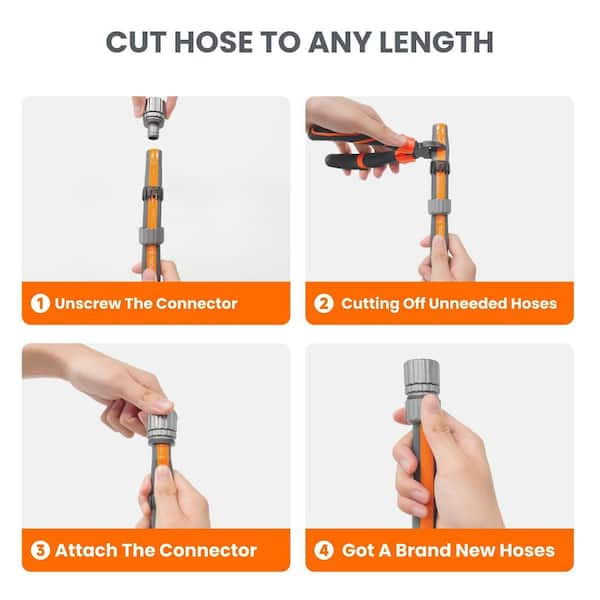
Have you ever needed a shorter garden hose but didn’t know where to start? Cutting a garden hose might seem tricky, but it’s actually simple and quick when you know the right steps.
Whether your hose is too long or damaged at the end, learning how to cut it properly saves you money and frustration. In this guide, you’ll discover easy tips and tricks to get the job done perfectly every time. Keep reading to take control of your garden hose and make your watering tasks easier than ever.
Credit: www.homedepot.com
Choosing The Right Hose
Cutting a garden hose needs the right hose type and size. Picking the right hose helps your garden work well.
Before cutting, know what hose fits your needs. This makes your job easier and saves water.
Types Of Garden Hoses
Garden hoses come in many types. Each type has its use and benefits. Choose one that fits your garden tasks.
- Vinyl hoses: Lightweight and cheap. Good for light watering.
- Rubber hoses: Strong and flexible. Last longer and work well in cold weather.
- Reinforced hoses: Have layers to prevent kinks. Great for heavy use.
- Soaker hoses: Release water slowly. Perfect for watering plants deeply.
- Expandable hoses: Expand when filled with water. Easy to store but less durable.
Selecting The Correct Diameter
Hose diameter affects water flow and pressure. Pick a diameter that matches your watering needs.
Common hose diameters are ½ inch, ⅝ inch, and ¾ inch. Larger diameters give more water but need more effort.
| Diameter | Best Use |
|---|---|
| ½ inch | Small gardens, low water flow |
| ⅝ inch | Most common, good water flow for average gardens |
| ¾ inch | Large gardens, high water flow needs |
Tools You’ll Need
Cutting a garden hose is a simple task. You need the right tools to make a clean cut. This helps your hose last longer and work better.
Using proper tools also keeps you safe while working. Let’s look at the tools you will need to cut a garden hose.
Recommended Cutting Tools
Choose tools that can cut through tough rubber or plastic. The cut should be straight and smooth. This stops leaks and damage.
- Sharp utility knife or box cutter
- Garden scissors or pruning shears
- Hose cutter with a sharp blade
- Heavy-duty scissors made for thick materials
- Pipe cutter for precise cuts
Make sure your cutting tool is sharp. Dull blades can crush the hose instead of cutting it.
Safety Gear Essentials
Wear safety gear to protect your hands and eyes. Cutting tools can slip and cause injury.
- Protective gloves to avoid cuts
- Safety glasses to protect your eyes
- Long sleeves to shield your arms
Always cut away from your body. Work on a stable surface to keep control of your tools.
Preparing The Hose
Cutting a garden hose requires careful preparation. This ensures a clean and efficient result.
Before cutting, gather the necessary tools and measure the hose accurately.
Measuring The Desired Length
Decide how long you want the hose to be. Measure the length with a measuring tape.
Use a tape measure for accuracy. Ensure the hose is straight while measuring.
- Place the hose on a flat surface
- Measure from the end to the desired length
- Mark the spot with a marker
Marking The Cut Point
Once measured, mark where you will cut. This helps in making a straight cut.
Use a visible marker to draw a line around the hose. This line guides your cut.
| Tool | Purpose |
| Marker | Marks the cut point |
| Measuring Tape | Measures desired length |
Cutting Techniques
Cutting a garden hose correctly keeps it working well. You need the right tools and careful cutting.
Using good techniques helps avoid leaks and damage to the hose ends.
Straight Cuts For Clean Edges
Make straight cuts to get clean edges on your garden hose. This helps the fittings fit tightly.
Use a sharp utility knife or hose cutter. Cut on a flat surface and hold the hose steady.
- Mark the cutting spot with a pen or tape
- Cut slowly and evenly across the hose
- Avoid twisting the hose while cutting
- Check the cut edge for any rough spots
Avoiding Common Mistakes
Do not cut the hose at an angle. Slanted cuts cause leaks and weak connections.
Do not use dull tools. They crush the hose or make jagged edges.
- Do not cut without measuring first
- Do not rush the cutting process
- Do not leave rough edges; trim if needed
- Do not force fittings if the cut is uneven
Attaching Hose Fittings
Attaching fittings to a garden hose lets you connect it to water sources or other hoses. Doing this correctly helps prevent leaks and ensures strong connections.
Before attaching, cut the hose cleanly and squarely. This makes it easier to fit the connectors and seal them tightly.
Types Of Hose Connectors
There are several common hose connectors. Each works best for certain uses and hose types. Picking the right one helps your garden hose last longer.
- Threaded Connectors:Screw onto the hose end and attach to taps or other hoses with matching threads.
- Quick-Connect Couplers:Snap on and off easily for fast hose changes without tools.
- Barbed Fittings:Push into the hose and hold with a clamp to prevent slipping.
- Compression Fittings:Use a nut to compress a ring around the hose for a tight seal.
Securing The Fittings Properly
To keep fittings secure, follow these steps carefully. A loose fitting can cause leaks or disconnect under pressure.
- Push the hose end fully onto the fitting or barb.
- Place a hose clamp over the hose end, near the fitting.
- Tighten the clamp firmly using a screwdriver or wrench.
- Check that the fitting does not move or leak.
- Test by turning on water and watching for drips.
| Clamp Type | Use | Tool Needed |
| Worm Gear Clamp | Most common for barbed fittings | Screwdriver |
| Spring Clamp | Quick and easy to use | None or pliers |
| Wire Clamp | Strong grip for heavy-duty hoses | Pliers or wrench |
Credit: www.housedigest.com
Testing The Hose
After cutting your garden hose, testing it is important. This helps ensure it works well without leaks or loose fittings.
Testing the hose is simple. You will check for leaks and make adjustments if needed.
Checking For Leaks
First, connect the hose to the water source. Turn on the water slowly and watch for drips or wet spots. Look closely at the cut area and fittings.
- Inspect the cut end for any cracks or damage.
- Check around the hose connector for water dripping.
- Feel the hose along the cut to spot wet areas.
- Let the water run for a few minutes to be sure.
Adjusting The Fit If Needed
If the hose leaks or fits loosely, adjust the connection. Tighten the hose clamp or replace damaged parts. A snug fit stops water from escaping.
| Issue | Action to Take |
|---|---|
| Leak at connector | Tighten hose clamp or use plumber’s tape |
| Loose hose fit | Replace hose washer or use a new connector |
| Cracked hose end | Cut off damaged part and reattach fitting |
Maintaining Your Hose
Caring for your garden hose helps it last longer and work better. Simple steps can keep it in good shape.
Cutting your hose properly is just the start. Regular maintenance protects it from damage and wear.
Proper Storage Tips
Store your hose in a cool, dry place to avoid cracks. Keep it away from direct sunlight and cold weather.
Use a hose reel or hanger to keep it off the ground. This prevents kinks and tangles.
- Drain all water before storing
- Coil the hose loosely without sharp bends
- Keep it out of freezing temperatures
- Avoid placing heavy objects on the hose
Extending Hose Lifespan
Check your hose often for leaks or damage. Fix small problems before they get worse.
Clean your hose regularly to remove dirt and debris. This stops buildup that can weaken the hose.
- Use a sharp blade to cut clean ends
- Attach fittings tightly to prevent leaks
- Avoid dragging the hose across rough surfaces
- Replace worn parts quickly

Credit: www.erynwhalenonline.com
Frequently Asked Questions
How Do I Cut A Garden Hose Cleanly?
Use a sharp utility knife or garden hose cutter. Cut on a flat surface. Hold the hose firmly to avoid uneven edges.
What Tools Are Best For Cutting Garden Hoses?
A sharp utility knife, garden hose cutter, or heavy-duty scissors work best. These tools ensure a clean, straight cut without fraying.
Can I Shorten A Garden Hose Without Leaks?
Yes, by cutting the hose cleanly and attaching a new end fitting or connector securely. Use hose clamps for a tight seal.
How Do I Prevent Fraying After Cutting A Garden Hose?
Apply heat shrink tubing or wrap the cut end with waterproof tape. This helps keep the hose intact and prevents leaks.
Conclusion
Cutting a garden hose is simple with the right tools and steps. Measure carefully before you cut to avoid mistakes. Use a sharp knife or scissors for a clean cut. Seal the ends well to stop leaks and keep the hose working longer.
This small task saves money and helps you customize your garden setup. Practice once or twice, and it will get easier. Now, you can adjust your hose length anytime without trouble. Keep your garden neat and watering efficient with this handy skill.