Cutting backer board might sound tricky, but it doesn’t have to be. If you’re planning a tiling project or a bathroom makeover, knowing how to cut backer board correctly can save you time, money, and a lot of frustration.
In this guide, you’ll discover simple, step-by-step methods that anyone can follow—even if you’ve never done it before. By the end, you’ll feel confident handling this essential material like a pro. Ready to make your project smoother and more precise?
Let’s dive in.
Choosing The Right Tools
Cutting backer board is an important task in tiling and construction. Using the right tools makes the job easier and safer.
This guide helps you pick the best tools and safety gear for cutting backer board.
Types Of Backer Board
Backer board comes in different materials. Each type needs a certain cutting tool.
Common types include cement board, foam board, and fiber cement board.
- Cement board:Dense and heavy, used under tile.
- Foam board:Lightweight and easy to cut, for walls and floors.
- Fiber cement board:Durable and weather resistant, good for exterior use.
Essential Cutting Tools
Pick cutting tools that match the backer board type. Sharp tools make clean cuts and reduce dust.
Common cutting tools include utility knives, scoring tools, and power saws.
- Utility knife:Best for foam boards and thin backer boards.
- Scoring tool:Used to score and snap cement boards.
- Jigsaw or circular saw:Needed for thick or fiber cement boards.
- Diamond blade:Recommended for cutting cement or fiber cement boards with power saws.
Safety Gear Essentials
Cutting backer board creates dust and sharp edges. Always wear safety gear to protect yourself.
Basic safety gear includes masks, gloves, and eye protection.
- Dust mask or respirator:Prevents inhaling harmful dust.
- Safety glasses or goggles:Protects eyes from debris.
- Work gloves:Keeps hands safe from cuts and rough edges.
- Long sleeves and pants:Protects skin from dust and scratches.
Preparing The Work Area
Cutting backer board needs a clean and safe work area. Preparing your space helps make the job easier and safer.
Organize your tools and materials before you start cutting. This will save time and reduce mistakes.
Clearing The Space
Remove all unnecessary items from your work area. This creates room to move and handle the backer board safely.
Clear the floor and surfaces of tools, debris, and other objects. A tidy space prevents accidents and damage.
- Move furniture away from your cutting spot
- Sweep or vacuum dust and dirt
- Keep tools organized and within reach
Setting Up A Stable Surface
Place the backer board on a strong, flat surface. A stable base helps you make straight and safe cuts.
Use sawhorses, workbenches, or sturdy tables. Avoid surfaces that wobble or tilt to prevent slips.
- Check the surface for firmness before starting
- Use clamps to hold the board in place if possible
- Ensure enough space around the board to move freely
Marking The Cut Lines
Mark the backer board clearly to guide your cuts. Use a pencil or chalk to draw straight lines.
Measure twice before marking. Accurate lines help avoid mistakes and wasted material.
- Use a ruler or straight edge for clean lines
- Double-check measurements before drawing
- Mark both sides if cutting through the board
Cutting Techniques
Cutting backer board correctly is important for a clean and safe installation. Use the right tools and methods for precise cuts.
This guide covers common cutting techniques to help you work efficiently with backer board.
Scoring And Snapping Method
This method works well for thin backer boards. You score the surface, then snap the board along the line.
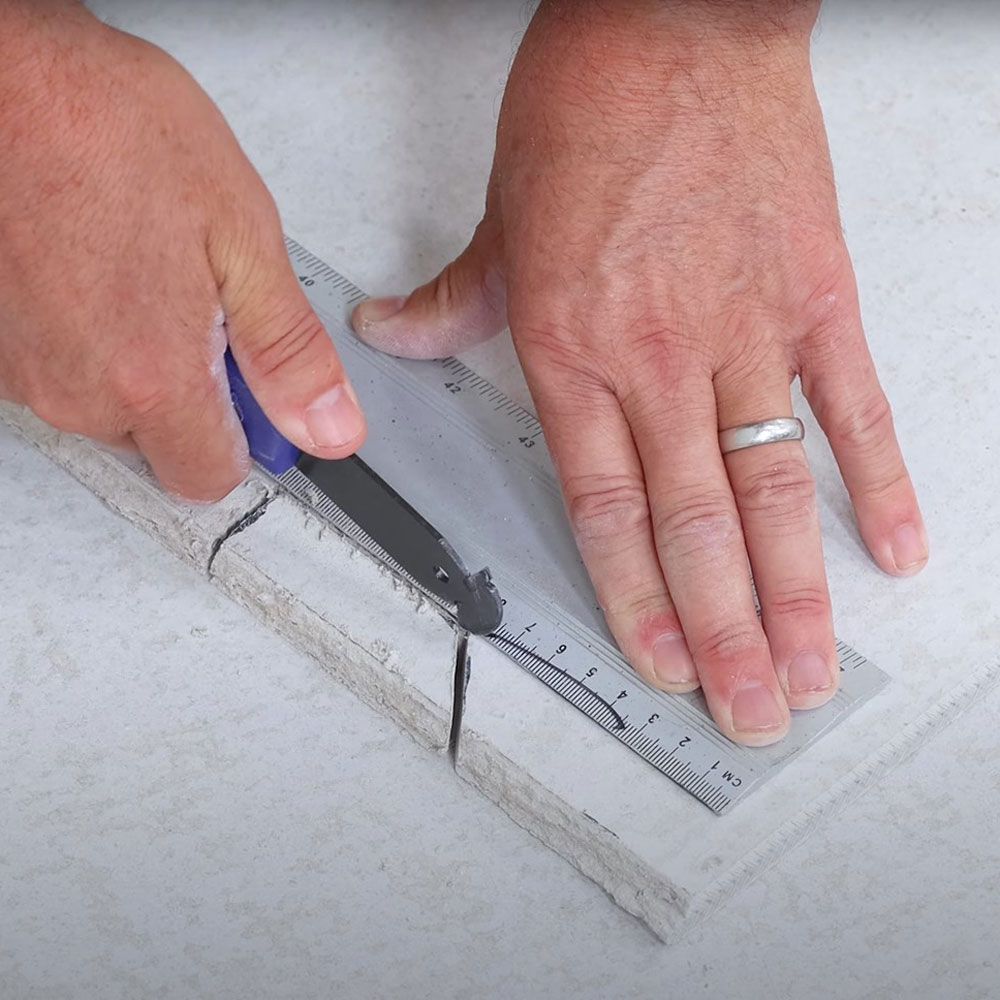
Use a straight edge and a sharp utility knife to score the board deeply. Then lift and snap the board down to break it cleanly.
- Mark the cut line clearly
- Score several times for a deep groove
- Snap the board carefully to avoid cracks
Using A Utility Knife
A utility knife can cut backer board if you score it multiple times. This tool is good for small or detailed cuts.
Hold the board firmly and make repeated cuts along a straight edge. Apply steady pressure for clean lines.
- Use a new, sharp blade
- Score the board several times
- Wear gloves to protect your hands
Power Saw Options
Power saws make quick work of cutting backer board. They are best for large pieces or thick boards.
Common saws include circular saws, jigsaws, and wet saws. Use a blade made for cement or tile for clean cuts.
- Circular saws cut straight lines fast
- Jigsaws handle curves and detailed shapes
- Wet saws reduce dust and cool the blade

Credit: www.simplydesigning.net
Handling Edges And Finishing
Cutting backer board creates rough edges that need attention. Proper handling of edges ensures a smooth and safe surface.
Finishing the cut surfaces prevents damage and improves durability. Follow these tips for a clean and lasting finish.
Smoothing Rough Edges
After cutting, rough edges can cause injury or affect tile adhesion. Use sanding tools to smooth the edges carefully.
- Wear gloves and eye protection.
- Use medium-grit sandpaper or a sanding block.
- Smooth edges evenly without removing too much material.
- Check edges by touch to ensure no sharp spots remain.
- Clean dust with a brush or vacuum before proceeding.
Sealing Cut Surfaces
Sealing cut surfaces protects the backer board from moisture and damage. Use a suitable sealer or primer to cover the exposed areas.
| Sealer Type | Purpose | Application |
| Latex Primer | Seals moisture | Brush or roller |
| Waterproofing Membrane | Water resistance | Spread with trowel |
| Sealant Paint | Surface protection | Spray or brush |
Common Mistakes To Avoid
Cutting backer board needs care and attention. Many people make simple mistakes that cause problems later.
Knowing common errors helps you work smarter and safer. Avoid these to get a clean and accurate cut.
Incorrect Measurements
Wrong measurements lead to wasted material and poor fit. Measure twice and mark clearly before cutting.
- Do not guess the size; use a reliable tape measure.
- Mark the cut line with a pencil or chalk.
- Double-check measurements against the space needed.
- Account for grout lines and tile thickness in your measurements.
Improper Tool Use
Using the wrong tools can damage the backer board or cause injury. Choose the right cutting method for the material.
| Tool | Best Use |
| Utility Knife | Scoring thin backer boards |
| Backer Board Saw | Cutting thick boards cleanly |
| Jigsaw | Cutting curves or irregular shapes |
| Carbide-Tipped Blade | Used with power saws for straight cuts |
Ignoring Safety Precautions
Backer board dust can irritate skin and lungs. Always protect yourself when cutting.
- Wear safety goggles to protect your eyes.
- Use a dust mask or respirator to avoid inhaling dust.
- Wear gloves to protect your hands from sharp edges.
- Work in a well-ventilated area or outside if possible.

Credit: insulationgo.co.uk
Tips For Efficient Cutting
Cutting backer board properly saves time and effort. Using the right methods helps you work faster and cleaner. This guide gives simple tips to cut backer board efficiently.
Learn how to prepare your tools, cut multiple pieces at once, and handle different types of backer boards with ease.
Batch Cutting Strategies
Cutting several backer boards together reduces the time spent measuring and marking. Group pieces by size and shape for easier handling.
- Stack boards evenly to avoid mistakes.
- Use clamps to hold boards firmly in place.
- Mark all pieces clearly before cutting.
- Cut slowly to keep edges clean and straight.
- Check measurements twice before starting cuts.
Maintaining Tools
Sharp and well-maintained tools make cutting backer board safer and more precise. Dull blades cause rough edges and slow your work.
| Tool | Maintenance Tip |
| Utility Knife | Change blades regularly for clean cuts. |
| Jigsaw | Use fine-tooth blades and check tension. |
| Measuring Tape | Keep clean and free of rust for accuracy. |
| Clamps | Inspect pads and tighten screws often. |
Working With Different Board Types
Different backer boards require different cutting methods. Cement boards are tough and need scoring, while foam boards cut easily with a knife.
- Cement Board:Score deep lines with a carbide knife, then snap along the line.
- Foam Backer:Use a sharp utility knife and multiple passes for smooth edges.
- Fiber Cement:Use a circular saw with a diamond blade for best results.

Credit: www.tilemountain.co.uk
Frequently Asked Questions
What Tools Are Needed To Cut Backer Board?
To cut backer board, you’ll need a utility knife, a straightedge, and a circular saw. Use the utility knife for scoring and the straightedge for guidance. The circular saw helps with precise cuts. Always wear safety goggles and gloves for protection.
Can I Cut Backer Board Without Dust?
Yes, you can minimize dust by using a score-and-snap method. Wetting the board slightly before cutting also helps reduce dust. Always work in a well-ventilated area and use a mask for safety.
How Do I Score Backer Board?
To score backer board, use a utility knife and a straightedge. Firmly drag the knife along the straightedge to create a deep groove. Repeat the process until the board is ready to snap.
Is A Special Blade Needed For Cutting?
Yes, a carbide-tipped blade is recommended for cutting backer board. It ensures clean and efficient cuts. Ensure the blade is compatible with your circular saw. Always check the manufacturer’s guidelines for the best results.
Conclusion
Cutting backer board does not have to be hard. Use the right tools and measure twice. Score and snap or cut carefully with a saw. Always wear safety gear to protect yourself. Taking your time leads to cleaner, more accurate cuts.
This helps your tile or flooring project look its best. Practice on scrap pieces if you feel unsure. Soon, cutting backer board will feel simple and clear. Keep these tips in mind for your next project.