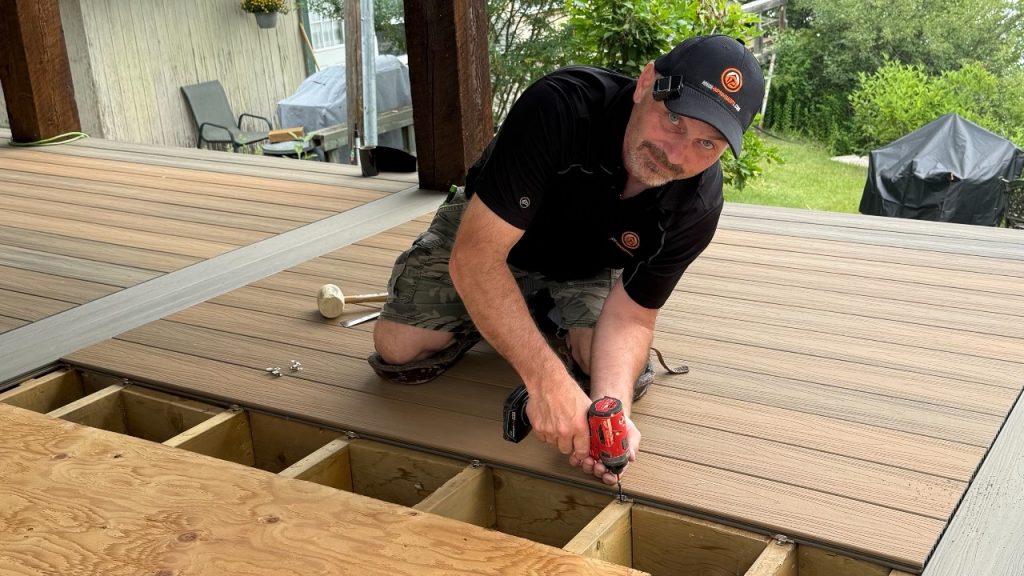
Cutting composite deck boards might seem tricky at first, but with the right tips, you can do it like a pro. If you want your deck to look clean and fit perfectly, knowing how to cut these boards is key.
In this guide, you’ll discover simple steps and smart tricks to make every cut precise and smooth. Stick with me, and you’ll save time, avoid mistakes, and get your deck looking just the way you want it. Ready to master your deck project?
Let’s dive in!
Tools And Materials Needed
Cutting composite deck boards needs the right tools and materials. Using proper tools makes clean and safe cuts easier.
This guide covers essential tools, safety gear, and extra supplies you may need for cutting composite boards.
Essential Tools
You need strong and accurate tools to cut composite deck boards. The right saw and measuring tools help get perfect cuts.
- Circular saw with a fine-tooth carbide blade
- Measuring tape for exact board lengths
- Speed square or carpenter’s square for straight cuts
- Clamps to hold boards steady while cutting
- Work table or saw horses for support
Safety Gear
Safety gear protects you from dust and sharp tools. Always wear protective equipment before cutting.
- Safety glasses to protect your eyes
- Hearing protection like earplugs or earmuffs
- Dust mask to avoid breathing dust
- Work gloves to protect your hands
Additional Supplies
Extra supplies can make your work smoother. Marking tools and cleaning materials help prepare and finish cuts.
- Pencil or chalk for marking cut lines
- Vacuum or broom to clean dust after cutting
- Wood filler or composite filler for touch-ups
- Rags for wiping boards clean
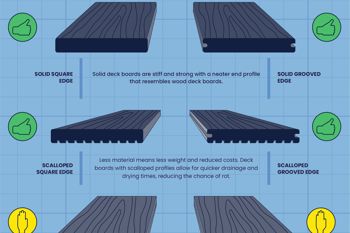
Credit: www.decks.com
Preparing The Work Area
Before cutting composite deck boards, set up a safe and clear work area. This helps you work faster and avoid accidents.
Organizing the space makes cutting easier and protects your materials.
Clearing The Space
Remove any obstacles or debris from the area where you will cut. A clean space reduces tripping hazards.
Make sure there is enough room to move around and handle the deck boards safely.
- Pick up tools and materials not needed for cutting
- Clear leaves, dirt, and trash from the floor
- Move furniture or equipment out of the way
- Keep children and pets away from the area
Setting Up A Cutting Station
Arrange a stable surface to support the deck boards during cutting. This keeps cuts straight and safe.
Use saw horses or a sturdy workbench at a comfortable height. Add clamps to hold boards steady.
- Place saw horses on level ground
- Use clamps to secure the board firmly
- Keep your cutting tools within reach
- Wear safety gear like goggles and gloves
Measuring And Marking The Boards
Cutting composite deck boards needs careful measuring and marking. This helps you get clean, straight cuts.
Taking time to measure and mark the boards well saves material and keeps your deck looking good.
Accurate Measurements
Use a tape measure that is easy to read. Measure twice to avoid mistakes. Record your measurements clearly.
- Start from the edge of the board you will cut.
- Stretch the tape measure along the board length.
- Note the exact length needed for your cut.
- Double-check your measurement before marking.
Marking Guidelines
Use a pencil or chalk to mark the cut line. Draw a straight line across the board for a clear guide.
| Tool | Purpose |
|---|---|
| Pencil | For precise, thin lines |
| Chalk | Good for rough surfaces |
| Speed Square | Helps draw straight lines |
| Clamps | Hold the board steady while marking |
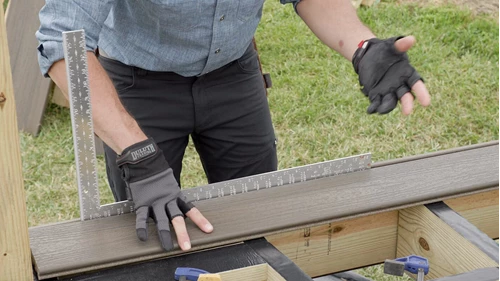
Credit: www.decks.com
Choosing The Right Blade
Cutting composite deck boards needs a good blade. Using the right blade makes clean cuts and saves time.
Not all blades work well with composite materials. You must pick one that cuts smoothly without damaging the boards.
Blade Types
Different blades work for different jobs. For composite decking, you want blades made for plastic or wood-plastic mixes.
Carbide-tipped blades are common. They stay sharp longer and give smooth cuts. Avoid old or dull blades that cause splinters.
- Carbide-tipped blades: Best for composite decks
- High-speed steel blades: Less durable for composites
- Diamond blades: Used for harder materials, not common for decking
Blade Features For Composite Decking
Look for blades with special features. These features help cut composite boards without chipping or melting.
Blades with more teeth give smoother cuts. Thin kerf blades cut faster and reduce waste. Also, blades with anti-vibration help control the saw better.
- Tooth count: 60 to 80 teeth for smooth cuts
- Thin kerf: Less material removed, less strain on saw
- Anti-vibration design: Makes cutting easier and safer
- Non-stick coating: Prevents resin build-up on blade
Cutting Techniques
Cutting composite deck boards needs care to avoid damage. Using the right tools and methods ensures clean cuts.
This guide covers straight, angled, and curved cuts. Follow these tips for better results and safety.
Straight Cuts
Straight cuts are the most common type for composite boards. A circular saw with a carbide blade works well for these cuts.
- Measure and mark the cut line clearly with a pencil.
- Secure the board firmly on a stable surface.
- Use a straight edge or guide to keep the saw steady.
- Cut slowly to avoid splintering or chipping the board.
- Wear safety gear like goggles and gloves.
Angled Cuts
Angled cuts add style and fit corners. A miter saw is best for clean and precise angled cuts on composite decking.
| Angle | Use | Tip |
|---|---|---|
| 45 degrees | Corner joints | Double-check angle before cutting |
| 30 degrees | Decorative edges | Use clamps to hold boards steady |
| 60 degrees | Complex designs | Practice on scrap board first |
Curved Cuts
Curved cuts require more care. Use a jigsaw with a fine-toothed blade for smooth curves on composite boards.
Follow these tips for curved cuts:
- Draw the curve clearly on the board.
- Clamp the board securely to prevent movement.
- Cut slowly and follow the line closely.
- Sand edges after cutting to smooth rough spots.
Finishing The Cut Edges
Cutting composite deck boards leaves edges that need proper finishing. Good finishing protects the boards and improves their look.
This guide explains how to finish cut edges by sanding and sealing them carefully.
Sanding Methods
Sanding smooths rough edges and removes splinters. Use the right tools to avoid damage.
Start with medium-grit sandpaper and finish with fine-grit for a clean surface.
- Use a sanding block or orbital sander for flat edges.
- Sand along the length of the board, not across.
- Wear a mask to avoid inhaling dust.
- Check edges for smoothness by touch.
Sealing The Edges
Sealing protects cut edges from moisture and damage. Use a sealant made for composite materials.
Apply sealant evenly with a brush or cloth. Let it dry fully before installing the boards.
- Choose a sealant compatible with composite decking.
- Apply thin coats to avoid drips or buildup.
- Seal all cut edges and ends for full protection.
- Follow manufacturer instructions for drying time.
Tips For Avoiding Common Mistakes
Cutting composite deck boards needs care and the right tools. Mistakes can cause damage or waste materials.
Follow simple tips to make clean cuts and keep your boards strong and looking good.
Preventing Chipping
Chipping happens when the blade tears the board instead of cutting it cleanly. It can ruin the look of your deck.
Use tape and slow cutting to keep the edges smooth and chip-free.
- Place painter’s tape along the cut line before cutting
- Cut the board with the good side facing down
- Use a fine-tooth saw blade made for composite materials
- Cut slowly and steadily without forcing the blade
- Support the board well to avoid vibrations
Maintaining Blade Sharpness
A dull blade causes rough cuts and can damage the board. Keep your blade sharp for the best results.
Check your blade often and replace it if it shows wear or damage.
- Use a blade designed for composite decking
- Clean the blade regularly to remove resin build-up
- Inspect the blade teeth before each job
- Replace the blade if it becomes dull or chipped
- Store blades properly to avoid damage

Credit: www.familyhandyman.com
Frequently Asked Questions
What Tools Do I Need To Cut Composite Deck Boards?
You need a circular saw with a fine-tooth blade, measuring tape, pencil, safety goggles, and gloves. These tools ensure clean, precise cuts and protect you during the process.
How Do I Measure Composite Deck Boards Accurately?
Measure twice to ensure accuracy. Use a tape measure and mark the cutting line clearly with a pencil. Double-check measurements before cutting to avoid mistakes.
Can I Use A Regular Saw To Cut Composite Boards?
A regular saw can work, but a circular saw with a carbide-tipped blade is best. It provides smoother cuts and prevents board damage.
Should I Cut Composite Boards Indoors Or Outdoors?
Cut composite boards outdoors or in a well-ventilated area. This reduces dust accumulation and ensures safety while working with composite materials.
Conclusion
Cutting composite deck boards is simple with the right tools and steps. Measure carefully and mark where to cut. Use a saw with a fine-tooth blade for clean edges. Work slowly to avoid splintering or damage. Safety gear keeps you protected during the job.
Practice on scrap pieces if unsure. These tips help create a neat, strong deck. Enjoy your outdoor space with confidence and ease.