Are you ready to tackle your tile project but unsure how to cut tile backer board cleanly and safely? Knowing the right techniques can save you time, reduce frustration, and give your work a professional finish.
In this guide, you’ll discover simple steps and handy tips that make cutting tile backer board easier than you might think. Keep reading, and you’ll gain the confidence to handle this task like a pro—no special tools or skills needed.
Let’s get started!
Tools Needed
Cutting tile backer board requires the right tools to make clean and accurate cuts. Using proper tools helps you work faster and safer.
Below are the essential tools and safety gear you need before starting your tile backer board project.
Essential Cutting Tools
You need tools that can score and snap or cut through the backer board easily. These tools help you shape the board to fit your project space.
- Utility knife with a sharp blade for scoring
- Carbide-tipped scoring tool for harder boards
- Hand saw or jigsaw with a fine-tooth blade
- Measuring tape for accurate cuts
- Straight edge or ruler to guide cuts
- Marker or pencil to mark cutting lines
Safety Equipment
Cutting tile backer board creates dust and sharp edges. Safety gear protects your eyes, lungs, and hands from injury.
| Safety Gear | Purpose |
| Safety goggles | Protect eyes from dust and debris |
| Dust mask or respirator | Prevent inhaling harmful dust |
| Gloves | Protect hands from sharp edges |
| Long sleeves | Shield skin from irritation |
Preparing The Work Area
Cutting tile backer board needs a safe and organized space. Preparing the area helps you work better and avoid mistakes.
Clear the workspace and gather your tools before you start cutting the board. This will save time and keep you safe.
Clearing The Space
Remove all items that might get in your way or cause accidents. A clean space helps you focus on the task.
- Move furniture and other obstacles away from the work area.
- Sweep the floor to clear dust and debris.
- Make sure you have enough light to see the board clearly.
- Wear protective gear like gloves and safety glasses.
Marking The Board
Marking the tile backer board clearly before cutting is very important. Use proper tools to make straight and accurate lines.
| Tool | Use |
| Pencil or Marker | Draw cutting lines on the board surface |
| T-Square or Straight Edge | Help make straight and accurate lines |
| Measuring Tape | Measure the exact size needed before marking |
Double-check your measurements before cutting. Mark the lines lightly to avoid mistakes.
Measuring And Marking
Cutting tile backer board needs careful measuring and marking. This helps you make clean, straight cuts.
Good measurements reduce waste and ensure the board fits perfectly.
Accurate Measurements
Use a tape measure to find the exact size you need. Measure twice to avoid mistakes.
Mark the measurement clearly with a pencil. Make small marks where you will cut.
- Start measuring from the edge of the board
- Check the space where the board will fit
- Use a pencil for clear, visible marks
- Mark both ends of the cut line
Using A Straight Edge
Place a straight edge along your pencil marks. This guides your saw for a straight cut.
Hold the straight edge firmly so it does not move while cutting.
- Use a metal ruler or a level as your straight edge
- Align it with the pencil marks
- Secure it with clamps or hold it tight
- Draw the cut line along the straight edge
Cutting Techniques
Cutting tile backer board properly helps you get clean edges for tiling. Using the right technique makes the job easier and safer.
There are several ways to cut backer board. Choose a method based on the tools you have and the type of cut you need.
Scoring And Snap Method
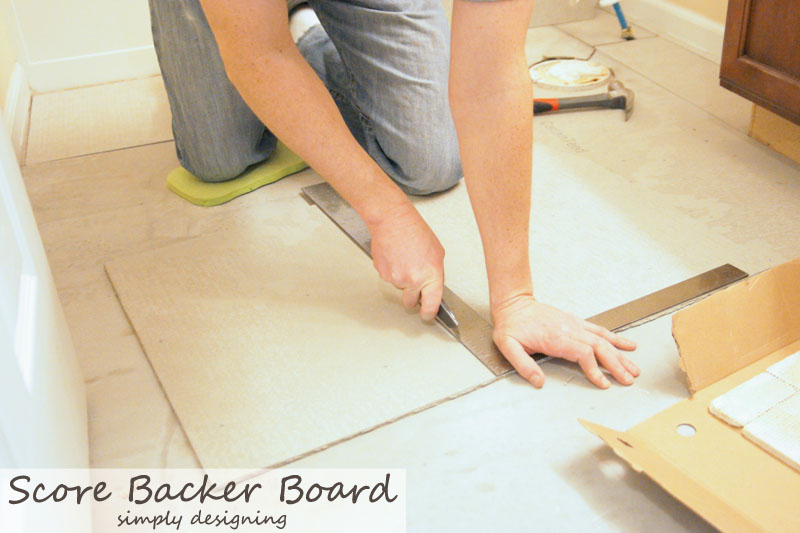
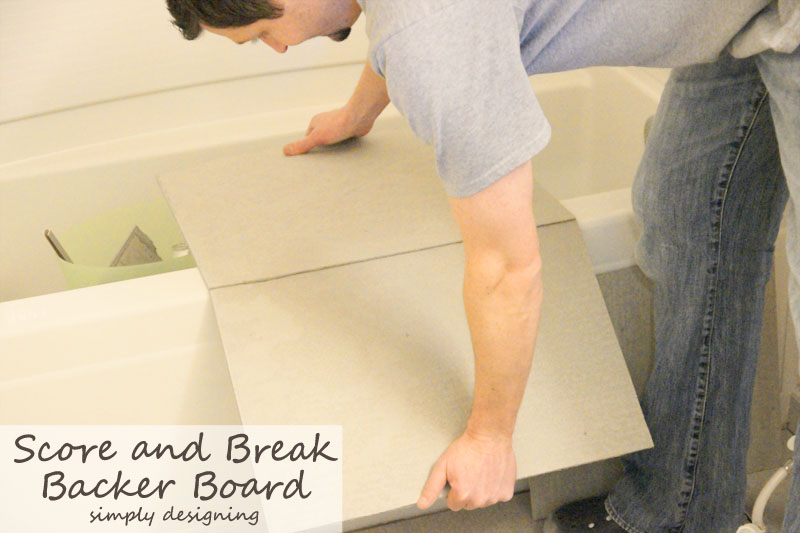
This method works well for straight cuts on thin backer boards. You score the surface deeply and then snap the board along the line.
Use a straight edge to guide your scoring tool. Score the board several times until the line is clear. Then lift one side to snap the board cleanly.
- Mark the cutting line with a pencil
- Use a utility knife or scoring tool to cut deeply
- Place the board over a support edge
- Snap the board downward along the score line
Using A Utility Knife
A utility knife works well for thin or soft backer boards. Score the surface multiple times to cut through the material.
Hold the knife firmly and make slow, even passes. Change the blade if it gets dull to keep the cut clean and safe.
- Draw your cutting line clearly
- Use a sharp utility knife blade
- Score the line several times, pressing firmly
- Snap or cut through the backer board fully
Power Saw Options
Power saws make cutting backer board faster, especially for thick or large pieces. Choose the right blade to reduce dust and chipping.
Common saws include circular saws, jigsaws, and oscillating multi-tools. Use a carbide-tipped blade made for cement board or masonry.
- Wear safety glasses and a dust mask
- Set the saw to a shallow depth
- Cut slowly to avoid breaking the board
- Support the board firmly during cutting
Handling Cut Edges
Cutting tile backer board can leave rough and uneven edges. These edges may cause problems during installation. Proper handling helps ensure a smooth, secure fit.
Taking care of the cut edges protects the board from damage and moisture. It also improves the overall look of your tile project.
Smoothing Rough Edges
Use a rasp or sandpaper to smooth rough edges after cutting. This makes the edges safer to handle and helps tiles lay flat.
Wear gloves and a dust mask to protect yourself from dust and sharp edges. Work gently to avoid breaking the board.
- Use a sanding block or coarse sandpaper
- Sand the edges evenly for a clean finish
- Remove dust with a damp cloth after sanding
Sealing The Board
Sealing cut edges stops moisture from soaking into the board. This helps prevent swelling and damage over time.
Apply a waterproof sealant or latex paint to all cut edges. Let it dry fully before installing the board.
- Use a brush to apply sealant evenly
- Cover all exposed edges and corners
- Allow sealant to dry according to instructions

Credit: insulationgo.co.uk
Common Mistakes To Avoid
Cutting tile backer board needs care and attention. Avoiding common mistakes helps you get a clean cut every time.
This guide shows two key mistakes to watch out for. Fixing these will make your project easier and neater.
Incorrect Measurements
Wrong measurements cause wasted material and poor fit. Take time to measure twice and mark clearly before cutting.
- Use a reliable tape measure or ruler
- Mark lines with a pencil or chalk for visibility
- Double-check measurements before cutting
- Measure the space where the board will fit
- Account for grout or adhesive thickness
Improper Tool Use
Using the wrong tools can cause uneven cuts and damage the board. Select the right tools and follow safety steps.
| Tool | Purpose | Tip |
| Utility Knife | Scoring thin boards | Use a new blade for clean cuts |
| Jigsaw | Cutting curves or shapes | Use a fine-tooth blade |
| Circular Saw | Straight cuts on thick boards | Use a carbide blade and cut slowly |
| Measuring Tape | Marking cut lines | Keep it straight and taut |
| Straightedge | Guide for cutting tools | Clamp firmly to avoid slipping |
Tips For Best Results
Cutting tile backer board needs focus and care. Taking your time helps you make clean cuts. Using the right tools keeps the process smooth.
These tips will help you work safely and get good results. Follow them closely for a better job.
Working Slowly And Carefully
Rushing can cause mistakes or damage the backer board. Move your tools steadily and check your measurements twice. Patience leads to cleaner cuts.
- Mark your cut lines clearly with a pencil.
- Use a straight edge to guide your cuts.
- Score the board lightly before cutting through.
- Wear safety glasses to protect your eyes from dust.
- Take breaks to keep your hands steady.
Maintaining Tools
Good tools make cutting easier and safer. Keep blades sharp and clean. Check tools before each use to avoid problems.
| Tool | Maintenance Tip |
| Utility Knife | Change blades often for sharp cuts. |
| Jigsaw | Clean dust off and check blade tightness. |
| Measuring Tape | Keep it clean and retract smoothly. |
| Straight Edge | Check for bends or damage. |
Credit: www.simplydesigning.net

Credit: www.tilemountain.co.uk
Frequently Asked Questions
How Do You Cut Tile Backer Board?
To cut tile backer board, use a utility knife or a circular saw. Score the board with the knife and snap it along the line. For a cleaner cut, a circular saw with a carbide-tipped blade is recommended. Always wear safety goggles and a dust mask for protection.
What Tools Are Needed For Cutting Backer Board?
You’ll need a utility knife, a straightedge, and a circular saw with a carbide-tipped blade. A pencil for marking and safety gear like goggles and a dust mask are essential. These tools ensure precision and safety while cutting tile backer board.
Can You Use A Jigsaw To Cut Backer Board?
Yes, a jigsaw can be used to cut tile backer board. Ensure you use a blade designed for cement board. This method is useful for making curved cuts. Always wear protective gear to prevent inhaling dust particles while cutting.
Is Cutting Backer Board Difficult?
Cutting backer board isn’t difficult with the right tools. A utility knife or circular saw makes the process straightforward. Ensure you measure accurately and use proper safety gear. Practice on a small piece first if you’re inexperienced.
Conclusion
Cutting tile backer board does not have to be hard. Use the right tools and measure carefully. Score the board firmly before snapping it. Take your time to avoid mistakes. Clean the edges after cutting for a smooth fit. Following these steps helps your project go smoothly.
Now, you can prepare your surface with confidence. Simple steps lead to better results every time.