
Your wooden cutting board is more than just a kitchen tool—it’s where you prep your meals, slice fresh ingredients, and bring your recipes to life. But over time, it can hide stubborn stains, odors, and bacteria that regular washing just can’t remove.
If you want to keep your cutting board looking fresh, safe, and ready for your next cooking adventure, learning how to deep clean it properly is a must. You’ll discover simple, effective steps to restore your wooden cutting board’s natural beauty and hygiene.
Keep reading to unlock the secrets that will make your board last longer and keep your food safer.
Credit: www.thekitchn.com
Choosing The Right Tools
Deep cleaning a wooden cutting board needs the right tools. Choosing them carefully keeps the wood safe and clean.
Using the best supplies helps remove stains and germs without damage. This guide covers what to pick for a good clean.
Essential Cleaning Supplies
Start with soft sponges or cloths to avoid scratching the wood. Avoid steel wool or rough brushes that can harm the surface.
- Mild dish soap for gentle cleaning
- Soft scrub brush for stuck-on bits
- Coarse salt for scrubbing stains
- White vinegar for disinfecting
- Food-grade mineral oil for conditioning
Natural Vs Chemical Cleaners
Natural cleaners are safer for wooden boards and the food you prepare. They clean well without harsh chemicals.
| Type | Example | Benefits | Drawbacks |
| Natural | Vinegar, Lemon, Salt | Safe, eco-friendly, food-safe | May need extra scrubbing |
| Chemical | Bleach, Commercial Cleaners | Strong disinfectants, fast action | Can damage wood, toxic residues |
Credit: choppingboards.in
Initial Cleaning Steps
Cleaning a wooden cutting board well keeps it safe to use. It stops bacteria from building up. Start with the right steps to remove all dirt and food bits.
Wood needs gentle care. Use simple methods to avoid damage. These first steps help keep your board clean and last longer.
Removing Food Residue
Clear the board of leftover food pieces first. Scrape off crumbs and stuck-on bits using a plastic or wooden spatula. Avoid metal tools to protect the wood.
- Use a bench scraper or plastic spatula to remove scraps
- Brush away crumbs with a dry cloth or paper towel
- Do not soak the board at this stage
- Work gently to avoid scratches
Washing With Soap And Water
Wash the board with warm water and mild dish soap. Use a soft sponge or cloth to clean the surface carefully. Avoid harsh scrubbing to keep the wood safe.
| Cleaning Tip | Reason |
|---|---|
| Use warm water, not hot | Prevents wood from warping or cracking |
| Choose mild dish soap | Protects the wood’s natural oils |
| Dry board immediately after washing | Stops water damage and mold growth |
Deep Cleaning Techniques
Wooden cutting boards need careful cleaning to stay safe and last long.
Deep cleaning removes germs and stains that regular washing may miss.
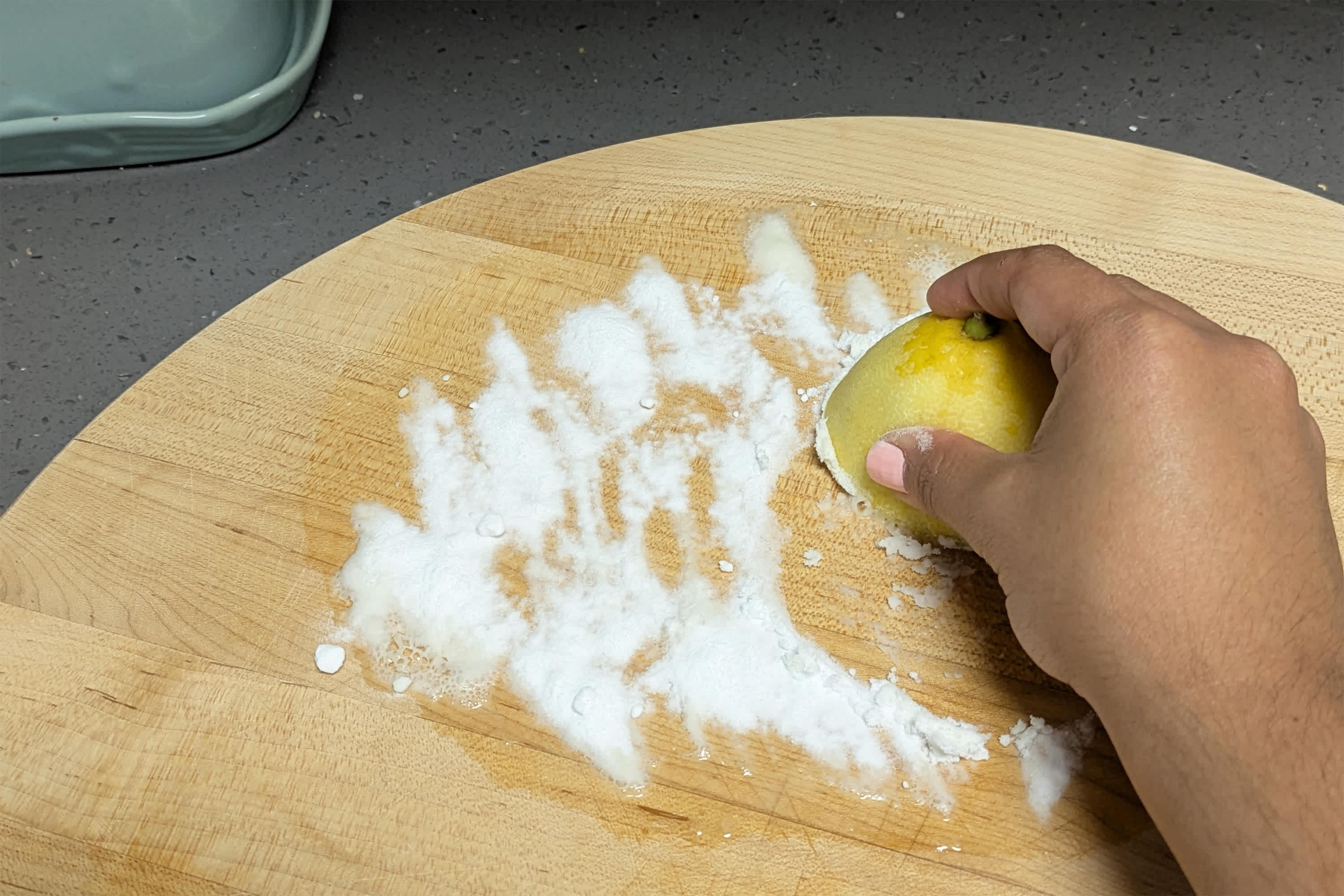
Using Salt And Lemon
Salt and lemon work well to scrub and brighten wooden boards naturally.
- Sprinkle coarse salt over the board’s surface.
- Cut a lemon in half and rub it on the salt.
- Scrub the board using the lemon juice and salt.
- Let it sit for 5 minutes to absorb odors and stains.
- Rinse with warm water and dry thoroughly.
Applying Baking Soda Paste
Baking soda paste cleans and deodorizes wooden cutting boards effectively.
To make and use baking soda paste:
| Ingredient | Amount |
|---|---|
| Baking soda | 3 tablespoons |
| Water | 1 tablespoon |
Mix baking soda and water until a thick paste forms.
Spread the paste on the board and scrub with a brush.
Let it sit for 10 minutes, then rinse well and dry.
Disinfecting With Vinegar
White vinegar kills bacteria and freshens wooden cutting boards safely.
- Pour white vinegar onto the board’s surface or use a spray bottle.
- Let the vinegar sit for about 5 minutes to disinfect.
- Wipe the board with a clean cloth or rinse with warm water.
- Dry the board completely to avoid moisture damage.
Removing Stains And Odors
Wooden cutting boards can get stains and smells after use. Deep cleaning keeps them fresh and safe.
Using simple kitchen ingredients helps remove tough marks and bad odors. This guide shows how to clean well.
Tackling Tough Stains
To remove stains, sprinkle coarse salt on the board. Rub it with half a lemon to lift the marks.
Let the salt and lemon sit for five minutes. Then rinse the board with warm water and dry it well.
- Sprinkle coarse salt over the stained areas
- Use half a lemon to scrub the salt into the wood
- Wait five minutes to let it work
- Rinse thoroughly with warm water
- Dry with a clean towel
Eliminating Lingering Smells
Odors can stay in wood after cutting strong foods like garlic. Baking soda helps absorb these smells.
Sprinkle baking soda on the board and let it sit for 15 minutes. Then scrub and rinse with warm water.
- Sprinkle baking soda over the cutting board
- Let it sit for 15 minutes to absorb odors
- Scrub gently with a soft brush or sponge
- Rinse with warm water
- Dry completely before storing
Drying And Maintenance
Keeping a wooden cutting board dry helps it last longer. Proper drying stops mold and bacteria growth. Regular maintenance keeps the wood strong and smooth.
After cleaning, drying your board the right way prevents damage. Maintaining your board includes oiling and storing it carefully.
Proper Drying Methods
Dry your wooden cutting board right after washing. Air drying is the safest way. Avoid putting it in a dishwasher or soaking it in water.
- Wipe the board with a clean towel to remove excess water.
- Stand the board upright or on its edge to air dry fully.
- Place the board in a well-ventilated area away from direct heat.
- Do not stack other items on top while drying.
Preventing Warping And Cracks
Wood can warp or crack if it dries unevenly or loses moisture. Keeping your board oiled and storing it properly helps avoid damage.
| Tip | Reason |
|---|---|
| Apply food-safe mineral oil once a month | Keeps wood moisturized and flexible |
| Store board flat or upright in dry place | Prevents bending and warping |
| Avoid extreme heat or cold | Stops wood fibers from shrinking or swelling |
| Do not soak in water | Prevents wood from absorbing excess moisture |
Conditioning The Wood
Conditioning your wooden cutting board keeps it strong and safe. It stops the wood from drying out and cracking.
Regular oiling helps the board last longer and stay smooth for cutting food.
Choosing The Right Oil
Pick oils that soak into wood and do not go bad. Avoid oils that turn sticky or smell bad over time.
- Mineral oil is safe and does not spoil.
- Beeswax blends add extra protection.
- Coconut oil works if it is refined and odorless.
- Do not use vegetable or olive oils as they can turn rancid.
How To Apply Oil Correctly
Apply the oil evenly and let it soak well. This keeps the wood moist and prevents cracks.
- Clean and dry the cutting board before oiling.
- Pour a small amount of oil onto the board.
- Use a clean cloth to spread the oil over all surfaces.
- Let the oil soak in for at least a few hours or overnight.
- Wipe off any extra oil before use.
- Repeat oiling every month or when the wood looks dry.
Regular Care Tips
Keeping a wooden cutting board clean is important for safety. Regular care helps the board last longer.
Simple daily habits prevent bacteria and stains. Knowing when to deep clean keeps your board fresh.
Daily Cleaning Habits
Clean the board after each use. Use warm water and mild soap to wash it well.
Rinse thoroughly and dry with a clean towel. Avoid soaking the board in water to stop warping.
- Scrape off food scraps before washing
- Use a soft sponge or cloth
- Dry board immediately after washing
- Store it in a dry, upright position
When To Deep Clean
Deep clean your board if it smells or has stains. Also clean it deeply after cutting raw meat or fish.
Regular deep cleaning removes germs and keeps the wood healthy. Do this once a month or as needed.
- Sprinkle coarse salt on the board
- Rub with half a lemon to remove odors
- Let it sit 5 minutes, then rinse
- Apply mineral oil to keep wood from drying
Credit: choppingboards.in
Frequently Asked Questions
How Often Should I Deep Clean My Wooden Cutting Board?
You should deep clean your wooden cutting board every month. Regular cleaning helps maintain its condition and prevent bacteria buildup. If you use it frequently, consider cleaning it every two weeks. Always ensure the board is thoroughly dry after cleaning to prevent warping or cracking.
Can I Use Vinegar To Clean A Wooden Cutting Board?
Yes, vinegar is effective for cleaning wooden cutting boards. It helps disinfect and remove odors. Mix equal parts of water and white vinegar, then wipe the board. Rinse thoroughly with water afterward. Avoid soaking the board to prevent warping. Vinegar is a natural and safe cleaning solution.
Is Lemon Juice Safe For Wooden Cutting Boards?
Lemon juice is safe and effective for cleaning wooden cutting boards. It helps remove odors and stains naturally. Rub a lemon half directly on the board, focusing on stains. Rinse with water and dry thoroughly. Lemon juice also imparts a fresh scent to your cutting board.
How Do I Remove Stains From A Wooden Cutting Board?
To remove stains, sprinkle coarse salt on the board. Use a lemon half to scrub the surface. The abrasive salt, combined with lemon’s acidity, lifts stains effectively. Rinse with warm water and dry completely. Regular maintenance prevents stubborn stains from forming on wooden cutting boards.
Conclusion
Deep cleaning your wooden cutting board keeps it safe and fresh. Regular care stops bacteria from growing and keeps food tasting great. Use gentle scrubs and natural cleaners to protect the wood. Dry your board well to avoid cracks and warping.
With simple steps, your cutting board stays strong and lasts longer. Keep this routine to enjoy a clean, healthy kitchen tool every day. Easy and effective care makes all the difference.