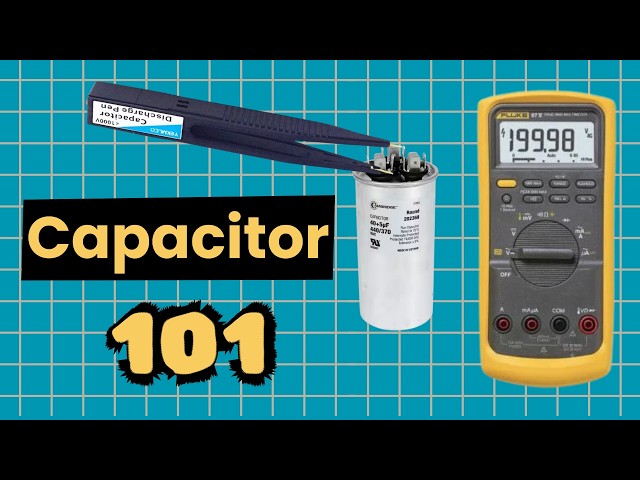
If you’ve ever opened your air conditioner to fix or replace parts, you know it can be risky. One of the most important steps is safely discharging the air conditioner capacitor.
If you don’t, you could get a painful shock or damage your unit. But don’t worry—this guide will walk you through exactly how to discharge your air conditioner capacitor quickly and safely. By the end, you’ll feel confident handling this task without fear.
Keep reading to protect yourself and your AC from costly mistakes.
Signs Of A Faulty Capacitor
Signs of a faulty capacitorinclude the air conditioner not starting or taking longer to start. The unit may make a humming noise but fail to run. Another sign is the fan blades turning slowly or not at all. The system might also shut off randomly or blow warm air instead of cold. Capacitors store electrical energy and help start the motor. When they fail, the AC struggles to work properly.
Common symptomsshow up as the AC unit cycling on and off frequently. The compressor might overheat or trip a breaker. Sometimes, the capacitor can bulge or leak fluid, which is a clear sign it needs replacement.
| Diagnostic Tools | Purpose |
|---|---|
| Multimeter | Measures capacitance and checks for short circuits |
| Capacitance Meter | Specifically tests the capacitor’s charge level |
| Visual Inspection | Detects bulges, leaks, or damage on the capacitor |

Credit: www.youtube.com
Safety Precautions
Always wear personal protective equipment (PPE)before handling an air conditioner capacitor. Use insulated glovesto avoid electric shocks. Safety glasses protect your eyes from sparks or debris. Wear long sleeves to protect your skin from accidental contact.
Ensure the power is completely shut offat the main breaker before starting work. Confirm no power by testing the unit with a voltage tester. This step is criticalto prevent dangerous shocks. Never rely on just turning off the switch on the air conditioner.
| Power Shutdown Procedures |
|---|
| Turn off the main circuit breaker to the AC unit. |
| Use a voltage tester to check if power is off. |
| Wait a few minutes for stored energy to drain. |
| Proceed only when you are sure no electricity flows. |
Tools Needed
Essential tools make discharging an air conditioner capacitor safe and easy.
- Insulated screwdriver:Prevents electric shock while working.
- Multimeter:Checks if the capacitor is fully discharged.
- Protective gloves:Keeps hands safe from electrical hazards.
- Safety glasses:Protects eyes from sparks or debris.
Optional tools can help but are not always needed.
- Capacitor discharge tool:Speeds up the discharge process safely.
- Wire connectors:Makes connecting tools easier.
- Electrical tape:Secures wires and prevents short circuits.

Credit: www.reddit.com
Locating The Capacitor
To access the capacitor, first turn off the power to the AC unit. This is important for safety. Remove the service panel carefully. The capacitor is usually inside the outdoor unit near the compressor.
The capacitor looks like a small metal cylinder or oval. It has several wires connected to it. Often, it has a label with voltage and microfarad (µF) ratings. The capacitor is usually mounted with a bracket or clips.
- Check for a shiny metal case.
- Look for wires attached to terminals on top.
- Find the label with specs like “35 µF” or “440V”.
- Capacitors come in single or dual types.
Discharging The Capacitor
First, turn off the power to the air conditioner. This stops electricity flow. Use a resistoror an insulated screwdriverto discharge the capacitor safely. Touch both capacitor terminals with the resistor or screwdriver. Hold for a few seconds to let the charge drain.
Wear rubber glovesand use tools with insulated handles. This keeps you safe from electric shocks. Double-check with a multimeter to see if the capacitor is fully discharged. If the reading shows zero volts, it is safe to handle.
- Switch off power supply
- Wear insulated gloves
- Use resistor or insulated screwdriver
- Touch both capacitor terminals carefully
- Hold for several seconds
- Check voltage with a multimeter
Testing The Capacitor
Use a multimeter to test the capacitor’s charge and health. Set the multimeter to the capacitance setting. Disconnect the capacitor from the AC unit first. Connect the multimeter leads to the capacitor terminals. A healthy capacitor shows a reading near its rated value.
If the multimeter shows zero or very low reading, the capacitor might be bad. A reading that fluctuates or never stabilizes also means trouble. Compare your reading to the capacitor’s label for accuracy. Safety first: never touch capacitor terminals during testing.
Replacing The Capacitor
Choose a capacitor that matches the voltageand microfarad (µF)rating of the old one. Check these numbers on the capacitor label. Using the wrong rating can cause damageto the air conditioner. Buy from a reliable supplierto get quality parts.
- Turn off the power before starting.
- Use a screwdriver with an insulated handle.
- Discharge the old capacitor by touching the terminals carefully.
- Note the wire positions and take a photo for reference.
- Remove wires from the old capacitor gently.
- Attach wires to the new capacitor in the same order.
- Secure the new capacitor in place.
- Restore power and test the air conditioner.
Maintenance Tips
Regular inspectionshelp catch problems early. Look for leaks, dirt, and weararound the capacitor. Check the wires for frays or loose connections. Use a multimeterto test the capacitor’s health. Keep a logof inspection dates and findings to track changes.
- Wear safety gloves and glasses before working.
- Always turn off power to the AC unit.
- Discharge the capacitor safely using a resistor or insulated screwdriver.
- Clean dust and debris from the capacitor and surrounding area.
- Replace capacitors showing bulging or leakingsigns.
These steps lower risks and improve the AC unit’s lifespan. Regular care keeps the system running efficiently and safely.
Credit: www.bettlink.com
Frequently Asked Questions
What Is An Air Conditioner Capacitor?
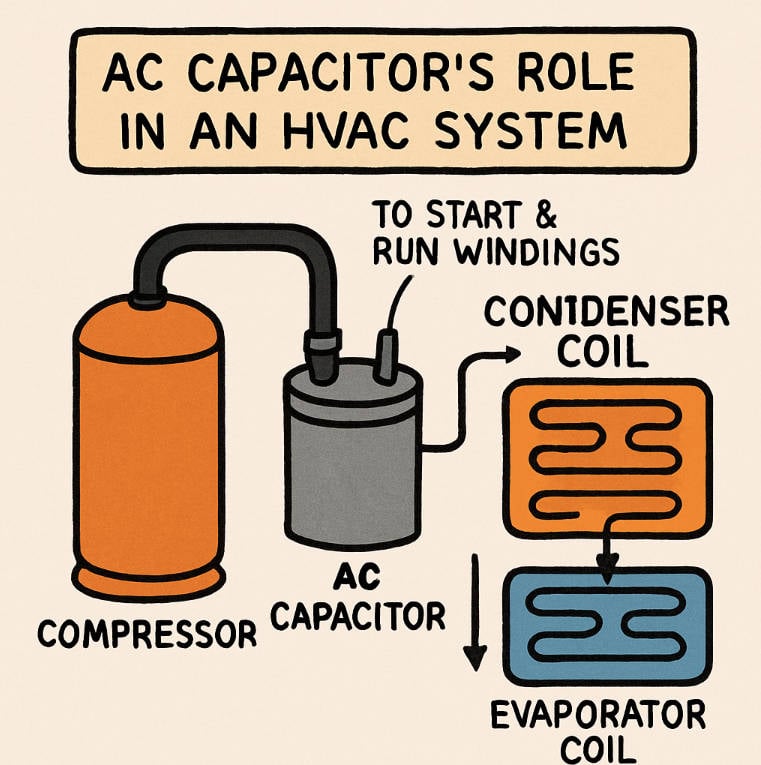
An air conditioner capacitor is an essential component that stores and releases electrical energy. It helps start and run the AC’s compressor and fan motors. A faulty capacitor can lead to inefficient cooling or system failure. Regular maintenance and timely replacement ensure optimal air conditioner performance.
Why Should You Discharge An Ac Capacitor?
Discharging an AC capacitor is crucial for safety before performing maintenance or repairs. Capacitors store electrical energy, even after the power is off. Touching a charged capacitor can cause severe electric shocks. Proper discharge prevents injuries and ensures a safe working environment during air conditioner servicing.
How Do You Safely Discharge A Capacitor?
To safely discharge a capacitor, first, turn off the power supply. Use a screwdriver with an insulated handle to bridge the terminals, shorting out any stored charge. Ensure no residual charge remains by checking with a multimeter. Always follow safety precautions to prevent electric shocks.
Can You Discharge A Capacitor Without A Tool?
Discharging a capacitor without a tool is not recommended. Using an insulated screwdriver is the safest method. Attempting to discharge without proper tools can lead to electric shocks or damage to the capacitor. Always prioritize safety and use appropriate tools for discharging capacitors effectively.
Conclusion
Discharging an air conditioner capacitor is important for safety. Always turn off the power before starting. Use a screwdriver with an insulated handle to discharge the capacitor slowly. Take your time and be careful. This simple step helps avoid shocks and damage.
Remember, safety comes first with any electrical work. Now you know how to handle this task safely. Stay cautious and follow the steps clearly every time.