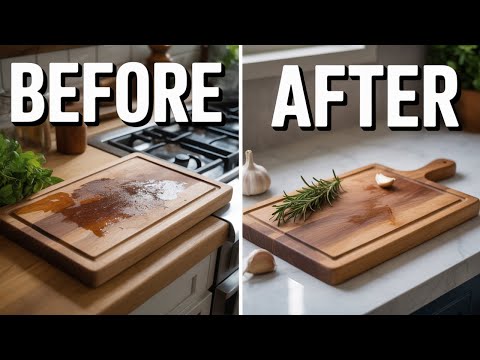
Your wooden cutting board is a kitchen essential, but do you know how to keep it truly clean and safe? Simply washing it isn’t enough to get rid of all the germs that can hide deep in the wood.
If you want to protect your health and make your board last longer, learning how to properly disinfect it is key. You’ll discover easy, effective methods to kill bacteria without damaging your wooden cutting board. Keep reading to make sure your kitchen stays safe and your meals taste their best.
Why Disinfect Wooden Cutting Boards
Wooden cutting boards can hold bacteria from raw foods. Cleaning alone may not remove all germs. Disinfecting keeps your board safe to use.
Disinfecting helps stop cross-contamination. It protects you and your family from foodborne illnesses.
Risks Of Bacteria On Wood
Wood has tiny pores where bacteria can hide. These germs grow fast if not cleaned well. Some bacteria can cause serious illness.
- Salmonella from raw chicken
- E. coli from uncooked beef
- Listeria from dairy products
- Cross-contamination between foods
Benefits Of Regular Cleaning
Cleaning and disinfecting keep your cutting board safe. It also helps the wood last longer without damage.
| Benefit | Details |
| Health Safety | Reduces harmful bacteria growth |
| Food Quality | Prevents food contamination |
| Board Longevity | Protects wood from cracking and warping |
| Easy Maintenance | Keeps the board clean and fresh |
Daily Cleaning Tips
Wooden cutting boards need regular cleaning to stay safe. Cleaning stops germs and keeps the board fresh.
Use simple steps to clean your board after every use. This helps avoid stains and bad smells.
Soap And Water Wash
Wash your wooden cutting board with warm water and mild soap. Use a sponge or cloth to scrub the surface well.
Make sure to clean both sides of the board. This stops bacteria from spreading.
- Rinse the board with warm water after washing.
- Do not soak the board in water to avoid warping.
- Use dish soap that is gentle on wood.
- Clean right after use to stop germs from growing.
Drying Techniques
Dry your cutting board quickly after washing. Use a clean towel to wipe off extra water.
Stand the board upright or lean it against a wall. This helps air flow around the whole board.
- Do not leave the board flat to dry; it may trap moisture.
- Avoid placing the board in direct sunlight to prevent cracks.
- Make sure the board is fully dry before storing it.
Natural Disinfecting Methods
Wooden cutting boards need regular cleaning to stay safe for food use. Natural methods use simple items found at home. These ways kill germs without harsh chemicals.
Below are three natural ways to disinfect your wooden cutting board. Each method is easy and effective.
Using White Vinegar
White vinegar is a natural disinfectant that kills many types of bacteria. It is safe for wood and does not leave strong smells.
To use vinegar, simply spray or wipe the cutting board with white vinegar. Let it sit for a few minutes, then rinse with water. Dry the board well to prevent moisture damage.
Lemon And Salt Scrub
Lemon and salt work together to clean and disinfect wooden boards. Lemon’s acid breaks down stains and kills germs. Salt acts as a scrub to remove debris.
- Cut a lemon in half
- Sprinkle coarse salt on the board
- Rub the lemon over the salted surface
- Let it sit for 5 minutes
- Rinse with warm water and dry
Baking Soda Paste
Baking soda cleans and deodorizes wooden cutting boards. It is gentle and safe for wood surfaces.
| Ingredient | Amount | Use |
|---|---|---|
| Baking Soda | 2 tablespoons | Make a paste with water |
| Water | 1 tablespoon | Mix with baking soda |
| Application | – | Spread paste on board, scrub, then rinse |

Credit: homewithgraceandjoy.com
Using Commercial Disinfectants Safely
Disinfecting wooden cutting boards keeps them clean and safe for food. Using commercial disinfectants can kill germs effectively.
It is important to use these products carefully. Proper use protects your health and the wood surface.
Choosing The Right Products
Pick disinfectants made for kitchen use. Check if the product says it is safe for wood.
Avoid bleach or harsh chemicals. These can damage the wood and leave harmful residues.
- Look for food-safe disinfectants
- Choose products labeled for wooden surfaces
- Avoid products with strong acids or bleach
- Read instructions before buying
Application And Rinsing
Apply disinfectant following the instructions on the label. Use a clean cloth or spray bottle.
Let the disinfectant sit for the time the label recommends. This helps kill bacteria.
- Spray or wipe the disinfectant evenly
- Wait the recommended contact time
- Rinse the board well with water after disinfecting
- Dry the board completely before use
Deep Cleaning For Stubborn Stains
Wooden cutting boards can hold onto tough stains from food and juices. Deep cleaning helps remove these marks and keeps the board safe to use. This guide shows two ways to clean and refresh your wooden cutting board.
These methods go beyond regular washing. They help remove stains and kill germs hiding deep in the wood.
Hydrogen Peroxide Treatment
Hydrogen peroxide is a safe cleaner that works well on wooden boards. It breaks down stains and kills bacteria without hurting the wood. Use 3% hydrogen peroxide for best results.
Pour or spray the hydrogen peroxide over the stained area. Let it sit for 5 to 10 minutes. Then wipe the board with a clean cloth. Rinse with water and dry completely before use.
- Use 3% hydrogen peroxide solution
- Apply to stained areas generously
- Wait 5–10 minutes to let it work
- Wipe clean and rinse thoroughly
- Dry the board fully to avoid damage
Sanding And Refinishing
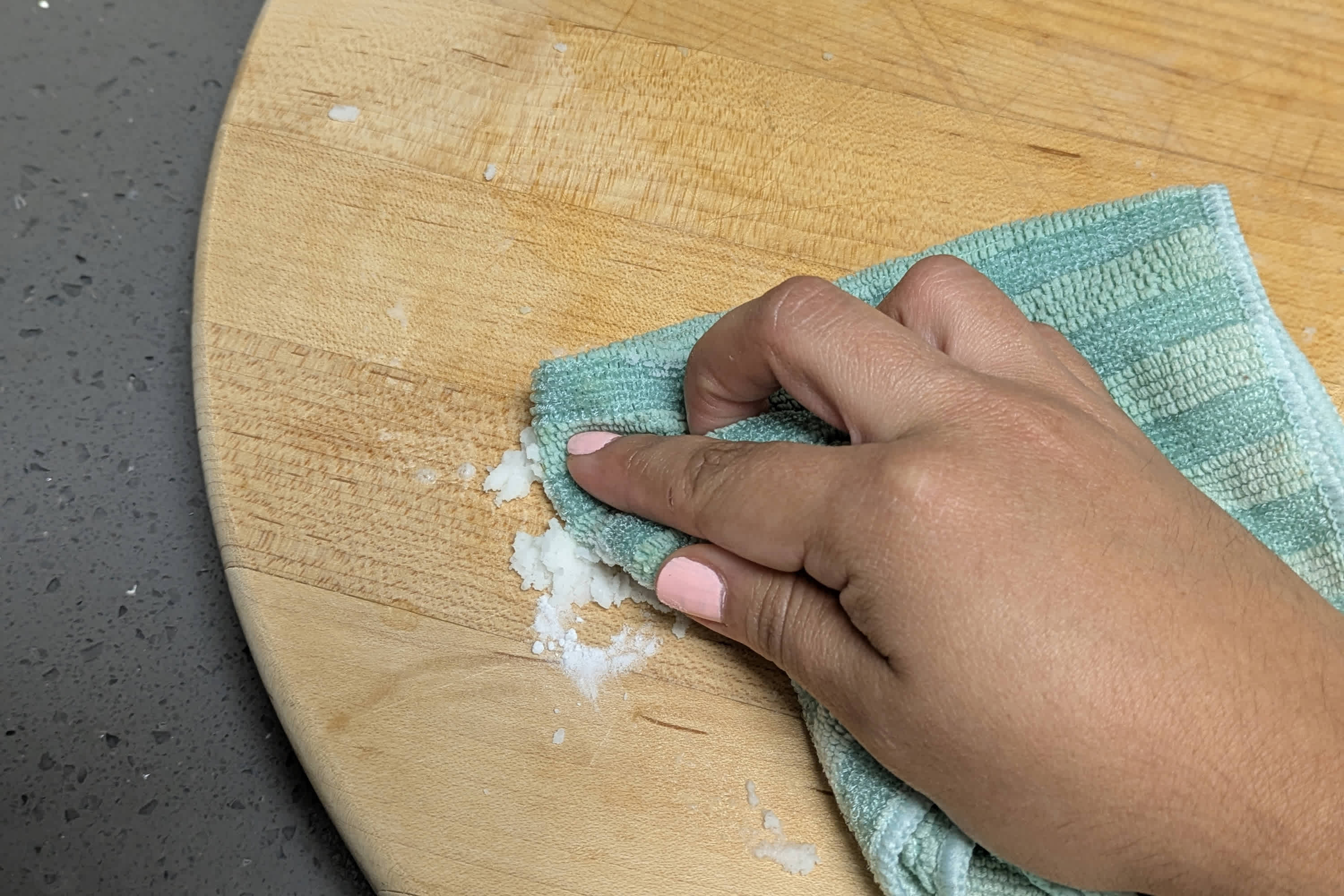
Sanding removes deep stains and smooths the wood surface. Use fine-grit sandpaper and sand in the direction of the wood grain. This step removes old marks and any rough spots.
After sanding, wipe off dust with a damp cloth. Let the board dry. Apply a food-safe mineral oil or beeswax to protect the wood. This keeps the board strong and prevents stains in the future.
- Use fine-grit sandpaper (220 grit)
- Sand along the wood grain evenly
- Remove dust with a damp cloth
- Let the board dry completely
- Apply mineral oil or beeswax to seal
Credit: www.thekitchn.com
Maintenance Tips To Prolong Board Life
Wooden cutting boards need care to last a long time. Proper maintenance keeps them safe and strong.
Disinfecting is important, but so is regular upkeep. This helps avoid cracks and warping.
Oiling And Conditioning
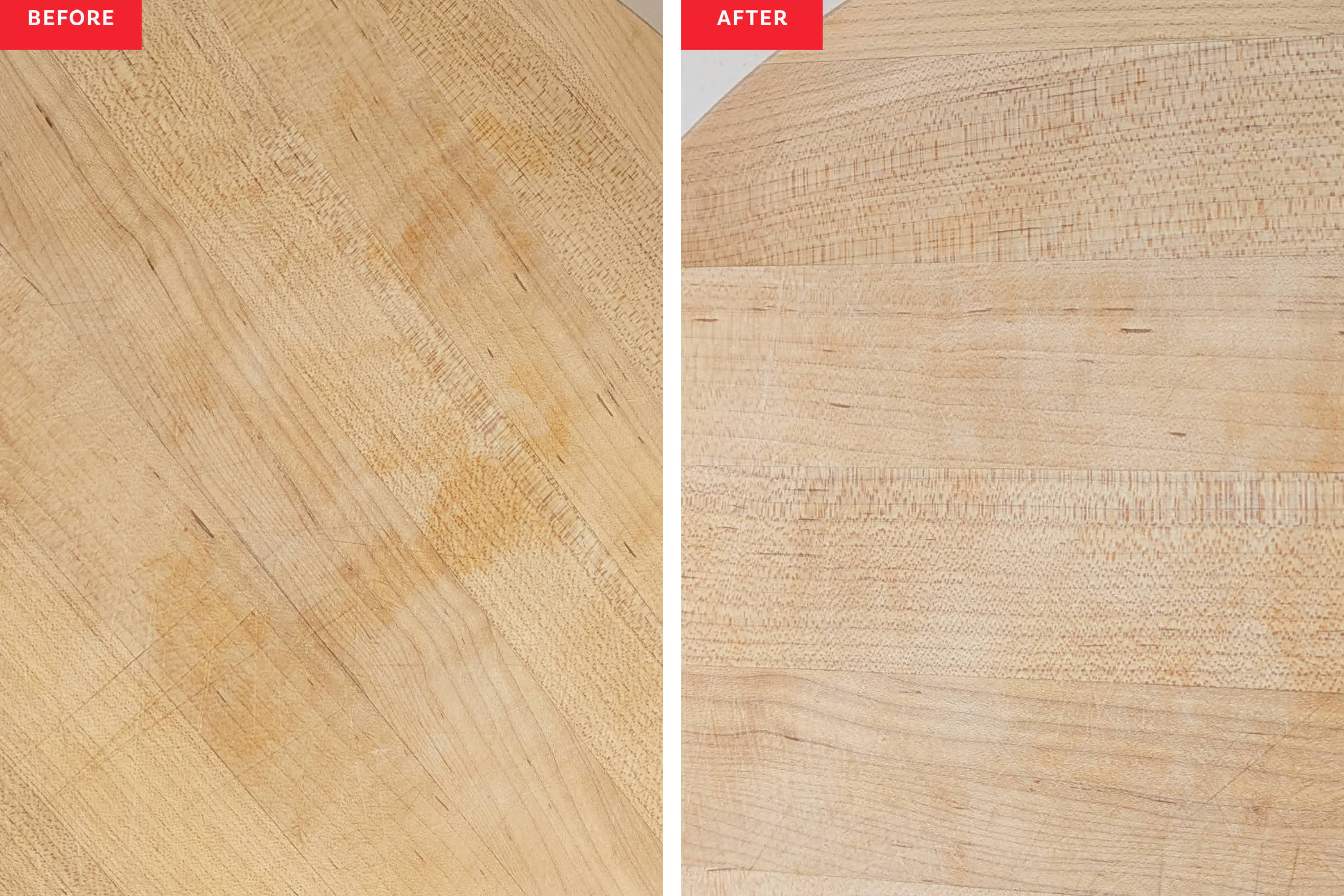
Apply food-safe oil to your wooden board to keep it from drying out. Oil soaks into the wood and protects it.
Conditioning with oil helps prevent cracks and splits. Do this once a month or when the board looks dry.
- Use mineral oil or beeswax-based conditioner
- Apply oil evenly with a clean cloth
- Let the board absorb oil for several hours
- Wipe off any extra oil before use
Avoiding Excess Moisture
Wood can swell and crack if it stays wet too long. Avoid soaking your board in water.
Dry your board fully after washing. Store it in a dry place with good airflow to prevent mold.
- Wash board by hand with mild soap
- Do not put wooden boards in the dishwasher
- Dry board with a towel right after washing
- Stand board upright to air dry completely
Credit: www.thekitchn.com
Frequently Asked Questions
How Often Should I Disinfect A Wooden Cutting Board?
Disinfect your wooden cutting board after every use to ensure safety. Regular cleaning prevents bacteria buildup. Use vinegar or hydrogen peroxide for effective disinfection. Rinse thoroughly with hot water and allow it to air dry. Consistent maintenance extends the board’s lifespan and keeps your kitchen hygienic.
Can Vinegar Disinfect Wooden Cutting Boards?
Yes, vinegar is an effective natural disinfectant for wooden cutting boards. It can kill bacteria and eliminate odors. Simply spray undiluted white vinegar on the board, let it sit for a few minutes, and rinse with hot water. Regular use of vinegar helps maintain a clean and safe cutting surface.
How Do I Remove Stains From Wooden Boards?
To remove stains, sprinkle coarse salt on the board. Rub with a lemon half, applying pressure to lift the stain. Let it sit for a few minutes, then rinse with hot water. This natural method effectively removes stains and keeps your board looking fresh.
Is Hydrogen Peroxide Safe For Wooden Cutting Boards?
Yes, hydrogen peroxide is safe and effective for disinfecting wooden cutting boards. It kills bacteria and viruses. Use a 3% solution, spray on the board, and let it sit for a few minutes. Rinse thoroughly with hot water. Ensure the board is completely dry before storing to prevent damage.
Conclusion
Disinfecting your wooden cutting board keeps your kitchen safe and clean. Use simple methods like vinegar, lemon, or mild bleach. Clean the board after every use to stop germs. Dry it well to avoid cracks and bacteria growth. Regular care helps your board last longer and stay fresh.
A clean cutting board means healthier food and less risk of illness. Keep these tips in mind to protect your family and enjoy cooking safely.