Choosing the right air conditioner size for your space can feel confusing. If your AC is too small, it won’t cool your home properly.
If it’s too big, you’ll waste energy and money. You want a system that keeps your space comfortable without driving up your bills. You’ll discover simple steps to figure out the perfect air conditioner size for your needs. By the end, you’ll feel confident making the best choice for your home and budget.
Keep reading to unlock the secrets to staying cool and saving money.
Why Ac Size Matters
Oversized air conditionerscool the room too fast. This causes the unit to turn on and off often. Such short cycles waste energy and wear out the system. Rooms may also feel damp because the AC does not run long enough to remove moisture. High electricity bills can result from this inefficiency.
On the other hand, undersized unitsstruggle to cool the room properly. They run continuously, trying to reach the set temperature. This increases energy use and causes more wear on the AC. The room may stay hot and uncomfortable during warm days. Repair costs can add up due to constant use.
Measuring Your Space
Measure the length and width of the room in feet. Multiply these two numbers to get the square footage. This number helps decide the air conditioner’s cooling power. Bigger rooms need units with higher capacity.
Ceiling height also matters. Standard height is about 8 feet. If ceilings are taller, the room holds more air. This means you might need a stronger unit. Adjust your calculations based on the height.
| Ceiling Height | Adjustment Needed |
|---|---|
| Up to 8 feet | No adjustment |
| 8 to 10 feet | Add 10% to cooling capacity |
| Above 10 feet | Add 20% or more |
Evaluating Insulation And Sunlight
Good wall and window insulationhelp keep cool air inside. Poor insulation lets heat in, making the air conditioner work harder. Check for gaps or thin spots in walls and around windows. Adding weatherstrips or curtains can improve insulation.
Direct sunlightheats the room quickly. Rooms facing the sun need a larger air conditioner. Use blinds or shades to block sunlight during hot hours. Trees or awnings outside windows can reduce heat gain.
| Factor | Effect on AC Size | What to Do |
|---|---|---|
| Wall Insulation | Better insulation means smaller AC needed | Seal gaps, add insulation |
| Window Insulation | Well-insulated windows reduce cooling load | Use double glazing or curtains |
| Sunlight Exposure | More sunlight requires bigger AC | Install blinds, plant shade trees |
Using Btu Ratings
BTUstands for British Thermal Unit. It measures how much heat an air conditioner can remove in one hour. The higher the BTU, the more cooling power the AC has. Choosing the right BTU helps keep your room cool without wasting energy.
The size of the room affects the BTU needed. Small rooms need fewer BTUs. Large rooms need more. Using the right BTU keeps the room comfortable and saves money.
| Room Size (square feet) | Recommended BTU |
|---|---|
| Up to 150 | 5,000 – 6,000 BTU |
| 150 – 250 | 6,000 – 8,000 BTU |
| 250 – 350 | 8,000 – 10,000 BTU |
| 350 – 450 | 10,000 – 12,000 BTU |
| 450 – 550 | 12,000 – 14,000 BTU |
Adjusting For Room Features
More people in a room means more cooling power is needed. Each person adds around 600 BTUsof heat. So, count everyone who usually stays in the room.
Appliances and heat sources like computers, ovens, or lights also add heat. This extra heat makes the air conditioner work harder. Think about the size and number of these devices.
| Room Feature | Impact on AC Size |
|---|---|
| Number of Occupants | Add 600 BTUs per person |
| Appliances | Add extra cooling depending on wattage |
| Heat Sources | Increase cooling needs slightly |

Credit: www.warmzilla.co.uk
Selecting The Right Ac Type
Window unitsare easy to install and cost less. They cool small rooms well. These units fit into a window and take up no floor space.
Split systemshave two parts: an indoor and an outdoor unit. They work quietly and cool larger areas better. They need professional installation.
| Type | Best For | Installation | Cost | Noise Level |
|---|---|---|---|---|
| Window Units | Small rooms | Easy, DIY | Low | Moderate |
| Split Systems | Large rooms | Professional | Higher | Low |
| Portable AC | Temporary cooling | Easy, movable | Medium | Moderate to high |
| Central Air | Whole house | Professional | High | Low |
Portable ACscan move from room to room. They need a window vent but no permanent setup.
Central air systemscool entire homes. They use ducts and need expert installation. These systems cost more but work well for big spaces.
Consulting Professional Guidelines
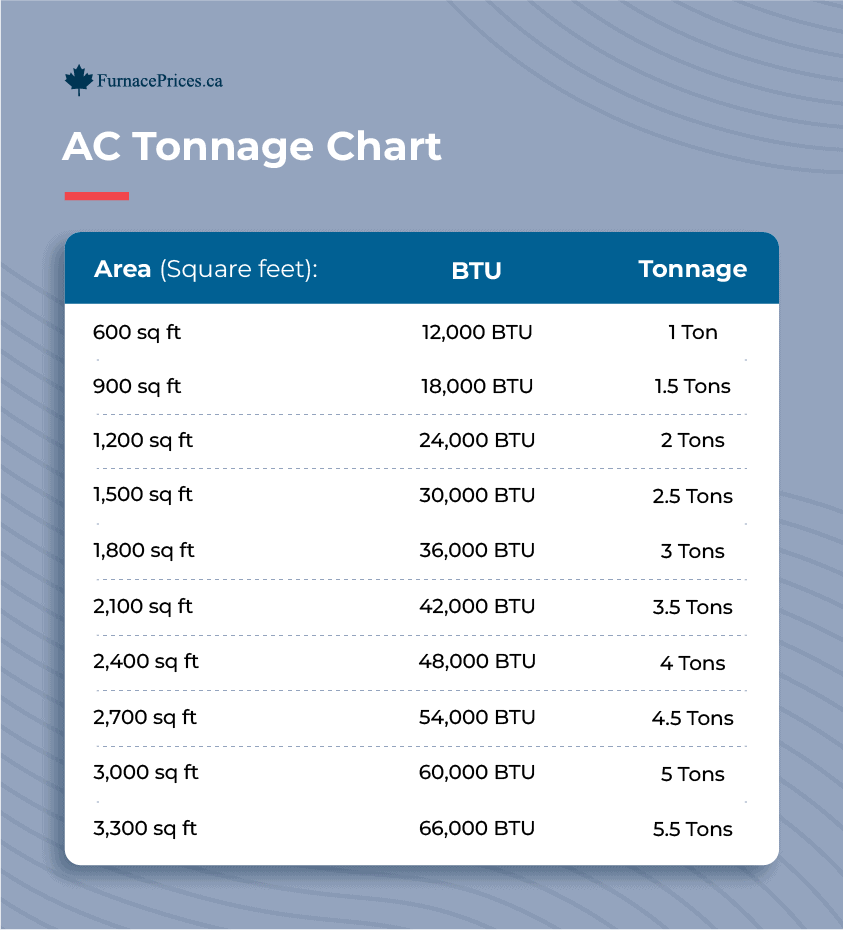
Manufacturer charts provide a quick way to estimate the right air conditioner size. These charts list room sizes and the recommended cooling capacity in BTUs. Use the chart by matching your room’s square footage. This helps avoid buying a unit that is too small or too large.
Expert advice is best when rooms have unusual layoutsor special needs. Professionals consider factors like ceiling height, sunlight, and insulation. They can offer a precise calculationfor your space.
- Consult experts if your home has many windows.
- Seek advice when there is poor insulation.
- Get help for rooms with high ceilings or multiple heat sources.

Credit: www.furnaceprices.ca
Energy Efficiency Tips
Energy Star unitssave money and use less power. They meet strict energy rules. Choose units with a high SEER rating for better savings. These models cool your home well and reduce bills.
Keep your AC clean for best performance. Change filters every 1-3 months to stop dust build-up. Clean the coils and fins to help cool air flow. Regular tune-ups catch small problems early.
- Set thermostat to 78°F when home
- Use fans to help air circulate
- Seal windows and doors to keep cool air in
- Shade outdoor unit to avoid extra heat
Credit: lynnswinnipeg.ca
Frequently Asked Questions
What Size Air Conditioner Do I Need?
To determine the correct size, calculate your room’s square footage. For every square foot, you need approximately 20 BTUs. Consider factors like ceiling height, insulation, and sunlight. An undersized AC won’t cool efficiently, while an oversized one may waste energy.
Always consult with a professional for accurate sizing.
How Does Room Size Affect Ac Choice?
Room size directly impacts the AC size you need. A larger room requires more BTUs to cool effectively. Using an undersized unit will lead to inefficient cooling and increased energy bills. Measure your room accurately and consider factors like windows and sunlight when choosing an AC.
Is A Bigger Ac Always Better?
No, a bigger AC isn’t always better. An oversized unit cools quickly but doesn’t dehumidify effectively. This can lead to a clammy environment and higher energy bills. It also cycles on and off frequently, causing wear and tear. It’s crucial to choose the right size for optimal performance.
How To Calculate Btu For My Room?
To calculate BTU, multiply the room’s square footage by 20. Adjust for room conditions like sunlight and insulation. For example, a 300-square-foot room needs about 6,000 BTUs. If the room is sunny or poorly insulated, increase the BTU. Always consult a professional for precise calculations.
Conclusion
Choosing the right air conditioner size saves energy and money. A unit too big cools quickly but wastes power. Too small, it runs constantly and struggles to cool. Measure your room size and consider insulation and sunlight. Check BTU ratings carefully.
This helps keep your space comfortable year-round. Proper sizing means better cooling and lower bills. Take time to plan before buying. Your home will thank you with steady, efficient cooling. Simple steps lead to smart choices.