Filling large outdoor planters might seem simple, but getting it right makes all the difference for your plants’ health and your garden’s look. If you’ve ever struggled with heavy pots that don’t drain well or plants that don’t thrive, this guide is for you.
You’ll learn smart, easy steps to fill your planters so they stay light, drain properly, and give your plants the best chance to grow strong. Keep reading, and you’ll discover tips that can save you time, money, and frustration while transforming your outdoor space.
Choosing The Right Planter
Picking the right planter is key to healthy outdoor plants. It affects how plants grow and survive.
Large outdoor planters need careful choice to fit your garden style and plant needs.
Material Options
Planters come in many materials. Each has benefits and limits to think about.
- Plastic:Lightweight and cost-effective but may not last long in sun.
- Ceramic:Looks nice and holds moisture but can crack in cold weather.
- Terracotta:Breathes well for roots but dries out quickly.
- Wood:Natural look and good insulation but needs sealing to avoid rot.
- Metal:Durable and modern but can heat up fast in sunlight.
Size Considerations
Choosing the right size planter helps plants grow strong. Too small or too big causes problems.
| Planter Size | Best For | Notes |
|---|---|---|
| Small (under 12 inches) | Herbs, small flowers | Good for limited space |
| Medium (12-24 inches) | Vegetables, medium plants | Allows root growth |
| Large (over 24 inches) | Shrubs, small trees | Supports bigger root systems |
Drainage Importance
Drainage keeps plants healthy by stopping water from pooling at roots.
Check these for good drainage:
- Drain holes at the bottom of the planter
- A layer of stones or gravel inside
- Use well-draining soil
Selecting Suitable Soil
Choosing the right soil is key for large outdoor planters. Good soil helps plants grow strong and healthy. It holds water, nutrients, and air well.
Different plants need different soil types. Knowing your soil options helps you pick the best one.
Soil Types For Outdoor Plants
Outdoor plants do best in soils that drain well but keep moisture. There are three common soil types:
- Sandy Soil:Drains fast but dries out quickly. Good for plants that like dry roots.
- Clay Soil:Holds water well but drains slowly. Can cause root rot if not amended.
- Loamy Soil:A mix of sand, silt, and clay. It drains well and holds moisture. Best for most plants.
Amending Soil For Drainage
Good drainage prevents water from pooling and hurting roots. You can improve drainage by adding materials to the soil.
- Add coarse sand to break up heavy clay soils.
- Mix in organic matter like compost to improve texture.
- Use perlite or small gravel to create air pockets.
Using Soil Mixes
Soil mixes combine different ingredients to suit planter needs. They balance moisture, air, and nutrients.
| Ingredient | Purpose | Typical Amount |
| Peat Moss | Retains moisture | 30% |
| Compost | Provides nutrients | 30% |
| Perlite | Improves drainage and aeration | 20% |
| Sand | Enhances drainage | 20% |
Layering Techniques
Filling large outdoor planters correctly helps plants grow well. Layering different materials creates good drainage and soil health.
Use the right materials in layers to keep roots healthy and water flowing well.
Base Layer Materials
The base layer supports the entire planter. Use materials that keep the pot stable and add weight.
Common base materials include gravel, broken pottery, or small stones. These help prevent the planter from tipping.
- Gravel adds weight and stability
- Broken pottery pieces improve airflow
- Small stones help water flow at the bottom
Adding Drainage Layers
Drainage layers stop water from sitting at the bottom. This keeps roots from rotting.
Use materials that let water pass through easily. This keeps the planter from becoming waterlogged.
- Use coarse sand or small gravel
- Place a layer about 2-3 inches thick
- Make sure it covers the base layer evenly
Topsoil Placement
Topsoil is where plants grow. Use good quality soil rich in nutrients.
Fill the planter with topsoil above the drainage layer. Leave enough space for your plants to root.
- Use potting mix or garden soil
- Fill the planter up to 2 inches below the rim
- Lightly press soil to remove air pockets
Credit: momcrieff.com
Planting Strategies
Large outdoor planters need special care to look great. Good planting strategies help plants grow well and stay healthy.
Choosing the right plants and arranging them correctly can make your planter a beautiful focal point.
Choosing Plants For Large Planters
Pick plants that fit the size of the planter and the outdoor conditions. Use a mix of tall, medium, and low plants for interest.
Look for plants that like the same sun and water conditions to keep care simple.
- Tall plants add height and drama
- Medium plants fill the middle space
- Low or trailing plants soften edges
- Choose drought-tolerant plants for sunny spots
- Pick shade-loving plants for less sun
Arranging Plants For Balance
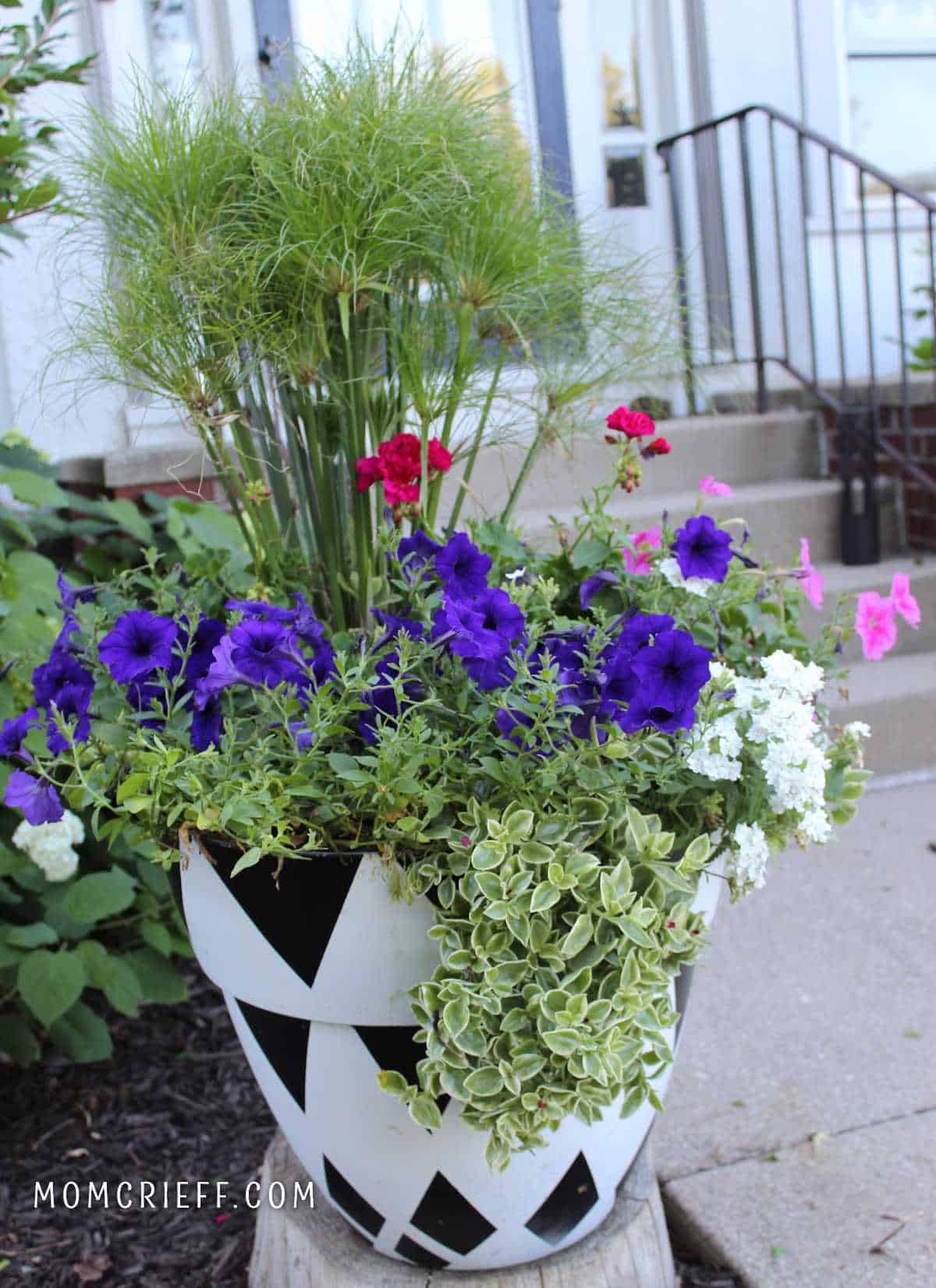
Place tall plants in the center or back of the planter. Put medium plants around them. Use trailing plants near the edges.
This layout creates a balanced look. It shows off each plant and makes the planter look full.
- Tall plants create a strong center
- Medium plants add fullness
- Trailing plants soften edges
- Mix colors and textures for interest
- Keep the arrangement symmetrical for a formal look
Spacing And Depth Tips
Give each plant enough space to grow. Crowding can hurt roots and leaves.
Plant deeper for tall plants and shallower for short ones. This helps roots spread well.
- Leave 2 to 4 inches between plants
- Plant tall plants deeper to support stems
- Use loose soil for good root growth
- Water well after planting
- Add mulch to keep soil moist
Watering And Maintenance
Large outdoor planters need regular care to keep plants healthy. Watering and maintenance are key tasks to help plants grow well.
Proper watering, feeding, and pest control keep your planters looking great all season long.
Watering Frequency
Watering needs vary by weather and plant type. Large planters dry out faster in hot sun. Check soil moisture daily during warm months.
- Water deeply until water drains from the bottom.
- Water early in the morning or late in the evening.
- Reduce watering in cool or rainy weather.
- Use mulch to keep soil moist longer.
Fertilizing Tips
Plants in large containers need extra nutrients. Use slow-release fertilizer or liquid feed every few weeks. Follow package instructions carefully.
| Fertilizer Type | Frequency | Best Use |
| Slow-release | Every 6-8 weeks | General feeding |
| Liquid feed | Every 2-4 weeks | Fast nutrient boost |
| Organic compost | Monthly | Improve soil health |
Pest And Disease Control
Check plants often for signs of pests or disease. Early action stops problems from spreading. Use natural or chemical treatments as needed.
Tips to control pests and diseases:
- Remove dead or damaged leaves promptly.
- Spray with insecticidal soap for bugs.
- Keep plants spaced for good air flow.
- Use neem oil to treat fungal infections.
- Clean tools after use to avoid spreading disease.

Credit: silksareforever.com
Seasonal Care
Large outdoor planters need special attention during seasonal changes. Proper care ensures their beauty year-round. Understanding how to manage them through different seasons is key.
Planters face varying conditions throughout the year. Learn how to prepare them for each season. This guide covers essential care tips.
Preparing For Winter
Winter can be harsh on outdoor planters. Protecting them from cold is important. First, move planters to a sheltered area.
Cover the soil with mulch to retain warmth. This helps plants survive the cold months. Ensure planters have proper drainage to prevent waterlogging.
- Move planters to a sheltered spot
- Cover soil with mulch for warmth
- Ensure proper drainage to prevent waterlogging
Refreshing Soil And Plants
Spring is ideal for refreshing soil. Start by removing old soil. Replace it with fresh, nutrient-rich soil to boost plant growth.
Inspect your plants for signs of damage. Trim dead or unhealthy parts. This promotes healthy new growth and prepares them for the warm season.
- Remove old soil and add fresh soil
- Inspect plants for damage
- Trim dead or unhealthy plant parts
Protecting From Extreme Weather
Extreme weather can damage planters. During hot weather, ensure they are watered regularly. This prevents soil from drying out.
In stormy weather, secure planters to prevent tipping. Use heavy materials or fasten them to stable structures. This keeps them safe during strong winds.
- Water regularly during hot weather
- Secure planters to prevent tipping
- Use heavy materials or fasten to stable structures

Credit: www.containedcreations.com
Frequently Asked Questions
How Do I Prepare Large Outdoor Planters For Planting?
Start by cleaning the planter thoroughly. Ensure drainage holes are clear. Add a layer of gravel for drainage. Use quality potting soil suitable for outdoor plants. Avoid garden soil as it can compact and hinder root growth.
What Soil Mix Is Best For Large Outdoor Planters?
A lightweight, well-draining potting mix works best. Mix compost or organic matter to enrich nutrients. Avoid heavy soils that retain too much water. Ensure the soil supports healthy root development and aeration.
How Much Soil Should Fill A Large Planter?
Fill the planter about two-thirds full with soil. Leave space for plant roots and watering. This prevents soil overflow and allows roots to grow freely. Avoid compacting the soil to maintain good aeration.
Should I Add Fertilizer To Large Outdoor Planters?
Yes, use a slow-release fertilizer mixed into the soil. It provides steady nutrients over time. Alternatively, feed plants with liquid fertilizer during the growing season. Avoid over-fertilizing, which can harm plants.
Conclusion
Filling large outdoor planters takes some planning and care. Start with good drainage to keep plants healthy. Use lightweight soil to avoid heavy pots. Add compost or fertilizer for strong growth. Don’t forget to water regularly, especially in hot weather.
With the right steps, your plants will thrive and brighten your outdoor space. Enjoy the beauty that large planters bring to your garden or patio. Simple actions make a big difference in planter success.