
Is your car’s air conditioner not cooling like it used to? A leak in your auto air conditioner might be the hidden problem draining your comfort and your wallet.
Finding that leak early can save you from costly repairs and keep your drives cool and refreshing. You’ll discover simple, effective ways to spot leaks in your car’s AC system—without needing expert tools or confusing jargon. Ready to take control of your car’s cooling?
Let’s dive in and get your air conditioner back to peak performance.
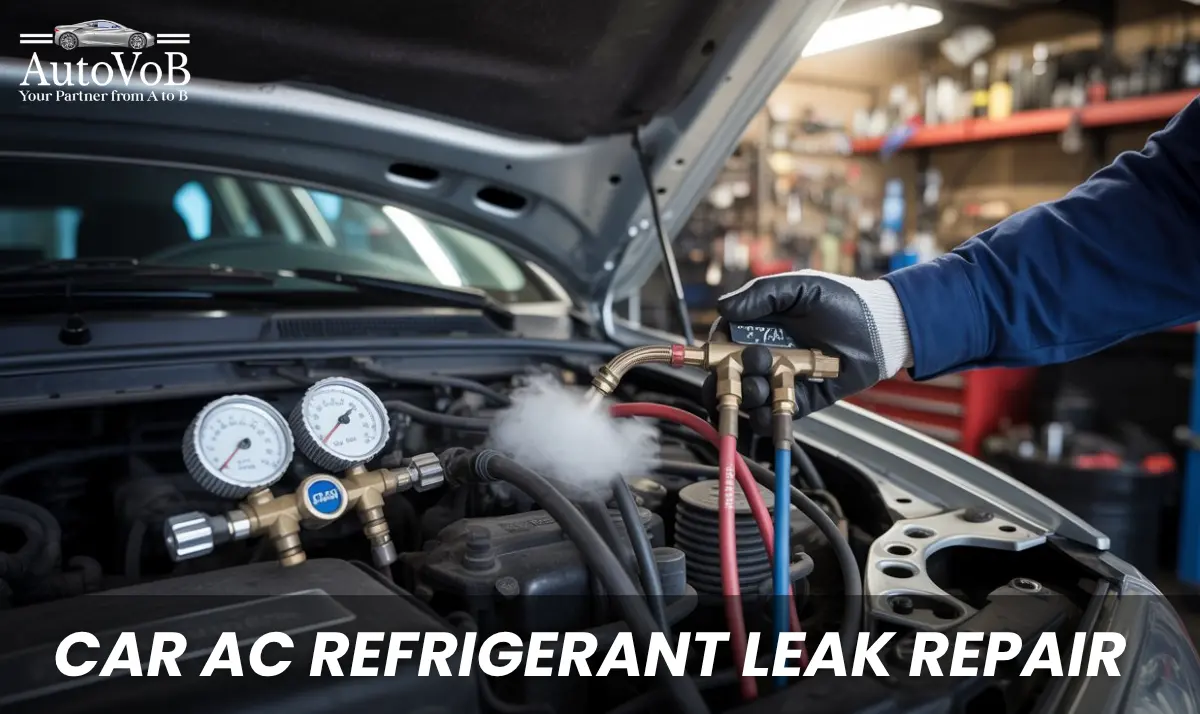
Credit: www.autovob.com
Signs Of A Leak
Leaks in your car’s air conditioner cause problems fast. You need to spot signs early. This helps fix the issue before it gets worse.
Look for changes in how your AC works and sounds. Also, check for any visible clues around the system.
Reduced Cooling Performance
If your AC blows warm air or cools less than before, a leak may be the cause. Low refrigerant means less cold air inside the car.
- Air does not get cold enough
- Cooling takes longer than usual
- Temperature changes often without adjustment
- AC stops working suddenly
Unusual Noises
Listen for strange sounds from the AC system. Leaks often cause hissing or bubbling noises. These sounds come from escaping refrigerant gas.
| Noise Type | Possible Cause |
|---|---|
| Hissing | Refrigerant gas escaping |
| Bubbling | Air or moisture in system |
| Clicking | Compressor strain from low refrigerant |
Visible Refrigerant Residue
Check the AC parts for oily or greasy spots. Refrigerant leaks often leave a residue. This residue may look like white or green powder.
- Around hoses and connections
- Near the compressor unit
- At the condenser fins
- On the evaporator case inside the dashboard
Tools You’ll Need
Finding a leak in your car’s air conditioner can be tricky. You need the right tools to make it easier.
Here are some tools that can help you detect leaks quickly and accurately.
Leak Detection Dye
Leak detection dye is a special liquid. It helps you find leaks in the air conditioning system.
You add the dye to the system, and it circulates with the refrigerant. The dye will show up where there is a leak.
- Make sure the system is off before adding dye
- Use a dye injector to add the dye
- Check the instructions for the right amount
Uv Light
UV light is used with detection dye. It makes the dye glow at the leak points.
Shine the UV light on the air conditioner parts. Look for glowing spots to find the leak.
- Wear UV protection glasses
- Check hoses and connections first
- Use in a dark area for better visibility
Electronic Leak Detector
An electronic leak detector sniffs out leaks. It senses refrigerant escaping from the system.
Move the detector around different parts. Listen for a sound that indicates a leak.
- Turn on the detector outside the car
- Start with connections and joints
- Keep the sensor close to surfaces
Step-by-step Leak Detection
Finding a leak in your auto air conditioner helps keep it working well. Leaks reduce cooling and can cause damage.
This guide shows simple steps to detect leaks in your car’s AC system. Follow each part carefully for best results.
Preparing The Ac System
Start by turning off the engine and opening the hood. Check the AC system for visible damage like cracked hoses or loose fittings.
- Make sure the AC is empty of refrigerant if needed.
- Clean the area around the AC components.
- Wear gloves and eye protection before working on the system.
Applying Leak Detection Dye
Use a special dye made for AC systems. This dye mixes with the refrigerant and shows leaks under UV light.
- Inject the dye into the low-pressure service port.
- Run the engine and AC for about 15 minutes to circulate the dye.
- Turn off the engine and wait a few minutes before inspection.
Inspecting With Uv Light
Use a UV flashlight to find glowing spots where the dye escapes. These spots show leaks in the system.
| Area to Check | What to Look For |
| Hoses and connections | Bright green or yellow glow |
| Compressor seals | Small glowing spots or streaks |
| Evaporator and condenser | Glowing dye stains or wet spots |
Using An Electronic Detector
An electronic leak detector senses refrigerant gas in the air. It helps find leaks that UV light might miss.
- Turn on the detector and let it warm up.
- Slowly move the sensor tip near AC parts and connections.
- Watch for beeping or flashing that signals a leak.
- Mark leak points for repair after detection.
Common Leak Locations
Finding leaks in your auto air conditioner can save you money. Leaks cause the AC to lose refrigerant and cool less.
Leaks often happen in a few key parts of the system. Knowing these spots helps you check faster and fix sooner.
Hoses And Connections
Hoses carry refrigerant through the AC system. Connections link hoses to other parts like the compressor and condenser.
Leaks often happen where hoses meet metal parts. Cracks or loose clamps can cause refrigerant to escape.
- Check hoses for cracks or wear
- Look for oily residue near hose ends
- Ensure clamps and fittings are tight
Compressor And Condenser
The compressor pumps refrigerant through the system. The condenser cools the refrigerant after compression.
Leaks can happen at compressor seals or condenser joints. Damage or corrosion causes refrigerant to leak out.
- Inspect compressor body for oil stains
- Check condenser fins for damage or holes
- Look at seals and joints for cracks
Evaporator Core
The evaporator core cools the air inside your car. It sits inside the dashboard and uses refrigerant to remove heat.
Leaks in the evaporator core are harder to find. Signs include a sweet smell or wet spots inside the cabin.
- Look for dampness under the dashboard
- Check for musty or sweet odors inside car
- Use leak detection tools for precise location
Temporary Fixes
Finding a leak in your car’s air conditioner can save you money. Temporary fixes help you use the AC until you get a full repair.
Two common ways to stop leaks temporarily are using sealant products and tightening loose fittings. These methods are quick and easy.
Using Sealant Products
Sealant products can plug small leaks inside the AC system. They flow through the pipes and block holes where refrigerant escapes.
- Choose a sealant made for auto air conditioners.
- Follow the product instructions carefully.
- Inject the sealant into the AC system through the low-pressure port.
- Run the AC to spread the sealant evenly.
- Check if the leak stops after some time.
Tightening Loose Fittings
Loose fittings can cause leaks in the AC system. Tightening them can stop the leak until you get professional help.
| Tool Needed | Action |
| Wrench | Loosen then tighten AC pipe fittings |
| Socket Set | Adjust bolts on compressor and lines |
| Flashlight | Inspect fittings for leaks |
| Gloves | Protect your hands while working |

Credit: www.youtube.com
When To See A Professional
Finding a leak in an auto air conditioner can be tricky. Some leaks are easy to spot. Others need special tools and skills.
Knowing when to call a professional helps avoid more damage. It also ensures the repair is safe and done right.
Complex Repairs
Some leaks happen in hard-to-reach parts. These parts may include the compressor or evaporator. Fixing these needs special tools.
Trying to fix complex leaks without experience can cause more damage. Professionals know how to handle these repairs safely and correctly.
Handling Refrigerants Safely
Refrigerants in air conditioners can be harmful. They can cause health problems if handled wrong. They also hurt the environment.
Only trained professionals should work with refrigerants. They use the right equipment to catch leaks and refill safely.
- Professionals follow laws about refrigerant use
- They prevent refrigerant from escaping into the air
- They protect you from chemical exposure
Preventing Future Leaks
Leaks in your auto air conditioner can cause it to stop cooling properly. Preventing leaks saves money and keeps your car comfortable.
Good care and smart use help stop leaks before they start. Follow simple tips to keep your air conditioner working well.
Regular Maintenance Tips
Check your air conditioner often. Look for signs of leaks like wet spots or a drop in cooling power.
Clean or replace air filters regularly. Dirty filters make the system work harder, increasing wear and leaks.
- Inspect hoses and connections for cracks or damage
- Top off refrigerant levels as needed
- Have a professional check the system yearly
Proper Usage Practices
Use your air conditioner correctly to avoid strain. Turn it on before driving to cool the cabin gently.
Avoid setting the temperature too low. Extreme cold settings can increase pressure and cause leaks.
- Do not run the AC when the engine is off
- Keep windows closed while AC runs
- Turn off the AC before stopping the car

Credit: www.youtube.com
Frequently Asked Questions
How Do I Detect A Leak In My Car’s Ac System?
To find an AC leak, first check for oil stains around hoses and connections. Use a UV dye and a UV light to spot leaks. Listen for hissing sounds from refrigerant escaping. A pressure gauge can also help identify low refrigerant levels indicating leaks.
What Tools Are Needed To Find Auto Ac Leaks?
Essential tools include a UV dye kit, UV flashlight, refrigerant pressure gauge, and soap solution spray. These help detect leaks visually and by pressure changes. A leak detector tool can also sense escaping refrigerant gases for precise leak location.
Can Soap Water Help Find Air Conditioner Leaks?
Yes, soap water creates bubbles at leak points. Spray it on suspected areas like hoses and joints. Bubbles form where refrigerant escapes. It’s an easy, cost-effective method to spot leaks in your car’s AC system without special equipment.
Why Is My Car Ac Losing Refrigerant Rapidly?
Rapid refrigerant loss often indicates a significant leak. Common leak points include compressor seals, hoses, and condenser. Leaks reduce cooling efficiency and can damage the system. Identifying and fixing leaks early prevents costly repairs and maintains AC performance.
Conclusion
Finding a leak in your car’s air conditioner saves time and money. Start with simple checks like looking for oily spots. Use a leak detector or soap solution for better results. Fix small leaks quickly to avoid bigger problems. Regular maintenance helps keep the system strong and cool.
Knowing these steps makes car care easier and safer. Stay calm and follow the guide carefully. Your car will stay comfortable and fresh all summer.