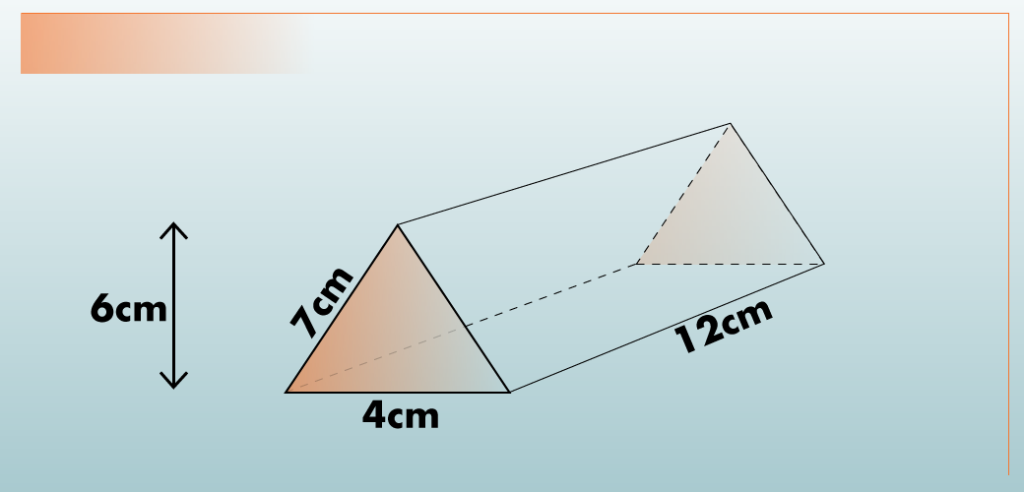
Are you planning a camping trip and want to make sure your tent fits perfectly in your gear setup? Knowing how to find the surface area of a tent can help you understand how much material it covers, how much space it will take, and even how well it will protect you from the elements.
Whether you’re a beginner or just need a quick refresher, this guide will walk you through simple steps to calculate your tent’s surface area with ease. Keep reading, and you’ll soon have the confidence to measure your tent like a pro!
Types Of Tent Shapes
Tents come in different shapes. Each shape changes how much surface area the tent has.
Knowing the shape helps calculate the surface area. This is important to understand the fabric needed.
Common Tent Designs
There are many tent designs. Some popular shapes are dome, A-frame, and cabin tents.
Dome tents have curved walls and a rounded top. A-frame tents look like the letter “A”. Cabin tents have straight walls and a flat roof.
- Dome Tents:Rounded shape with flexible poles.
- A-Frame Tents:Simple triangular shape.
- Cabin Tents:Boxy shape with vertical walls.
Impact On Surface Area
Tent shape affects how to find surface area. Curved shapes need more complex math.
Flat walls and simple shapes make it easier to calculate surface area. Dome tents use parts of circles or ellipses.
| Tent Shape | Surface Area Calculation | Notes |
|---|---|---|
| Dome | Use curved surface formulas like spherical caps | More fabric needed due to curves |
| A-Frame | Calculate two triangles plus rectangle base | Simple math, less fabric |
| Cabin | Add area of rectangles and squares | Most fabric efficient |
Essential Tools For Measurement
To find the surface area of a tent, you need the right tools. These tools help you measure accurately and calculate the area with ease.
Using precise measurements ensures your calculations are correct. Let’s explore the essential tools you need.
Measuring Tape And Ruler
A measuring tape and ruler are crucial for measuring the tent’s dimensions. They help you measure the length, width, and height of the tent.
Choose a measuring tape that is flexible and long enough for larger tents. A ruler is useful for smaller sections and detailed measurements.
- Measuring tape can reach up to 100 feet
- Ruler offers precision for small areas
- Both tools must be easy to read
Calculator And Notepad
A calculator is essential for calculating the surface area. It helps you multiply and add the measurements accurately.
Keep a notepad handy to jot down measurements. This helps you stay organized and ensures you don’t forget any numbers.
- Calculator for quick calculations
- Notepad for recording measurements
- Both tools help avoid mistakes
Basic Formulas For Surface Area
Calculating the surface area of a tent helps to know how much material you need. Different tent shapes use different formulas.
This guide shows simple formulas for rectangular, square, triangular, and dome tents.
Rectangular And Square Tents
Rectangular and square tents have flat sides and a flat roof. You find surface area by adding the areas of all sides and the roof.
| Shape | Formula for Surface Area |
| Rectangular Tent | 2 × (length × height) + 2 × (width × height) + (length × width) |
| Square Tent | 4 × (side × height) + (side × side) |
Triangular And Dome Tents
Triangular tents have sloped sides, and dome tents are round. Use different formulas for each shape.
- Triangular Tent:Calculate the area of two triangular ends and three rectangular sides. Add all areas.
- Dome Tent:Use the formula for the surface area of a sphere: 4 × π × radius². For half a dome, divide by 2.

Credit: www.youtube.com
Step-by-step Measurement Process
Finding the surface area of a tent helps you know how much fabric you need. This guide shows you how to measure each part carefully.
Follow the steps to measure the tent and calculate the total surface area accurately.
Measuring Tent Dimensions
Start by measuring the main parts of the tent. Use a tape measure and record each length in feet or meters.
- Measure the length of the base from one end to the other.
- Measure the width of the base at the widest point.
- Measure the height from the base to the top peak.
- If the tent has sloping sides, measure the length of each slant.
Calculating Each Surface
Next, calculate the area of each tent surface using the measurements. Use simple formulas for rectangles and triangles.
| Surface | Shape | Formula |
| Floor/Base | Rectangle | Length × Width |
| Side Walls | Rectangle or Triangle | Height × Width (Rectangle) ½ × Base × Height (Triangle) |
| Roof | Triangle or Rectangle | ½ × Base × Height (Triangle) Length × Width (Rectangle) |
Adding Areas For Total Surface
Finally, add all the surface areas together to get the total surface area of the tent.
- Sum the floor area and the wall areas.
- Include the roof area based on its shape.
- Double areas if there are two identical sides.
- Write down the total surface area in square feet or meters.
Tips For Accurate Measurement
Measuring the surface area of a tent helps you understand its size better. Accurate measurement makes it easier to plan space and materials.
Use simple tools and clear steps to get the best results. Taking your time prevents errors and saves effort later.
Measuring On Flat Ground
Place the tent fully spread out on flat ground for easy measuring. This shows the true shape and size of the tent.
Use a tape measure to find the length and width. Measure from edge to edge without stretching the fabric.
- Ensure the ground is level to avoid uneven measurements.
- Mark corners with small weights or pegs for accuracy.
- Write down each measurement right after taking it.
Avoiding Common Mistakes
Do not measure when the tent is folded or wrinkled. This gives wrong numbers and wastes time.
Do not stretch the fabric too much. It changes the size and causes errors in calculation.
- Check that the tape measure is straight, not bent or twisted.
- Measure twice to confirm results before recording.
- Keep the tent clean and dry to avoid slipping or folding.

Credit: studyx.ai
Using Surface Area Data
Knowing the surface area of a tent helps you pick the right materials. It also makes sure you buy enough fabric. This information saves money and avoids waste.
Surface area data shows the total fabric needed to cover the tent. You can use it to plan cutting and sewing. It also guides you on the amount of waterproof coating or insulation.
Selecting Tent Material
Choose materials based on the tent’s surface area and use. Some fabrics work better for large tents. Others are best for small or lightweight tents.
- Nylon is light and strong for backpacking tents.
- Polyester resists water and sun damage well.
- Canvas is heavy but very durable and breathable.
- Ripstop fabrics reduce tearing on big tents.
- Consider coatings like silicone or polyurethane for water resistance.
Estimating Fabric Needs
Calculate the total surface area to find fabric yardage. Add extra for seams and hems. Use a table to compare fabric widths and needed lengths.
| Fabric Width (inches) | Surface Area (sq. ft.) | Fabric Length Needed (yards) |
| 54 | 120 | 4.15 |
| 60 | 150 | 4.17 |
| 72 | 180 | 3.13 |
Advanced Techniques
Finding the surface area of a tent can be tricky with simple math. Advanced techniques help measure complex shapes accurately.
Using modern tools and models makes the process faster and more precise. These methods work well for large or unusual tents.
Using 3d Models
3D models show the tent shape from all angles. They help calculate surface area by breaking the tent into smaller parts.
Software can create 3D models from photos or measurements. The model gives exact area measurements without guesswork.
- Create a 3D model using CAD software
- Divide the tent into flat surfaces
- Calculate each surface area separately
- Add all areas for total surface area
Digital Measurement Tools
Digital tools like laser distance meters and 3D scanners capture tent dimensions quickly. They reduce errors from manual measuring.
These tools link to software that computes surface area. This approach works well for tents with curves or unusual shapes.
- Use laser distance meters to measure lengths
- Employ 3D scanners for detailed shape data
- Upload measurements to calculation software
- Obtain accurate surface area results

Credit: www.youtube.com
Frequently Asked Questions
How Do You Calculate The Surface Area Of A Tent?
To calculate a tent’s surface area, measure each panel’s dimensions. Multiply length by width for rectangles. Add all panel areas together for total surface area.
What Shapes Are Tents Usually Made Of?
Tents commonly use triangles, rectangles, and trapezoids. Each shape’s area is calculated separately, then summed to find total surface area.
Why Is Knowing A Tent’s Surface Area Important?
Knowing surface area helps estimate material needs, weight, and ventilation. It aids in selecting the right tent size and durability for camping trips.
Can I Find Surface Area Without Complex Math?
Yes, break the tent into simple shapes. Measure each side, calculate individual areas, then add them up for an accurate total.
Conclusion
Finding the surface area of a tent is easier than it seems. Start by measuring the tent’s dimensions carefully. Use simple math formulas to calculate each side’s area. Add all the parts together to get the total surface area. Knowing this helps with choosing the right tent cover or material.
It also helps plan space inside the tent. Practice with different tent shapes to get better. This skill saves time and avoids mistakes on camping trips. Keep measuring and calculating to feel confident every time.