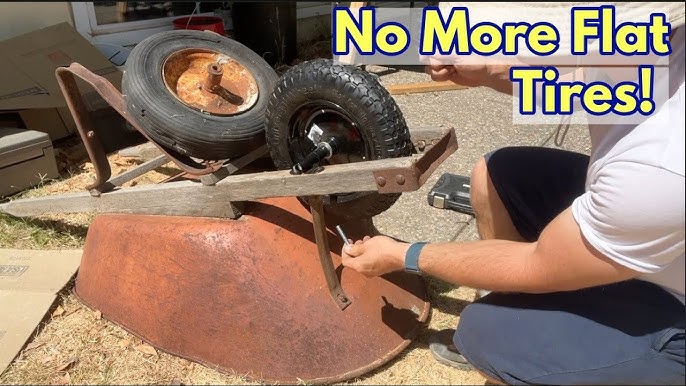
Is your wheelbarrow tire flat or damaged? It’s frustrating when your trusty tool won’t roll smoothly just when you need it most.
But don’t worry—you don’t have to buy a new tire or call for help. You can fix it yourself, even if you’ve never done it before. You’ll learn simple, step-by-step ways to get your wheelbarrow tire back in shape quickly.
Keep reading, and you’ll save time, money, and avoid the hassle of being stuck with a broken wheel.

Credit: www.youtube.com
Tools And Materials Needed
Fixing a wheelbarrow tire needs some basic tools and materials. Having the right items makes the repair easier and faster.
This guide covers the tools and parts you need to replace or fix a wheelbarrow tire properly.
Essential Repair Tools
You need simple tools to remove and repair the wheelbarrow tire. These tools help you take off the tire and replace it safely.
- Wrench or socket set to loosen and tighten nuts
- Screwdriver for removing any screws or clips
- Tire levers or pry bars to remove the tire from the rim
- Air pump or compressor to inflate the tire
- Patch kit if you plan to fix a puncture instead of replacing
- Gloves to protect your hands during repair
Choosing The Right Replacement Parts
Select the correct replacement tire and tube for your wheelbarrow. Using the right parts ensures a good fit and long-lasting repair.
Check the size and type of the tire before buying. Match the parts to your wheelbarrow’s model and use.
- Tire size (usually printed on the old tire sidewall)
- Tube size that fits inside the tire
- Type of tire: pneumatic (inflatable) or solid
- Wheelbarrow wheel diameter and width
- Valve type for the tube (e.g., Schrader or Presta)

Credit: wheelco.co.nz
Identifying Tire Problems
A wheelbarrow tire can lose air or get damaged over time. Finding the problem early helps fix it faster. You should know how to spot common tire issues before they get worse.
This guide covers how to check your tire and find punctures or leaks. Keeping your tire in good shape makes your work easier and safer.
Common Tire Issues
Wheelbarrow tires often face these problems:
- Flat tires caused by punctures or holes
- Worn-out treads that reduce grip
- Cracks or dry rot from old age
- Loose or broken valve stems
- Low air pressure from small leaks
Checking the tire regularly helps find these problems early. Replace or repair parts before the tire stops working.
Checking For Punctures And Leaks
Look closely at the tire surface to find punctures and leaks. Some problems are easy to see, but others need tests.
| Check Method | What to Look For | How to Do It |
|---|---|---|
| Visual Inspection | Holes, cuts, nails, or sharp objects | Look all around the tire and remove debris |
| Soapy Water Test | Air bubbles showing leaks | Mix soap with water and apply to tire surface |
| Submersion Test | Air bubbles from small holes | Place tire in water and watch for bubbles |
| Listen for Hissing | Sound of escaping air | Put tire close to your ear and listen carefully |
Removing The Tire
Fixing a wheelbarrow tire often starts with removing the tire. This allows you to check the inner tube or replace the tire if needed.
Removing the tire involves two main steps. First, detach the wheel from the wheelbarrow. Then, take the tire off the rim carefully.
Detaching The Wheelbarrow Wheel
Start by turning the wheelbarrow upside down or resting it on its handles. This gives easy access to the wheel.
Use a wrench or socket set to loosen the nuts or bolts holding the wheel in place. Remove them completely to free the wheel.
- Place the wheelbarrow upside down
- Locate the axle nuts or bolts
- Use the correct wrench size
- Turn nuts or bolts counterclockwise
- Remove the wheel carefully
Taking Off The Tire From The Rim
After removing the wheel, deflate the tire completely by letting out all the air from the valve.
Use tire levers or flat tools to pry the tire away from the rim. Work slowly around the tire to avoid damage.
- Press the valve to release air
- Insert a tire lever under the tire edge
- Lift the tire bead over the rim
- Move the lever around the tire
- Remove the tire from the rim
Fixing A Flat Tire
A flat tire can stop your work quickly. Fixing it yourself saves time and money. You can repair small holes or replace the inner tube if needed.
Read on to learn how to patch small punctures and replace the inner tube on your wheelbarrow tire.
Patching Small Punctures
First, remove the tire from the wheelbarrow. Find the hole by inflating the tire and listening for air. You can also use soapy water to spot bubbles where the air escapes.
After locating the hole, dry the area well. Use a tire patch kit to cover the puncture. Press the patch firmly and wait for it to stick before reinflating the tire.
- Remove the tire from the wheelbarrow
- Find the hole using air or soapy water
- Dry the puncture area
- Apply the patch and press firmly
- Wait before reinflating the tire
Replacing The Inner Tube
Remove the wheel from the wheelbarrow. Take off the tire by loosening the rim or using tire levers. Pull out the old inner tube carefully.
Check the tire for sharp objects. Place a new inner tube inside the tire. Fit the tire back on the rim and tighten it securely. Inflate the new tube slowly to the correct pressure.
- Remove the wheel from the wheelbarrow
- Loosen the rim and remove the tire
- Take out the old inner tube
- Check tire for sharp objects
- Insert new inner tube
- Put tire back on rim and tighten
- Inflate new tube to the right pressure
Reinstalling The Tire
After fixing or replacing a wheelbarrow tire, you need to put it back properly. Reinstalling the tire ensures smooth use and safety.
This guide explains how to mount the tire on the rim and secure the wheel to the wheelbarrow.
Mounting The Tire Back On The Rim
Start by placing the tire evenly around the rim. Make sure the tire bead fits inside the rim edges on both sides.
Use your hands or a tire lever to push the tire onto the rim. Avoid using sharp tools that can damage the tire.
- Check the tire direction if it has a tread pattern
- Ensure the tire is centered on the rim
- Work around the rim slowly to avoid pinching the tube
- Leave a small gap to insert the valve stem if needed
Securing The Wheel To The Wheelbarrow
After mounting the tire, place the wheel back on the axle. Align it with the wheelbarrow frame holes.
Insert the axle bolt through the wheel and frame. Tighten the nut firmly to hold the wheel in place.
- Grease the axle before reattaching the wheel
- Use washers if needed to prevent wobbling
- Check that the wheel spins freely without rubbing
- Tighten all fasteners securely but do not over-tighten
Credit: www.youtube.com
Inflating And Testing
Fixing a wheelbarrow tire is easy with the right steps. Proper inflation and testing help ensure the tire works well.
Follow these guidelines to inflate your tire correctly and check its performance.
Proper Tire Inflation
Inflating the tire to the correct pressure is important. It helps the wheelbarrow move smoothly and last longer.
- Find the recommended tire pressure on the side of the tire.
- Use a pump to inflate the tire to the correct pressure.
- Check the pressure with a tire gauge to ensure accuracy.
Checking For Leaks And Performance
After inflating, it is important to check the tire for leaks. Testing the tire’s performance ensures it is ready for use.
Push the wheelbarrow to test how the tire performs. Listen for any unusual sounds.
| Test | Expected Outcome |
| Leak Test | No bubbles |
| Performance Test | Easy movement |
Maintenance Tips
Fixing a wheelbarrow tire is only part of keeping it ready for use. Proper care helps avoid future problems. Regular maintenance keeps the tire in good shape.
Read on to learn how to prevent tire issues and store your wheelbarrow correctly.
Preventing Future Tire Issues
Check your tire often for damage or low air pressure. Fix problems early to avoid bigger repairs. Use the right air pressure to keep the tire firm but not hard.
- Inspect the tire for cracks or holes regularly.
- Keep the tire inflated to the recommended pressure.
- Clean the tire to remove dirt and sharp objects.
- Replace the tire if it shows excessive wear.
- Lubricate the wheel bearings to reduce friction.
Storing The Wheelbarrow Correctly
Store your wheelbarrow in a dry place to protect the tire. Keep it off the ground to avoid flat spots. Cover it to shield from sun and rain.
| Storage Tip | Why It Helps |
| Keep wheelbarrow indoors | Prevents tire damage from weather |
| Elevate the wheelbarrow | Stops flat spots on tires |
| Use a cover | Protects from sun and moisture |
| Check tire pressure before storage | Keeps tire shape stable |
Frequently Asked Questions
How Do I Know If My Wheelbarrow Tire Needs Fixing?
Check for flatness, cracks, or visible damage on the tire. If the tire is soft or deflated, it likely needs repair or replacement.
What Tools Are Needed To Fix A Wheelbarrow Tire?
You need a wrench, tire lever, patch kit or replacement tube, and an air pump. These tools help remove, repair, and inflate the tire effectively.
How Can I Repair A Punctured Wheelbarrow Tire?
Remove the tire, locate the puncture, patch it using a repair kit, and reassemble. Ensure the patch is sealed and inflate the tire properly.
When Should I Replace A Wheelbarrow Tire Instead Of Fixing It?
Replace the tire if it has large tears, severe cracks, or the tube is beyond repair. Consistent damage reduces safety and performance.
Conclusion
Fixing a wheelbarrow tire is easier than it seems. With the right tools and steps, you can do it yourself. Check the tire regularly to avoid future problems. Keep your wheelbarrow ready for all your work. Small repairs save time and money.
Take care of your tools, and they will last longer. Now, you can handle tire issues without stress. Simple fixes keep your garden tasks smooth and easy.