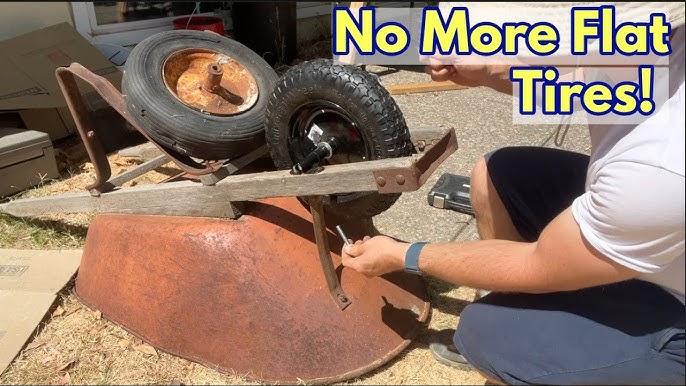
Is your wheelbarrow wheel giving you trouble right when you need it most? A flat or wobbly wheel can turn a simple task into a frustrating challenge.
But don’t worry—you don’t have to buy a new wheelbarrow or call a repair service. You can fix your wheelbarrow wheel quickly and easily with a few simple steps. Keep reading, and you’ll learn exactly how to get your wheel rolling smoothly again, saving you time, money, and hassle.
Common Wheelbarrow Wheel Issues
Wheelbarrows are essential tools for gardening and construction. They make moving heavy loads easier. But sometimes, the wheels can cause problems.
Understanding common wheel issues helps you fix them quickly. This guide will explain the problems and how to solve them.
Flat Tires
Flat tires are a frequent issue with wheelbarrows. They make moving loads very hard. Checking your tire pressure regularly can prevent flats.
- Inspect tires for sharp objects
- Inflate tires to the correct pressure
- Replace damaged tires promptly
Loose Or Broken Axles
If the axle is loose or broken, the wheel will wobble. This makes the wheelbarrow unstable and hard to use.
| Issue | Solution |
| Loose axle | Tighten bolts |
| Broken axle | Replace with a new one |
Damaged Bearings
Bearings allow the wheel to turn smoothly. Damaged bearings make pushing the wheelbarrow difficult.

Credit: www.youtube.com
Tools And Materials Needed
Fixing a wheelbarrow wheel needs the right tools and parts. Having them ready saves time and effort.
This guide lists what you need to repair the wheel easily and safely.
Basic Repair Tools
You need simple tools to take off the wheel and fix it. Most tools are common and easy to find.
- Wrench or adjustable spanner to loosen nuts and bolts
- Screwdriver for removing any screws
- Pliers to hold or pull small parts
- Tire pump if the wheel has an inflatable tire
- Hammer to tap parts into place if needed
- Lubricant spray for smooth wheel movement
Replacement Parts
Check your wheelbarrow to know which parts need replacement. Having the right parts helps fix it properly.
- New wheel or tire if the old one is damaged
- A new axle if the current one is bent or broken
- Fresh bearings to help the wheel spin smoothly
- Replacement nuts and bolts for secure fitting
- Tube for inflatable tires if it is punctured
Safety Equipment
Wear safety gear to protect yourself during the repair. Safety helps prevent injuries.
- Work gloves to protect your hands from cuts and dirt
- Safety glasses to shield your eyes from dust or debris
- Closed-toe shoes to protect your feet
- Long sleeves to avoid scratches
Removing The Wheel
Removing a wheelbarrow wheel is simple if you follow the right steps. It helps to fix or replace the wheel easily.
This guide shows how to remove the wheel safely and without damage.
Loosening Nuts And Bolts
First, find the nuts and bolts holding the wheel. These keep the wheel attached to the frame.
- Use a wrench to turn the nuts counterclockwise.
- If nuts are tight, spray some oil to loosen them.
- Hold the bolt head with a second wrench to stop it from turning.
- Keep turning until the nuts and bolts come off.
Detaching The Wheel Properly
After loosening, carefully remove the wheel. Make sure to check the parts and keep them safe.
| Part | What to Check | Tip |
|---|---|---|
| Wheel | Look for cracks or damage | Replace if broken |
| Nuts and Bolts | Check for rust or wear | Clean or replace if needed |
| Axle | Ensure it is straight and clean | Wipe dirt before reassembly |

Credit: wheelco.co.nz
Fixing A Flat Tire
A flat tire on a wheelbarrow can stop your work quickly. Fixing it yourself saves time and money. You just need a few tools and some patience.
This guide shows how to check for punctures, patch the inner tube, and replace the tire if needed. Follow these easy steps to get your wheelbarrow rolling again.
Checking For Punctures
First, remove the wheel from the wheelbarrow. Then, take off the tire to access the inner tube. Inflate the tube slightly so it holds shape.
Look closely for holes or sharp objects stuck in the tire. You can also listen for a hissing sound or feel air escaping. Another way is to submerge the tube in water and watch for bubbles.
- Remove wheel from wheelbarrow
- Deflate and remove tire
- Inflate inner tube slightly
- Check for holes by sight, sound, or water test
Patching The Inner Tube
Once you find the hole, mark it with a pen. Dry the area around the puncture. Use sandpaper to roughen the surface for better glue grip.
Apply rubber cement around the hole and wait a few minutes for it to get tacky. Press the patch firmly on the glue and hold it for a minute. Let it dry completely before reinflating.
- Mark the hole location
- Dry and roughen the area
- Apply rubber cement and wait
- Stick the patch and press firmly
- Let it dry before use
Replacing The Tire
If the tire is badly damaged or worn out, replace it with a new one. Remove the old tire and inner tube completely. Check the wheel rim for any sharp edges or rust.
Put the new tire on the rim and insert a new inner tube inside. Inflate the tube slowly to make sure it fits well. Reattach the wheel to the wheelbarrow and test it by rolling.
- Remove old tire and tube
- Inspect wheel rim for damage
- Fit new tire on rim
- Insert new inner tube
- Inflate and check fit
- Reattach wheel to wheelbarrow
Repairing The Axle
The axle is a key part of a wheelbarrow wheel. It holds the wheel in place and helps it spin. Fixing the axle keeps the wheelbarrow working well.
This guide explains how to find axle damage and how to tighten or replace the axle if needed.
Identifying Axle Damage
Look closely at the axle for cracks, bends, or rust. These signs show damage. Check if the wheel spins unevenly or wobbles. This can mean the axle is loose or broken.
- Inspect the axle for visible cracks or bends.
- Check for rust or corrosion on metal parts.
- Spin the wheel to see if it moves smoothly.
- Look for wobbling or unusual noises.
- Feel for looseness by trying to move the wheel side to side.
Tightening Or Replacing The Axle
Tighten the axle if it is loose. Use a wrench to turn the nuts on each side. If the axle is bent or cracked, replace it. Remove the old axle and slide a new one in place.
| Action | Tool Needed | Notes |
| Tighten axle nuts | Wrench | Turn nuts clockwise until tight |
| Remove damaged axle | Wrench, hammer (if stuck) | Loosen nuts, tap axle out carefully |
| Install new axle | Wrench | Slide axle through wheel and frame |
| Secure axle nuts | Wrench | Tighten nuts firmly to prevent wobble |
Maintaining Wheel Bearings
Wheel bearings help your wheelbarrow wheel spin smoothly. Keeping them clean and lubricated stops damage. Regular care makes your wheel last longer.
Check the bearings often. Dirt and rust can cause the wheel to stick or wobble. Fixing bearings is simple with the right steps.
Cleaning And Lubricating Bearings
Remove the wheel from the wheelbarrow to access the bearings. Wipe off dirt and old grease carefully. Use a clean cloth or brush for this.
After cleaning, apply fresh grease or oil to the bearings. This helps reduce friction and keeps the wheel turning smoothly. Use a lubricant made for wheel bearings.
- Remove the wheel and axle
- Wipe off dirt and old grease
- Use a brush for stubborn grime
- Apply fresh grease or oil
- Reassemble the wheel and test
Replacing Worn Bearings
Look for signs of worn bearings like noise or rough spinning. If bearings are damaged, remove them from the axle. You may need a bearing puller tool.
Get new bearings that match the size of the old ones. Press the new bearings onto the axle carefully. Make sure they fit snugly before putting the wheel back.
- Check for noise or rough spinning
- Remove old bearings using a puller
- Buy bearings that fit your wheel
- Press new bearings onto the axle
- Reassemble and test the wheel
Reassembling The Wheel
Reassembling the wheel is an important part of fixing a wheelbarrow wheel. It helps the wheel turn smoothly and carry weight safely.
This process involves putting the wheel back on the axle and making sure all parts are aligned and secure.
Aligning The Wheel Correctly
First, place the wheel onto the axle carefully. Make sure the hole in the wheel hub fits the axle snugly.
The wheel must be centered and straight. A misaligned wheel will wobble and cause problems when pushing the wheelbarrow.
- Slide the wheel fully onto the axle
- Check that the wheel sits flat on both sides
- Ensure the wheel spins freely without touching the frame
Securing Nuts And Bolts
After aligning the wheel, secure it with the nuts and bolts. These parts keep the wheel attached and stable.
Tighten the nuts and bolts firmly but do not over-tighten. Over-tightening can damage the wheel or axle.
- Place washers if needed to protect parts
- Use a wrench to tighten the nuts evenly
- Check that the wheel still spins well after tightening

Credit: www.youtube.com
Preventive Maintenance Tips
Keeping your wheelbarrow wheel in good shape saves time and money. Regular care helps avoid sudden problems.
Simple checks and actions can keep the wheel running smoothly for a long time.
Regular Inspections
Look at the wheel often to find damage early. Check for cracks, flat spots, or loose parts. Inspect the tire pressure if it has an inflatable tire.
- Check tire tread and sidewalls for cuts or holes
- Spin the wheel to listen for unusual sounds
- Look for rust or worn bearings
- Tighten nuts and bolts if loose
Proper Storage
Store the wheelbarrow in a dry, covered place. Keep it off the ground to stop moisture damage. Avoid direct sun to prevent tire cracks.
| Storage Tip | Reason |
|---|---|
| Keep under a roof or shed | Protect from rain and sun |
| Elevate off the ground | Prevent moisture buildup |
| Store tire away from sharp objects | Avoid punctures |
| Use a wheel cover if possible | Reduce dust and dirt |
Lubrication Schedule
Lubricate the wheel axle to reduce friction and wear. Follow a regular schedule based on use and weather.
- Clean the axle area before lubrication
- Apply light machine oil or grease
- Wipe off excess lubricant
- Repeat every 3 months or after heavy use
Frequently Asked Questions
How Do I Fix A Flat Wheelbarrow Tire?
To fix a flat tire, first remove the wheelbarrow wheel. Then, patch or replace the inner tube. Finally, inflate the tire to the recommended pressure and reattach the wheel securely.
What Causes A Wheelbarrow Wheel To Wobble?
A wobbling wheelbarrow wheel usually results from loose axle nuts or bent axles. Tighten the nuts and inspect the axle for bends. Replace damaged parts to ensure smooth and stable wheel movement.
How Can I Lubricate A Wheelbarrow Wheel Properly?
Apply grease or oil to the wheel’s axle and bearings. Clean any dirt first. Lubrication reduces friction, preventing rust and ensuring smooth rotation of the wheelbarrow wheel.
When Should I Replace A Wheelbarrow Wheel?
Replace the wheel if it’s cracked, severely worn, or the tire won’t hold air. Also, change the wheel if the axle is damaged beyond repair. Timely replacement ensures safe and efficient use.
Conclusion
Fixing a wheelbarrow wheel is easier than it seems. With basic tools and steps, anyone can do it. Regular checks help avoid bigger problems later. A working wheel makes your tasks faster and safer. Take your time and follow each step carefully.
Soon, your wheelbarrow will be ready to use again. Keep it in good shape for longer life. Simple repairs save money and effort in the long run. Don’t let a broken wheel stop your work. Try fixing it yourself and see the difference.