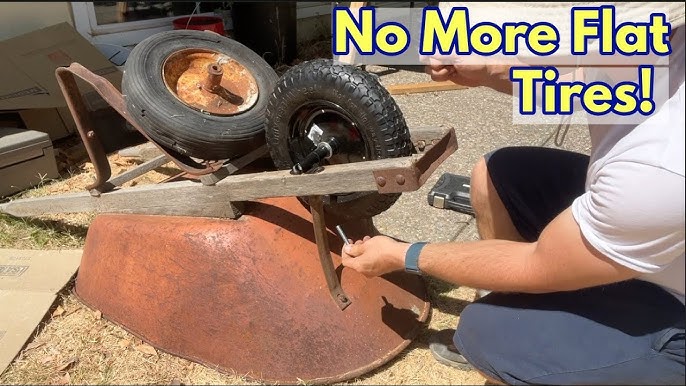
Is your wheelbarrow wheel giving you trouble right when you need it most? A broken or flat wheel can slow down your work and cause unnecessary frustration.
But don’t worry—fixing your wheelbarrow wheel is easier than you might think. In this guide, you’ll discover simple steps to get your wheel rolling smoothly again. Keep reading, and you’ll be back to tackling your projects with confidence in no time.
Identify Common Wheel Issues
Wheelbarrow wheels can stop working well for different reasons. Knowing what is wrong helps fix the wheel fast.
Look carefully at the wheel to find the problem. This saves time and stops more damage.
Flat Tire
A flat tire is the most common problem. It happens when the tire loses air or gets a hole.
You can check for flat tires by pressing on the tire. If it feels soft or flat, it needs air or repair.
- Look for holes or sharp objects stuck in the tire.
- Check if the valve is leaking air.
- Inflate the tire to the right pressure.
Bent Rim
A bent rim makes the wheel wobble or not roll smoothly. It can happen if the wheel hits a hard object.
Check the rim by spinning the wheel. Watch if it moves side to side or hits the brake.
- Look for dents or bends on the metal rim.
- Try to straighten small bends with a tool carefully.
- Replace the rim if it is badly damaged.
Loose Axle
A loose axle makes the wheel shake or fall off. It happens if the bolts or nuts get loose.
Check the axle by moving the wheel side to side. If it feels loose, tighten the bolts or nuts.
- Use a wrench to tighten all nuts and bolts.
- Replace damaged nuts or bolts if needed.
- Test the wheel after tightening to ensure stability.

Credit: www.youtube.com
Gather Necessary Tools
Fixing a wheelbarrow wheel needs the right tools. Gathering these tools first saves time and effort.
Having the correct tools helps you do the job safely and correctly. Below are the main tools you need.
Wrenches And Screwdrivers
You need wrenches and screwdrivers to remove and tighten nuts and bolts on the wheel.
Different sizes of wrenches and screwdrivers may be required depending on your wheelbarrow model.
- Adjustable wrench for various bolt sizes
- Socket wrench for easier bolt removal
- Flathead screwdriver for prying and screws
- Phillips screwdriver for crosshead screws
Replacement Parts
Sometimes the wheel or axle parts are damaged and need replacing. Have spare parts ready.
Common replacement parts include the wheel, axle, bearings, and nuts or washers.
- New wheel that fits your wheelbarrow
- Axle rod if the old one is bent or rusted
- Bearings for smooth wheel rotation
- Nuts, washers, and cotter pins as needed
Lubricants And Sealants
Lubricants help the wheel spin freely and reduce wear. Sealants keep dirt and water out.
Using the right grease and sealant extends the life of your wheelbarrow wheel.
- Grease for axle and bearings
- WD-40 or similar lubricant for rust prevention
- Silicone or rubber sealant to protect parts
Remove The Wheel
Fixing a wheelbarrow wheel starts with removing the wheel. Removing the wheel helps you check for damage or replace it.
This guide shows how to remove the wheel safely and easily.
Loosen Nuts And Bolts
First, find the nuts and bolts holding the wheel in place. You need tools like a wrench or pliers to loosen them.
Turn the nuts and bolts counterclockwise until they become loose enough to remove.
- Use the correct wrench size for the nuts and bolts
- Hold the bolt head with pliers if it spins
- Work slowly to avoid stripping the nuts
- Keep nuts and bolts in a safe place
Detach Wheel From Frame
After loosening the nuts and bolts, pull the wheel away from the frame. It may take some wiggling if it is stuck.
Check the axle and clean any dirt or rust before installing a new wheel or fixing the old one.
- Hold the frame steady while pulling the wheel
- Use a flat tool to pry the wheel if stuck
- Inspect the axle for damage or wear
- Clean the area before reattaching the wheel

Credit: www.youtube.com
Fix A Flat Tire
A flat tire on a wheelbarrow can stop your work fast. Fixing it is easy with the right steps.
This guide shows how to remove the tire, patch or replace the inner tube, and then reinstall the tire.
Remove Tire From Rim
First, take off the wheelbarrow wheel from the frame. Use a wrench if needed.
Next, let all the air out of the tire by pressing the valve stem. This makes it easier to remove the tire.
Use tire levers or strong flat tools to pry the tire bead away from the rim. Work around the rim until the tire is free on one side.
Patch Or Replace Inner Tube
Check the inner tube for holes or damage. You can patch small holes or replace the tube if it is badly torn.
- Find the hole by inflating the tube slightly and listening for air leaks.
- Mark the hole with chalk or a marker.
- Use sandpaper to roughen the area around the hole.
- Apply rubber cement and wait a few minutes.
- Place the patch on the hole and press firmly.
- Let it dry before reinstalling.
Reinstall Tire
Put the patched or new tube inside the tire. Align the valve stem with the hole in the rim.
Push the tire bead back onto the rim carefully. Use your hands or tire levers if needed.
Inflate the tire slowly. Check that the tire is seated evenly on the rim as you pump air.
| Tool | Purpose |
| Wrench | Remove wheel from frame |
| Tire levers | Remove and reinstall tire on rim |
| Rubber cement | Seal patches on inner tube |
| Pump | Inflate inner tube |
Straighten A Bent Rim
A bent rim on a wheelbarrow wheel can make it hard to push and control. Fixing it yourself saves time and money.
This guide explains how to straighten a bent rim safely using simple tools and steps.
Assess Rim Damage
First, check the rim carefully to see where it is bent. Look for dents, bends, or cracks.
Spin the wheel slowly and watch the rim’s edge. Notice any wobbling or uneven parts.
- Look for sharp bends or flat spots
- Check if the rim is loose from the wheel
- Identify if the damage is repairable
Use Tools To Bend Back
Use a rubber mallet or hammer to carefully bend the rim back into shape. Work slowly to avoid cracks.
A block of wood can help support the rim and prevent further damage while you tap it.
- Place the rim on a flat surface
- Use the wood block behind the bent area
- Tap gently with the mallet to push the rim out
- Check the shape often during the process
Check For Wheel Balance
After straightening, spin the wheel to see if it spins evenly. A balanced wheel rolls better.
If the wheel wobbles, adjust the rim more or check the spokes. Tighten any loose parts to improve balance.
- Spin the wheel and watch for wobbles
- Tighten loose spokes if needed
- Repeat bending if the rim is still uneven
- Test the wheelbarrow on flat ground
Tighten Or Replace Axle
The wheelbarrow wheel often needs attention to work well. The axle is a key part that holds the wheel in place.
If the wheel wobbles or does not spin right, the axle may be loose or broken. Fixing it can make the wheel work smoothly again.
Inspect Axle Condition
Start by checking the axle for any damage or rust. Look for cracks, bends, or worn-out areas that can cause problems.
Also, check the wheel for any signs of rubbing or misalignment with the axle. This helps find the exact issue.
- Look for rust or corrosion
- Check for cracks or bends
- Ensure the wheel fits well on the axle
- Spin the wheel to feel for rough spots
Tighten Loose Parts
If the axle looks fine but the wheel is loose, tighten the nuts or bolts. Use a wrench to secure all parts firmly.
Check that the washers and clips are in place. These parts keep the wheel steady on the axle.
- Use a wrench to tighten nuts
- Replace missing washers or clips
- Make sure the wheel spins freely
- Do not overtighten to avoid damage
Install New Axle If Needed
If the axle is bent or broken, replace it with a new one. Measure the old axle to find the right size.
Remove the old axle carefully. Slide the new axle through the wheel and frame, then secure it with nuts and clips.
- Remove the wheel and old axle
- Buy an axle with the same length and diameter
- Install the new axle through wheel and frame
- Tighten all nuts, washers, and clips firmly
Lubricate Moving Parts
Keeping your wheelbarrow wheel moving smoothly needs good lubrication. This stops parts from sticking and wearing out fast.
Lubricating the moving parts helps the wheel turn with less effort. It also extends the life of the wheelbarrow.
Apply Grease To Bearings
The bearings in the wheel let it spin freely. Grease helps these parts move without friction.
First, clean dirt and old grease from the bearings. Then, apply fresh grease evenly around them.
- Remove the wheel from the barrow
- Wipe off old grease and dirt
- Use a grease gun or your finger to apply new grease
- Spin the wheel to spread grease inside
- Reattach the wheel securely
Prevent Rust And Wear
Rust can stop the wheel from turning well. Lubrication also protects metal parts from moisture.
Apply a thin layer of oil or grease on the axle and metal parts. This blocks water and reduces wear.
- Check for rust spots regularly
- Clean the wheel and axle after use
- Apply oil or grease to all moving metal parts
- Store the wheelbarrow in a dry place
Reattach And Test Wheel
Fixing a wheelbarrow wheel involves reattaching it properly and testing for safe use. This guide covers key steps to secure and align the wheel.
Follow the instructions carefully to ensure the wheel spins smoothly and stays in place during work.
Secure Nuts And Bolts
First, tighten all nuts and bolts that hold the wheel in place. Loose parts can cause wobbling or fall off during use.
- Use a wrench to tighten each nut firmly.
- Check bolts for rust or damage before securing.
- Replace any worn parts to avoid future problems.
- Make sure nuts are threaded correctly to avoid stripping.
Check Wheel Alignment
Proper wheel alignment keeps the wheelbarrow balanced and easy to push. Misalignment causes uneven wear and hard steering.
| Check Point | What to Look For | Action |
| Axle Position | Wheel centered between frame arms | Adjust bolts to center wheel |
| Wheel Spin | Wheel spins without wobbling | Retighten nuts or replace bearings |
| Frame Fit | Wheel sits flush against frame | Loosen and reposition if needed |
Test For Smooth Operation
After reattaching and aligning, test the wheel’s movement. It should roll freely and stay secure on the axle.
- Lift the wheelbarrow and spin the wheel by hand.
- Listen for noises like grinding or squeaking.
- Check if the wheel stops quickly or spins smoothly.
- Push the wheelbarrow on a flat surface to feel for resistance.
- Retighten or adjust if you notice any issues.

Credit: wheelco.co.nz
Frequently Asked Questions
How Do I Fix A Flat Wheelbarrow Tire?
To fix a flat wheelbarrow tire, first remove the wheel. Inspect it for punctures or leaks. Patch any holes using a tire repair kit. Reinflate the tire to the recommended pressure. If the tire is beyond repair, consider replacing it with a new one.
How Can I Replace A Wheelbarrow Wheel?
Start by removing the axle nut with a wrench. Slide the old wheel off and align the new wheel onto the axle. Secure the new wheel by tightening the axle nut back in place. Ensure the wheel rotates smoothly before using the wheelbarrow again.
What Tools Are Needed For Wheelbarrow Wheel Repair?
You’ll need a wrench, tire repair kit, and an air pump. The wrench is for removing the wheel. The tire repair kit helps in patching punctures. An air pump is essential for inflating the tire after repair or replacement.
How Can I Prevent Wheelbarrow Wheel Damage?
Regularly check the tire pressure and inflate as needed. Avoid overloading the wheelbarrow. Store the wheelbarrow indoors to protect it from harsh weather. Inspect for debris or sharp objects that can cause punctures. Regular maintenance extends the wheel’s lifespan.
Conclusion
Fixing a wheelbarrow wheel is easier than it seems. Check the tire, tube, and axle for damage. Replace or repair parts as needed. Tighten all bolts to keep the wheel stable. Regular care helps the wheel last longer. Keep your wheelbarrow ready for any job.
Small steps save time and money. Now, your wheelbarrow will roll smoothly again. Simple fixes bring big improvements. Give it a try and see the difference.