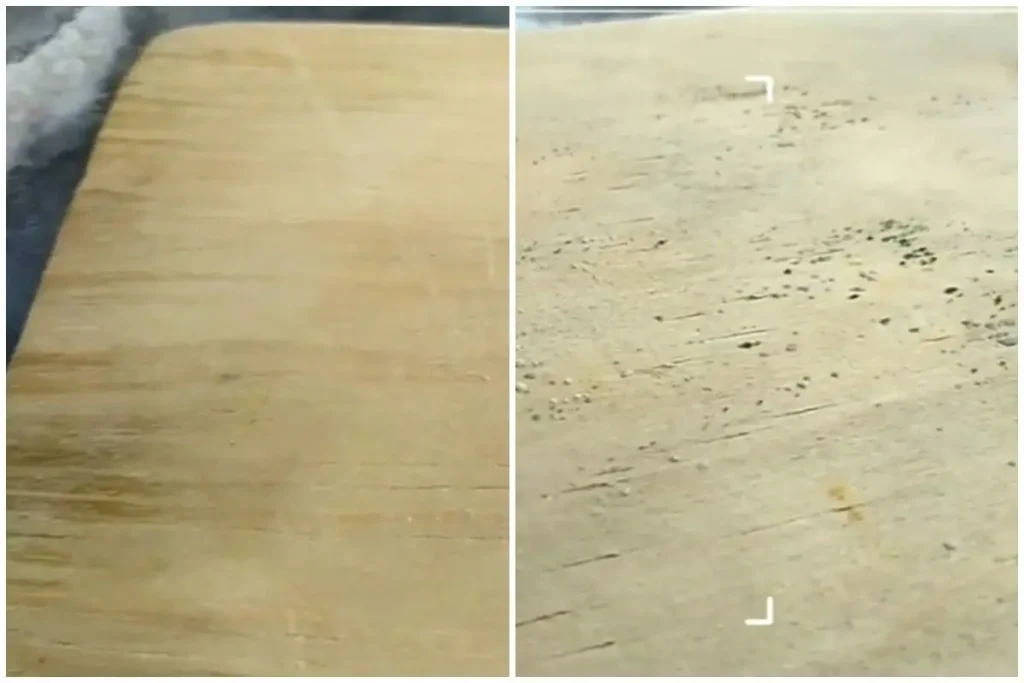
Is your wooden cutting board showing signs of mold? You might be worried about your health and the safety of your food.
Don’t panic—getting mold off your wood cutting board is easier than you think. You’ll discover simple, effective steps to clean and restore your board. By the end, you’ll feel confident using your cutting board again, knowing it’s fresh and safe.
Keep reading to learn how to protect your kitchen and keep your food preparation clean.

Credit: www.reddit.com
Causes Of Mold On Wood Boards
Mold can grow on wood cutting boards when conditions are right. Understanding the causes helps prevent mold growth.
Wood is porous, so it absorbs moisture easily. This makes it a good place for mold to grow if not cared for properly.
Moisture And Humidity
Excess moisture and high humidity create a perfect environment for mold on wood boards. If the board stays wet or damp, mold can start to grow quickly.
- Leaving the board wet after washing
- Drying the board slowly in a humid room
- Using the board with wet hands or food
- Not allowing air to circulate around the board
Improper Cleaning
Cleaning wood boards incorrectly can leave food residue and moisture behind. These leftovers feed mold spores and help them grow.
| Common Cleaning Mistakes | Effect on Mold |
| Using only water without soap | Leaves food residue |
| Not drying the board fully | Keeps surface moist |
| Using harsh chemicals | Damages wood, creating cracks |
| Ignoring deep scratches | Mold hides in cracks |
Storage Conditions
Where and how you store your wood board affects mold growth. Poor storage traps moisture and blocks airflow.
- Storing boards in dark, damp places
- Stacking boards without space between them
- Placing boards near sinks or dishwashers
- Covering boards with plastic or cloth
Safety Precautions Before Cleaning
Removing mold from a wood cutting board needs care to keep you safe. Mold can cause health problems if you breathe it in or touch it.
Before cleaning, take steps to protect yourself. Use the right gear and prepare your space well.
Protective Gear
Wear protective gear to avoid contact with mold spores. This gear helps protect your skin, eyes, and lungs.
- Wear rubber gloves to keep mold off your skin.
- Use a face mask, like an N95 respirator, to avoid breathing spores.
- Wear safety goggles to protect your eyes from mold dust.
- Put on old clothes that can be washed or thrown away after cleaning.
Work In A Ventilated Area
Good airflow helps reduce mold spores in the air. Clean your wood cutting board in a place with fresh air.
| Ventilation Tip | Reason |
|---|---|
| Open windows or doors | Brings fresh air and removes spores |
| Use a fan | Improves air circulation |
| Avoid small, closed rooms | Prevents mold spores from building up |
Basic Cleaning Methods
Mold on a wood cutting board can be unsafe. Cleaning it quickly stops mold growth. Basic cleaning helps keep your board safe.
Use simple household items to remove mold. Good cleaning keeps your board fresh and ready for use.
Soap And Warm Water
Soap and warm water clean surface mold easily. This method is gentle on wood and effective.
Start by rinsing the board with warm water. Add a few drops of dish soap and scrub the surface.
- Use warm water, not hot
- Apply mild dish soap
- Rinse board after scrubbing
- Dry board completely
Scrubbing Techniques
Scrubbing helps remove mold from wood pores. Use a firm brush or sponge to clean deeply.
Scrub in circular motions to reach all spots. Avoid steel brushes that may damage the wood.
- Use a soft or medium brush
- Scrub all sides of the board
- Focus on moldy areas
- Rinse and dry after scrubbing

Credit: en.brilio.net
Natural Mold Removal Solutions
Mold can grow on wood cutting boards if they stay damp. Removing mold naturally keeps your board safe to use.
These natural solutions clean mold without harsh chemicals. They also help keep your cutting board fresh.
White Vinegar
White vinegar kills mold and bacteria on wood. It is safe and easy to use for cleaning cutting boards.
Pour white vinegar on the moldy spots. Let it sit for about 10 minutes. Then scrub with a brush and rinse well.
Baking Soda Paste
Baking soda is a natural cleaner and deodorizer. It can help remove mold and absorb odors from wood boards.
Mix baking soda with a little water to make a thick paste. Spread it on the moldy area. Let it sit for 15 minutes. Scrub and rinse the board.
Lemon Juice
Lemon juice contains natural acids that kill mold. It also leaves a fresh scent on your cutting board.
Apply lemon juice directly to the mold spots. Let it sit in the sun for 5 to 10 minutes. Scrub the board and rinse with water.
Using Commercial Cleaners
Mold on wood cutting boards can be hard to remove. Commercial cleaners offer a strong way to clean and kill mold.
These products are made to work on tough stains and keep your board safe to use. Choose carefully and follow directions for best results.
Choosing The Right Product
Pick a cleaner made for wood surfaces. Avoid harsh chemicals that can damage the wood or leave harmful residues.
Look for mold-killing ingredients like bleach or hydrogen peroxide. These help remove mold and prevent it from coming back.
- Use food-safe cleaners for kitchen items
- Avoid products with strong acids or alkalis
- Check labels for mold and mildew removal claims
- Prefer cleaners that rinse off easily
Application Tips
Before cleaning, scrub the board with soap and water. This removes loose dirt and mold spores.
Apply the cleaner as the label says. Use gloves and work in a well-ventilated area.
- Apply cleaner with a soft cloth or sponge
- Let the solution sit for the recommended time
- Rinse board thoroughly with water
- Dry the board completely before use
- Repeat if mold remains
Deep Cleaning For Stubborn Mold
Mold on wood cutting boards can be hard to remove. Deep cleaning helps get rid of stubborn mold that regular washing cannot remove.
This process protects your board and keeps it safe for food use. It involves sanding and using safe cleaning agents.
Sanding The Surface
Sanding removes the top layer of wood where mold lives. Use fine-grit sandpaper for this job.
Sand evenly across the board until you see no mold spots. Wipe away dust with a damp cloth afterward.
- Choose fine-grit sandpaper (120-150 grit)
- Smoothly sand all affected areas
- Remove all visible mold and stains
- Wipe off dust with a clean, damp cloth
Hydrogen Peroxide Treatment
Hydrogen peroxide kills mold spores without harming wood. Use a 3% solution for safety and effectiveness.
Apply it to the board with a cloth or spray bottle. Let it sit for 10 minutes, then rinse with water and dry well.
- Use 3% hydrogen peroxide solution
- Apply evenly on the moldy surface
- Wait 10 minutes for it to work
- Rinse board with water
- Dry completely before use
Drying And Maintaining Your Board
Keeping your wood cutting board dry is key to stopping mold growth. Proper drying also keeps the wood in good shape. Regular care helps your board last longer and stay safe.
Below are ways to dry and maintain your board well. Follow these tips to keep it clean and in top condition.
Proper Drying Techniques
After washing your board, drying it quickly is important. Do not leave it wet or stacked with other items. Air drying helps prevent moisture buildup that causes mold.
- Wipe the board with a clean towel right after washing.
- Stand the board upright or lean it against a wall to dry.
- Place the board in a well-ventilated area away from direct sunlight.
- Do not store the board flat if it is still damp.
- Use a fan or open window to increase air flow if possible.
Regular Oil Treatment
Oiling your wood cutting board keeps it from drying out and cracking. Oil creates a barrier that blocks moisture and mold. Use food-safe oils like mineral oil or beeswax.
| Oil Type | Benefits | Application Frequency |
|---|---|---|
| Mineral Oil | Penetrates wood and prevents drying | Once a month |
| Beeswax | Seals surface and adds shine | Every 2-3 months |
| Coconut Oil | Natural but may go rancid | Use sparingly |

Credit: www.aol.com
Preventing Future Mold Growth
Mold can grow on wood cutting boards if they stay wet or dirty. Preventing mold means keeping the board clean and dry.
Good habits and proper storage stop mold from coming back. Learn how to care for your cutting board below.
Routine Cleaning Habits
Clean your cutting board right after use. Wash it with warm water and soap to remove food bits and moisture.
Dry the board completely before storing it. Avoid soaking the wood or leaving it wet for long times.
- Use hot, soapy water after every use
- Rinse well to remove soap and debris
- Dry with a clean towel or air dry upright
- Disinfect with vinegar or diluted bleach occasionally
- Do not put wooden boards in the dishwasher
Ideal Storage Practices
Store your wood cutting board where air can flow around it. Avoid closed, humid spaces that trap moisture.
Keep the board standing on its side or use a rack. This helps the board dry fully and stops mold growth.
- Store in a dry place with good air circulation
- Keep the board upright or on a rack
- Do not stack wet boards together
- Avoid storing near the sink or dishwasher
- Check the board regularly for signs of mold
Frequently Asked Questions
How Do You Remove Mold From A Cutting Board?
To remove mold, scrub the board with hot water and dish soap. Rinse thoroughly and dry immediately. For stubborn mold, use a mixture of vinegar and baking soda. Scrub the board gently and rinse. Always dry the board completely to prevent mold regrowth.
Can Vinegar Kill Mold On Wood Boards?
Yes, vinegar is effective at killing mold on wood cutting boards. Apply undiluted white vinegar to the moldy areas. Let it sit for about 10 minutes. Scrub the board gently and rinse with hot water. Dry the board thoroughly to ensure no mold returns.
Is It Safe To Use Bleach On Cutting Boards?
Using bleach on wood cutting boards is not recommended. Bleach can damage the wood’s surface. Instead, opt for natural solutions like vinegar or baking soda. These are safer and won’t harm the board. Always ensure the board is completely dry after cleaning.
How To Prevent Mold On Wooden Boards?
To prevent mold, always dry your cutting board completely after washing. Store it in a well-ventilated area. Regularly oil the board with food-safe mineral oil. This helps repel moisture and mold. Avoid soaking the board in water, as it can promote mold growth.
Conclusion
Cleaning mold from a wood cutting board is simple and safe. Use vinegar or baking soda to scrub the mold away. Rinse the board well and dry it completely. Regular cleaning helps keep mold from coming back. Always store your cutting board in a dry place.
Taking these steps protects your health and your board. Now, your cutting board is ready for fresh, safe use. Keep it clean, and it will last longer. Easy to follow and effective.