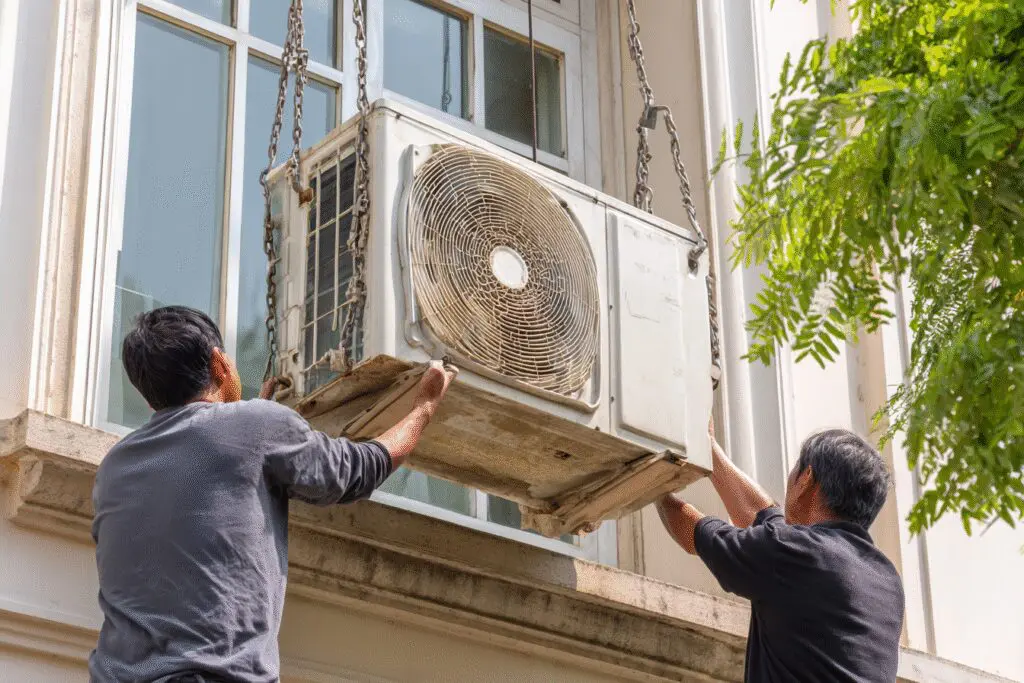
Are you stuck with an old air conditioner that’s taking up space and driving up your energy bills? Getting rid of it might seem tricky, but it doesn’t have to be.
Whether you want to upgrade, clear out clutter, or just make your home safer, knowing the right steps can save you time, money, and stress. Keep reading, and you’ll discover simple, effective ways to say goodbye to that AC unit for good—without any hassle.
Your home and wallet will thank you.
Prepare Your Air Conditioner For Disposal
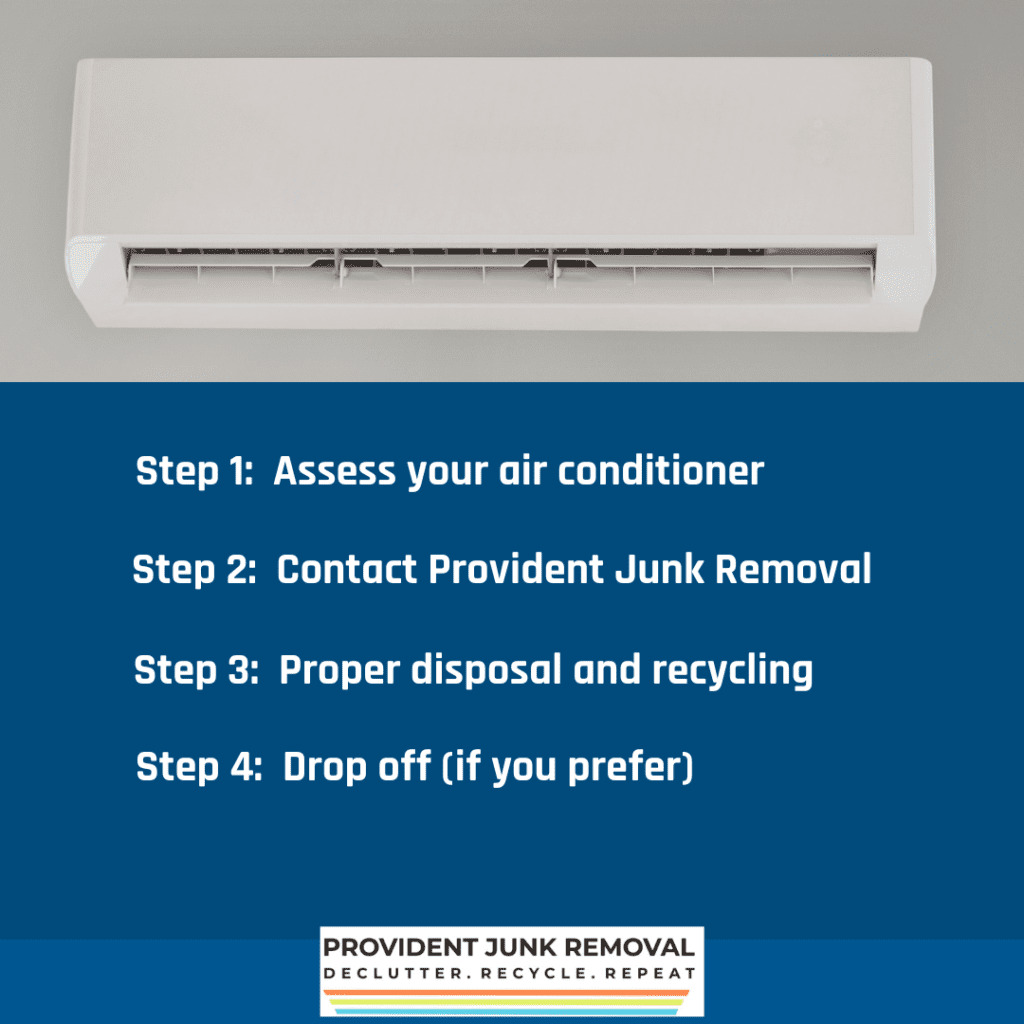
First, turn offthe air conditioner and unplugit from the power source. This ensures safety during disposal.
Next, remove the filtersand clean any dust or debris. Cleaning parts like filters helps prevent mold and makes the unit easier to handle.
Check if your air conditioner contains refrigerant. This gas needs special handlingby professionals to protect the environment. Never release refrigerant into the air yourself.
Credit: providentjunk.ca
Explore Recycling Options
Many cities have local recycling centersthat accept old air conditioners. These centers safely handle harmful parts like refrigerants. Find nearby centers by checking your city’s website or calling waste management offices.
Some appliance retailersoffer take-back programs. They accept old units when you buy a new air conditioner. This service helps you recycle easily and keeps dangerous materials from landfills.
The recycling processfor AC units involves several steps:
- Removing refrigerants safely to prevent pollution.
- Separating metals, plastics, and other materials.
- Reusing or recycling parts to reduce waste.
This process protects the environment and conserves resources.
Donate Or Sell Your Air Conditioner
Many charities accept used appliances. They often help families in need. Check local charity websites or call to ask if they take air conditioners. Some may even offer free pickup.
Online marketplaces like eBay, Craigslist, or Facebook Marketplaceallow easy selling or donating. Take clear photos and write a simple description. Mention the unit’s condition and size. Set a fair price or mark it as free.
Prepare the air conditioner by cleaning it well. Remove any dust and dirt. Make sure it works properly. Pack any extra parts or remote controls. This helps buyers or charities accept it faster.
Credit: nixxitjunk.com
Consider Professional Removal Services
Hiring expertsensures safe and proper removal of your air conditioner. They have special toolsand skills to avoid damage. Professionals can also handle refrigerants, which require careful disposalto protect the environment.
During removal, expect the team to inspect the unit first. They will disconnect power and carefully remove all parts. Clean-up is often included, leaving the area tidy.
| Cost Factor | Details |
|---|---|
| Service Fees | Varies by location and company |
| Unit Size | Larger AC units cost more to remove |
| Disposal Charges | Proper disposal may add to cost |
| Additional Repairs | Extra work can increase price |
Repurpose Old Air Conditioner Parts
Old air conditioner parts can be reused for DIY projects or repairs. Salvaging components reduces waste and saves money. Simple parts like fans and motors have many practical uses around the home.
Creative Diy Projects
Old air conditioner parts can be used in many creative projects. The metal fins make great plant holders. The fan blades can become a wall decoration. Compressor parts can be turned into small storage boxes. Pipes and tubes are perfect for garden stakes or trellises. These projects save money and reduce waste.
Using Components For Home Repairs
Some parts can help fix other items around the house. Copper tubing is good for plumbing repairs. Screws and bolts can replace missing hardware. The metal frame can support shelves or small furniture. Fans and motors might work in other appliances. Keep parts clean and rust-free for best use.
Safety Tips For Handling Parts
- Wear gloves to avoid cuts from sharp edges.
- Handle electrical parts carefully to prevent shocks.
- Dispose of refrigerants safely; do not release them.
- Work in a well-ventilated area.
- Keep tools and parts organized to avoid accidents.
Avoid Common Disposal Mistakes
Do not throw your old air conditioner in landfills. These devices contain harmful chemicalslike refrigerants and oils. Dumping them can pollute the soil and water. This causes serious harm to the environmentand wildlife.
Illegal disposal, like dumping in unauthorized places, is against the law. It can lead to fines and penalties. Always check local rules before disposing of an air conditioner.
| Environmental Impact | Details |
|---|---|
| Refrigerant leaks | Damage to the ozone layer and air quality |
| Soil contamination | Toxins can harm plants and animals |
| Water pollution | Harmful chemicals can enter water sources |
- Recycleyour air conditioner properly.
- Contactcertified disposal services.
- Followlocal laws and guidelines.

Credit: www.youtube.com
Frequently Asked Questions
How Do I Dispose Of An Old Ac Unit?
To dispose of an old air conditioner, contact your local waste management service. Many areas have specific protocols for electronic waste. You can also check for recycling programs or trade-in options at appliance stores. Ensure refrigerants are handled safely by a professional to prevent environmental harm.
Can I Recycle An Air Conditioner?
Yes, air conditioners can be recycled. Many parts, including metal and plastic, are recyclable. Contact local recycling centers to check if they accept air conditioners. Ensure the refrigerant is properly extracted before recycling. This not only helps the environment but can also earn you a small recycling fee.
What Should I Do Before Removing An Ac?
Before removing an air conditioner, ensure it’s disconnected from power sources. Have a professional remove refrigerants to avoid environmental harm. Clear the area around the unit for easy removal. If you’re hiring a professional, make arrangements in advance for a smooth process.
Are There Services That Pick Up Old Ac Units?
Yes, many services offer pickup for old air conditioners. Check with your local waste management or recycling center. Some appliance retailers also provide haul-away services when you purchase a new unit. These services ensure proper disposal and recycling of your old air conditioner.
Conclusion
Getting rid of an air conditioner does not have to be hard. Follow the steps carefully to stay safe and eco-friendly. Remember to check local rules before disposal. Consider donating or recycling parts to help the environment. Taking time to plan makes the process smooth.
You can handle this task without stress. Keep your home clean and free from old appliances. A little effort goes a long way. Ready to say goodbye to that old air conditioner?