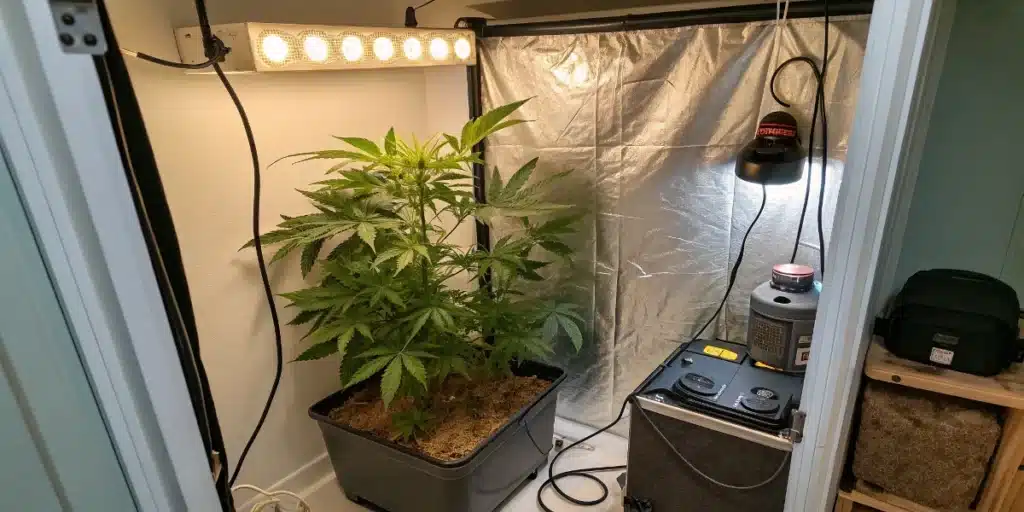
Growing marijuana in a grow tent can seem tricky at first, but with the right steps, you can create the perfect environment for your plants to thrive. If you want to take control of your cannabis growing process, save money, and enjoy fresh, homegrown buds, this guide is for you.
You’ll learn simple tips that anyone can follow, whether you’re a complete beginner or have some experience. Ready to see your plants flourish right before your eyes? Keep reading to discover how to set up your grow tent and grow marijuana successfully.
Choosing The Right Grow Tent
Growing marijuana in a grow tent needs the right setup. The grow tent protects plants and helps control the environment.
Picking a good grow tent is key for a successful grow. Look at size, material, and airflow before buying.
Size And Space Considerations
Choose a grow tent size that fits your space and plant number. Too small tents limit plant growth.
Make sure there is room for lights, fans, and other equipment inside the tent.
- Small tents work for 1-2 plants
- Medium tents fit 3-6 plants
- Large tents hold more than 6 plants
- Leave extra space for tools and airflow
Material Quality And Durability
Look for tents made with strong fabric and sturdy frames. This helps the tent last longer.
Good materials also block light well and keep the inside dark for your plants.
- Thick canvas or oxford fabric is best
- Metal frames add strength
- Double stitching improves durability
- Lightproof material stops leaks
Ventilation And Airflow Features
Proper airflow keeps plants healthy and controls temperature. Look for tents with vents and ports.
Vents should fit fans and filters easily. Good airflow helps prevent mold and pests.
- Multiple vent openings for fans
- Mesh windows for air intake
- Adjustable vents to control airflow
- Ports for electrical cords and hoses
Selecting Growing Mediums
Choosing the right growing medium is key for healthy marijuana plants. Each medium has its own advantages and challenges. Let’s explore some popular options.
You can grow marijuana in soil, coco coir, or hydroponics. Each method offers unique benefits and requires different care.
Soil Vs. Hydroponics
Soil is a traditional and easy choice. Hydroponics, on the other hand, uses water and nutrients directly. Both have pros and cons.
- Soil: Natural and easy to use
- Hydroponics: Faster growth, but needs more equipment
- Soil provides better taste, while hydroponics offers higher yields
Using Coco Coir
Coco coir is a versatile growing medium. It is made from coconut husks and is eco-friendly. Many growers find it easy to manage.
| Feature | Coco Coir |
| pH Level | Neutral |
| Retains Water | Yes, holds moisture well |
| Aeration | Excellent for root growth |
Benefits Of Organic Soil
Organic soil enriches plants with natural nutrients. It also supports beneficial microbes, leading to healthier growth.
Lighting Setup
Lighting is very important when growing marijuana in a grow tent. Good lights help plants grow strong and healthy.
You need the right light type, placement, and schedule for the best results.
Types Of Grow Lights
There are different types of grow lights to choose from. Each type has its own pros and cons.
- LED lights use less power and last long
- HID lights give strong light but use more energy
- CFL lights are cheap but cover small areas
- Fluorescent lights are good for seedlings and clones
Light Placement And Intensity
Place your lights at the right height above your plants. This keeps light strong but not too hot.
Adjust light intensity as plants grow. Too close can burn leaves. Too far can slow growth.
- Keep LED lights 12-24 inches from plants
- HID lights need 18-36 inches distance
- Use a light meter to check intensity
- Move lights up as plants get taller
Light Schedule For Growth Stages
Marijuana plants need different light hours during growth stages. Change the schedule as they grow.
Vegetative stage needs more light. Flowering stage needs less light but longer dark time.
- Vegetative stage: 18 hours light, 6 hours dark
- Flowering stage: 12 hours light, 12 hours dark
- Keep light schedule consistent every day
- Use timers to automate light changes

Credit: www.reddit.com
Temperature And Humidity Control
Growing marijuana in a grow tent needs careful control of temperature and humidity. These factors affect plant health and yield.
Keeping the right climate helps prevent mold and pests. It also makes plants grow strong and healthy.
Ideal Temperature Ranges
Marijuana plants grow best with temperatures between 70°F and 85°F (21°C to 29°C). During the day, keep it around 75°F to 80°F.
At night, lower the temperature to about 65°F to 70°F. Avoid letting it go over 85°F or below 60°F.
- Day temperature: 75°F – 80°F (24°C – 27°C)
- Night temperature: 65°F – 70°F (18°C – 21°C)
- Avoid temps above 85°F (29°C) or below 60°F (15°C)
Managing Humidity Levels
Humidity affects how plants absorb water and nutrients. Keep humidity at the right level for each growth stage.
Seedlings and clones need high humidity of 65% to 70%. Vegetative plants do well at 40% to 70%. Flowering plants need lower humidity of 40% to 50%.
- Seedlings/clones: 65% – 70% humidity
- Vegetative stage: 40% – 70% humidity
- Flowering stage: 40% – 50% humidity
Using Fans And Dehumidifiers
Fans help move air and keep temperatures steady. They also stop mold by reducing moisture build-up.
Dehumidifiers remove extra moisture from the air. Use them to keep humidity in the right range, especially during flowering.
- Use oscillating fans for even air flow
- Place fans to avoid direct wind on plants
- Use dehumidifiers to lower humidity below 50% during flowering
Watering And Nutrients
Growing marijuana in a grow tent needs careful attention to watering and nutrients. These two factors help plants stay healthy and grow strong.
Too much or too little water or nutrients can harm the plants. Understanding how to manage these properly is key to a good harvest.
Watering Frequency And Techniques
Marijuana plants need water regularly but not too often. Overwatering can cause root problems, while underwatering slows growth.
- Check the top inch of soil; if dry, it is time to water.
- Water deeply to reach all roots, not just the surface.
- Use pots with good drainage to avoid water buildup.
- Water in the morning to let excess moisture evaporate during the day.
Essential Nutrients For Marijuana
Marijuana plants need key nutrients to grow healthy leaves and buds. These include macronutrients and micronutrients.
| Nutrient | Role |
| Nitrogen (N) | Helps leaf and stem growth |
| Phosphorus (P) | Supports root and flower development |
| Potassium (K) | Improves overall plant health and resistance |
| Calcium (Ca) | Strengthens cell walls |
| Magnesium (Mg) | Aids in photosynthesis |
| Iron (Fe) | Important for chlorophyll production |
Avoiding Overfeeding And Nutrient Burn
Giving too many nutrients can hurt your plants. Nutrient burn looks like yellow or brown leaf tips and weak growth.
- Start with low doses of nutrients and increase slowly.
- Flush the soil with water if you see signs of burn.
- Follow nutrient schedules and avoid mixing too many types.
- Test the pH of soil or water to ensure nutrient uptake.

Credit: blimburnseeds.com
Plant Training Techniques
Training your marijuana plants helps improve light exposure and airflow. This can lead to bigger yields and healthier plants. There are several methods you can use inside a grow tent.
Each technique has its own benefits and uses. Choose the one that fits your grow setup and plant strain best.
Topping And Fimming
Topping and fimming are techniques that cut the top of the plant to encourage more branches. This makes the plant bushier and produces more bud sites.
- Topping:Cut the main stem just above a node. This causes two new main stems to grow.
- Fimming:Pinch or cut part of the new growth tip. This can create multiple new branches.
- Both methods reduce plant height and spread growth.
- Perform topping or fimming during early vegetative growth for best results.
Low Stress Training (lst)
Low Stress Training bends and ties down branches without cutting. This shapes the plant to get more even light and airflow.
- Start when plants are young and flexible.
- Gently bend branches down and secure with soft ties.
- Expose lower buds to more light by spreading the canopy.
- Adjust ties as plants grow to keep shape.
- Do not snap or break branches during training.
Using Trellises And Supports
Trellises and supports hold up branches to prevent breakage and improve light exposure. They work well with heavy buds and tall plants.
| Support Type | Use | Benefits |
|---|---|---|
| Net Trellis | Spread branches horizontally | Better light and airflow |
| Plant Stakes | Support vertical stems | Prevents bending or breaking |
| Tomato Cages | Surround plant for support | Holds heavy buds upright |
Pest And Disease Management
Growing marijuana in a grow tent needs careful pest and disease control. Pests and diseases can harm plants and reduce yield.
Good management keeps plants healthy and helps you get better harvests. Learn how to spot pests and stop problems early.
Common Pests In Grow Tents
Grow tents can attract pests like spider mites, aphids, and fungus gnats. These pests feed on your plants and spread diseases.
Spider mites are tiny and create webbing on leaves. Aphids suck plant sap, causing leaves to curl. Fungus gnats lay eggs in soil, damaging roots.
- Spider mites
- Aphids
- Fungus gnats
- Thrips
- Whiteflies
Preventive Measures
Keep your grow tent clean and dry to stop pests. Remove dead leaves and old plant parts quickly.
Check plants regularly for signs of pests. Use clean tools and wash your hands before touching plants. Proper air flow helps prevent mold and pests.
- Clean the grow tent often
- Remove dead plant material
- Inspect plants daily
- Use sterile tools
- Maintain good air circulation
Safe Pest Control Methods
Use natural pest control to protect your plants. Introduce beneficial insects like ladybugs to eat pests.
Neem oil and insecticidal soap spray can control pests safely. Avoid harsh chemicals that may harm plants or people.
- Introduce beneficial insects
- Spray neem oil or insecticidal soap
- Use sticky traps for flying insects
- Keep humidity and temperature stable
- Remove heavily infested leaves

Credit: blimburnseeds.com
Harvesting And Curing
Harvesting and curing marijuana in a grow tent needs care and attention. These steps affect the plant’s final quality and potency.
Knowing when to harvest, cutting and drying properly, and curing well lead to better flavor and effects.
Signs Of Ready Harvest
Look closely at your plants to know when they are ready to harvest. Here are common signs:
- Trichomes turn cloudy or amber in color
- Pistils darken and curl inward
- Leaves may start to yellow and die off
- Buds feel dense and sticky to the touch
Proper Cutting And Drying
Cut branches carefully to avoid damage. Hang them upside down in a dark, ventilated space to dry.
| Condition | Ideal Range |
| Temperature | 60-70°F (15-21°C) |
| Humidity | 45-55% |
| Drying Time | 7-14 days |
Check buds daily. They should be dry but not brittle before curing.
Curing For Optimal Flavor And Potency
Curing improves taste and strength by slowly breaking down chlorophyll and sugars.
- Place dried buds in airtight jars
- Open jars once a day for 10-15 minutes to release moisture
- Store jars in a cool, dark place
- Cure for 2 to 8 weeks for best results
Frequently Asked Questions
What Equipment Is Essential For A Marijuana Grow Tent?
Essential equipment includes grow lights, ventilation fans, carbon filters, temperature and humidity controllers, and reflective tent lining. These create optimal growing conditions inside the tent, ensuring healthy plant growth and maximizing yield.
How To Control Temperature And Humidity In A Grow Tent?
Use exhaust fans, intake vents, and humidifiers or dehumidifiers to regulate temperature and humidity. Monitoring devices help maintain ideal levels, typically 70-85°F and 40-60% humidity, for marijuana growth.
What Type Of Lighting Works Best In Grow Tents?
LED and HID lights are popular choices. LEDs are energy-efficient and produce less heat. HID lights like MH and HPS provide intense light but require more ventilation.
How Often Should Marijuana Plants Be Watered In A Grow Tent?
Water when the top inch of soil feels dry. Overwatering can cause root rot. Frequency depends on plant size, tent conditions, and growth stage, usually every 2-3 days.
Conclusion
Growing marijuana in a grow tent takes patience and care. Choose the right tent size and set up good lighting. Keep the temperature and humidity at proper levels. Water your plants regularly but avoid overwatering. Watch for pests and diseases to keep plants healthy.
With steady attention, your plants will thrive and produce well. Growing indoors gives control over the environment. Small steps lead to better results. Start simple and learn as you go. Enjoy the process and the green reward.