Are you struggling to keep the right humidity level in your grow tent? If your plants look dry or aren’t thriving, low humidity could be the problem.
Getting the humidity just right is key to healthy, vibrant growth. You’ll discover simple, effective ways to boost humidity in your grow tent without spending a fortune. Keep reading, and you’ll learn how to create the perfect environment your plants need to flourish.
Credit: blimburnseeds.com
Benefits Of Proper Humidity
Proper humidity in a grow tent helps plants grow healthy and strong.
It keeps the environment balanced for roots and leaves to work well.
Impact On Plant Growth
Humidity affects how plants absorb water and nutrients. It also controls how leaves breathe.
- High humidity helps plants avoid stress and dry leaves.
- Low humidity can cause plants to wilt or grow slowly.
- Correct humidity improves photosynthesis and nutrient uptake.
- Proper moisture levels reduce pests and disease risks.
Common Humidity Ranges For Plants
Different plants need different humidity levels to grow well. Knowing these ranges helps keep plants happy.
| Plant Type | Ideal Humidity Range |
|---|---|
| Seedlings | 70% to 80% |
| Vegetative Stage | 50% to 70% |
| Flowering Stage | 40% to 50% |
| Tropical Plants | 60% to 80% |
| Desert Plants | 30% to 40% |

Credit: www.reddit.com
Choosing The Right Humidifier
Humidity is important in a grow tent. It helps plants grow better. Choosing the right humidifier is key.
There are different types of humidifiers. Each has its own benefits and drawbacks.
Types Of Humidifiers
There are many types to consider. Each type suits different needs.
- Ultrasonic Humidifiers:These are quiet and efficient. They use vibrations to create mist.
- Evaporative Humidifiers:They use a fan to evaporate water. They are good for large spaces.
- Warm Mist Humidifiers:These boil water to create steam. They can warm the tent slightly.
Placement Tips
Where you place the humidifier matters. It affects how well it works.
- Place it in the center for even distribution.
- Keep it away from plants to avoid direct moisture.
- Ensure it is stable and on a flat surface.
Natural Methods To Boost Humidity
Keeping the right humidity in your grow tent helps plants grow well. You can raise humidity naturally without machines. Simple ways work well and are easy to do.
Try these natural methods to keep the air moist. They help plants stay healthy and strong inside the tent.
Water Trays And Pebbles
Place trays of water inside the grow tent to add moisture to the air. The water slowly evaporates and raises humidity. Adding pebbles helps keep plants above the water level. This stops roots from sitting in water and getting damaged.
- Fill a shallow tray with water.
- Place small pebbles or stones inside the tray.
- Set plant pots on top of the pebbles.
- Check water levels and refill as needed.
- Keep trays clean to avoid mold growth.
Misting Plants Regularly
Misting plants adds moisture directly to their leaves and the air. Use a spray bottle with clean water. Mist plants once or twice a day, depending on how dry the tent is.
| Time of Day | Recommended Mist Frequency |
| Morning | Once |
| Afternoon | Optional, if air is dry |
| Evening | Once, avoid too late to prevent mold |
Optimizing Ventilation
Good ventilation helps control humidity inside your grow tent. It moves air to keep plants healthy.
Balancing airflow and humidity is key to creating the right environment for your plants.
Balancing Airflow And Humidity
Too much airflow can dry out the tent and lower humidity. Too little airflow can cause mold.
Adjust vents and fans to keep air moving without losing humidity. Close vents partially if needed.
- Open vents for fresh air but keep some closed to hold moisture
- Use a hygrometer to check humidity levels regularly
- Adjust ventilation to keep humidity between 50% and 70%
Using Fans Strategically
Place fans to move air gently around plants. Avoid strong winds that dry leaves.
Use oscillating fans to spread humidity evenly and prevent hot spots.
- Set fans on low speed to reduce moisture loss
- Position fans above plants to circulate air without blowing directly
- Turn fans off at night to increase humidity when temperatures drop
Using Wet Towels And Sponges
Keeping the right humidity in a grow tent is important for healthy plants. Wet towels and sponges help raise humidity easily.
These items release moisture into the air as water evaporates. They are cheap and simple tools to increase humidity.
Place Wet Towels Inside The Tent
Hang or lay wet towels in your grow tent. Towels hold water and slowly release it into the air.
Change the towels when they dry out to keep humidity levels steady.
- Use clean cotton towels for best absorption
- Spread towels near plants for even moisture
- Keep towels away from lights to avoid fire risk
Use Sponges To Add Moisture
Wet sponges also help add humidity. Place them in shallow containers or trays inside the tent.
Sponges release water slowly and can last longer than towels before drying out.
- Keep sponges damp but not dripping
- Use several sponges spread around for better coverage
- Replace sponges regularly to prevent mold growth
Sealing The Grow Tent
Keeping humidity high in your grow tent starts with sealing it well. A tightly sealed tent traps moisture inside.
Proper sealing helps plants grow better by maintaining stable humidity levels.
Preventing Humidity Loss
Prevent humidity from escaping by closing all openings tightly. Use seals on zippers and vents.
- Check that the tent door zippers close fully without gaps.
- Cover ventilation holes with adjustable flaps or dampers.
- Seal any cracks or tears with waterproof tape.
- Use weather stripping around openings for extra protection.
- Avoid leaving the tent open for long periods.
Checking For Leaks
Find leaks by inspecting your tent carefully. Even small holes cause big humidity loss.
| Leak Source | How to Check | Fix Method |
| Zippers | Look for gaps when zipped | Use zipper covers or tape |
| Seams | Check for loose stitching | Apply seam sealer or tape |
| Tent Walls | Feel for air flow inside | Patch holes with repair kit |
| Vent Openings | Inspect vent covers | Use adjustable dampers |
Monitoring Humidity Levels
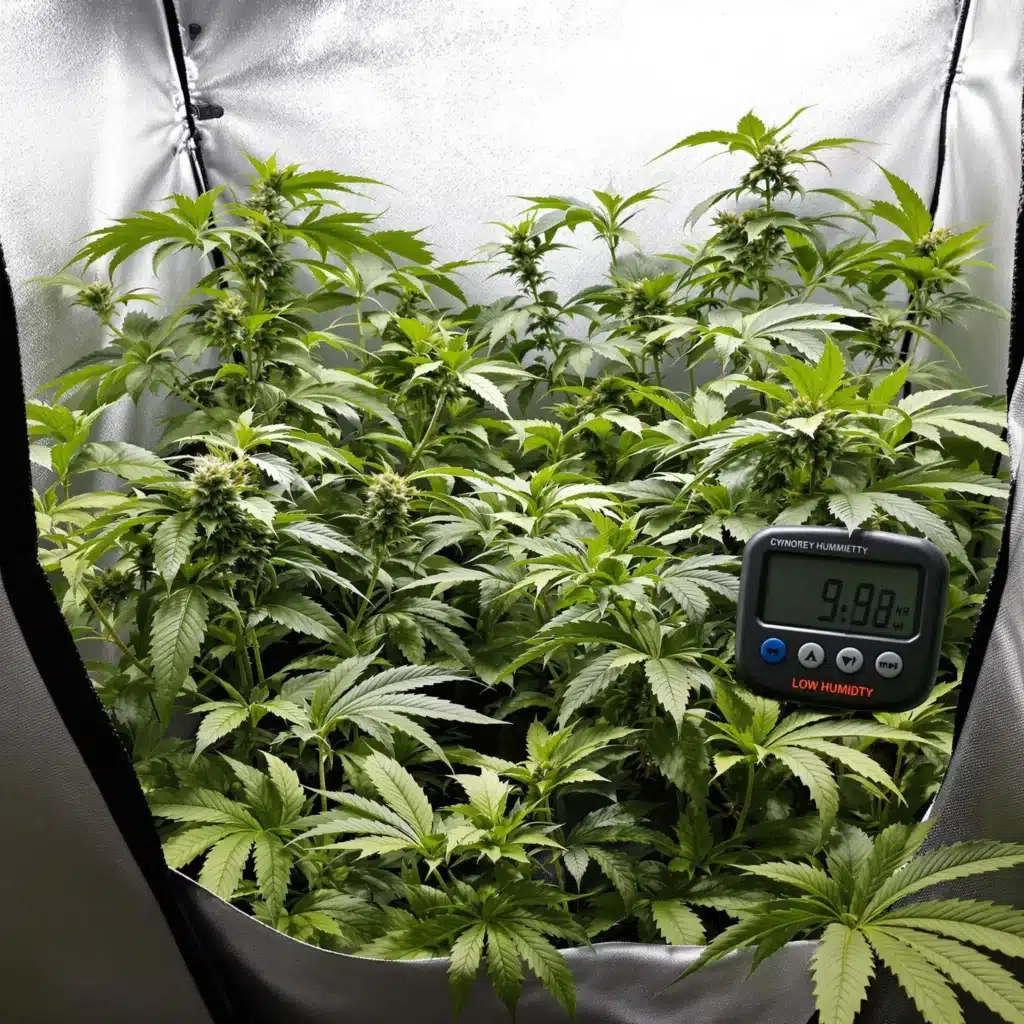
Keeping the right humidity in your grow tent is important for plant health. Monitoring helps you know when to make changes.
Using tools and adjusting based on readings keeps your grow tent environment steady and suitable for growth.
Using Hygrometers
A hygrometer measures the humidity inside your grow tent. You can buy digital or analog types. Digital ones show more exact numbers.
- Place the hygrometer at plant level for accurate readings.
- Check it at the same time daily to track changes.
- Use more than one hygrometer if the tent is large.
- Calibrate your hygrometer often to keep it accurate.
Adjusting Based On Readings
After reading the humidity levels, you can make changes to keep them in the right range. Each plant type needs a different humidity level.
| Humidity Level | Action to Take |
| Too Low (Below 40%) | Add a humidifier or place water trays inside the tent |
| Ideal Range (40% – 70%) | Keep current settings and monitor regularly |
| Too High (Above 70%) | Use a dehumidifier or improve air circulation |

Credit: www.spider-farmer.com
Frequently Asked Questions
How Can I Naturally Increase Humidity In A Grow Tent?
You can increase humidity by placing water trays inside the tent. Adding live plants and misting regularly also helps boost moisture levels naturally.
What Is The Ideal Humidity For A Grow Tent?
The ideal humidity varies by plant stage, usually 40-70%. Seedlings prefer 65-70%, while mature plants thrive at 40-50% humidity.
Does Using A Humidifier Improve Grow Tent Humidity?
Yes, a humidifier efficiently raises humidity. It provides consistent moisture, especially in dry environments, promoting healthier plant growth.
How Often Should I Monitor Humidity In A Grow Tent?
Check humidity daily using a hygrometer. Frequent monitoring ensures optimal levels and prevents problems like mold or dryness.
Conclusion
Raising humidity in your grow tent helps plants grow strong. Use simple tools like humidifiers or water trays. Check humidity levels often to keep them steady. Too much or too little can harm your plants. Small changes make a big difference over time.
Keep your tent clean to avoid mold and pests. With care, your plants will thrive and produce well. Remember, patience and attention bring the best results.