Are you struggling with low humidity inside your grow tent? Getting the right moisture level is key to healthy plants and bigger yields.
If your tent feels too dry, your plants may not grow as well as they should. But don’t worry—you can fix this easily. You’ll discover simple, effective ways to increase humidity in your grow tent. By the end, you’ll know exactly what to do to create the perfect environment for your plants to thrive.
Keep reading to unlock the secrets to better humidity control and watch your garden flourish.

Credit: www.spider-farmer.com
Why Humidity Matters
Humidity is the amount of water vapor in the air. It plays a big role in how plants grow inside a grow tent.
Keeping the right humidity helps plants stay healthy and grow faster. It also stops problems like leaf damage and mold.
Effects On Plant Growth
Humidity affects many parts of plant growth. It controls how plants absorb water and nutrients. Low humidity can dry out leaves. High humidity can cause disease.
- Helps plants keep water inside their leaves
- Supports photosynthesis and nutrient movement
- Reduces stress during hot or dry conditions
- Prevents leaf curling and dropping
- Limits pests and fungal infections
Ideal Humidity Levels For Different Plants
Different plants need different humidity levels to grow well. Knowing the right range helps you adjust your grow tent environment.
| Plant Type | Ideal Humidity Range |
| Seedlings | 65% to 75% |
| Vegetative Stage | 50% to 70% |
| Flowering Stage | 40% to 50% |
| Succulents and Cacti | 30% to 40% |
| Tropical Plants | 60% to 80% |

Credit: www.reddit.com
Common Causes Of Low Humidity
Low humidity in a grow tent can harm your plants. It slows growth and causes stress.
Understanding the causes helps you fix the problem fast. Two main causes are environmental factors and grow tent setup issues.
Environmental Factors
Outside air and weather can lower humidity inside the grow tent. Dry climates and cold air hold less moisture.
Strong air conditioning or heating near the tent also dries the air. This makes it harder to keep humidity up.
- Dry outdoor climate reduces moisture inside the tent
- Cold air holds less humidity than warm air
- Air conditioners remove moisture from the air
- Heaters dry out the air quickly
- Open windows or vents let dry air in
Grow Tent Setup Issues
How you set up your grow tent affects humidity levels. Poor sealing and ventilation cause dry air leaks.
Using fans without humidity control can remove moist air. Also, lack of water sources inside the tent lowers humidity.
- Gaps or holes in the tent let dry air enter
- Excessive ventilation removes humid air too fast
- Fans without humidifiers dry the air inside
- No water trays or humidifiers inside the tent
- Plants not watered enough reduce humidity
Simple Methods To Boost Humidity
Growing plants in a tent needs the right humidity for healthy growth. Low humidity can cause dry leaves and slow growth.
Here are easy ways to increase humidity inside your grow tent.
Using A Humidifier
A humidifier adds moisture to the air quickly and keeps humidity stable. It is a simple tool to control the environment for your plants.
Choose a humidifier that fits the size of your grow tent. Place it near your plants but away from electrical parts.
Water Trays And Pebble Dishes
Water trays or pebble dishes release moisture as water evaporates. They work without electricity and are easy to use.
- Fill shallow trays with water and place them near plants.
- Use a layer of pebbles in the tray to keep plant pots above water.
- Refill trays regularly to keep evaporation steady.
- Clean trays often to prevent mold growth.
Misting Plants Regularly
Misting adds water droplets to plant leaves and the air around them. This raises humidity for a short time and helps plants stay fresh.
| Best Time to Mist | Morning or early afternoon |
| Water Type | Use clean, room temperature water |
| Frequency | 1 to 2 times daily depending on dryness |
| Tip | Avoid misting under strong lights to prevent leaf burn |
Optimizing Grow Tent Conditions
Maintaining the right humidity level inside your grow tent helps plants grow healthy. Too low humidity can stress plants. Too high humidity can cause mold and pests.
Here are ways to increase humidity effectively by sealing, ventilation, and using moisture-retaining materials.
Sealing The Tent Properly
Close all openings tightly to keep moisture inside. Check zippers and seams for air leaks. Use weather stripping or tape to seal any gaps.
- Inspect tent corners and edges
- Seal zipper areas when not in use
- Use thick, high-quality tent fabric
- Cover vents you do not use
Adjusting Ventilation
Ventilation controls humidity and temperature. Reducing airflow can raise humidity. But avoid cutting airflow completely to prevent mold.
| Vent Type | Effect on Humidity |
| Intake Vent | Brings fresh air, lowers humidity |
| Exhaust Vent | Removes hot air, controls moisture |
| Closed Vent | Increases humidity |
Using Moisture-retaining Materials
Place materials that hold water inside the tent. They slowly release moisture to increase humidity naturally.
- Wet sponges or towels placed near plants
- Open containers of water on tent floor
- Humidity trays with pebbles and water
- Use of hydrogel crystals to absorb and release moisture
Monitoring Humidity Levels
Keeping the right humidity in your grow tent helps plants grow strong. Watching humidity levels lets you fix problems fast.
Good monitoring keeps plants healthy and stops mold or dryness. Use tools to check humidity often.
Choosing The Right Hygrometer
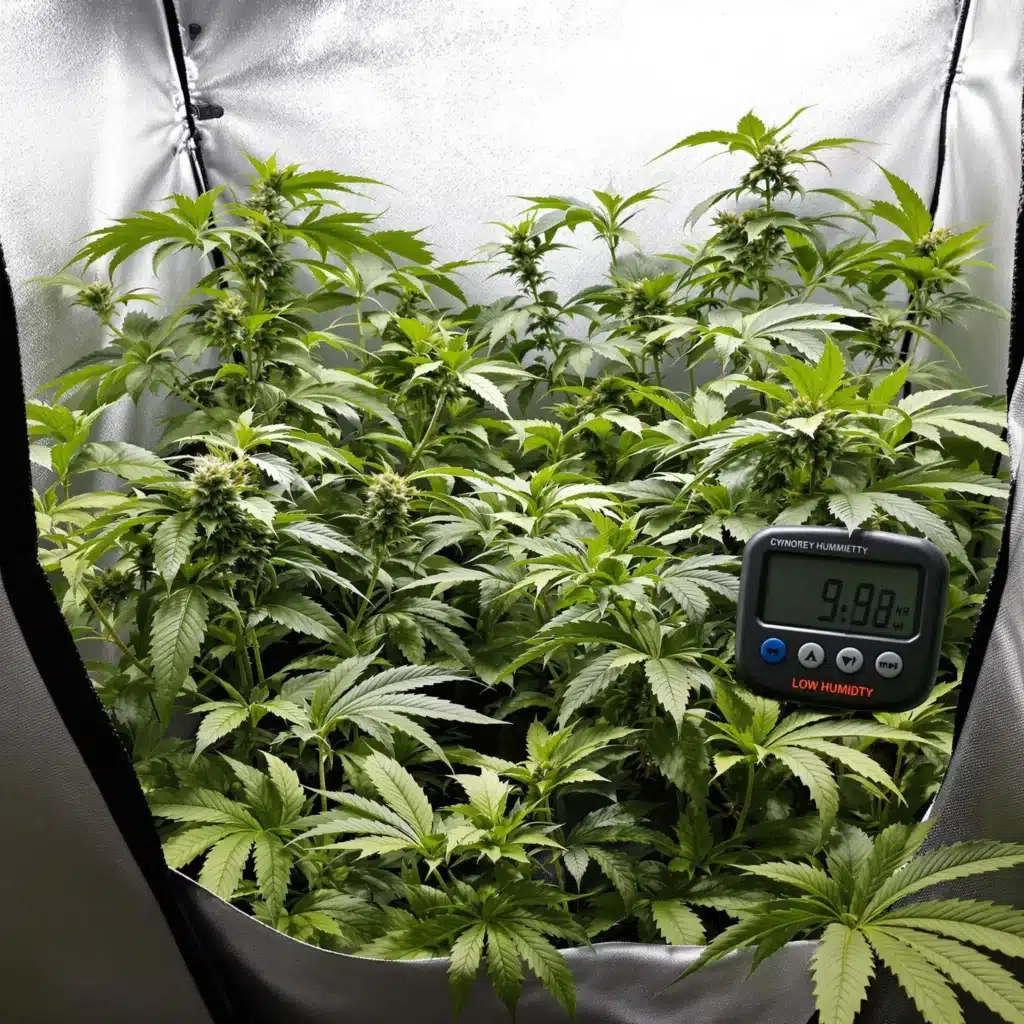
A hygrometer measures humidity inside your tent. Pick one that is easy to read and works well in small spaces.
Digital hygrometers show exact numbers and are simple to use. Some models also show temperature for full control.
- Look for accuracy within 2% to 5%
- Choose a size that fits your tent space
- Pick a digital display for clear reading
- Consider models with alarms for high or low levels
Tracking Humidity Trends
Tracking humidity over time helps you see patterns. This shows if your changes are working or if you need to adjust more.
Write down humidity readings daily. Compare results to find the best times for watering or using a humidifier.
- Record humidity at the same time each day
- Note temperature and plant changes too
- Use a chart or app to track numbers
- Adjust equipment based on trends
Credit: blimburnseeds.com
Troubleshooting Humidity Issues
Keeping the right humidity in your grow tent is key for plant health. Too much or too little moisture can cause problems.
This guide helps you fix common humidity problems and keep your plants growing well.
Dealing With Excess Moisture
Too much humidity can lead to mold and plant diseases. It also slows down growth. Fixing this means removing extra moisture.
- Use a dehumidifier to lower moisture levels.
- Check for leaks or standing water in the tent.
- Remove wet materials like damp cloth or soil spills.
- Increase air circulation with fans to dry the air.
- Reduce watering frequency to avoid water buildup.
Balancing Humidity And Airflow
Good airflow helps control humidity and prevents hot spots. It also brings fresh air to plants.
| Action | Effect |
| Install exhaust fan | Removes moist air from tent |
| Use intake vents | Brings fresh air inside |
| Place oscillating fans | Circulates air around plants |
| Keep vents open during the day | Balances temperature and humidity |
Advanced Tips For Humidity Control
Keeping the right humidity in a grow tent helps plants grow healthy. Controlling humidity can be tricky without the right tools. Using advanced methods can make it easier to keep humidity at the best level.
This guide shows you how to use automated systems and foggers to improve humidity control. These tips help maintain stable moisture for your plants.
Automated Humidity Systems
Automated humidity systems adjust moisture levels without constant attention. They use sensors to monitor air and turn humidifiers or dehumidifiers on or off as needed. This keeps the environment steady and reduces work.
- Install a humidity sensor inside the grow tent
- Connect the sensor to a humidifier or dehumidifier
- Set your desired humidity range on the controller
- The system will run devices only when needed
- Check and clean sensors regularly for accuracy
Using Foggers And Ultrasonic Devices
Foggers and ultrasonic devices add fine moisture particles to the air. They are quiet and use little power. These devices increase humidity quickly and keep it steady. They are ideal for small to medium grow tents.
| Device Type | How It Works | Best Use |
| Ultrasonic Humidifier | Creates mist using vibrations | Small tents, precise humidity |
| Cool Mist Fogger | Sprays tiny water droplets | Larger tents, fast humidifying |
| Warm Mist Humidifier | Heats water to create steam | Less common for grow tents |
Frequently Asked Questions
How Do I Naturally Increase Humidity In A Grow Tent?
Place open water trays or damp sponges inside the tent. Use live plants that release moisture. Increase watering frequency to boost humidity levels naturally and safely.
Can A Humidifier Improve Grow Tent Conditions?
Yes, a humidifier effectively raises humidity quickly. Choose one suitable for your tent size. It maintains consistent moisture, benefiting plant growth and health.
What Is The Ideal Humidity For Grow Tents?
Optimal humidity ranges from 50% to 70% during vegetative growth. Lower it to 40%-50% during flowering to prevent mold and mildew.
How Often Should I Monitor Humidity In My Grow Tent?
Check humidity daily using a reliable hygrometer. Regular monitoring helps maintain ideal levels and prevents plant stress or disease.
Conclusion
Boosting humidity in your grow tent doesn’t have to be hard. Simple techniques make a big difference. Use water trays or wet sponges. They add moisture to the air. Consider investing in a humidifier. It provides consistent humidity levels. Monitor conditions regularly.
This ensures your plants thrive. Happy plants yield better results. Experiment with different methods. Find what works best for your setup. Stay patient and observant. Your plants will thank you for the care. Enjoy growing in a healthier environment. Success comes with attention and practice.