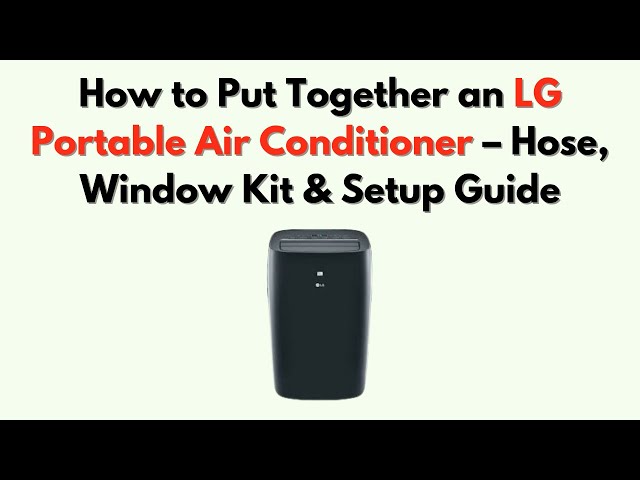
Are you ready to beat the heat and stay cool this summer? Installing your LG portable air conditioner might seem tricky, but it doesn’t have to be.
In this guide, you’ll find simple, step-by-step instructions that anyone can follow. By the end, you’ll have your unit up and running quickly, saving you time and frustration. Keep reading to discover how easy it is to enjoy cool comfort in your own space.
Choosing The Right Location
Placing your LG portable air conditioner in the right spot helps it work well. The right location cools your room faster and saves energy.
Think about space, power, and airflow before you set it up. These factors keep the unit running safely and smoothly.
Ideal Room Placement
Choose a flat, stable surface near a window or vent for the exhaust hose. The unit should be away from direct sunlight to avoid extra heat.
- Place near a window or door for venting hot air
- Keep away from heat sources like lamps or ovens
- Allow space around the unit for air circulation
- Do not block vents or airflow paths
Avoiding Obstructions
Clear space around the air conditioner to help air flow freely. Blocked vents reduce cooling and can cause overheating.
| Obstruction Type | Effect on Unit |
| Furniture | Blocks airflow and reduces cooling |
| Curtains or Drapes | Can block vents and exhaust hose |
| Toys or Boxes | Reduce space for air circulation |
| Walls too close | Limits ventilation and heat dissipation |
Near Power Source
Place your unit close to a power outlet to avoid long extension cords. Use a grounded outlet to keep it safe.
- Use a dedicated outlet if possible
- Do not overload the outlet with other devices
- Avoid using extension cords or power strips
- Check the power cord for damage before use
Unpacking And Inspecting
Before setting up your LG portable air conditioner, carefully unpack the box. Inspect every part to make sure nothing is missing or damaged.
Taking time to check the contents helps avoid problems during installation and use.
Checking Included Components
Open the box and find the list of included parts in the manual. Verify each item is present to ensure proper installation.
- Portable air conditioner unit
- Exhaust hose
- Window installation kit
- Remote control with batteries
- User manual and warranty card
- Drainage pipe (if included)
Inspecting For Damage
Check each component for visible damage. Look for cracks, dents, or missing pieces that could affect the unit’s function.
| Component | Damage to Check |
| Air conditioner unit | Scratches, dents, broken parts |
| Exhaust hose | Cracks, holes, torn ends |
| Window kit | Broken clips, cracks in plastic |
| Remote control | Button damage, battery cover missing |
| Manual and accessories | Missing or torn pages, broken parts |
Preparing The Window Kit
Before installing your LG portable air conditioner, you need to prepare the window kit. This kit helps vent hot air outside through your window. Proper preparation ensures the unit works well and your room stays cool.
This guide covers measuring your window, assembling the window kit, and installing the window bracket. Follow these steps carefully for a secure and efficient setup.
Measuring Your Window
Measure the dimensions of your window to make sure the window kit fits correctly. You will need the width and height of the open part of your window.
- Use a tape measure to check the width from one side to the other.
- Measure the height from the bottom to the top of the window opening.
- Note if your window slides sideways or up and down.
- Check if the window frame is flat and clean for installation.
Assembling The Window Kit
After measuring, assemble the window kit parts. The kit includes panels, a sealing strip, and screws or clips to secure it in place.
| Part | Function |
| Window Panel | Blocks the open window space |
| Sealing Strip | Prevents air leaks around the panel |
| Screws/Clips | Hold the panel in the window frame |
Attach the sealing strip to the edges of the window panel for a tight fit. Adjust the panel length if needed by sliding or cutting according to your window size.
Installing The Window Bracket
Now, place the assembled window kit into your window opening. Use the window bracket to secure the kit firmly in place.
- Open your window wide enough to fit the window panel.
- Insert the window panel into the window track or frame.
- Fit the window bracket at the bottom or side of the panel.
- Tighten screws or clips to lock the bracket and panel securely.
- Check that the panel is snug and no gaps remain for air leaks.

Credit: www.dreo.com
Connecting The Exhaust Hose
Connecting the exhaust hose is important for your LG portable air conditioner. It lets hot air leave the room. This keeps your space cool and comfortable.
Follow the steps below to attach the hose correctly. Make sure it fits tightly to avoid leaks.
Attaching Hose To Air Conditioner
Start by locating the exhaust port on the back of your air conditioner. The hose must fit here to release hot air.
- Take the exhaust hose and align it with the port.
- Push the hose firmly into the port until it clicks or fits snugly.
- Twist the hose slightly if needed to lock it in place.
- Check that there are no gaps or loose connections.
Securing Hose To Window Kit
The window kit holds the exhaust hose in your window. This keeps the hot air outside and stops bugs or dust from coming in.
| Window Kit Part | Purpose |
|---|---|
| Extension Panel | Fits different window sizes |
| Window Bracket | Holds the hose securely |
| Sealing Foam | Blocks gaps around the window |
- Open the window slightly and place the window kit in the opening.
- Adjust the extension panel to fit your window width.
- Attach the exhaust hose to the window bracket firmly.
- Close the window against the kit and press the sealing foam to block gaps.
- Make sure everything fits tight to avoid air leaks.
Sealing And Insulating
Proper sealing and insulation improve the efficiency of your LG portable air conditioner. This helps keep cool air inside and stops warm air from entering.
Focus on preventing air leaks around the unit and use foam seals or weather stripping for better insulation.
Preventing Air Leaks
Check for gaps where air can escape or enter around the air conditioner window kit. These leaks reduce cooling power and waste energy.
- Inspect the window kit edges carefully.
- Fill any visible gaps with a silicone sealant.
- Make sure the exhaust hose fits tightly into the window kit.
- Tighten screws or fasteners to secure the kit firmly.
- Replace any damaged parts that cause openings.
Using Foam Seals And Weather Stripping
Foam seals and weather stripping help block air leaks around the air conditioner. They are easy to install and improve insulation.
| Material | Use | Benefit |
| Foam Seal | Fill small gaps around window edges | Stops drafts and dust |
| Weather Stripping | Seal window sashes and vents | Blocks air and moisture |
| Adhesive Tape | Secure foam and strips in place | Prevents slipping and gaps |
Powering Up The Unit
Powering your LG portable air conditioner correctly is important. It keeps the unit safe and working well. Follow the right steps to start your air conditioner the right way.
This guide covers two important topics: plugging in safely and the first settings. These will help you use your air conditioner without problems.
Plugging In Safely
Always use a grounded outlet for your LG portable air conditioner. Avoid using extension cords or power strips. These can cause power issues or damage the unit.
- Check that the power outlet matches the unit’s voltage needs.
- Make sure the outlet is not overloaded with other devices.
- Keep the power cord away from water and heat sources.
- Plug the unit directly into the wall socket.
- Do not use damaged or frayed power cords.
Initial Setup And Settings
After plugging in, turn on the unit using the power button. Set your preferred temperature and fan speed. You can adjust these settings using the remote or control panel.
| Setting | Recommended Range | Purpose |
| Temperature | 68°F – 78°F (20°C – 26°C) | Comfort cooling |
| Fan Speed | Low, Medium, High | Control airflow |
| Mode | Cool, Fan, Dry | Select operation mode |
Operating Tips
Using your LG portable air conditioner correctly helps keep your room comfortable. You can adjust settings to fit your needs. Understanding how to operate the unit saves energy and extends its life.
Below are some tips on adjusting the temperature, fan speed, and using the timer and sleep mode features.
Adjusting Temperature And Fan Speed
Set the temperature to match the room size and outside weather. Use the fan speed to control how fast the air moves. Higher fan speeds cool the room faster but use more power.
- Press the temperature buttons to raise or lower the setting.
- Choose the fan speed: low, medium, or high.
- Use the auto mode to let the unit select the best fan speed.
- Keep doors and windows closed for better cooling.
Using Timer And Sleep Mode
The timer lets you set when the air conditioner turns on or off. Sleep mode saves energy by adjusting temperature while you rest. These features help you stay comfortable without wasting power.
| Feature | Function | Benefit |
| Timer | Set on/off time | Saves energy by running only when needed |
| Sleep Mode | Adjusts temperature gradually | Keeps you comfortable and reduces power use |
Maintenance And Care
Regular maintenance keeps your LG portable air conditioner working well. It helps the unit cool better and last longer.
Clean and care for your air conditioner often. This prevents damage and improves air quality.
Cleaning Filters
Clean the filters every two weeks. Dirty filters block airflow and reduce cooling power.
- Turn off and unplug the unit before cleaning.
- Remove the filter carefully from the back of the unit.
- Use a vacuum or wash the filter with warm water and mild soap.
- Let the filter dry completely before putting it back.
- Reinstall the filter and plug in the unit.
Draining Water
Your LG portable air conditioner collects water during use. You must drain it to avoid leaks and damage.
| Drain Method | Description |
| Manual Drain | Open the drain plug and let water flow out into a container. |
| Continuous Drain | Attach a hose to the drain outlet for automatic water removal. |
Storing The Unit
Store your air conditioner properly after the cooling season. This protects it from dust and damage.
- Turn off and unplug the unit.
- Drain all water completely from the unit.
- Clean or replace the filters before storing.
- Cover the unit with a plastic sheet or cloth.
- Store in a dry, cool place away from direct sunlight.
Troubleshooting Common Issues
LG portable air conditioners are easy to use but sometimes have problems. This guide helps you fix common issues quickly.
Read each section to learn how to solve problems like no cooling, loud noise, or water leaks.
Unit Not Cooling
If your LG portable air conditioner is not cooling, check the following points to find the cause and fix it.
- Check if the air filter is dirty and clean it if needed.
- Make sure the room temperature is within the unit’s operating range.
- Verify the exhaust hose is properly connected and not blocked.
- Ensure the cooling mode is selected on the control panel.
- Check if the unit is placed near heat sources or direct sunlight.
Excessive Noise
Unusual noise can happen for many reasons. Use this table to identify the noise type and possible fixes.
| Noise Type | Cause | Solution |
|---|---|---|
| Rattling | Loose parts or screws | Tighten screws and check panels |
| Humming | Compressor running normally | This is normal during cooling |
| Buzzing | Electrical issues | Unplug and restart unit |
| Clicking | Fan blade hitting something | Inspect and remove obstacles |
Water Leakage
Water leaks can damage floors and walls. Use this custom HTML block to understand how water flows in your unit and where leaks may start.
Water Flow Diagram

Check these points for water leaks:
- Drainage pipe is clear and not clogged.
- Internal water tank is not full or cracked.
- Unit is level on the floor to allow proper drainage.

Credit: www.youtube.com

Credit: www.sylvane.com
Frequently Asked Questions
How Do I Prepare My Lg Portable Ac For Installation?
First, choose a suitable location near a window and power outlet. Unbox the unit carefully. Ensure the window kit and exhaust hose are included. Clear space around the AC for proper ventilation. Read the user manual for specific model instructions before starting installation.
What Tools Are Needed To Install Lg Portable Air Conditioner?
You typically need a screwdriver and measuring tape. Some models include a window kit with mounting brackets. A drill may be necessary for some window types. Check your LG AC manual for exact tool requirements. Having tools ready speeds up the installation process.
How Do I Install The Window Kit For Lg Ac?
Fit the adjustable window kit into your window opening. Secure the panels tightly to prevent air leaks. Attach the exhaust hose to both the AC unit and window kit. Make sure the hose is straight and not kinked for optimal airflow.
Seal gaps with weather stripping if needed.
Can I Install Lg Portable Ac Without Professional Help?
Yes, most LG portable AC units are designed for DIY installation. The process is straightforward with included manuals and window kits. Follow instructions carefully for safety and efficiency. If unsure, consult customer support or a professional to avoid damage.
Conclusion
Installing an LG portable air conditioner is simple. Follow the steps carefully. Make sure all parts are available. Find a suitable window for the exhaust hose. Secure the hose tightly to avoid leaks. Plug the unit into a power outlet.
Turn it on and check settings. Keep the manual handy for troubleshooting. Regular cleaning ensures efficiency. Enjoy your cool, comfortable space. Installing it yourself saves money. Feel proud of your work. Now, relax and enjoy the cool air. Stay refreshed and happy.