Are you struggling to keep your room cool without a bulky window unit? Installing a portable air conditioner in your sliding window could be the perfect solution.
But how do you do it right, without gaps or leaks that let hot air in? In this guide, you’ll discover simple, step-by-step instructions to fit your portable AC securely and efficiently. By the end, you’ll enjoy cool, fresh air without hassle or damage to your window.
Ready to turn your sliding window into a powerful cooling spot? Let’s get started!

Credit: www.amazon.com
Choosing The Right Portable Ac
Check the portable AC unit sizebefore buying. It should match the room size to cool well. Cooling capacity is measured in BTUs. A higher BTU means more cooling power.
Measure your sliding window dimensions carefully. The unit must fit securely in the window space. Make sure the window can open wide enough for vent installation.
Consider venting options for your portable AC. Most need a vent hose connected to the window. Check if the vent kit fits your sliding window style.
- Measure window height and width accurately
- Match BTU rating with room size
- Choose vent kit that fits sliding window
- Ensure the unit can sit stable in the window
Gathering Necessary Tools
Gathering the right toolsmakes installation easier and faster. Prepare these items before starting:
- Screwdriver (Phillips and flathead)
- Measuring tape
- Drill with bits
- Level tool
- Sealant or weatherstripping
- Portable air conditioner kit (includes window bracket)
- Protective gloves and safety glasses
Safety is important. Always wear glovesand eye protection. Ensure the window is stable before working. Avoid sharp edges and keep tools away from children. Double-check that the air conditioner is unplugged during setup to prevent electric shock.
Preparing The Sliding Window
Clean the window framethoroughly. Remove dust, dirt, and old paint. Use a damp cloth and mild soap. Dry the frame well before installation. A clean frame ensures a secure fitand better sealing.
Measure the window openingcarefully. Use a tape measure for width and height. Measure both the inside and outside edges. Note the smallest measurement to avoid mistakes. These numbers help pick the right size for the air conditioner.
Installing The Venting Kit
Start by assembling the venting components. Connect the exhaust hose to the venting panel. Ensure the hose fits tightly to avoid air leaks.
Attach the exhaust hose securely to the air conditioner’s vent outlet. Use the provided clamps or connectors for a firm hold. Check that the hose is straight and not bent.
Place the venting panel in the sliding window gap. Adjust the panel to fit snugly against the window frame. Seal any gaps with weather stripping or foam to block outside air.
- Assemble venting parts carefully
- Attach exhaust hose firmly
- Secure venting panel in window
- Seal gaps to prevent leaks
Positioning The Portable Ac
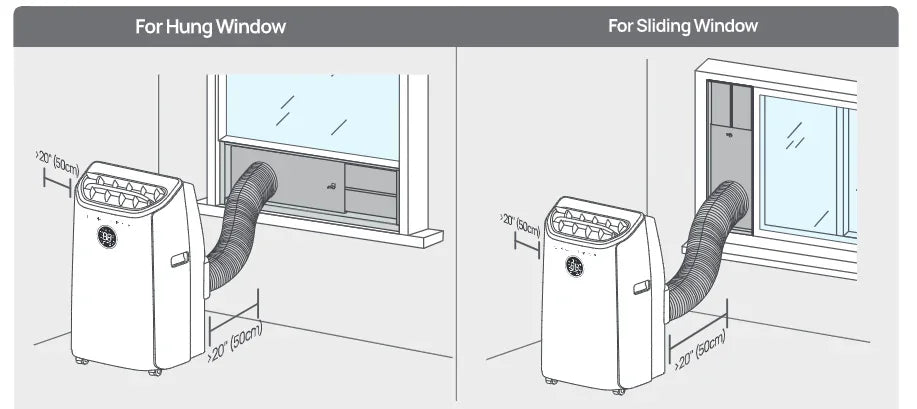
Place the portable air conditioner close to the sliding window. This helps the hose reach outside easily. Make sure the unit is near a power outlet for easy connection.
Connect the exhaust hose to the back of the unit. Secure it tightly to stop air leaks. The hose should point outside the window to remove hot air.
Adjust the unit so it stands firmly and stable. Use small blocks or pads under the unit if the floor is uneven. Check the window panel fits snugly to block outside air.
Sealing And Insulating Gaps
Weather strippinghelps block drafts around the window frame. It is easy to install and sticks firmly to surfaces. Choose a soft, flexible kind for better sealing. Press it along the edges where the air conditioner meets the window. This stops hot air from coming in and cool air from escaping.
Foam sealantfills bigger gaps and cracks. Spray a small amount into spaces that weather stripping cannot cover. It expands and hardens quickly to block air leaks. Be careful not to use too much as it can overflow and make a mess.
- Check all edges for any air gaps after installation.
- Use extra weather stripping or foam sealant as needed.
- Keep the window closed tightly to hold the seal.
These steps help prevent air leaksand improve cooling efficiency. A well-sealed window keeps your room cooler and lowers energy use.
Testing The Air Conditioner
Turn on the air conditioner and select the desired settings. Check if the unit powers up without error lights. Adjust fan speed and cooling mode to your comfort level.
Ensure the exhaust hose is properly vented outside the sliding window. No gaps or leaks should exist around the vent. This helps the unit work efficiently.
Feel the air blowing out. It should be cool and steady. Watch the room temperature for a while. The air conditioner should lower the heat noticeably.

Credit: www.amazon.com
Maintenance Tips
Clean air filtersregularly to keep your air conditioner working well. Dirty filters block airflow and reduce cooling power. Rinse filters with water and let them dry before putting back. Do this every two weeks during use.
Inspect the hoseoften for cracks or leaks. A damaged hose can cause air to escape and lower performance. Replace the hose if you see any holes or tears to keep cool air inside.
Store the unitproperly during off-season months. Remove the hose and clean the whole unit. Cover it with a cloth or plastic to keep dust out. Store in a dry place to avoid damage and rust.

Credit: www.dreo.com
Frequently Asked Questions
How To Secure Portable Ac In Sliding Window?
To secure a portable AC in a sliding window, use a window kit. Adjust the kit to fit your window’s dimensions. Ensure the AC’s exhaust hose is tightly connected to prevent air leaks. Use weatherstripping to seal any gaps, ensuring efficient cooling and preventing insects from entering.
What Tools Are Needed For Installation?
For installation, you’ll need a screwdriver, measuring tape, and weatherstripping. A level might be helpful for precise adjustments. These tools assist in securing the window kit and sealing gaps. Having these on hand ensures a smooth installation process, enhancing the unit’s efficiency.
Can I Install Without A Window Kit?
Installing without a window kit is not recommended. Window kits ensure a secure fit and prevent air leaks. They are designed specifically for portable AC units, maximizing efficiency. Without it, you risk reduced cooling performance and potential damage. Always use the provided kit for best results.
How To Prevent Air Leaks?
To prevent air leaks, ensure the window kit fits snugly. Apply weatherstripping around the edges to seal gaps. Regularly check the exhaust hose connection for tightness. Sealing all openings ensures optimal cooling efficiency and prevents warm air from entering the room.
Conclusion
Installing a portable air conditioner in a sliding window is simple with the right steps. Measure your window carefully and secure the unit firmly. Make sure the exhaust hose is connected and vented outside. This setup keeps your room cool and comfortable during hot days.
Regularly check the seals to avoid air leaks. Enjoy a cooler space without major changes to your home. Stay comfortable and save energy with this easy installation.