
Mold in your window air conditioner can cause more than just a bad smell—it can affect your health and damage your unit. If you want to keep your air conditioner running smoothly and your home fresh, knowing how to stop mold before it starts is key.
You’ll discover simple, effective steps you can take right now to keep mold out of your window air conditioner. Keep reading, and you’ll learn easy ways to protect your air quality and save money on repairs.
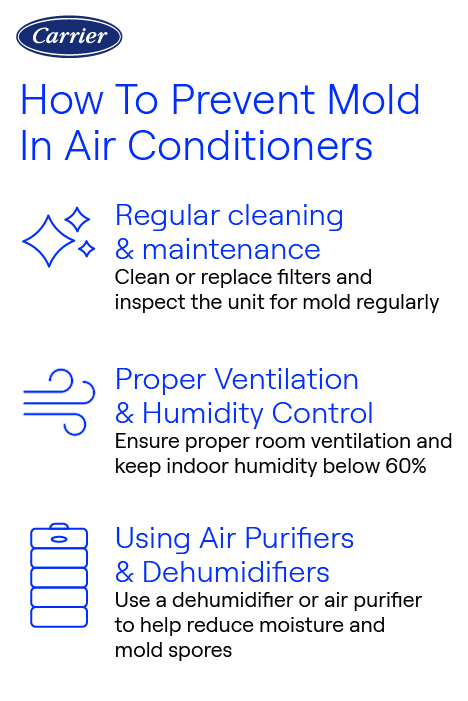
Credit: www.carrier.com
Causes Of Mold In Window Ac Units
Mold grows easily in window air conditioner units. It can cause bad smells and health problems. Understanding what causes mold helps keep your AC clean.
Several factors lead to mold growth inside the unit. These include moisture, poor airflow, and dirty parts. Each factor creates a perfect home for mold spores.
Moisture Buildup
Moisture collects inside the AC unit during cooling. This wet environment encourages mold to grow. Water can pool in the drip pan or stay on coils.
- Condensation on cooling coils
- Blocked or clogged drain tubes
- Leaking seals letting in rain or humidity
- High humidity in the room
Poor Ventilation
Poor airflow stops moisture from drying. Mold needs damp, still air to spread. If the AC area is closed or crowded, air cannot move well.
| Ventilation Problem | Effect on Mold Growth |
| Blocked air vents | Traps moisture inside unit |
| Closed windows or curtains | Reduces air exchange |
| Obstructed fan blades | Limits airflow over coils |
Dirty Filters And Coils
Dust and dirt on filters and coils hold moisture. This creates a wet surface for mold spores. Dirty filters also block airflow, making the problem worse.
- Reduced cooling power
- Musty smell from the unit
- Visible dust or mold patches
- Increased energy use
Signs Of Mold Growth
Mold in window air conditioners is a common issue. It can affect your health and comfort.
Recognizing the signs of mold growth is important. It helps you take action quickly.
Unpleasant Odors
Foul smells coming from your air conditioner might indicate mold. These odors are usually musty and damp.
- Check for unusual smells when the unit is on.
- Sniff around the vents for musty scents.
- Ensure regular maintenance to prevent odor buildup.
Visible Black Or Green Spots
Dark spots may appear around air conditioner vents. These spots are often black or green, typical of mold.
Reduced Air Quality
If you notice poor air quality, mold might be the cause. It can lead to respiratory problems and allergies.
| Symptom | Possible Cause |
| Allergies | Mold spores in the air |
| Coughing | Irritants from mold |
| Fatigue | Contaminated air circulation |
Regular Cleaning Routines
Keeping mold out of your window air conditioner helps it work better. Regular cleaning stops mold from growing inside.
Simple cleaning tasks done often keep your air conditioner fresh and safe to use.
Cleaning The Filters
Filters catch dust and dirt. Clean them every month to stop mold growth.
Remove the filter and wash it with warm water and mild soap. Let it dry fully before putting it back.
- Turn off the air conditioner before removing filters
- Use a soft brush to remove dust
- Wash with warm water and soap
- Dry completely before reinstalling
Washing The Coils
Coils get dirty and hold moisture that causes mold. Clean them every few months to stop mold.
Use a coil cleaner or mild detergent. Spray gently and wipe with a soft cloth. Avoid bending the fins.
- Unplug the air conditioner
- Use a coil cleaner or mild soap
- Spray the coils lightly
- Wipe with a soft cloth carefully
- Let dry before turning on the unit
Draining The Water Properly
Water collects inside the unit and can cause mold. Drain water after use to keep it dry.
Check the drain pan and drain hole. Empty any water and keep the drain clear to avoid blockages.
- Turn off and unplug the unit
- Locate the drain pan under the coils
- Remove any standing water
- Clear the drain hole with a pipe cleaner if blocked
- Keep the area dry after draining

Credit: www.reddit.com
Using Mold-resistant Products
Mold grows easily in window air conditioners. Using special products helps stop mold growth. These products keep your AC clean and safe.
This guide covers three effective mold-resistant products. Learn how each one works to protect your air conditioner.
Anti-mold Sprays
Anti-mold sprays kill mold spores and prevent new mold. Use them on AC parts that get wet or damp. Spray regularly for best results.
- Choose sprays made for air conditioners
- Follow instructions on the label
- Spray on filters, vents, and coils
- Wear gloves and a mask when applying
- Let the spray dry completely before use
Dehumidifiers
Dehumidifiers lower indoor humidity. Less moisture means less chance for mold to grow. Use a dehumidifier near your window AC unit.
| Humidity Level | Mold Growth Risk |
| Above 60% | High |
| 40% to 60% | Moderate |
| Below 40% | Low |
Uv Light Sanitizers
UV light sanitizers kill mold spores with ultraviolet rays. They fit inside your AC unit and work continuously. UV lights reduce mold and bacteria on coils.
- Install the UV light near the cooling coils
- Keep the light on when the AC runs
- Replace bulbs every 1 to 2 years
- Follow safety instructions to avoid skin exposure
Proper Installation And Maintenance
Mold can grow inside window air conditioners if they are not installed or maintained well. Keeping mold out helps your air stay clean and safe.
Good installation and regular care lower mold risk. Follow simple steps to protect your air conditioner.
Ensuring Correct Drainage
Drainage stops water from staying inside the unit. Water left inside can cause mold to grow quickly.
Make sure the drain hole is clear and the unit is slightly tilted outside. This helps water flow out easily.
- Check the drain hole for blockages
- Keep the unit tilted outward
- Clear any standing water regularly
Sealing Gaps And Leaks
Gaps around the air conditioner let warm air and moisture inside. Moisture makes mold grow faster.
Seal all gaps and leaks with weather stripping or foam. This stops moist air from entering the room or unit.
- Use weather stripping around the unit
- Fill gaps with foam sealant
- Check seals every few months
Scheduling Professional Servicing
Experts can clean and inspect your air conditioner better than you can. They find hidden mold and fix problems early.
Have a professional service your unit once a year. This keeps it running well and mold-free.
- Get a yearly cleaning and inspection
- Ask professionals to check drainage and seals
- Fix any mold signs quickly with expert help

Credit: unitedstatesolutions.com
Tips For Seasonal Storage
Storing your window air conditioner properly keeps mold away. Mold grows in damp, dirty places. Good storage stops mold during off-season months.
Follow these tips to keep your air conditioner clean and dry before storing it. This helps the unit last longer and stay fresh.
Thorough Cleaning Before Storage
Clean your air conditioner well before you put it away. Remove dust, dirt, and debris from all parts. This lowers the chance of mold growth.
Use mild soap and water to wash the filters and outer parts. Avoid harsh chemicals that can damage the unit. Rinse everything carefully.
- Take out the filters and wash them
- Wipe down the inside and outside surfaces
- Clean the drain pan to remove water buildup
- Let all parts dry before reassembling
Drying The Unit Completely
Make sure the air conditioner is fully dry before storage. Moisture left inside causes mold to grow. Leave the unit in a warm place to dry.
Use a fan to speed up drying if needed. Check all parts for dampness, including filters and coils. Only store the unit when it feels dry to touch.
- Air dry the filters and removable parts
- Use a cloth to wipe wet areas
- Keep the unit in a warm spot to dry
- Check for moisture before storing
Covering And Storing In A Dry Place
Cover the air conditioner to keep dust and pests away. Use a breathable cover to avoid trapping moisture. Avoid plastic covers that hold humidity.
Store the unit in a dry, cool place. Avoid damp basements or garages. Good air circulation helps prevent mold and rust.
- Choose a breathable fabric cover
- Store in a dry area with good airflow
- Keep the unit off the ground if possible
- Check stored unit occasionally for moisture
Frequently Asked Questions
How Does Mold Grow In Window Air Conditioners?
Mold grows when moisture and warmth combine inside the unit. Poor drainage or dirty filters trap humidity. This creates an ideal environment for mold spores to thrive and multiply in your air conditioner.
What Are The Best Ways To Prevent Mold In Ac Units?
Regular cleaning, changing filters, and ensuring proper drainage prevent mold. Use a vacuum or brush to clean coils. Dry the unit completely before storage. These steps reduce moisture buildup and stop mold growth.
Can Mold In Window Ac Affect Health?
Yes, mold exposure can cause allergies, respiratory issues, and irritation. Mold spores released into the air trigger symptoms like coughing, sneezing, and headaches. Keeping your AC mold-free protects your indoor air quality and health.
How Often Should I Clean My Window Air Conditioner?
Clean your window AC every 1-3 months during use. Check and replace filters monthly if needed. Frequent cleaning removes dust and moisture, preventing mold buildup and ensuring efficient cooling.
Conclusion
Keeping mold out of your window air conditioner takes regular care. Clean the filters and coils often. Dry the unit completely after use. Check for leaks that bring moisture inside. Proper airflow helps stop mold growth. Small steps protect your health and improve air quality.
A clean AC runs better and lasts longer. Stay consistent with these habits to enjoy fresh, cool air all summer. Mold won’t stand a chance. Simple actions make a big difference every day.