If you fish with braided line, you know how important a strong, reliable knot is. But tying knots with braided fishing line can be tricky if you don’t know the right technique.
You might have struggled with knots slipping or coming undone at the worst moments. Imagine landing your biggest catch without worrying about your line breaking. You’ll learn simple, effective ways to knot braided fishing line that even beginners can master.
Keep reading, and you’ll gain the confidence to tie knots that hold tight every time.

Credit: www.wikihow.com
Choosing The Right Knot
Knotting braided fishing line needs care. A strong knot holds the line and helps catch fish.
Choosing the right knot can stop the line from slipping or breaking. This guide covers common knots and what affects knot strength.
Common Knots For Braided Line
Some knots work better with braided line. They keep the line tight and resist slipping.
- Palomar Knot – Simple and very strong for braided line.
- Double Uni Knot – Good for joining two lines of different thickness.
- Improved Clinch Knot – Common and easy to tie, but less strong with braid.
- Loop Knot – Allows the lure to move freely in the water.
- BFG Knot – Designed to hold braided line firmly without slipping.
Factors Influencing Knot Strength
Knot strength depends on several factors. Knowing them helps pick and tie the best knot.
| Factor | Effect on Knot |
| Type of Knot | Some knots grip braided line better than others. |
| Line Diameter | Thicker lines may need bigger knots for strength. |
| Number of Wraps | More wraps can increase knot security but add bulk. |
| Moisture | Wet knots tighten better and reduce heat from friction. |
| Proper Tightening | Tighten slowly and evenly to avoid weakening the knot. |

Credit: www.youtube.com
Preparing The Line
Preparing braided fishing line correctly helps you tie strong knots. It also prevents line damage and increases fishing success.
This guide covers important steps before tying knots. Trimming and moistening the line keeps it ready. Avoiding frays and damage protects your gear.
Trimming And Moistening
Trim the braided line cleanly before tying the knot. Use sharp scissors or a line cutter to avoid rough edges. Rough edges can weaken the knot.
- Cut the line straight across, not at an angle
- Remove any frayed or damaged parts
- Moisten the line with water or saliva before tightening the knot
- Moistening reduces friction and prevents heat damage
Avoiding Frays And Damage
Protect the braided line from frays and damage to keep knots strong. Frayed lines break easily and cause lost fish.
| Common Cause | How to Prevent |
| Sharp edges on rod guides | Check and smooth rough spots regularly |
| Line rubbing against rocks | Use a line guard or avoid rough areas |
| Incorrect knot tying | Follow proper knot techniques and prepare line |
| Exposure to sunlight | Store line in a cool, shaded place |
Step-by-step Knot Tying
Learning to knot braided fishing line is essential for anglers. It ensures that your line stays strong while fishing. Here are some simple techniques to help you tie knots effectively.
Each knot type has its own advantages. Knowing different techniques gives you flexibility in various fishing situations.
Palomar Knot Technique
The Palomar knot is strong and reliable. It is easy to tie and works well with braided line.
- Double about six inches of line and pass it through the hook eye.
- Tie a simple overhand knot with the doubled line.
- Pass the hook through the loop formed by the knot.
- Moisten the knot and pull on both ends to tighten.
Improved Clinch Knot Technique
The improved clinch knot is popular among anglers. It is reliable for securing hooks to the line.
- Thread the line through the hook and wrap it around the standing line five times.
- Bring the end back through the loop near the hook eye.
- Pass it through the big loop you just made.
- Moisten and pull the tag end to tighten.
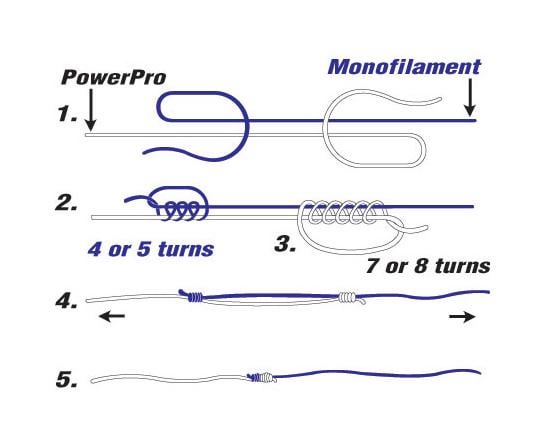
Double Uni Knot Technique
The double uni knot connects two lines. It is useful when joining different types of fishing lines.
- Overlap the ends of two lines to be joined.
- Take the end of one line and form a loop.
- Wrap it around both lines six times and pull tight.
- Repeat with the other line’s end.
- Moisten and pull the standing lines to slide the knots together.
Testing Knot Strength
Testing the strength of a knot is important to ensure it holds well under pressure. A strong knot keeps your braided fishing line secure and prevents losing fish.
Follow simple checks to see if your knot is tied correctly and ready for use.
Pulling And Inspecting
After tying your knot, pull on both ends of the line firmly. This action tests the knot’s ability to handle tension.
- Hold the main line and the tag end.
- Pull slowly and steadily.
- Watch for any slipping or loosening.
- Inspect the knot for tight wraps and no gaps.
- Feel for smoothness to avoid line damage.
Adjusting For Secure Ties
If the knot slips or loosens during the pull test, adjust it by tightening the wraps. Make sure the knot sits snugly without overlapping strands.
| Issue | Adjustment | Result |
|---|---|---|
| Knot slips under tension | Tighten the wraps and moisten the line before pulling | Improved grip and less slippage |
| Line feels rough or damaged | Retie knot using smooth, even pulls | Less damage, stronger knot |
| Strands overlap unevenly | Reposition and tighten wraps carefully | Even knot, better strength |
Tips For Durable Knots
Tying strong knots is important for braided fishing line. Good knots keep your line from slipping or breaking.
Use these tips to make knots last longer and hold better on your fishing trips.
Using Knot Sleeves Or Glue
Knot sleeves add extra strength to braided line knots. They protect the knot from friction and wear.
Applying a small amount of glue on the knot can stop it from loosening. Use glue made for fishing lines.
- Slide a knot sleeve over the knot for extra hold
- Use waterproof glue to keep knots tight
- Let the glue dry fully before casting
- Check knot sleeves regularly for damage
Regular Knot Maintenance
Check your knots before every fishing trip. Braided line knots can weaken from use and water exposure.
Replace or retie knots that look worn or loose. This helps avoid losing fish or gear.
- Inspect knots for frays or slips
- Trim old knots and tie new ones as needed
- Keep the line clean to prevent damage
- Practice tying knots to improve skill

Credit: medium.com
Frequently Asked Questions
What Is The Best Knot For Braided Fishing Line?
The Palomar knot is the best for braided line. It’s strong, simple, and retains line strength well. It’s widely trusted by anglers for various fishing conditions.
How Do I Prevent Braided Line From Slipping In Knots?
Use knots like the Double Uni or Palomar. These knots grip braided line tightly. Adding a few extra wraps increases friction and prevents slippage.
Can I Use The Same Knots For Braided And Monofilament Lines?
Some knots work well for both, like the Palomar. But braided line needs knots that grip tightly due to its slick texture. Choose knots designed for braided line for best results.
How Tight Should I Pull The Knot On Braided Line?
Pull knots firmly but gently to avoid damaging the line. Braided line is strong but can weaken if over-tightened. Ensure the knot seats well and holds securely.
Conclusion
Knotting braided fishing line is simple with practice. Choose the right knot and tie it tight. Check your knot for strength before fishing. A strong knot keeps your catch secure. Keep practicing to improve your skills every time. Fishing becomes more fun with reliable knots.
Stay patient and enjoy your time outdoors. Good knots lead to better fishing success.