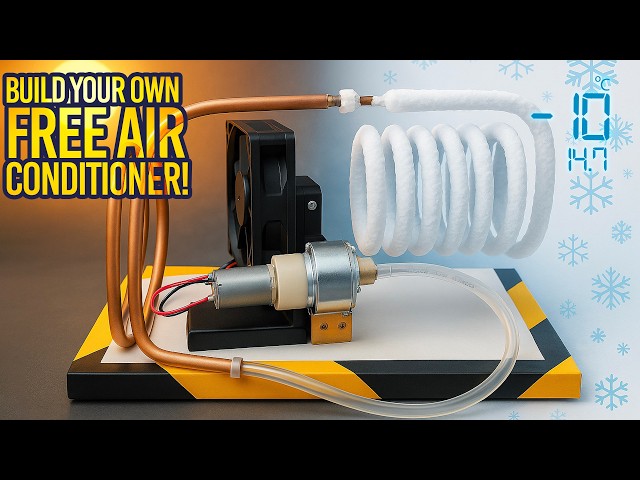
Feeling overheated and stuck without air conditioning? You don’t have to suffer through the heat any longer.
Imagine cooling down your space quickly and affordably with something you can make yourself. Yes, you can build a homemade air conditioner using simple materials you probably already have at home. In this guide, you’ll discover easy steps to create your own cooling solution that works surprisingly well.
Keep reading, and you’ll learn how to take control of your comfort without breaking the bank. Your cooler, more comfortable days are just ahead.
Basic Concepts Of Diy Cooling
Making a homemade air conditioner is a simple way to cool a room. It uses basic science to lower air temperature. Understanding how air conditioners work helps in building your own.
This guide explains the main ideas behind DIY cooling. It covers how air conditioners cool air and the key principles that make cooling possible.
How Air Conditioners Work
Air conditioners move heat from inside a room to the outside. They do this by using a coolant that changes from liquid to gas and back. This cycle absorbs heat from the air and releases it outside.
- Warm air inside passes over cold coils.
- The coolant inside the coils absorbs heat.
- Cool air is blown back into the room.
- The heated coolant moves outside and cools down.
- The cycle repeats to keep the room cool.
Key Cooling Principles
Cooling works by removing heat and lowering humidity. A homemade air conditioner uses these ideas with simple materials like ice, fans, and water.
| Principle | Description |
| Evaporation | Water absorbs heat as it turns to vapor, cooling the air. |
| Conduction | Heat moves from warm air to cold surfaces, lowering temperature. |
| Air Movement | Fans help spread cool air and remove warm air. |
| Insulation | Keeps cool air inside and blocks heat from outside. |
Materials Needed For Homemade Ac
Making a homemade air conditioner can help cool your space cheaply. You only need a few simple materials.
Choosing the right materials ensures your DIY AC works well and lasts longer.
Essential Tools And Supplies
You need basic tools and supplies to build a homemade air conditioner. These items help you assemble and operate the device.
- Styrofoam cooler or plastic container
- Small electric fan
- Ice packs or frozen water bottles
- Utility knife or box cutter
- Adhesive tape or glue
- Marker or pen for marking cuts
- Drill or sharp tool for holes
Choosing The Right Components
Select parts that fit your space and cooling needs. The size of the fan and container matters most.
Use frozen bottles instead of ice for longer cooling. Choose a fan that is quiet but strong enough to move air.
- Cooler size: medium or large for better cooling
- Fan speed: medium to high for airflow
- Ice source: reusable frozen bottles or gel packs
- Material durability: sturdy plastic or foam
Simple Ice And Fan Air Conditioner
Making a homemade air conditioner is easy and cheap. You can cool a small space using ice and a fan.
This simple device uses cold air from ice and moves it with a fan to lower room temperature.
Step-by-step Assembly
Gather a fan, a shallow container, and ice cubes. Place the ice in the container first.
Put the container in front of the fan. Make sure the fan blows air over the ice.
- Choose a fan with adjustable speed settings.
- Use a wide and shallow container for ice.
- Place the container so air passes directly over the ice.
- Keep the setup on a stable surface.
Tips For Better Cooling
Use large ice blocks to slow melting. This keeps air colder longer.
Run the fan on a low or medium setting. This helps air absorb more cold from the ice.
- Replace ice before it fully melts.
- Use salt in water to make ice colder.
- Keep the room sealed to keep cool air inside.
- Place a bowl under the container to catch water.
Using A Cooler Box For Cooling
A cooler box can work as a simple homemade air conditioner. It uses ice and a fan to cool the air. This method is cheap and easy to build at home.
You only need a few items like a cooler box, ice packs or ice cubes, and a small fan. The cold air from the ice cools down your room when the fan blows over it.
Building A Cooler-based Ac
Start by cutting holes in the cooler box for airflow. One hole should fit the fan, and another hole should let the cooled air out. Place the ice inside the cooler box.
- Cut a hole on the lid for the fan.
- Cut one or two holes on the sides for air vents.
- Put ice or frozen water bottles inside the box.
- Attach the fan over the lid hole.
- Turn on the fan to blow air through the ice.
Maintaining Ice For Longer Use
Keeping ice frozen longer will make your cooler AC work better. Use these tips to maintain ice inside the cooler box:
| Tip | Reason |
| Use large ice blocks | They melt slower than small cubes |
| Pre-chill the cooler box | Cold inside keeps ice from melting fast |
| Keep the cooler in shade | Reduces heat exposure |
| Close the lid tightly | Prevents warm air from entering |
| Use ice packs instead of water ice | Ice packs last longer |
Evaporative Cooling Methods
Evaporative coolers can help cool your home using water and air flow. They are simple to set up and cost-effective.
These devices are also known as swamp coolers. They work best in dry climates by adding moisture to the air.
How Evaporative Coolers Work
Evaporative coolers use the process of evaporation to cool air. Water absorbs heat from the air, which causes it to evaporate, cooling the air around it.
- Air enters the cooler through a fan.
- The air passes over water-saturated pads.
- Heat from the air evaporates the water.
- The cooled air is blown into the room.
Diy Evaporative Cooler Setup
You can create your own evaporative cooler at home with a few materials. This can be a fun and easy project.
| Material | Purpose |
| Small fan | To blow air |
| Ice or cold water | For cooling effect |
| Cooler box | To hold water/ice |
| Water pump | Circulate water over pads |
| Cooling pads | Absorb water for evaporation |

Credit: www.youtube.com
Safety And Maintenance Tips
Making a homemade air conditioner is fun and useful. It helps cool your room in hot weather.
To keep it working well, follow safety and maintenance tips. This keeps you safe and the unit running.
Preventing Water Damage
Water can leak from your homemade air conditioner. This may cause damage to floors or walls.
Use a container to catch dripping water. Make sure it is large enough to hold all the water.
- Place the unit on a water-resistant surface
- Empty water containers regularly
- Check hoses or tubes for leaks
- Avoid overfilling water tanks
Regular Cleaning And Upkeep
Clean your air conditioner often to keep it working well. Dust and dirt can block airflow.
Check the fan, ice packs, and water parts regularly. Replace or clean parts when needed.
- Wipe down the fan blades weekly
- Wash or replace filters if used
- Clean water containers to prevent mold
- Check power cords for damage
Energy Efficiency And Cost Savings
Making a homemade air conditioner can save money and use less energy. It is a simple way to cool rooms without high bills. Understanding energy use helps you choose the best cooling option.
This guide looks at how DIY air conditioners compare to commercial ones. It also gives tips to reduce electricity use while staying cool.
Comparing Diy And Commercial Acs
DIY air conditioners cost less to build and run. Commercial ACs have advanced features but use more electricity. Here is a comparison to help you decide.
| Feature | DIY Air Conditioner | Commercial Air Conditioner |
| Initial Cost | Low | High |
| Electricity Use | Low to Moderate | High |
| Cooling Power | Limited | Strong |
| Maintenance | Easy | Complex |
| Portability | High | Low |
Reducing Electricity Usage
Lowering electricity use saves money and helps the environment. Homemade air conditioners use simple parts that need less power. Follow these tips to cut energy use.
- Use a fan with ice or cold water for better cooling.
- Seal windows and doors to keep cool air inside.
- Turn off other electrical devices when using the AC.
- Run the AC only in the hottest hours of the day.
- Choose energy-efficient fans or pumps for your DIY unit.

Credit: www.youtube.com
Creative Cooling Hacks
Keeping cool during hot days can be easy with some simple tricks. Homemade air conditioners use common items to lower the temperature.
This guide shows you clever ways to cool your space with frozen bottles and portable ideas.
Using Frozen Water Bottles
Frozen water bottles act like ice packs to cool air. You can place them in front of a fan to blow cool air around the room.
- Fill plastic bottles with water and freeze them overnight.
- Place frozen bottles in a shallow pan for stability.
- Set a fan to blow air directly over the bottles.
- Keep extra bottles in the freezer to swap when needed.
- Use smaller bottles for personal cooling at your desk.
Portable Cooling Ideas
Portable cooling devices help you stay comfortable anywhere. You can create simple cooling setups that are easy to carry.
| Item | Purpose | How to Use |
| Battery-Powered Fan | Air circulation | Carry it to move cool air around |
| Cooling Towel | Body cooling | Wet it and wear around your neck |
| Spray Bottle | Refresh skin | Spray water lightly on your face and arms |
| Frozen Gel Packs | Target cooling | Place on pulse points like wrists |

Credit: diyjoy.com
Frequently Asked Questions
How Does A Homemade Air Conditioner Work?
A homemade air conditioner cools air by blowing it over ice or cold water. It uses a fan to circulate the chilled air. This process reduces room temperature temporarily and saves energy compared to traditional AC units.
What Materials Are Needed To Make A Homemade Ac?
You need a fan, a shallow pan or bowl, ice cubes or frozen water bottles, and a container to hold the ice. Optionally, some tubing or a cooler box can improve cooling efficiency.
Is A Homemade Air Conditioner Energy Efficient?
Yes, homemade air conditioners use less electricity than conventional units. They rely on ice or cold water instead of compressors. However, their cooling effect is limited to small spaces and short periods.
Can A Homemade Ac Cool Large Rooms Effectively?
No, homemade air conditioners are best for small rooms or personal spaces. Their cooling power depends on the amount of ice and airflow. For larger areas, a traditional AC is more effective.
Conclusion
Making a homemade air conditioner can save you money and keep you cool. The steps are simple and use easy-to-find materials. You can build it in a few hours at home. This project helps you stay comfortable without a big electric bill.
Try it yourself and enjoy a cooler space today. Small changes can make a big difference in hot weather. Stay safe and have fun creating your own air conditioner!