Measuring ingredients accurately can make or break your recipe, especially when it comes to small amounts like 1/3 cup. If you’ve ever struggled to find the right tools or wondered how to get it just right, you’re not alone.
Getting this measurement exact can improve your cooking and baking results, saving you from guesswork and frustration. Keep reading, and you’ll discover simple, foolproof ways to measure 1/3 cup every time, even if you don’t have a measuring cup handy.
Your next dish will thank you!
Importance Of Accurate Measurements
Measuring ingredients correctly is very important in cooking and baking. It helps to get the right taste and texture.
Even small mistakes in measurements can change the final result. Accurate measuring makes recipes work every time.
Use The Right Measuring Tools
Using the correct measuring cup for dry or liquid ingredients helps accuracy. A 1/3 cup measure is best for this amount.
Dry measuring cups are for things like flour or sugar. Liquid cups have space to see the level clearly.
Level Off The Ingredient
Fill the 1/3 cup and then use a flat edge to level off the ingredient. This removes extra and makes the amount exact.
Leveling is important for dry ingredients. It stops the mixture from being too heavy or too light.
Why Accurate Measuring Matters
Correct measurements keep the balance of flavors and textures in recipes. It helps baked goods rise properly.
Too much or too little of one ingredient can spoil the dish. Accuracy saves time and reduces waste.
Credit: www.recipesandplaces.com
Tools For Measuring Ingredients
Measuring ingredients correctly is key to good cooking and baking. Using the right tools helps you get exact amounts every time.
This guide explains different tools you can use to measure 1/3 cup accurately.
Standard Measuring Cups
Standard measuring cups are designed to measure dry and liquid ingredients. They come in sets with different sizes including 1/3 cup.
- Use the 1/3 cup directly for measuring.
- Fill the cup to the top level for dry ingredients.
- Place the cup on a flat surface for liquids and check at eye level.
- Standard cups are easy and fast to use.
Digital Scales
Digital scales measure ingredients by weight, giving very precise results. Use grams or ounces based on your recipe.
| Ingredient | Weight for 1/3 Cup |
| Flour | 43 grams |
| Sugar | 67 grams |
| Butter | 76 grams |
Put a bowl on the scale and reset it to zero before adding ingredients. This method works well for all types.
Measuring Spoons
Measuring spoons are small and used for tiny amounts. They do not usually include a 1/3 cup size, but can help with smaller portions.
To measure 1/3 cup with spoons, use this method:
- Use three 1-tablespoon spoons plus one 1-teaspoon spoon.
- Since 1 tablespoon equals 3 teaspoons, this adds up to 5 tablespoons plus 1 teaspoon.
- Combine these to approximate 1/3 cup (5 tablespoons + 1 teaspoon = 1/3 cup).
Measuring Dry Ingredients
Measuring dry ingredients correctly is key to baking success. Using the right amount keeps your recipes balanced.
This guide explains how to measure 1/3 cup of common dry ingredients for good results.
Flour And Sugar
Flour and sugar need careful measuring. Use a dry measuring cup for accuracy.
- Spoon flour lightly into the cup without packing it down.
- Level off the top with a flat edge like a knife.
- For sugar, scoop and level it directly for best results.
Baking Powder And Soda
Baking powder and baking soda are powerful. Use exact measures to avoid taste changes.
| Ingredient | How to Measure 1/3 Cup |
| Baking Powder | Fill the measuring cup, then level it off carefully. |
| Baking Soda | Scoop gently and level with a flat edge for accuracy. |
Measuring Liquid Ingredients
Measuring liquid ingredients correctly is important for cooking and baking. Using the right amount helps your recipe turn out well.
One common measurement is 1/3 cup. It may seem tricky, but there are easy ways to measure it accurately.
Using Liquid Measuring Cups
Liquid measuring cups are clear and have a spout for pouring. They help you see the exact amount of liquid inside.
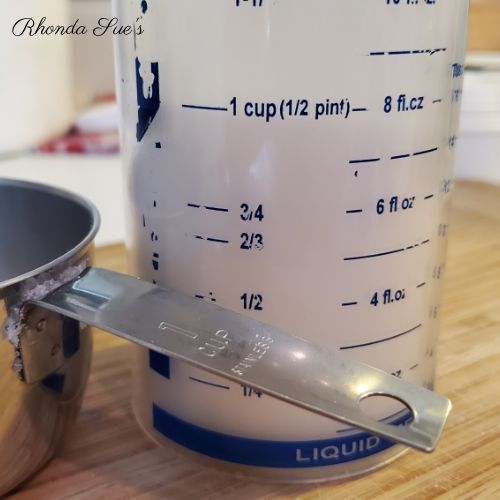
To measure 1/3 cup, place the cup on a flat surface. Pour the liquid until it reaches the 1/3 cup line. Check at eye level to be sure.
- Use a clear cup with measurement marks
- Place the cup on a flat surface
- Pour liquid slowly to the 1/3 cup mark
- Check the level at eye height
- Pour carefully to avoid spills
Alternatives For Liquids
If you do not have a liquid measuring cup, you can use other tools. Tablespoons or standard measuring cups work well.
One third cup equals about 5 tablespoons plus 1 teaspoon. You can also use a dry measuring cup filled carefully.
- Use 5 tablespoons and 1 teaspoon of liquid
- Fill a dry measuring cup to the 1/3 cup line slowly
- Use a kitchen scale if you know the liquid’s weight
- Use a small measuring jug with milliliter marks (about 79 ml)
Tips For Accurate Measurement
Measuring ingredients correctly is important for good cooking results. Using the right tools helps you get the exact amount you need.
Here are simple tips to measure 1/3 cup accurately for both dry and liquid ingredients.
Leveling Off Dry Ingredients
Dry ingredients like flour or sugar should be measured by filling the cup and then leveling it off. This stops you from using too much.
- Fill the 1/3 cup until it is overflowing.
- Use a straight edge, like a knife, to scrape off the extra.
- Make sure the surface is smooth and even with the top edge of the cup.
- Do not pack the ingredient unless the recipe says to.
Reading Liquid Measurements At Eye Level
For liquids, it is best to use a clear measuring cup. Reading the measurement at eye level avoids mistakes.
| Tip | Reason |
| Place the cup on a flat surface | Prevents tilting and inaccurate readings |
| Bend down to see the liquid at eye level | Allows you to see the true meniscus line |
| Read the bottom of the meniscus | Ensures correct measurement |
| Pour slowly to reach 1/3 cup mark | Helps avoid overpouring |

Credit: rhondasues.com
Converting Measurements
Measuring ingredients correctly is important for cooking and baking. Sometimes you need to convert measurements to get the right amount.
One common measurement is 1/3 cup. You can convert it into other units using simple math or charts. This helps when you do not have a 1/3 cup measuring tool.
Using Fractional Math
Fractional math lets you break down 1/3 cup into smaller parts. You can add or multiply fractions to find equivalent amounts.
For example, 1/3 cup equals 5 tablespoons plus 1 teaspoon. You can also convert cups to ounces by multiplying.
- 1 cup = 16 tablespoons
- 1/3 cup = 16 ÷ 3 = 5.33 tablespoons
- 5 tablespoons + 1 teaspoon = 1/3 cup
- 1 cup = 8 fluid ounces, so 1/3 cup = 8 ÷ 3 ≈ 2.67 ounces
Conversion Charts
Conversion charts show common measurements side by side. They help you quickly find how much 1/3 cup is in other units.
| Measurement | Equivalent of 1/3 Cup |
|---|---|
| Tablespoons | 5 tablespoons + 1 teaspoon |
| Teaspoons | 16 teaspoons |
| Fluid Ounces | 2.67 fl oz |
| Milliliters | 79 ml |
Use these charts to measure ingredients accurately when you do not have the exact cup size. It saves time and reduces mistakes.
Common Measurement Mistakes
Measuring ingredients accurately is key to good cooking. Small errors can change the taste or texture of a dish.
Many people make simple mistakes when measuring 1/3 cup. These mistakes can be avoided with careful attention.
Overpacking The Cup
Overpacking means pressing the ingredient too firmly into the cup. This adds more than the intended amount.
- Do not press down hard with a spoon or your hand.
- Fill the cup lightly and level it off with a flat edge.
- Fluff dry ingredients like flour or brown sugar before measuring.
- Use a scoop and level technique for best results.
Misreading The Scale
Using a scale to measure can be tricky if you misread the numbers or units. This causes wrong amounts.
| Common Scale Mistakes | How to Avoid |
| Reading grams instead of ounces | Check the scale unit before weighing |
| Not zeroing the scale with the container | Always tare the scale before measuring |
| Placing ingredient unevenly on the scale | Center the ingredient for accurate weight |
| Ignoring small increments | Use a precise scale for small amounts |

Credit: shawnacoronado.com
Practice And Patience In Baking
Measuring ingredients correctly is key to good baking. Learning how to measure 1/3 cup takes time and care.
Practice helps you get better. Patience keeps you trying even if it feels hard at first.
Trial And Error
At first, you might spill or use too much flour. That is normal. Keep trying to pour slowly and check your measuring cup.
- Use a clear measuring cup to see the level
- Fill slowly to avoid overfilling
- Level off the top with a knife for exact amount
- Write notes on what works best for you
Learning From Experience
Every baking try teaches you something new. You learn how ingredients affect the dough or batter.
| Experience | What You Learn |
| Too much flour | Dough becomes dry |
| Too little flour | Dough is sticky |
| Level measuring | Texture is just right |
Frequently Asked Questions
How Do I Measure 1/3 Cup Without A Measuring Cup?
You can use tablespoons to measure 1/3 cup. Since 1 cup equals 16 tablespoons, 1/3 cup is about 5 tablespoons plus 1 teaspoon. This method is handy when you lack a 1/3 cup measure.
Can I Use A 1/4 Cup And Teaspoons To Measure 1/3 Cup?
Yes, combine a 1/4 cup and 1 tablespoon plus 1 teaspoon to make 1/3 cup. This helps when you only have standard measuring cups like 1/4 and 1/2 cups available.
Is 1/3 Cup The Same As 5 Tablespoons Plus 1 Teaspoon?
Yes, 1/3 cup equals exactly 5 tablespoons plus 1 teaspoon. This conversion is precise and useful for measuring ingredients when you lack a 1/3 cup tool.
What Kitchen Tools Help Measure 1/3 Cup Accurately?
Standard measuring cups marked with 1/3 cup are best. Alternatively, use a tablespoon measure or a digital kitchen scale for precise results.
Conclusion
Measuring 1/3 cup can be easy with the right tools. Use a standard measuring cup or spoons to get it right. Level off the ingredient for accuracy. This small step helps your recipes turn out better. Practice a few times to feel confident.
Cooking and baking become more fun with simple skills. Keep measuring cups handy in your kitchen. Soon, you will measure 1/3 cup without thinking twice. Simple tips make cooking less stressful and more enjoyable.